
Moving Colors – a poem by David Cazden

Moving Colors


At an exhibit by Grace Walker Goad, 
autistic artist of Nashville.


The color pink unfolds
over her painting, a hue
like the two vinyl gloves 
I wore cleaning my parents' house
before it was sold―
pink as our living room window
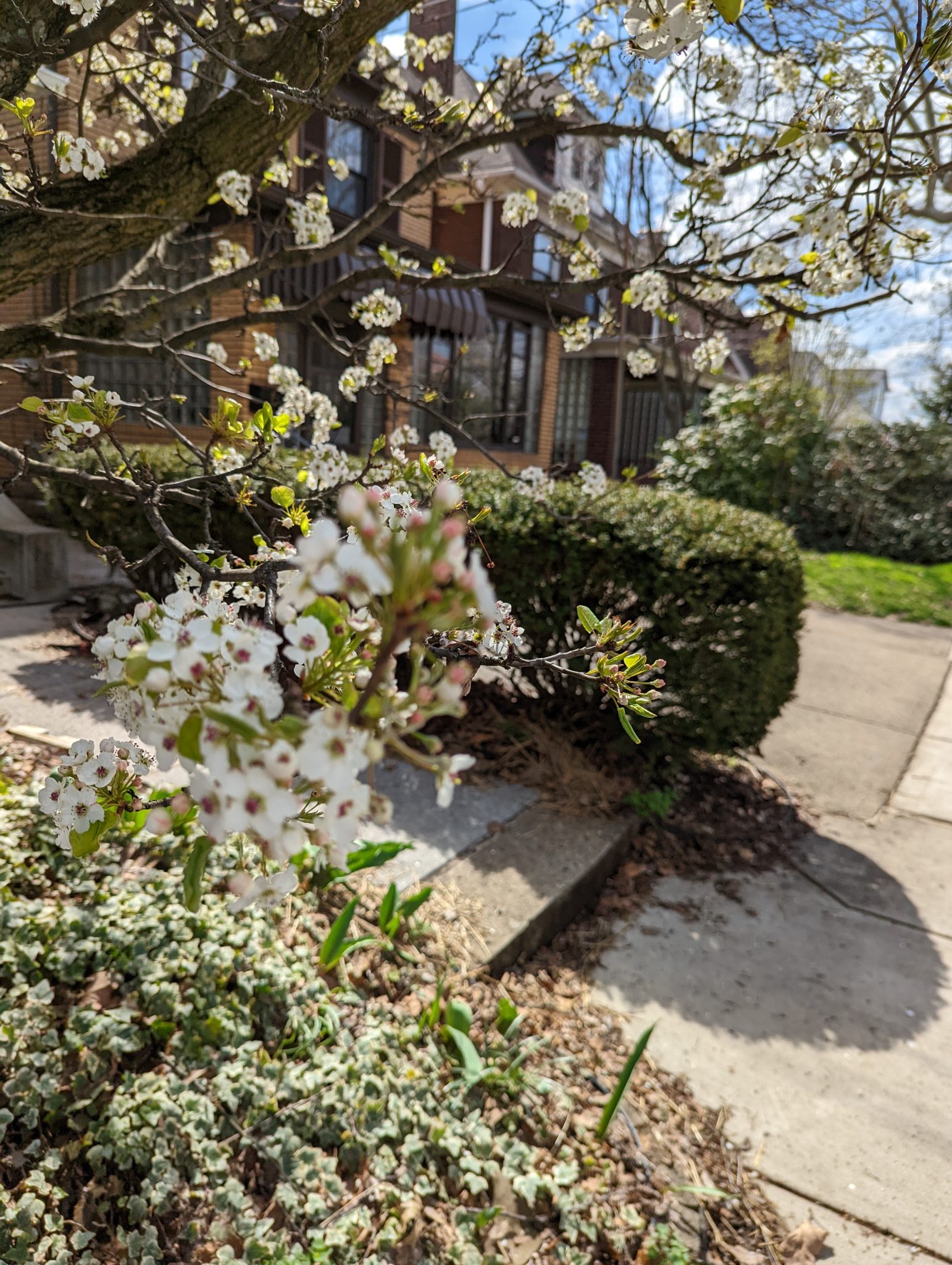
mirroring early spring buds
where, drapes buttoned up,
a scarf of wind on the chimney,
Mom sat in winter
in yellow lamplight.
Another painting's the color
of our 70s kitchen
in marigold-yellow,
like wild mustard 
staining hills behind our backyard
or Mom's blouse filling with sun,
opening the window to wake me.
Because the painter's autistic
"with lack of muscle control,"
she paints only abstracts―
Everything's communicated
through shape and hue
and swaths of sheer color.
I try to imagine 
the artist's hand
opening onto the canvas 
for the first time, like being born 
again in the sky―
For it's possible
to be born over and over.
And as I stroll down the gallery hall
I too am filled up with color
as if it were spirit,
by the time I leave,
taking concrete steps
to the parking lot―
into cool air,
under all-knowing stars,
in the late light of a blue moon.

David Cazden‘s poetry has appeared in various places such as Passages North, Nimrod, The Connecticut Review, Crab Creek Review, Fugue, Valparaiso Poetry Review, The McNeese Review, Barely South Review and elsewhere. He was poetry editor of the magazine, Miller’s Pond, for five years. David lives in Danville, Kentucky USA.
Fish Food – a poem by Larry Pike

Fish Food


	“And the Lord appointed a great fish to swallow up Jonah.” ―Jonah 1:17a (RSV)

	“A Lobster Diver in Cape Cod Says a Humpback Whale Scooped Him Up
and Spat Him Out.” ―NPR story, June 12, 2021


They said, inking their scrolls, that Jonah snoozed 
below deck while a storm swelled and the roiling sea
threatened to splinter the suddenly unstable ship.
But who really believed, devising this scripture

hundreds of years later, that Jonah snored 
under God’s disappointed eye as desperate sailors
tested every seaman’s skill and uttered every prayer
they knew to save their battered boat? We don’t

need CSI to see through such feeble perjury. What scribe
supposed this spin was essential to selling the story? Jonah,
on the lam from God, a last-minute fare on a westerly cruise,
couldn’t have imagined evading the Lord’s command,

wouldn’t have shuddered had the Coast Guard drawn astern
and bullhorned his name into the wailing wind. We can note
that Jonah manned up in the waves’ wildest moments
and owned his transgression, told the crew to give him up,

but his capitulation doesn’t merit a late-news live feed;
many prophets came around when their options dissipated
like the raging whitecaps once Jonah was tossed into the foam. 
The same may be said for Jonah’s contrition in the belly

of the giant God dispatched to gulp him out of the brine.
Who among us doubts that Jonah in the dripping darkness
pled for deliverance, pledged any sacrifice, promised obedience?
Anything to get out. The depth of Jonah’s conversion might

concern us if we don’t also consider our own reflected faith. 
Instead, chew on this: God knew Jonah wouldn’t be the last
to flee a call, knew the slackers and deniers would multiply
over time. Perhaps the episode’s design wasn’t to school Jonah

but to deter future watery escapes by refining the marine diet.
To great quantities of krill, crustaceans and modest fish add
an occasional human. Bony and brittle, sure, perhaps too bitter,
but an evolutionary gurgle that should make us pause at the shore,

cause us to question how far we ought to swim or if it’s safe to sail
toward the false safe harbor of our own distant Tarshish. 
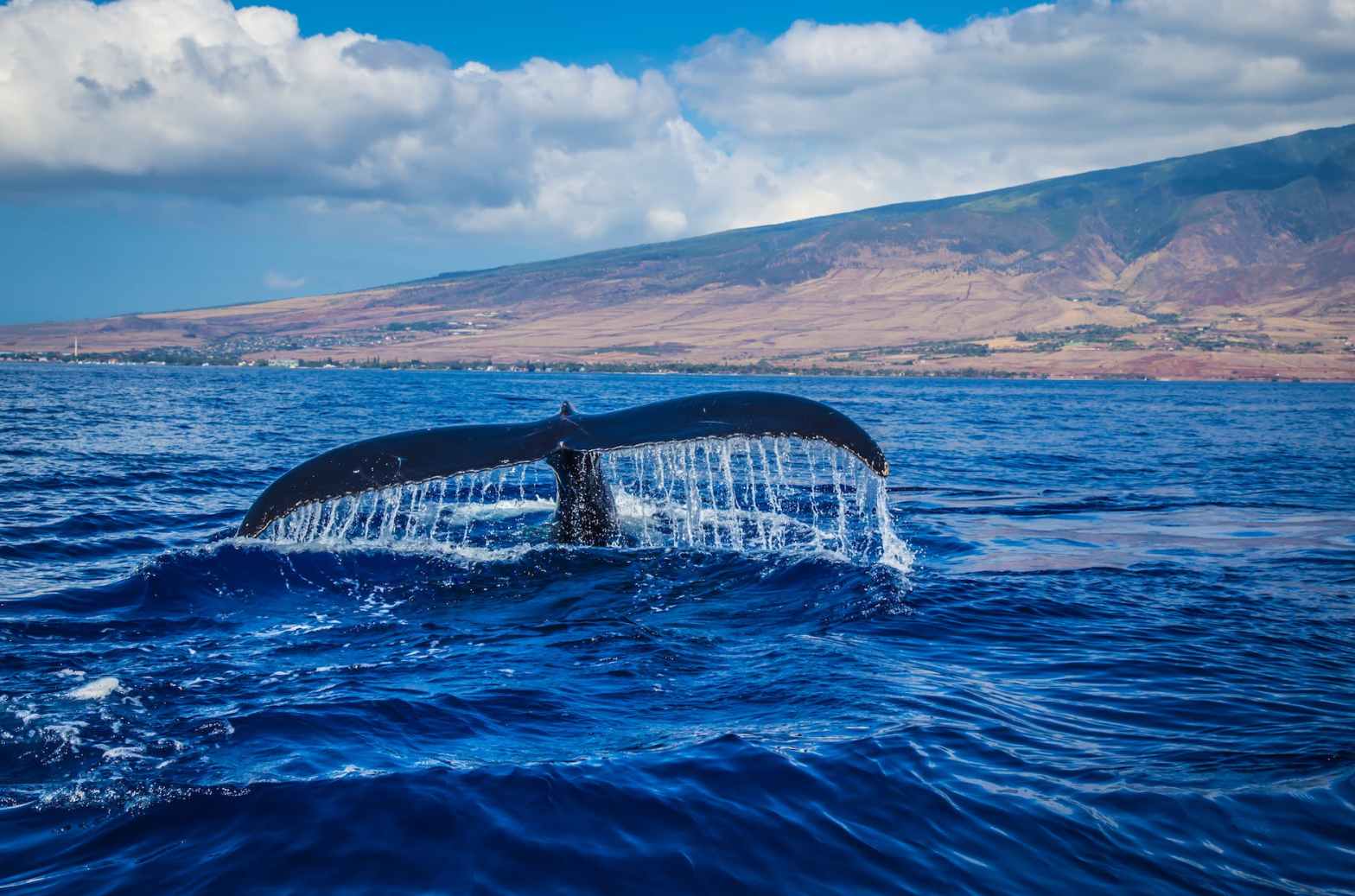
Our whales will probably puke us back into the sea. But maybe not.
You know what they say about creatures, once they get a taste.

Larry Pike’s poetry has appeared in a variety of literary journals, including Fathom MagazineSt. Katherine Review, and twice previously in Amethyst Review. Finishing Line Press published his collection Even in the Slums of Providence (October 2021). He lives with his wife, Carol, in Glasgow, Kentucky.

Dazed – a poem by Susan Shea

Dazed


If hawks suddenly started making honey
on my property, the sight of such
enormous honeycombs would jar me

jolt me into that place where too much
scares me, makes me feel nervous 
fearful I won't have enough 
closet space or gratitude to handle
the overflow of such abundance, and
		
I can't be like that quarterback who
wanted to win the Super Bowl all
of his life, only to find that the minute
he won it, he was empty, and knew only
the greatest-of-all-time spirit could fill
all the holes and hexagons of his want

because I have already caught that ball
and still I have to keep catching it from 
bad throws of my own making

so, who knows why my first inclination is
to startle, then run from too much plenty  

until I find that peace, to settle in 
to remember, I can open all the jars of sweet
contagious zeal, spread it thick on all
the empty slices in my sight
			

Susan Shea is a retired school psychologist who was raised in New York City, and is now living in a forest in the Pocono Mountains of Pennsylvania.  Since she has returned to writing poetry this year, her poems have been accepted in a few dozen publications, including Ekstasis, Across the Margin, Feminine Collective, Persimmon Tree Literary Magazine, Military Experience and the Arts, and the Avalon Literary Review.

Touched – a poem by Diane Elayne Dees

Touched

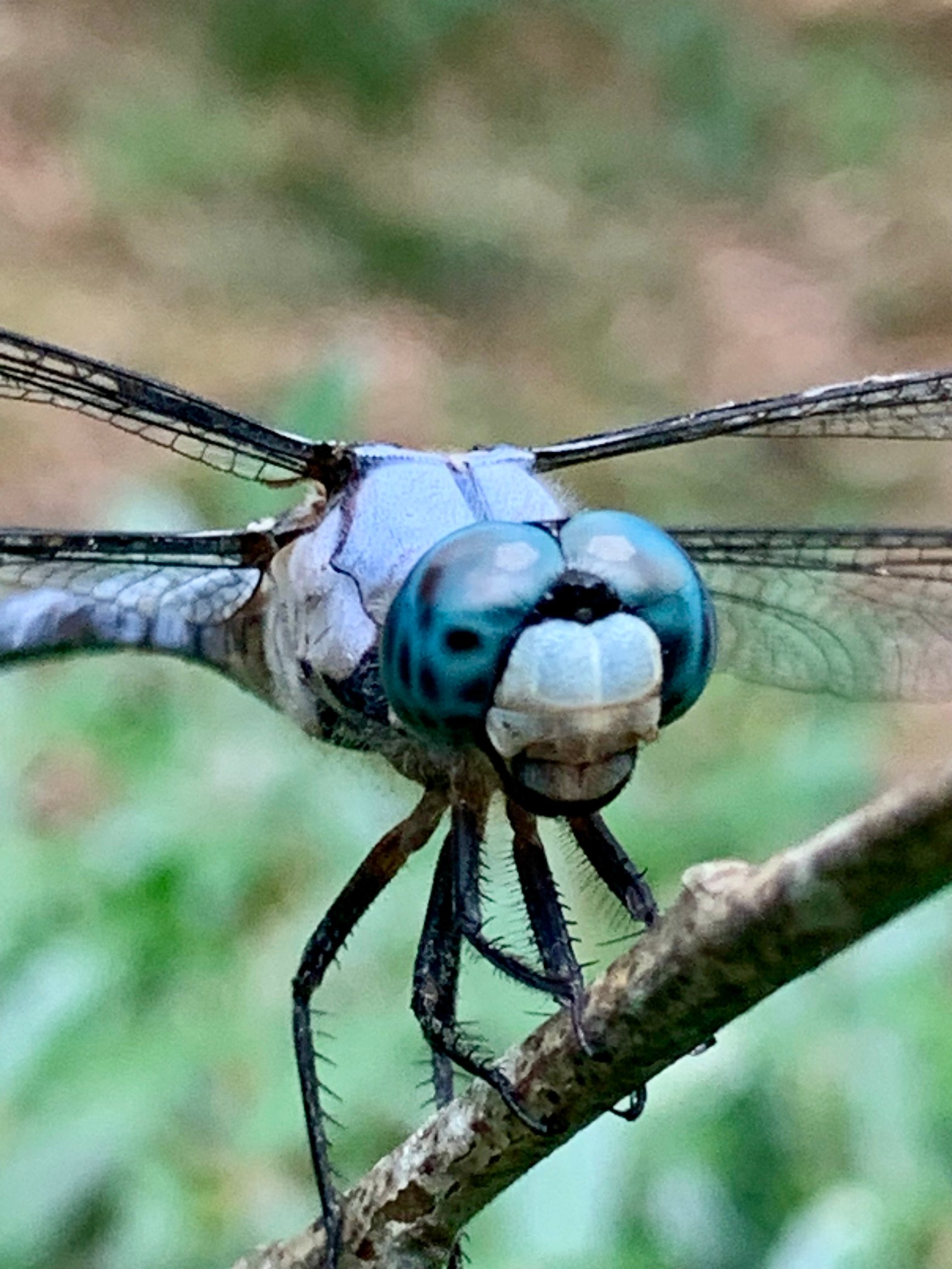
I touched a dragonfly today.
I looked into its bold blue face
and felt its wing of stained glass lace
upon my skin. I backed away,

it buzzed around my hand in play,
then landed in its former place.
I, too, determined I would stay
and look into its bold blue face.

I watched it lift its wings and sway.
I touched its body as the space
we held became suffused with grace.
I stood in awe, amazed to say—
I touched a dragonfly today.

accompanying image also by Diane Elayne Dees

Diane Elayne Dees is the author of the chapbooks, Coronary Truth (Kelsay Books), The Last Time I Saw You (Finishing Line Press), and The Wild Parrots of Marigny (Querencia Press). Diane, who lives in Covington, Louisiana, also publishes Women Who Serve, a blog that delivers news and commentary on women’s professional tennis throughout the world. Her author blog is Diane Elayne Dees: Poet and Writer-at-Large.

— 

Women Who Serve

DIANE ELAYNE DEES: POET AND WRITER-AT-LARGE

Offerings – a poem by Janet Ruth Heller

Offerings


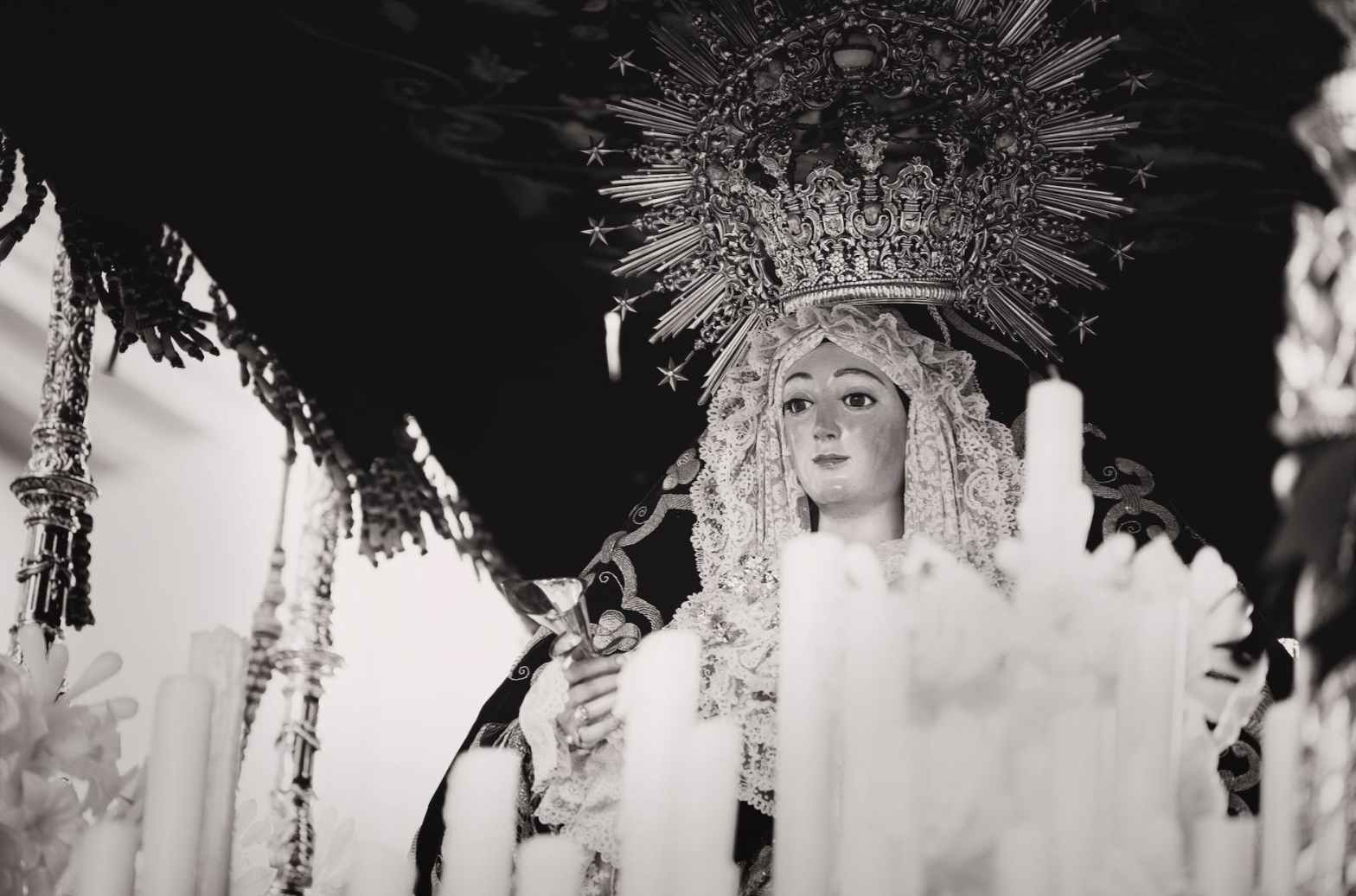
Offerings for the Virgin Mary
hang from the shrine of San Xavier del Bac
on an Amerindian reservation near Tucson:
women donate flowers and scarves,
photos of babies and newlyweds
with notes pleading for her protection.

One wife leaves a hat
with an image of her husband
and scrawls on the brim
the date of his death.

A skeptical Jew,
I look on bemused.

But then I grieve.
We all feel so vulnerable,
worry about our dear ones,
want to protect them,
fear the sudden blow of fate.

I pray for people I've never met,
wish their dreams fulfilled,
encompass all of us sojourners
on this planet full of mountain beauty
and primal sisterhood.
 

Janet Ruth Heller is the past president of the Michigan College English Association and a past president of the Society for the Study of Midwestern Literature.  She has a Ph.D. in English Language and Literature from the University of Chicago.  She has published four poetry books:  Nature’s Olympics (Wipf and Stock, 2021), Exodus(WordTech Editions, 2014), Folk Concert: Changing Times (Anaphora Literary Press, 2012), and Traffic Stop (Finishing Line Press, 2011); a scholarly book, Coleridge, Lamb, Hazlitt, and the Reader of Drama (University of Missouri Press, 1990); a middle-grade fiction chapter book for children, The Passover Surprise (Fictive Press, 2015, 2016); and a fiction picture book for children about bullying, How the Moon Regained Her Shape (Arbordale, 2006; 7th edition 2022), that has won four national awards, including a Children’s Choices award.  Her website is https://www.janetruthheller.com

In Their Derelict Boat – a poem by Wendy Jean MacLean

In Their Derelict Boat


When my bones creak and my muscles strain
I will praise you for this old boat, my soul,
that carries me across the waters
to you, on the far shore of my hopes.
I strain to keep the rhythm of prayer:
Pulling on the oars, moving the waters,
advancing in the humble abandonment
of my will into yours.
O derelict boat,
I cannot bail and row at the same time.
Water seeps in through places
that have not held the seal
of my life in yours.
O abundant sea
I am yours: made in water,
You, Lord, are my element.
My boat fills, I am swamped.
I find myself in you: all water, all salt,
all ready to be born again
in your boat, your ark, your vessel, the Christ.

Wendy Jean MacLean’s work is shaped by her lifelong engagement with mythology, gospel and spirituality. Published in Crosswinds, Gathering, Green Spirit, Ancient Paths, Boosey and Hawkes, GIA, Streetlight, Arborealis. Sheila-na-Gig, Collegeville Bearings Online. Awards include: Don Gutteridge Poetry Prize; Big Pond Rumours Chapbook; Open Heart; Poetry Matters; the Drummond, and a Pushcart nomination. Her music has been commissioned and sung internationally. In 2023 two pieces debuted at the national Unison Choir Festival in Halifax, in commemoration of the LGBTQ purge. Her latest book, On Small Wings, was published in 2022 by Wet Ink Books. Wendy is a Spiritual Director and minister of the United Church of Canada. She is currently part of the Deeptime Network leadership cohort.

Malleable as Clay – a poem by Alena Casey

Malleable as Clay

Lord, give me the heart to hear stories,
a softened heart, malleable as clay,
open as the sky,
deep as a cleft in the rock.
May their pain pour like lava,
course like the blood of a volcano.
May my heart melt to receive it.

Lord, give me the ears to hear the words
that other humans speak,
for we all blunder blindly,
and cannot hear for the clatter of knocking over
the block towers of our lives.

May I listen.
May their words fall like rain on the earth
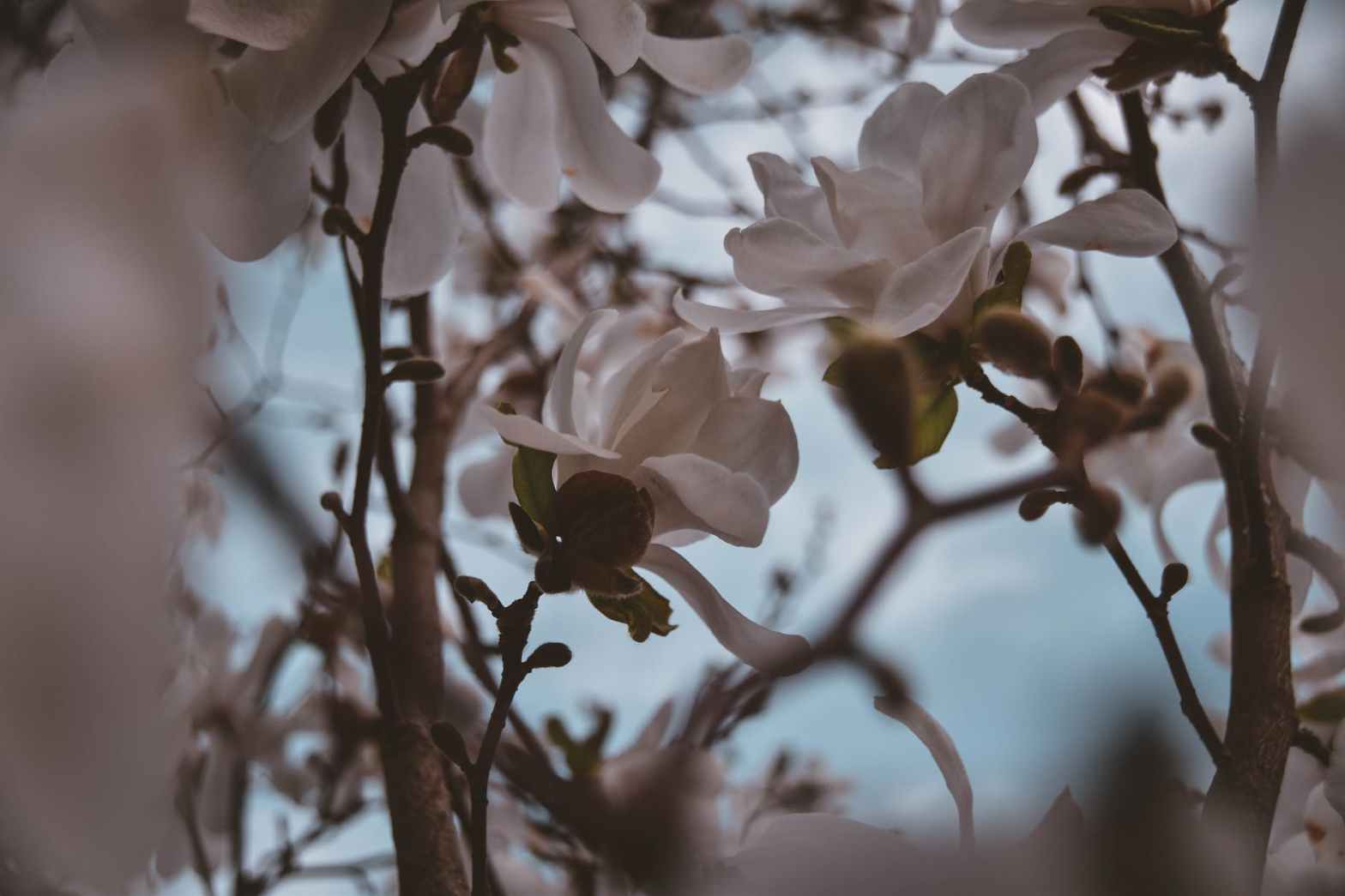
and cause lilies and magnolias
to lift their heads.

Alena Casey is a poet, writer, and mother of four from Indiana. Her poem won first place in the Society of Classical Poets 2023 Haiku Competition. Her poems have also been published with The Road Not TakenHeart of Flesh Literary Journal, and The Author’s Journal of Inventive Literature, among others. She can be found at strivingafterink.wordpress.com.

That Sunday – a poem by Joan E. Cashin

That Sunday 

The air is still as the morning light pours down, 
covering the little village in hazy gold.    
The church is poised against the olive green hills    
and the tiny steeple points toward God.  
A dozen souls crowd the ancient brownstone  
and pray their prayers of timeless longing,   
their voices echoing in the narrow brick streets.
The universe pauses, enfolds, and incorporates.  
Some prayers will be answered, and some will wind on 
through the labyrinth of centuries.  

Joan E. Cashin writes from the Midwest, and she has published in many journals including Soft Cartel, Down in the Dirt, Riggwelter, Mono, and Months to Years.

Trimming – a sonnet by Dan Campion

Trimming


I’ve pruned the lilac, privet, and the rose,
the cedar and the maple and the oak.
All will survive next winter thanks to those
spring cuts. You’ve done such work too, I suppose.
You heard the frozen limbs crack as they broke,
and, since, have kept your orchard trimmed. The ice
will have to find its victims elsewhere, freeze
somebody else’s trees, who’ll pay the price
for negligence. Neglect’s a nasty vice,
on that rule each good husbandman agrees.
Our family’s year of sickness, oranges froze,
the garden went to seed, woodlot to smoke.
A still hand sows disorder’s paradise.
The knowing spend June weeding on their knees.

Dan Campion‘s poems have appeared previously in Amethyst Review and in Light, Poetry, Rolling Stone, and many other journals. He is the author of Peter De Vries and Surrealism (Bucknell University Press) and coeditor of Walt Whitman: The Measure of His Song (Holy Cow! Press). A selection of his poems was issued by the Ice Cube Press in July 2022: https://icecubepress.com/2021/10/01/a-playbill-for-sunset/

Still Life – a poem by Don Brandis

Still Life


The view from a window changes
while that of a painting next to it doesn’t

‘what comes to us has chosen us’
she says setting down her coffee cup.

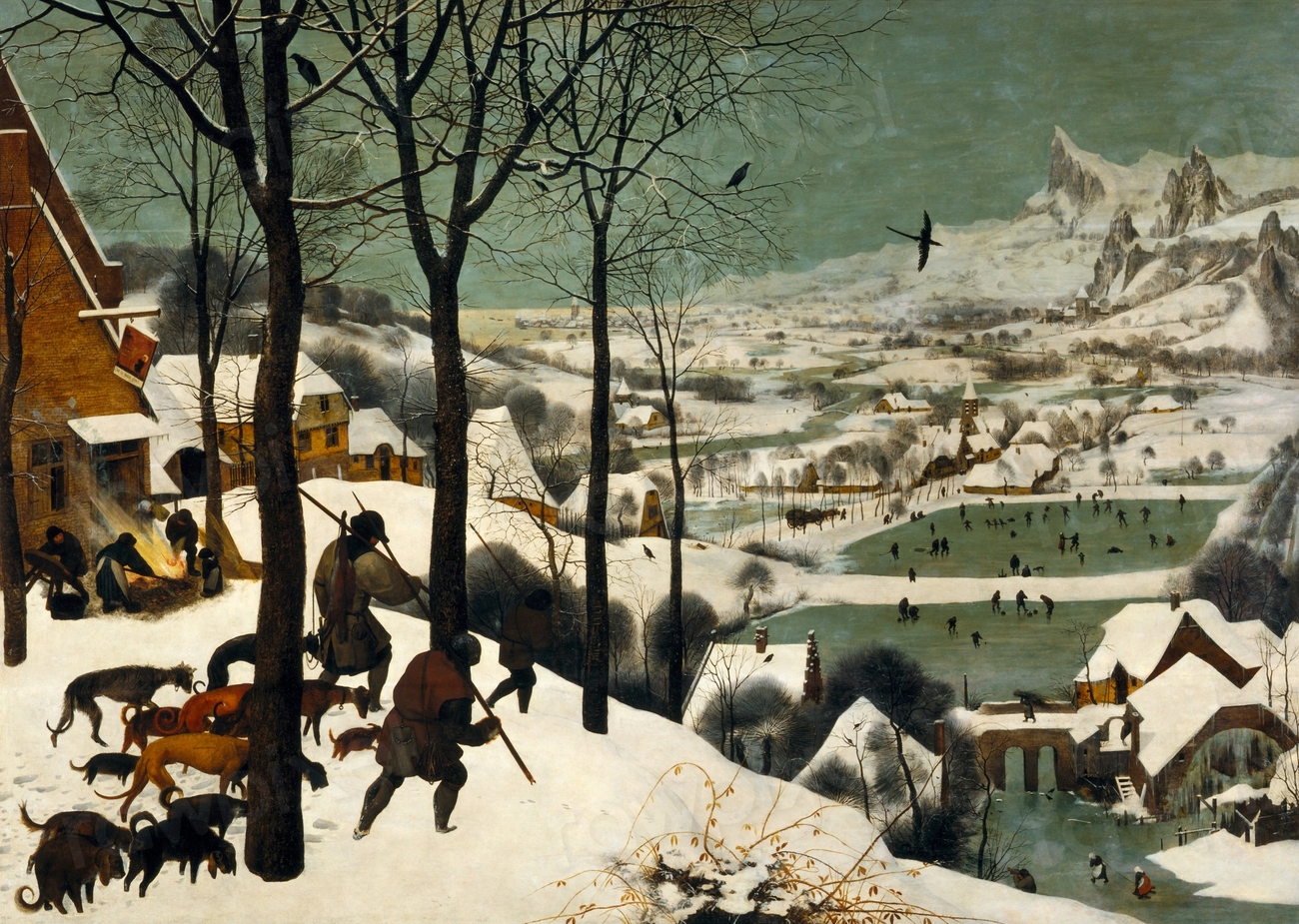
Bruegel’s returning hunters lean into each snowy step
or just the step we see assuming others
ankle-deep in snow’s deceptions
masking known to unknown ground as the hill drops away.

Leaning into steps aids balance with caution
of slicks, trips, errant falls
their long-pole spears hung with rabbits 
over shoulders, in front probing for the next step
a pack of dogs following nose to ground

the hunter’s faces turned away from us
in a scene with dozens of people none face us
only the next step’s hidden offerings
some walking iced-over ponds and streams
some skating, some fishing through holes in the ice
we are the scene’s only witness
a face seeing itself.

Slowly we begin to feel chosen
by a frozen moment outside ordinary time
yet within it not as contrast
but as what is there naked
saved for us caught up in a moment’s motions
not seeing its stillness.

Outside the window seductions of movement,
its singularity masking our duplicity, our multiplicity
tasks us.  We are only a white van racing a grey road 
for a few seconds. An erratic scattering 
of bright yellow-orange leaves falling like impulses,
each a glance of sunlight at just this angle
missing some branches, fenceposts 
favoring others.
Overhead is a sizeable hawk, wings outstretched
in a turn: we see both wings at once      one above
one below its body neither flying nor falling.

Don Brandis lives quietly outside Seattle writing poems.  He has a degree in philosophy and a long fascination with Zen.  Some of his poems have been published by Black Moon Magazine, Amethyst Review, Blue Unicorn, Leaping Clear, and others.  A book of his poems is out  – Paper Birds (Unsolicited Press, 2021).