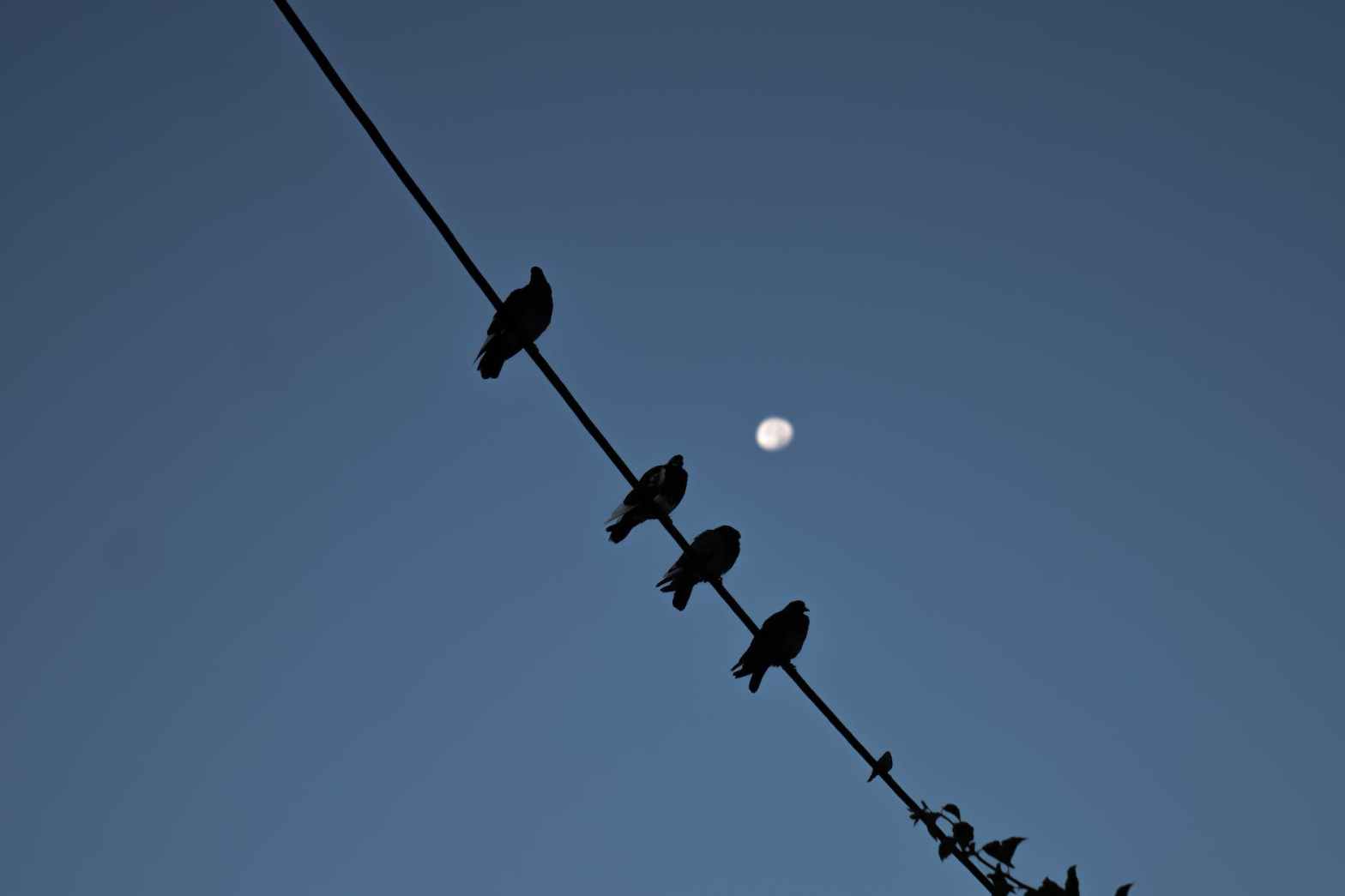
Little Bird-Gods – a poem by Ashley Steineger

Little Bird-Gods


How would we live
if we knew what
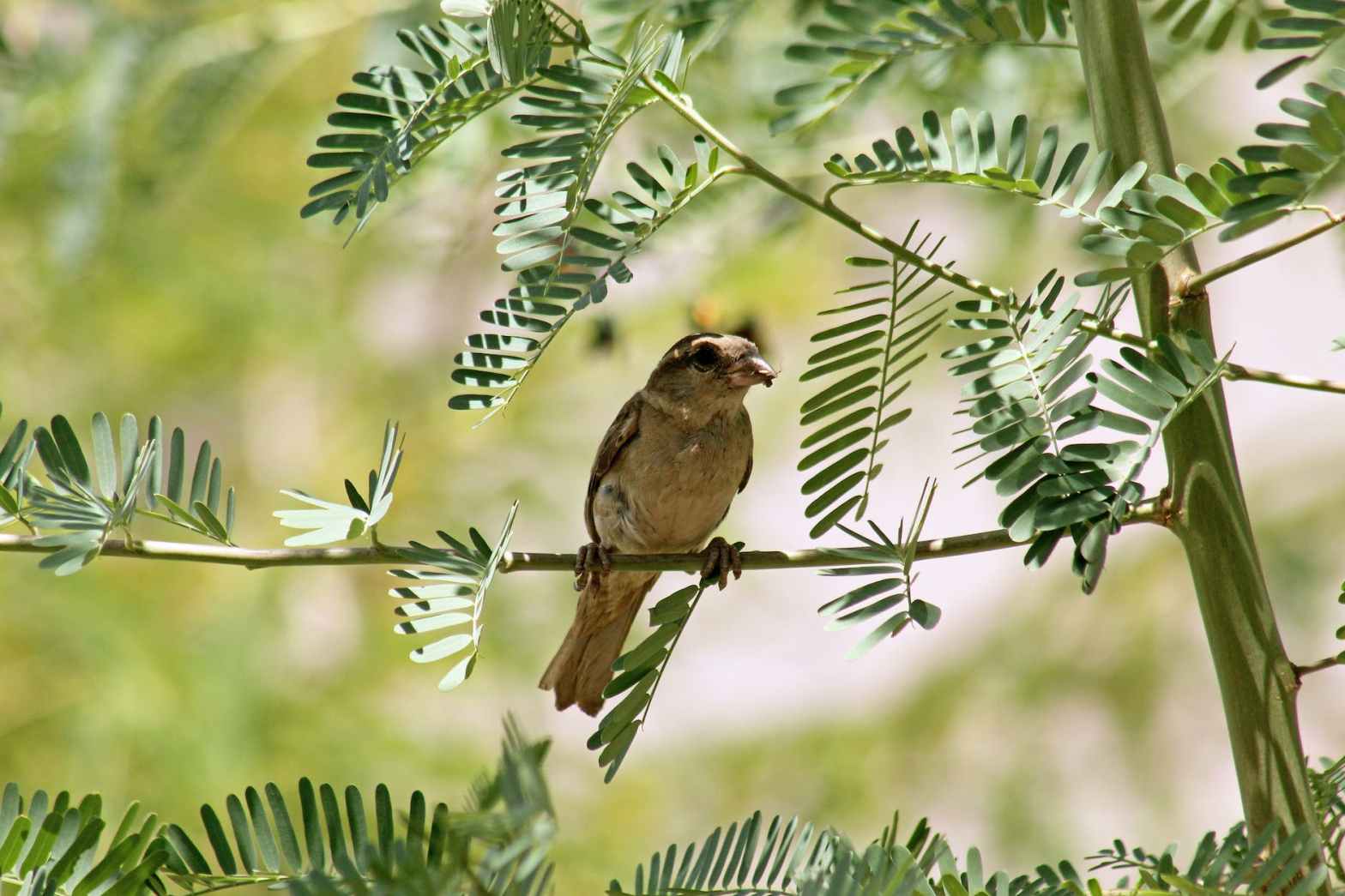
the power line birds

       gossip to each other
       when dusk turns her
       vague smile into

a long elegy of night
& the dead (newborns
of weightlessness)

       take shadows for strolls
       through parks & down
       potholed side streets

without hiding from us:
the alive! the ones
really lost (to ourselves

       to each other) no
       matter how many
       times the world

(usually a bird) reminds
us of our inseparability
the delicate circuitry

       that wires each living
       thing to every other
       living thing all of us

breathing beating
loving as one & how
would we live

       if we knew &
       (oh god, little bird)
       how do we live now?

Ashley Steineger is a holistic psychologist who believes poetry is the language of healing. She is the author of The Poetry Therapy Workbook (2023), and her poetry has appeared in The Night Heron Barks, Apricity Press, The Lumiere Review, and Palette Poetry, among others. She is a Pushcart Prize and Best of Net nominee, and currently lives and writes out of Raleigh, NC, where she enjoys forest bathing, collecting tattoos, and untranslatable words.

The Visitor – a poem by Jill Munro

The Visitor 

She had made her way downstairs,
was feeling for the kettle,
with unsure fingers,
in an empty kitchen,
when into the garden
stepped a gracious roe deer.

He moved behind the rose beds,
lingered by the laburnum,
paused for a moment
and they met,
stock still, knowing,
there, where she had waited,
longing, at her window.

Heart moved first,
and as she wept,
he was gone,
calling her to the bracken beds,
and gorse covered hillside
of their love filled youth.

Originally from the Highlands of Scotland, Jill Munro has lived and worked in Strasbourg, France, for over thirty years. She studied at St Andrews and then Edinburgh University, publishing her thesis on a study in the poetic imagery of the Song of Songs with the Sheffield Academic Press (1995). She wrote extensively in a professional capacity for a funding agency on the frontier of the life sciences, and during this time also translated numerous academic articles from French into English. She has been writing poetry for a number of years, exploring the themes of memory, landscape, loss and displacement.

My Mother’s Yahrzeit – a poem by Susan Zimmerman

My Mother’s Yahrzeit

At sundown, I light the candle.
If I miss sundown,
I light it when I remember.

Now she companions me
through the house
till I go to bed.

When I wake in the night, the candle
still shimmers in shadow,
throws a warm halo in the dark.

In the morning it welcomes me,
as if her presence lingered
from her night’s wandering.

Later, I’m not looking,
I’ve forgotten—
the flame goes out.

Last year when it went out, I lit another.
Not traditional, but neither was my mother.
I needed more time. I needed more light.

Susan Zimmerman’s chapbook, Nothing is Lost, was published by Caitlin Press in 1980. Her poems have more recently appeared or are forthcoming in literary journals such as Prairie FireGyroscope Review, The Maynard, and SWWIM Every Day. A poem of hers is also included in the new anthology The Path to Kindness: Poems of Connection and Joy, edited by James Crews.

Breathing – a poem by Kelly Terwilliger

Breathing

The outside reaches in, breath by breath.
And any other way it can.
Not that it intends to take over, just—
everything is at least a little porous.
My mother carries a rock up from the beach
and puts it on the step. Days later it falls to pieces, revealing
the small shells of burrowing clams, the coiled tube made by a worm.
The tide keeps sucking pieces out of the cliff,
rolling them, mouthing them, spitting them out,
until all that remains is where a fossil was.
The shape it left, or the shape it contained.
Even that ghost rubs and rubs away as it turns
to salt, the new tide spilling over.
Further out, a cormorant bobs, afloat,
before its next dive. What does it think
in its surface time? Before going under again?
Empty mind, waiting, or some inner joy?
Vast, glittering, dark—


Kelly Terwilliger lives in Oregon, where she works in public schools as an artist-in-residence and oral storyteller. She has two published collections of poems, Riddle, Fish Hook, Thorn, Key and A Glimpse of Oranges. 

The anchoress – a poem by Mathew Lyons

The anchoress


ghost sister // given to prayer
your heart wants out // the body’s cage

the body’s prison // a cell
god’s hive // sets it free

ghost sister // finger to dry in
on goat skin // wet with the spirit

by candlelight // wild swimming
with the spirit // in you

you in the waters // of the spirit
you alive // as the animal air

writhing // after a bell is struck
steaming // wet with the storm

of first light // raining in your cell
with the silence // ghost sister

with my ghost // and me, sister
listening for thunder // at the wall


Mathew Lyons is based in East London. His poems have appeared in Bad LiliesThe Interpreter’s HouseReliquiae and Under the Radar, among others.

On Black Mountain – a poem by Kerstin Schulz, with German translation by Werner Schulz and Kerstin Schulz

On Black Mountain

Each youth has a chair.
Each youth has a youth as a minder,
tender, pusher, someone who cares.
They’ve come for the mineral baths,
they’ve come on a bus from Sweden.
They’ve swung from the funicular car
high above the slopes of Černá Hora,
in the Giant Mountains of Bohemia.
They’ve taken the water
and now they take to the air.
Silver wheels braked in a line above,
they recline on a sweet summer slope,
carer and cared for, on the green grass.
A silver flute and every youthful throat
raised in hymns to the sky,
God-touched torsos, legs and arms
awash with the divine wind’s reply,
they sing the cure for our souls.

Am Schwarzer Berg

Jeder Jugendliche hat einen Stuhl.
Jeder Jugendliche hat einen Betreuer,
Begleiter, Stuhlbeweger, Pfleger.
Sie kamen wegen des Wassers,
sie kamen mit einem Bus aus Schweden.
Sie schwangen in der Schwebebahn
über den hohen Hängen von Černá Hora
im Riesengebirge Böhmens.
Sie haben die Heilwasser versucht
und machen jetzt eine Luft Kur.
Abgebremste Räder oben in einer silbernen Linie,
Betreuer und Betreute auf dem grünen Gras
an dem duftenden Sommerhang.
Eine silberne Flöte, und jede jugendliche Kehle
in Hymnen zum Himmel erhoben,
von Gott berührte Brüste, Beine und Arme
überflutet von der Erwiderung des heiligen Windes,
sie singen Heilung für unsere Seelen.

Kerstin Schulz is a German-American writer living in Portland, Oregon. Her work can be found in River Heron Review, HerStry, The Bookends Review, Raft, Relief, Montana Mouthful, and Cathexis Northwest Press, among other publications. She is also the winner of the PDXToday 2023 Poetry Contest.

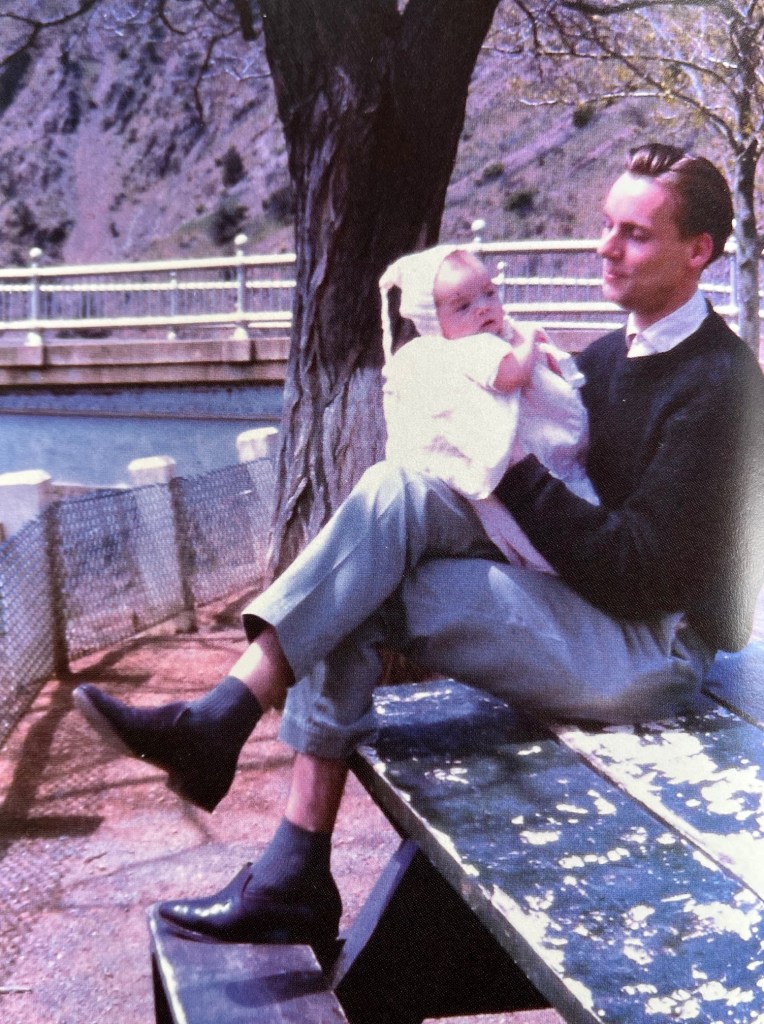
Photo of Werner and Kerstin Schulz, Klamath Falls, Oregon 1963

“If your child asks for a fish, do you give them a snake?” – a poem by Nathaniel A. Schmidt

“If your child asks for a fish, do you give them a snake?” 


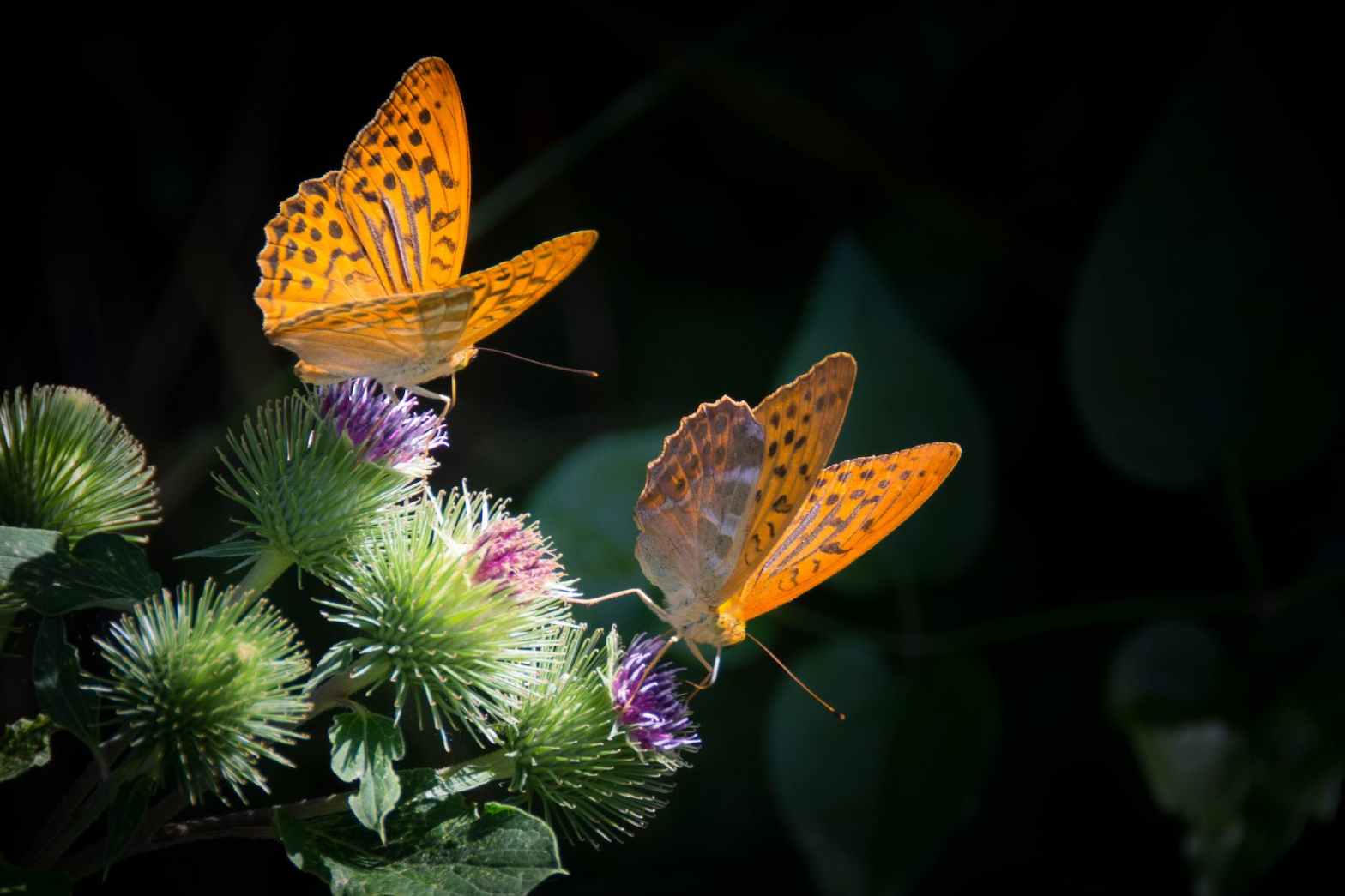
Two butterflies float their tissue-thin wings
through the air above hydrangea blossoms,
a pair of mates who dance to pollinate
while the newly leafed trees across the street
sashay alive, green limbs awash in buttery yellows
lazily swaying in the warm May breeze:

a thriving vision in the picture frame window
I peer through while in our family room
as my toddler daughter sleeps on my chest.
She grows and gleans energy as she rests
in this sanctuary, and I join her,
reading poems that name grace as the light
slipping in through cracks in life's prison walls –
refreshing my soul like a cup of chilled water.

I've needed this space to restore my faith
after visiting a strict church this past Sunday.
There God, if their preacher resembles the divine,
is a father who likes to chastise his children
with a hand raised to threaten, poised to spank
any poor sod who might step out of line,
his all seeing eye policing our deeds
because "he loves us" according to the pulpit
(a puppeteer's ploy to maintain control).

I am done with such domineering men,
their message a burden like a slave's steel collar,
twisting, deforming, the person it binds.
Instead let me trust my heart and my child
to the Spirit I sense in this garden,
a God who divests himself of power
to use a wee bug to feed his flowers,
the grey fallen leaves strewn across the grass
enriching the soil where they decompose,
the same place where deep roots nourish tall trees
with showers that rain on both the unjust and just:
new life sprouting out of what was once dead.


Nathaniel A. Schmidt is an ordained minister in the Christian Reformed Church and serves as a hospice chaplain. He holds degrees from Calvin Theological Seminary, Calvin University, and the University of Illinois Springfield. His newest collection of poems, Transfiguring, is available from Wipf & Stock, as is his first collection, An Evensong. He lives with his librarian wife, Lydia, and their daughter in southwest Michigan, meaning life is a perpetual story time.

But Then – a poem by Charles Hughes

But Then

In times long past, you would have known
The wind, the birds, and how
Birds have a calling like your own.
You may not know this now.

The wind blows where it wills, we’re told;
Birds neither sow nor reap—
They sing into the wind their old
Songs that still laugh or weep.

But, then, you would have understood—
Have felt—their songs as prayer,
As happy or sad, as beauty and good,
As love filling the air.

Charles Hughes has published two books of poems, The Evening Sky (2020) and Cave Art (2014), both from Wiseblood Books. His poems have appeared in the Alabama Literary ReviewAmethyst Review, The Christian CenturyLiterary Matters,  Spiritus, and elsewhere and were included in the recent anthology Taking Root in the Heart (Paraclete Press). He worked for over 30 years as a lawyer and lives in the Chicago area with his wife.

I Crashed My Angel – a poem by Dia Calhoun

I Crashed My Angel                  		

Too many times I threw myself
in the teeth of a wolf,
on the axe of a throat-cutter,
off the hurricane cliff of doubt.
Always, last possible breath
in she flew, her blue wings
keep me from falling.

From her feather tips music, faint
blue as sapphires in a far-off mist
I wanted . . . what? the longing
fading on the slow, glide down
That last time, like every time,
she set me on the ripe, plowed ground.

Nobody warned me
you can wear out your guardian angel
even unto death.
All that survived her blue wings
transplanted, sutured with gold
gordian knots on this strange angel
approaching me now.

Grabbing me, she leaps up.
No More Chances. Her wings
drench wind over me, my hair combs
fall and fall and fall. Have you ever risen
in the arms of an angel? What is this lilt,
my skin, this breathless sapphire
blue notes. Brassy
blare of jazz trumpets.

Open Your Ears. She carries me
higher, past arpeggios of cloud. We burst
into the blue where wind turns song. Where

I am melody. Chords of C major,
that blue running out
into the last summer morning. That B minor
blue of mermaids diving
I am lento, allegro. Fugue of blue.
Enormous, mosaic, my lifetime, each note
a glissando falling
she drops me into music

O Blue, holy broken expanse—

Dia Calhoun is the author of seven young adult novels, including two verse novels, After the River the Sun and Eva of the Farm(Atheneum, 2013, 2012). She has won the Mythopoeic Fantasy Award; published poems and essays in The Writer’s Chronicle; EcoTheo ReviewThe Nashville Review; MORIA Literary Magazine; Grist Journal; And Blue Will Rise Over Yellow: An International Poetry Anthology for Ukraine, and others. She co-founded readergirlz, recipient of The National Book Foundation Innovations in Reading Prize, and taught Creative Writing at Seattle University and Stony Brook University. More at diacalhoun.com.

Ringing the bell at St Pancras – a poem by Helen Evans

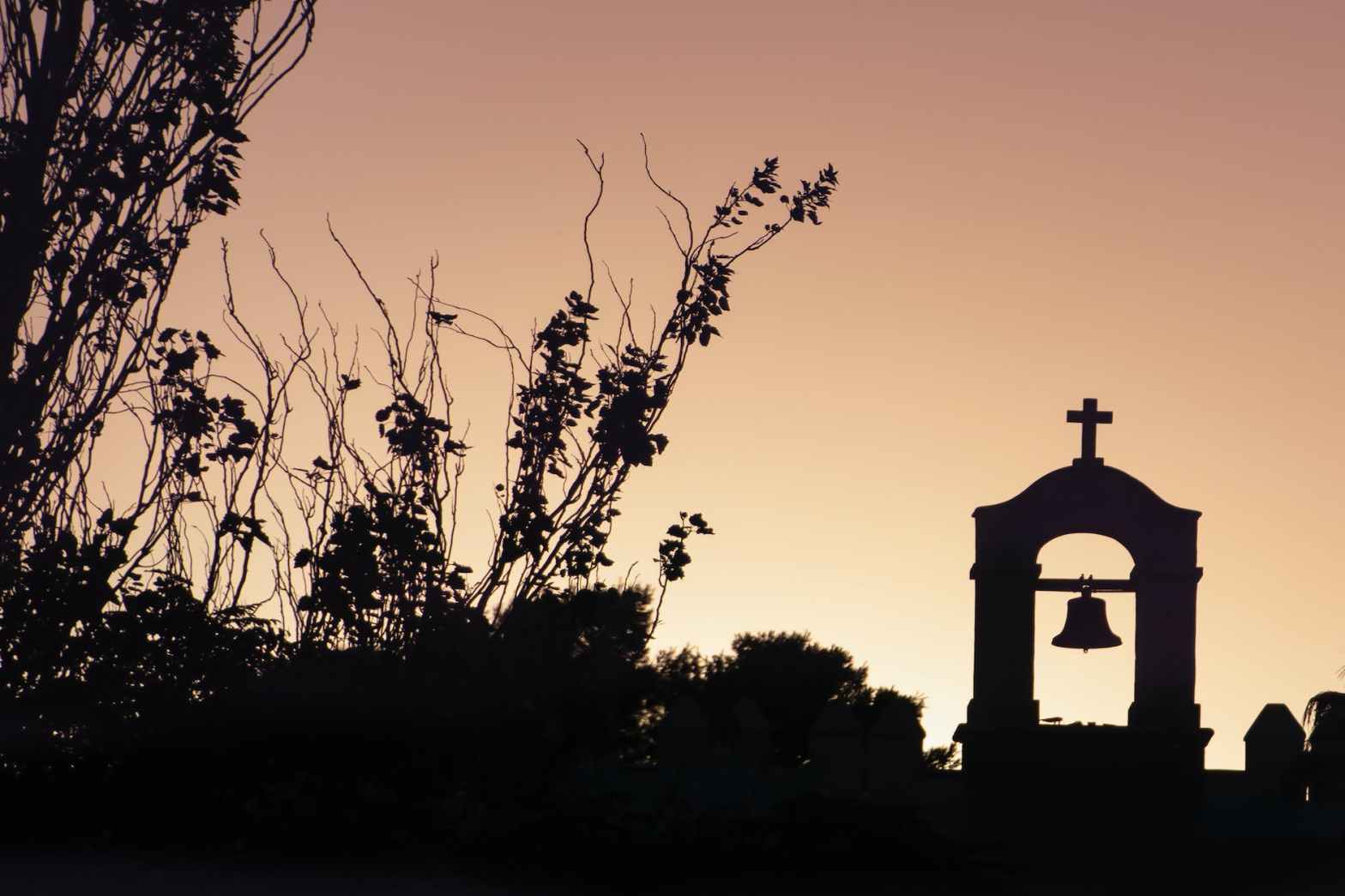
Ringing the bell at St Pancras

Quamvis sum parva tamen audior ampla per arva –
motto engraved on the mediaeval bell of St Pancras’ Church, Exeter


Although I am small, I am heard over the wide fields
Although I am small, I am heard
I am heard

Come and pause
Come and weep
Come and see
Come and pray
Come and praise

We’re heard
Although we’re small, we’re heard
Although we’re small, we’re heard over the wide fields


Helen Evans facilitates Inner Room, a pioneer lay ministry that creates space for people to be creative, and is piloting a new project, Poems for the Path Ahead, which in 2023 included poetry workshops held in a cathedral in England and in a consecrated cave in Scotland. Her debut pamphlet, Only by Flying, was published by HappenStance Press. Her poems have appeared in The Rialto, The North, Magma, Wild Court, The Friday Poem and Ink, Sweat & Tears. ‘That Angel Hovering’ was a joint winner of the Manchester Cathedral 600 Poetry Competition. She has a master’s degree with distinction in Creative Writing from the University of St Andrews.

www.helenevans.co.uk