
Torah and Dream
A few times at the breakfast table in my childhood years, my father of a sudden put down the cup of tea in his hand and declared with surprise: “Halom Halamti.”
The fresh breakfast morning unexpectedly jangled with the sound of the china teacup harshly on its saucer.
Halom Halamti. The Hebrew words mean: “I dreamed a dream.”
My father’s voice slightly off-key, perplexed, as if he were just remembering.
And then he stops, made anxious perhaps by the fragment of recollection, and anxious, too, that he has spoken out loud.
Halom Halamti, and the sound of the cup, and I, a child, am awake and alert and wanting to know more.
But no more comes.
The Hebrew phrasing – a rare use by my father – is from the Biblical story of Joseph, favorite son of Jacob and grandson of Isaac and great-grandson of the first patriarch of this narrative, Abraham. Joseph is imprisoned in a dungeon in a foreign land but after years in prison, one day he is called before Pharaoh, the Lord of the Empire of Egypt, to interpret a troubling dream.
A winding trail of fortune has led Joseph to this point. He was sold by his jealous brothers to a caravan of traders bound for Egypt, purchased as a slave by Potiphar, and when he refuses the seduction of Potiphar’s wife she accuses him of attempting rape and he is cast into prison. Years later, word of the captive’s dream-interpretive power reaches Pharaoh. And Pharaoh said unto Joseph, I have dreamed a dream, and there is none that can interpret it.
My father never spoke of what his own dreams were, and I was left with the impression that, other than in story-telling, dreams are secrets and we are best not to speak of them at all.
I had a vivid, unsettled dream life when I was young. I dreamt of people I recognized or forgot, of doorways and trees, fire and snow, I dreamt of smoking chimneys and the sudden ascent from a golden field of a flock of raucous black-winged birds.
Motifs repeated, and sometimes these images still come when I dream today.
When I was a child, often the images were vivid in my mind when I first awoke. Other times, I had no recall but then – in the middle of the day –
wait! sudden, a dream fragment darting through my mind like a small silver fish.
And then gone.
Most often, even when a dream stayed with me, it was no more than disjointed impressions. I had the feeling that I had traveled to a distant world, that there was much there that I learned and knew … but I could no longer access the knowledge once I found myself awake in my house, in my room, in my bed. There was more to the dream than I could convert into words.
It was as if something dense and heavy filled the passageway back from the dream world up into the sunlight of the morning, and the dream could not travel on through.
The dream was texture, the dream was –
My mind and tongue were thick with it, but often I couldn’t say it in any language that I remembered, on waking, how to speak.
As a child, I heard and read the strange and wondrous sagas of the Hebrew Bible as if they were the telling of a dream. I didn’t say to myself: “Bible stories are written-down glimpses from the dreams of the ancestors, from our long-ago mystics and sacred story-tellers.” Nor did I say to myself: “These stories are the collective dream of a wilderness-birthed tribal people.” I simply absorbed the stories in that way.
As I grew into adolescence and adulthood, I came to know that there are multiple Jewish teachings about passages of Torah, the first five books of the Hebrew Bible (the first five books of what Christians call the Old Testament), written on parchment scroll and read aloud in the synagogue each week.
(The Hebrew word “Torah” means “instruction,” and in addition to referring specifically to the text of the Torah scroll, as I use the word here, “Torah” also has an expansive reference, meaning any written or oral text of Jewish learning. What I am writing here could be called “Michelle’s words of Torah.”)
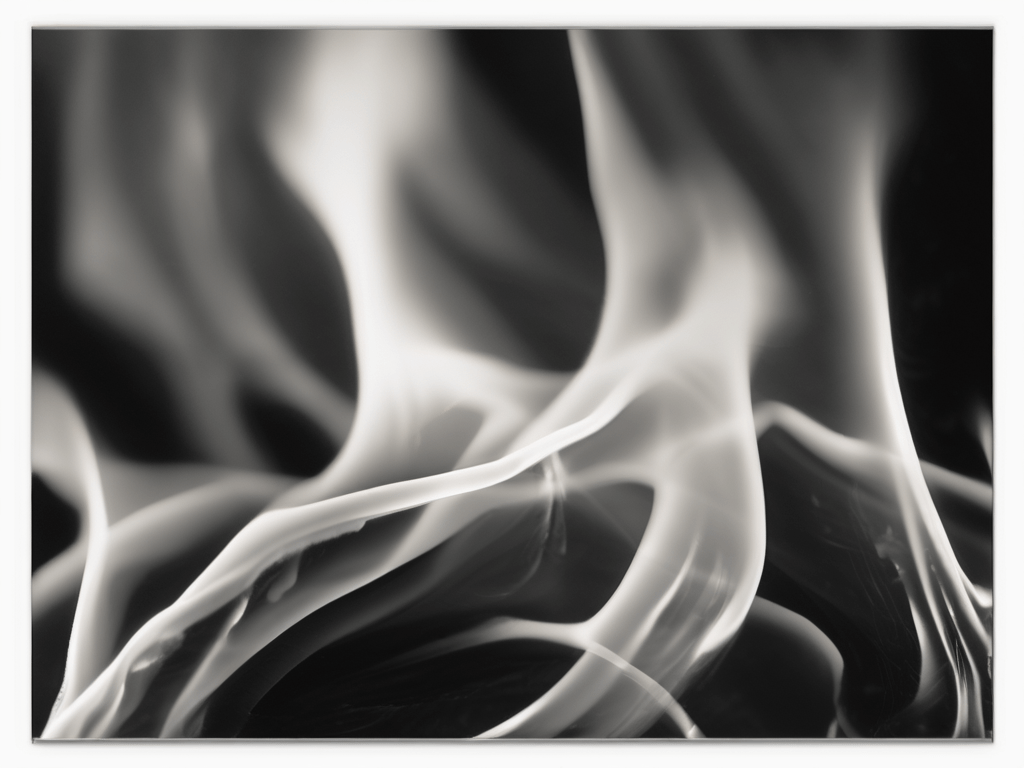
The tradition says, “The Torah is black fire written on white fire.”
The black fire is the Hebrew letters and the Hebrew words, translating from another realm the swirl of image and what is beyond-image, translating sound and all that is beyond-sound into the fixed, linear constrictions of a written tablet or scroll.
Then, if translated further, into a language other than Hebrew, the words and sentences lose additional layers and depths of meaning, ambiguity, hints, nuance; the text loses word play, cross-references, allusions and poetry when translated out of the original alphabet and tongue.
The white fire is the potent silence of the blank space around the black fire of the letters.
Even for those who believe that the Torah was given whole by God to Moses on Mount Sinai: the Jewish tradition opens into manifold interpretations, expanding to include teachings that are layered, capacious, mystical or allegorical, poetic, questioning and alive to new understandings in new generations. The white space, the white fire, calls us to listen, to interact, demanding from us the challenge of intimacy, of soul-opening. We puzzle and question and challenge with our broken and searching hearts, we wrestle as our ancestor Jacob wrestled with a mysterious, unnamed being, all night, until morning, and in the morning he received a blessing and the name “Israel,” “God-wrestler,” and he walked away, limping …
We can read and receive the characters in these ancient stories as the flesh and shadows of our dreams, recognizing in them aspects of ourselves: our complexities of longing, of fear and desire, our flawed or daring responses to life’s challenges, our troublesome or healing relationships with strangers and within our own families, and within our own conflicted hearts.
We needn’t either cling to or deny this text as literal or historical truth but, like numinous stories of many traditions, we can find truths told in symbol and the language of soul, renderings from the sacred dreaming – and nightmares – of the ancestors, the larger-than-life archetypes and energies, the encounters with the Sacred Source-of-All.
The Torah story – the “Five Books of Moses”: let us enter as we would enter a sacred cave surrounded by murmuring, echoing voices, distinct one moment, uncertain the next, and soon we are no longer sure whether we heard what we thought we heard, we are no longer certain of inflexible words and clear meanings.
We hear call-and-response – but who is calling? who is responding? We thought it was the voices in the cave, but perhaps it is the voice of memory, or our own beating hearts.
In the beginning: Creation and Paradise, Innocence and Bliss;
Then The Voice, and the human response choosing Will and Knowledge, birthing the human journey
The growth of the first brothers, new and vulnerable, unsure: immediately Jealousy and Fratricide. Am I my brother’s keeper?
The chaos of humanity, and then the Waters of Chaos, destroying all except one Ark.
Rescue, Rainbow, Promise
A Call:
a Whole and Surrendered Self responds to a Voice that says, Leave what you know about yourself and what you know about the world, dare a journey, open to new blessing; the Patriarch, 75 years old, says “Here I am,” to this call to start a new life
Later: Two Sons, from Two Women
One woman jealous of The Stranger-Other, oppressing The Stranger-Other to maintain the lineage of her son
Two Nations
Two Great Nations are born.
The Self who speaks Truth to Ultimate Power, daring to Question, to cry out for Justice …
and –
the self who accepts without questioning when the Voice commands – a dream, a nightmare? heard, mis-heard?Bind and Sacrifice Your Beloved Son …
The Rope, the Knife – the Angel, the Ram caught in the thickets (thorns of heart or memory, of yesterday or tomorrow?)
Later, the Son, the one dead if not for the Angel and the Ram: now grown and digging his Father’s stopped-up Wells, finding Contention, Hostility – finally: Expanse
Wayfarers and Visions, the Sacredness of Land, Auspicious Meetings at a Well. Enemies, and Pacts of Peace
Twin Boys at War in their Mother’s Womb, and She Calls to Heaven
Twin Boys at War when grown
Deceiving the Old Blind Father, for his Blessing
the self who advances through trickery, the self who cannot face the mirror of the Twin, and must run
Escape. A Dream of a Ladder to Heaven
Waking on Holy Ground, the Earth is Holy
Love and Deceit: Two Sisters, wed to one man
Return to face the Twin, the Shadow
A Wrestling until Dawn with a Stranger – or an Angel – or a Self, a Face –
The face of one’s Shadow, or the Face of God?
Twelve Sons born to the One Who Wrestled with God
One Daughter, seeking the company of Women, betrayed by Men, including her Brothers
One Son, his Father’s favorite, has Dreams of Grandeur
The Jealous Brothers Betray; the Multi-Colored Cloak they bring their Father, smeared with Blood
The Dark Pit, the Descent into Slavery
The Dungeon
The Telling of Dreams
The Famine, the Rise to Power –
Trauma seeking Power in place of healing
The Reunion of the Brothers
Forgiveness
Doubt
Trauma, lingering …
The People’s Descent into Slavery. Servitude, Distress
The Self with an open heart: the Midwives defy the King, and Pharaoh’s Daughter rescues an outlawed child, delivering the future
A Man sees a Burning Bush, and becomes a Prophet: “Let My People Go”
Speaking Truth to Power: Challenging the Pharaoh, the King, the right of one human being to own another
Let My People Go
the self that is complacent with or addicted to a hardened heart: the consciousness of a Pharaoh within each one of us, and within our tribes – today – not just the ancient Other: a self of deadened senses, solid as the rocks of Empire, of Ego, of fear becoming narrowness or cruelty;
and
the consciousness of Moses, within every human being: the courage for Resistance, moved by an Energy beyond Space and Time to act within human time to resist oppression, to believe in new possibility, to leave with urgent haste into the Wilderness, the Uncertainty of Freedom
Plague and Darkness; Blood and Flight
The Parting of the Sea
The Women take their Timbrels, and Dance
But what is this Freedom? Bitter Water, Sweet Water. Hunger, then Waking to Strange Food at Dawn
The Infinite Presence, Encounter at The Mountain
Fear of the Unknown – the Need: a Golden Idol
The Tablets Broken, then rewritten, but the shards carried in the Holy Ark – the Broken and the Whole together, part of who we are
Sanctuary and Holiness of Beauty. Cloud and Pillar of Fire
Sacrifice: Blood, Life and Death. Flaws, Incense, Ashes, the Human Heart
A Voice that repeats: You shall not Oppress the Stranger, for You were Strangers
Ordeals, Rules, Complaining, Cravings, Weariness, Doubt
Passions, loosed. The inner gods and demons of Uncertainty and Turbulence, Jealousy, Impatience. Plague and Rage. Zealotry. Death
the self who doubts and falters on the path, preferring the known, the constricted, the narrow – because it is known, it is bounded, it is certainty and order and shelter from doubt and confusion;
and the Consciousness of Miriam, fearless and joyful, bringing forth a well of living water in the desert, wherever she goes, and she and the women dance
Blessing, Breath
Justice, Love
Thirst for water on dry hot days and sleeping beneath the stars on desert nights. The Wilderness, on, and on
Terror, Compassion, Despair, Brutality, and Lust
The Voice – heard? mis-heard?
Battle, Disturbance, Possibility
Remembering, Forgetting
Revelation, Mystery, Destiny,
Hope, Search, and Song
Michelle Gubbay currently lives in Los Angeles, and has centered the many decades of her life on social justice activism and creative writing. Since 2013, she has been with InsideOUT Writers, leading weekly expressive writing sessions with incarcerated youth. “Torah and Dream” is a chapter in a multi-genre book-in-progress, told in the voice of a fictional alter-ego narrator. (In many places, including this chapter, there is little fictional overlay.) One of the book’s themes is the refusal to allow the brazen actors who interpret the Jewish tradition as a vengeful, narrow legacy to claim the entire rich and diverse Jewish heritage as exclusively their own.
 Amethyst Review