Pond Fountain – a poem by Dominic Palmer

Pond Fountain

It shoots up straight at first,
the solar pump powering
a bright, smooth column of sheer
water. Then gravity begins to grip,
the sides ripple, glitter, and refract
before the edges crack. The column
swells, the risen water hanging quite still
for a moment imperceptible to the naked eye,
till, after its brief sojourn in the sky,
fountain-water falls to resting-water
with that pattering release
which over all the garden
throws a scent of peace.

Dominic Palmer grew up near Oxford, studied in Cambridge, and now lives in Manchester with his wife and son. His poetry has been published by or is forthcoming in several journals, including Blue UnicornAmethyst Review, and EGG+FROG. Having worked as an English teacher and a musician, he is soon to begin training for ordination in the Church of England.

Torah and Dream – an essay by Michelle Gubbay

Torah and Dream

A few times at the breakfast table in my childhood years, my father of a sudden put down the cup of tea in his hand and declared with surprise: “Halom Halamti.

The fresh breakfast morning unexpectedly jangled with the sound of the china teacup harshly on its saucer.

Halom Halamti.  The Hebrew words mean: “I dreamed a dream.”  

My father’s voice slightly off-key, perplexed, as if he were just remembering. 

And then he stops, made anxious perhaps by the fragment of recollection, and anxious, too, that he has spoken out loud. 

Halom Halamti, and the sound of the cup, and I, a child, am awake and alert and wanting to know more.  

But no more comes. 

The Hebrew phrasing – a rare use by my father – is from the Biblical story of Joseph, favorite son of Jacob and grandson of Isaac and great-grandson of the first patriarch of this narrative, Abraham. Joseph is imprisoned in a dungeon in a foreign land but after years in prison, one day he is called before Pharaoh, the Lord of the Empire of Egypt, to interpret a troubling dream.  

A winding trail of fortune has led Joseph to this point.  He was sold by his jealous brothers to a caravan of traders bound for Egypt, purchased as a slave by Potiphar, and when he refuses the seduction of Potiphar’s wife she accuses him of attempting rape and he is cast into prison.  Years later, word of the captive’s dream-interpretive power reaches Pharaoh.  And Pharaoh said unto Joseph, I have dreamed a dream, and there is none that can interpret it.

My father never spoke of what his own dreams were, and I was left with the impression that, other than in story-telling, dreams are secrets and we are best not to speak of them at all.  

I had a vivid, unsettled dream life when I was young.  I dreamt of people I recognized or forgot, of doorways and trees, fire and snow, I dreamt of smoking chimneys and the sudden ascent from a golden field of a flock of raucous black-winged birds.  

Motifs repeated, and sometimes these images still come when I dream today.

When I was a child, often the images were vivid in my mind when I first awoke.  Other times, I had no recall but then – in the middle of the day – 

wait!  sudden, a dream fragment darting through my mind like a small silver fish. 

And then gone.

Most often, even when a dream stayed with me, it was no more than disjointed impressions. I had the feeling that I had traveled to a distant world, that there was much there that I learned and knew … but I could no longer access the knowledge once I found myself awake in my house, in my room, in my bed.  There was more to the dream than I could convert into words.  

It was as if something dense and heavy filled the passageway back from the dream world up into the sunlight of the morning, and the dream could not travel on through. 

The dream was texture, the dream was – 

My mind and tongue were thick with it, but often I couldn’t say it in any language that I remembered, on waking, how to speak.

As a child, I heard and read the strange and wondrous sagas of the Hebrew Bible as if they were the telling of a dream. I didn’t say to myself: “Bible stories are written-down glimpses from the dreams of the ancestors, from our long-ago mystics and sacred story-tellers.”  Nor did I say to myself: “These stories are the collective dream of a wilderness-birthed tribal people.”  I simply absorbed the stories in that way.  

As I grew into adolescence and adulthood, I came to know that there are multiple Jewish teachings about passages of Torah, the first five books of the Hebrew Bible (the first five books of what Christians call the Old Testament), written on parchment scroll and read aloud in the synagogue each week. 

(The Hebrew word “Torah” means “instruction,” and in addition to referring specifically to the text of the Torah scroll, as I use the word here, “Torah” also has an expansive reference, meaning any written or oral text of Jewish learning. What I am writing here could be called “Michelle’s words of Torah.”)  

The tradition says, “The Torah is black fire written on white fire.” 

The black fire is the Hebrew letters and the Hebrew words, translating from another realm the swirl of image and what is beyond-image, translating sound and all that is beyond-sound into the fixed, linear constrictions of a written tablet or scroll. 

Then, if translated further, into a language other than Hebrew, the words and sentences lose additional layers and depths of meaning, ambiguity, hints, nuance; the text loses word play, cross-references, allusions and poetry when translated out of the original alphabet and tongue.  

The white fire is the potent silence of the blank space around the black fire of the letters.   

Even for those who believe that the Torah was given whole by God to Moses on Mount Sinai: the Jewish tradition opens into manifold interpretations, expanding to include teachings that are layered, capacious, mystical or allegorical, poetic, questioning and alive to new understandings in new generations. The white space, the white fire, calls us to listen, to interact, demanding from us the challenge of intimacy, of soul-opening. We puzzle and question and challenge with our broken and searching hearts, we wrestle as our ancestor Jacob wrestled with a mysterious, unnamed being, all night, until morning, and in the morning he received a blessing and the name “Israel,” “God-wrestler,” and he walked away, limping … 

We can read and receive the characters in these ancient stories as the flesh and shadows of our dreams, recognizing in them aspects of ourselves: our complexities of longing, of fear and desire, our flawed or daring responses to life’s challenges, our troublesome or healing relationships with strangers and within our own families, and within our own conflicted hearts.

We needn’t either cling to or deny this text as literal or historical truth but, like numinous stories of many traditions, we can find truths told in symbol and the language of soul, renderings from the sacred dreaming – and nightmares – of the ancestors, the larger-than-life archetypes and energies, the encounters with the Sacred Source-of-All.

The Torah story – the “Five Books of Moses”:  let us enter as we would enter a sacred cave surrounded by murmuring, echoing voices, distinct one moment, uncertain the next, and soon we are no longer sure whether we heard what we thought we heard, we are no longer certain of inflexible words and clear meanings.  

We hear call-and-response – but who is calling? who is responding? We thought it was the voices in the cave, but perhaps it is the voice of memory, or our own beating hearts.

In the beginning: Creation and Paradise, Innocence and Bliss; 

Then The Voice, and the human  response choosing Will and Knowledge, birthing the human journey

The growth of the first brothers, new and vulnerable, unsure: immediately Jealousy and Fratricide. Am I my brother’s keeper?

The chaos of humanity, and then the Waters of Chaos, destroying all except one Ark.

Rescue, Rainbow, Promise 

A Call:

a Whole and Surrendered Self responds to a Voice that says, Leave what you know about yourself and what you know about the world, dare a journey, open to new blessing; the Patriarch, 75 years old, says “Here I am,” to this call to start a new life

Later: Two Sons, from Two Women 

One woman jealous of The Stranger-Other, oppressing The Stranger-Other to maintain the lineage of her son

Two Nations

Two Great Nations are born.

The Self who speaks Truth to Ultimate Power, daring to Question, to cry out for Justice … 

and –  

the self who accepts without questioning when the Voice commands – a dream, a nightmare? heard, mis-heard?Bind and Sacrifice Your Beloved Son … 

The Rope, the Knife – the Angel, the Ram caught in the thickets (thorns of heart or memory, of yesterday or tomorrow?) 

Later, the Son, the one dead if not for the Angel and the Ram: now grown and digging his Father’s stopped-up Wells, finding Contention, Hostility – finally: Expanse

Wayfarers and Visions, the Sacredness of Land, Auspicious Meetings at a Well.  Enemies, and Pacts of Peace 

Twin Boys at War in their Mother’s Womb, and She Calls to Heaven 

Twin Boys at War when grown 

Deceiving the Old Blind Father, for his Blessing 

the self who advances through trickery, the self who cannot face the mirror of the Twin, and must run

Escape. A Dream of a Ladder to Heaven 

Waking on Holy Ground, the Earth is Holy  

Love and Deceit: Two Sisters, wed to one man

Return to face the Twin, the Shadow

A Wrestling until Dawn with a Stranger – or an Angel – or a Self, a Face –

The face of one’s Shadow, or the Face of God?

Twelve Sons born to the One Who Wrestled with God

One Daughter, seeking the company of Women, betrayed by Men, including her Brothers

One Son, his Father’s favorite, has Dreams of Grandeur 

The Jealous Brothers Betray; the Multi-Colored Cloak they bring their Father, smeared with Blood

The Dark Pit, the Descent into Slavery 

The Dungeon 

The Telling of Dreams

The Famine, the Rise to Power – 

Trauma seeking Power in place of healing

The Reunion of the Brothers 

Forgiveness

Doubt

Trauma, lingering …

The People’s Descent into Slavery.  Servitude, Distress  

The Self with an open heart: the Midwives defy the King, and Pharaoh’s Daughter rescues an outlawed child, delivering the future

A Man sees a Burning Bush, and becomes a Prophet: “Let My People Go”

Speaking Truth to Power:  Challenging the Pharaoh, the King, the right of one human being to own another 

Let My People Go

the self that is complacent with or addicted to a hardened heart: the consciousness of a Pharaoh within each one of us, and within our tribes – today – not just the ancient Other: a self of deadened senses, solid as the rocks of Empire, of Ego, of  fear becoming  narrowness or cruelty; 

and 

the consciousness of Moses, within every human being: the courage for Resistance, moved by an Energy beyond Space and Time to act within human time to resist oppression, to believe in new possibility, to leave with urgent haste into the Wilderness, the Uncertainty of Freedom

Plague and Darkness; Blood and Flight 

The Parting of the Sea

The Women take their Timbrels, and Dance 

But what is this Freedom? Bitter Water, Sweet Water.  Hunger, then Waking to Strange Food at Dawn

The Infinite Presence, Encounter at The Mountain

Fear of the Unknown – the Need: a Golden Idol 

The Tablets Broken, then rewritten, but the shards carried in the Holy Ark – the Broken and the Whole together, part of who we are

Sanctuary and Holiness of Beauty.  Cloud and Pillar of Fire  

Sacrifice: Blood, Life and Death. Flaws, Incense, Ashes, the Human Heart 

A Voice that repeats: You shall not Oppress the Stranger, for You were Strangers

Ordeals, Rules, Complaining, Cravings, Weariness, Doubt

Passions, loosed. The inner gods and demons of Uncertainty and Turbulence, Jealousy, Impatience. Plague and Rage. Zealotry. Death

the self who doubts and falters on the path, preferring the known, the constricted, the narrow – because it is known, it is bounded, it is certainty and order and shelter from doubt and confusion; 

and the Consciousness of Miriam, fearless and joyful, bringing forth a well of living water in the desert, wherever she goes, and she and the women dance

Blessing, Breath 

Justice, Love  

Thirst for water on dry hot days and sleeping beneath the stars on desert nights.  The Wilderness, on, and on

Terror, Compassion, Despair, Brutality, and Lust  

The Voice – heard? mis-heard?

Battle, Disturbance, Possibility  

Remembering, Forgetting

Revelation, Mystery, Destiny, 

Hope, Search, and Song

Michelle Gubbay currently lives in Los Angeles, and has centered the many decades of her life on social justice activism and creative writing. Since 2013, she has been with InsideOUT Writers, leading weekly expressive writing sessions with incarcerated youth. “Torah and Dream” is a chapter in a multi-genre book-in-progress, told in the voice of a fictional alter-ego narrator. (In many places, including this chapter, there is little fictional overlay.) One of the book’s themes is the refusal to allow the brazen  actors who interpret the Jewish tradition as a vengeful, narrow legacy to claim the entire rich and diverse Jewish heritage as exclusively their own. 

Farewell – a poem by Michael J. LaFrancis

Farewell

What if this will be our Last Supper?
The way we make each other feel
after all is said and served will be our echo.

No amount of watching horror movies
over and over in our mind, withdrawing,
or denial can prepare us for a moment like this.

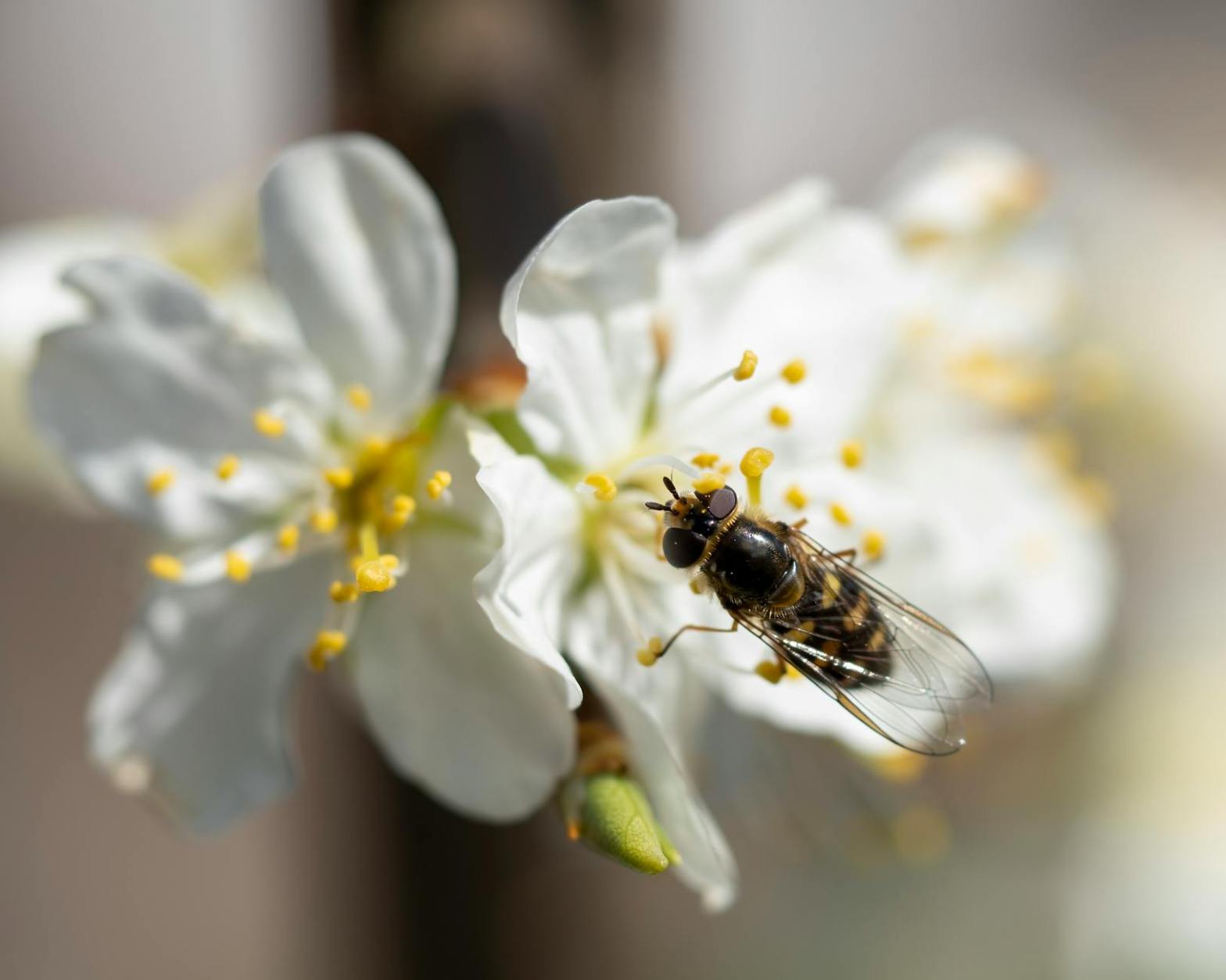
Bumble bees seem to know the way
by the sweet fragrance of being lost in love
to the last filament of nectar in a Rosa Ragusa.

One conscious breath, then another, trusting
in love and life, we are always together,
even after a dream comes to an end.

Michael J. LaFrancis is a trusted advisor, advocate, author and connector supporting individuals, groups and organizations aligning purpose and capabilities in service of their highest ideals. Writing poetry is a contemplative practice providing him with insight and inspiration for living a creative life. LaFrancis’ hobbies include landscape gardening, nature walks, collecting fine art and writing. He and his partner Sharon are co-authors of their autobiography: Our Wonderful Life.  They have two sons and have recently been promoted to being grandparents.

Embodied – a poem by Kellie Brown

Embodied

My hands
trace jagged wall seams,
grope bulky curtain folds.

My feet
prod loose floorboards,
nudge worn furniture.

My eyes
scan packed bookshelves,
peer within dark wardrobes.

My nostrils
sniff dank cellar air,
inhale musty attic dust.

My face
peeks through dense hedges,
lingers on a mirrored reflection.

I am searching for
a secret passageway,
a veiled threshold,
a forgotten alcove.

I seek fantastical places where
a trellis ascends to a magical garden,
a labyrinth opens to a bountiful orchard,
a litany leads a weary soul to solace.

Dr. Kellie Brown is a violinist, conductor, music educator, and award-winning writer of the book The Sound of Hope: Music as Solace, Resistance and Salvation during the Holocaust and World War II. Her words have appeared in Galway ReviewEarth & Altar, Ekstasis, Psaltery & Lyre, Still, The Primer, Writerly, and others. More information about her and her writing can be found at www.kelliedbrown.com.

Mary, Star of the Sea – a story by Abigail E. Myers

Mary, Star of the Sea

Father Kevin sat back in the kitchen chair and offered his most reassuring smile, conserved for the confessional and the sickbed, and the house was both. “Idolatry?” he echoed. “Mary Angela, you’re one of the most pious women I know.”

            She shrugged and looked out her window. Her gardens and those of her neighbors, separated by low lichened stone walls, overlooked the sea. “It’s still idolatry.”

            “Well, tell me the nature of this idolatry.”

            Mary Angela lifted her chin towards the sea, the thin tubes feeding oxygen into her nose sliding back as she did so. “Ronan is out there,” she said. “He promised me, when he was younger, that he wouldn’t swim alone. He used to go with his friend Fintan, sometimes almost every day. When he went off to the city, and Fintan went to university, they’d just pick up right where they left off whenever they were both back. At first light if that was all the time they had, in all manner of weather.” The story had animated her—she leaned forward, the tube to the oxygen tank almost taut for a moment. “But Fintan decided to stay near the university after graduation, and then, I don’t know, did they have a falling out or what—” She coughed, took a drink from a heavy goblet with a pattern of ornate cut-glass stars— “and when Ronan came back to be with me when I was getting sicker, I started catching him out there alone. In that frigid water. Not bothered a bit about it. And I say to him, You’ve been so good to me otherwise. Spare me this.” And then she leaned back in the chair, spent. “And I pray to Mary, Star of the Sea, what will happen to him without me? I should want to go, to be in the Divine Presence, and I just want to be here with him.”
            “Ah. I see.”

            “So I’ve made an idol of him. Abraham was willing to kill his son at God’s command, and I can’t even imagine leaving him behind, grown man that he is now.”

            Father Kevin adjusted the narrow purple stole, which represented the yoke of an ox, the yoke Christ said he took upon himself—my yoke is easy, my burden light. Was it? he asked himself. To have to convince a good woman with a terrible sickness and a son she loved desperately that it would be all right to die? 

Like so many of the young people these days, the lad came rarely to Mass. You were meant to be solicitous toward the young people, gentle and nonjudgmental. Well, you’re welcome anytime. We’ll always be here. And so was the sea, Father Kevin supposed, churning and yet immovable. 

            “If you think about this story as being about God’s love,” he said, “and you consider that God did not want Isaac to die, the story changes, I think. Abraham was surrounded by cultures that practiced child sacrifice, a horrifying thing of course—the God of Abraham assures him that he wants no such thing, that indeed the child he gave Abraham as a demonstration of his great love and faithfulness was not to be sacrificed, would grow to have children of his own and thus fulfill the promise God made in him. Perhaps this voice that had commanded Abraham to kill Isaac was not truly God at all—after all, angels appear to stay Abraham’s hand and deliver God’s true will, as often happens in these stories.”
            Mary Angela considered this, taking a long breath and letting it out in a sigh. “The last of the laundries closed a mere five years before I had Ronan, you know that?”

            “I do.”

            “A few years earlier and he might have been taken from me. But I raised him all on my own. Saved and saved to buy our little council house here, so I’d have something to leave him, something he could always call home.”

            “You did. And did a splendid job of it.”
            “Did I?” She looked out the window. “Why is he so sad, Father? Why does he say so little, why does he go off on his own so much?”

            “Perhaps he’s sad because his beloved mother is sick. Grief does funny things to people.”

            “Sure, but he was like this before I was sick. Maybe always, in some ways.”

            Father Kevin didn’t reply immediately, but he suspected she was right. He could sense the darkness that hung around the boy even on those few times a year he joined her for Mass: Easter and Christmas, the anniversary Masses for Mary Angela’s parents. Never outwardly rude, never so much as rolled his eyes. Shook hands and nodded after the Mass. But he never came to Confession, never took Communion, never lingered at the table when Mary Angela had Father Kevin round for tea even in better times. He lacked even that fire Father Kevin could grudgingly appreciate in each year’s batch of unwilling confirmands. 

“Even if you were to live fifty more years,” Father Kevin said finally, “could you pull him from the sea or from this great darkness? It is his to live with or his to leave behind. He’ll always be your boy, but he’s also a man. Perhaps the idol is not your son, but the belief that you should have, could have done more. This world is always ready to tell you you can’t measure up, that you could always do more. But this world will tell you that, no matter when you leave this world, no matter what you’ve done. Then you will pass into the truth that God will do the rest, and that God’s will is perfect in all matters.”

            “God cannot will for my son to—” She paused. “You know what I fear. It is still a mortal sin.”

            “We do not know what opportunities God might provide for repentance and relief. Think of how much you love your son, what you would do to save him—and now think of how much more perfect is God’s love, the love that sees you both and is responding to you both even now.”

            She looked away then, out over the garden and towards the sea again. “He’s coming out now,” she said. “Tell me what I should do.”

            Father Kevin took her hand. “Dedicate your Rosary tonight to Mary, Star of the Sea. When you consider the Sorrowful Mysteries, when you consider what she would have done to save her Son if she could have—remember that she could not, and she did not, and through this terrible suffering came the salvation of us all. Her actions were perfect even then. More is not required from you. Pray into the vision of the Star of the Sea, trusting that she sees you and your son and is looking after you both.”

            She nodded. “Father of mercy, like the prodigal son I return to you and say: ‘I have sinned against you and am no longer worthy to be called your child.’ Christ Jesus, Savior of the world, I pray with the repentant thief to whom you promised Paradise: ‘Lord, remember me in your kingdom.’ Holy Spirit, fountain of love, I call on you with trust: ‘Purify my heart, and help me to walk as a child of light.’”

Father Kevin lifted his right hand and made the Sign of the Cross. “Therefore I absolve you from your sins in the name of the Father, and of the Son, and of the Holy Spirit. May God grant you pardon and peace.”

            Mary Angela blessed herself just as the back door opened, and then clanged shut, and in loped Ronan, all six feet of him, loose-limbed and wet long-haired. “Mam,” he said. “Father,” he added with a nod. “Will you have some tea?”

            “Will I,” Mary Angela snapped. “Tell me, were you down there on your own again?”

            “No, Mam,” he said, the merest edge of irritation just barely audible in his soft, low voice. “Fintan came by. He couldn’t stay for tea is all.”
            “Ah, well,” she said. “How is he, anyway? I hadn’t seen in him so long, I thought you’d had a falling out.”

            “Fine. Will you have a cup of tea, then? Father?”

            “Oh, I suppose,” she said.

            “If you’re making some anyway, I wouldn’t mind,” Father Kevin said.

            “Have you had breakfast, Mam?”

            “No, I suppose I haven’t.”

            “Let me make you some porridge.”

            Mary Angela sighed. “He’s a good lad after all,” she said, in a way that was meant to be overheard. “Isn’t he, Father.”

            He patted her hand. “Raised to be.”

            She squeezed his hand back briefly, then looked out the window toward the sea as Ronan warmed the milk and set the kettle to boil. Father Kevin followed her gaze towards the shore, where her boy’s long footprints were already being washed away by the low waves.

Abigail E. Myers writes poetry, fiction, and creative nonfiction on Long Island, New York. Recent work appears with HAD, Discretionary Love, Tangled Locks, Farewell Transmission, Stanchion, Major 7th, and The Dodge, among other publications, and is forthcoming from JMWW and Atlas and Alice. Find her at abigailmyers.com and on Twitter/Bluesky @abigailmyers.

perhaps – a poem by Sister Lou Ella Hickman, OVISS

perhaps

it takes all of us
like countless trees creating a forest
to worship the Ineffable we all call Sacred
even the atheist
unknown even to him or herself
along with the indifferent mediocre lip server
everyone of whatever stripe and color
belongs in this circle of reverence
as trees belong to the earth
yet how much more this Great Mystery—
this Ineffable bends like a mothering willow
into our living and our worship


Sister Lou Ella Hickman, OVISS, has a master’s degree in theology from St. Mary’s University in San Antonio and is a former teacher and librarian. She is a certified spiritual director as well as a poet and writer. Her poems have appeared in numerous magazines such as America, First Things, and Emmanuel as well as numerous anthologies. Her first book of poetry, she: robed and wordless was published in 2015 and her second book, writing the stars will be published in 0ctober, 2024. (Both by Press 53) Five poems from her first book were set to music by James Lee lll entitled "Chavah's Daughters Speak" and was performed in six major national concerts from 2021 to 2024.

Living with AFib II – a poem by Janet Krauss

Living with AFib II

The one remaining sun-splattered leafed tree
rushes towards me waving, “Open the window,
feel the fresh, late November air lift you up,

winnow through your hair, wash your face
with the next sweep of wind, wash it with a scent
of the sea which will lift away your troubled breaths

and fling them across the boundless sky."


Janet Krauss, after retirement from teaching 39 years of English at Fairfield University, continues to mentor students,  lead a poetry discussion at the Wilton Library, participate in a CT. Poetry Society Workshop, and one other plus two poetry groups. She co-leads the Poetry Program of the Black Rock Art Guild. She has two books of poetry: Borrowed Scenery (Yuganta Press) and Through the Trees of Autumn (Spartina Press).  Many of her poems have been published in Amethyst Review, and her haiku in Cold Moon Journal.

Child of Light – a poem by Rupert M Loydell

Child of Light

the flesh
the blood

the bread
the mouth

the want
the why

the what
the need

the dream
the light

the silence
the song

the hope
the doubt

the guilt
the hurt

the fallout
the damaged

language
of belief


Rupert M Loydell is a writer, editor and abstract artist. His many books of poetry include Dear Mary (Shearsman, 2017) and The Return of the Man Who Has Everything (Shearsman 2015); and he has edited anthologies such as Yesterday’s Music Today (co-edited with Mike Ferguson, Knives Forks and Spoons Press 2014), and Troubles Swapped for Something Fresh: manifestos and unmanifestos (Salt, 2010)

Hallowtide – a poem by Alicia A. McCartney

Hallowtide 

For Don

Fall’s first flame faded fast.
The only colors now are tired evergreens,
straw-snapped cornstalks in empty fields.

After the hallow of All Soul’s, nights grow long
and frost wakes us, warns
that winter is coming for us.

And we are never ready
for the unexpected summons when
the unsayable breaks our voices.

We once broke bread together,
and now his departure breaks us.

Each lost leaf a grief
and a relief
for the tree’s bare bones
to be reclothed
white with snow.

Alicia A. McCartney lives with her husband and daughter in southwestern Ohio, where she writes and works as a professor of English literature. Her poetry is forthcoming in Ekstasis.

November in Nazaré – a poem by Heidi Naylor

November in Nazaré

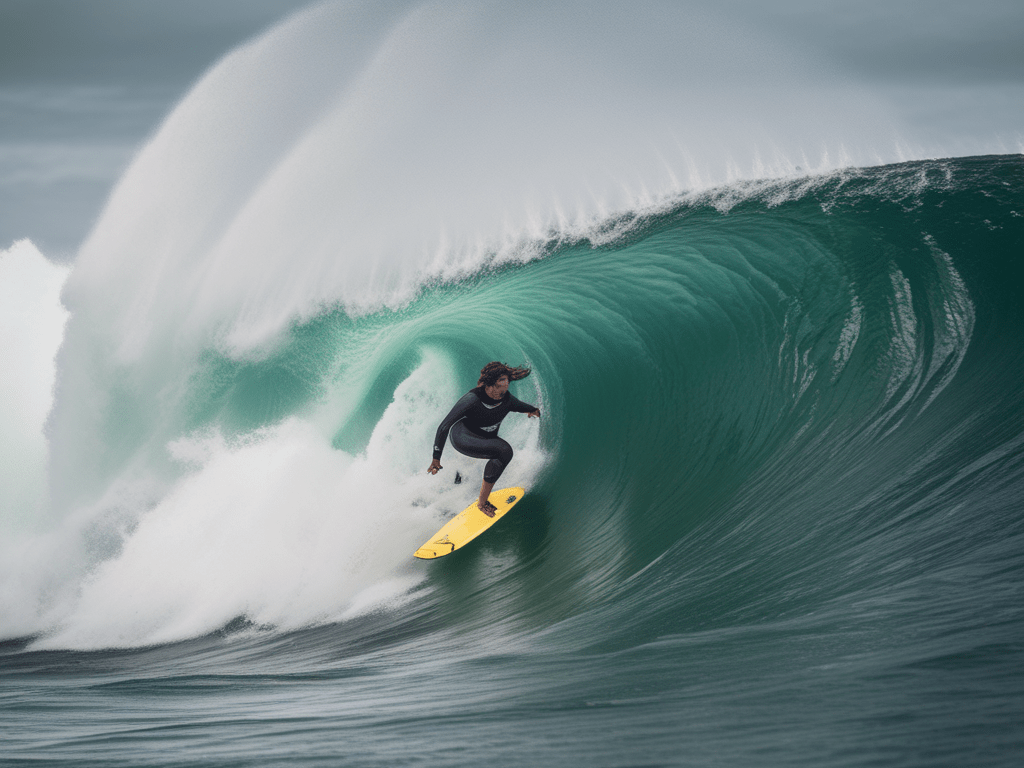
Maya Gabeira is towed to the top of a 75-foot bomb.
Go, go, go! she shouts to Carlos, her jetski driver; and she lets the rope fall.

Carlos skis the crest, watching her drop, waiting for her take hold, to sketch a creamy zigzag down a silken concrete wall.

She’s carving, shacked and slotted, fingertips brushing that wall, body and board in a curving, serpentine dance.

Oh It’s way more than pretty, Maya charging the bumps inside the greenroom, the tube, under the frothy curl as its thick crest crumbles over itself.

Pitching and riding to the outback, beneath and beyond the peel,
skating the end of the barrel.

Times she’ll wipeout, be rolled underwater, washed through pounding surf: tumbling
rocks and roiling sand. Maya’s been CPR’d back to life, she’s been hospitalized.

This is no cakewalk
but a threadthin dance through a blistering avalanche.

For today, her glossy head emerges. Up pops her board. Carlos zips round on the ski

clasps her hand and pulls her up; they watch for another pointbreak
heart-stopping wave. They climb.

Holding the tow rope, Maya slips off the back of the ski.
She lets the rope fall.

I don’t know how far a prayer will reach, or sometimes how near.

A baby, twisting—just this morning—from determined crawl

to a wobbly seat on the carpet,
sweet arms lifted in pleasure—
delicious delight on the video chat.

Five little girls playing across the street, staccato fade of their twilight voices
inventing the future.

My neighbor with a deep and private sorrow: estrangement, daughter, money—still,
she drops by my house with raisin bread.

The sidewalk icy. Air chastised with wind.
Through the window I watch as she chats up the postman.

That slick, light magnetized towrope. Attachment and tether. Safe harbor. Quiescence.

Stagnation.

Drop it.
Drop it now.

Heidi Naylor writes and teaches in Idaho. Her work has appeared in the Washington Post, the Jewish JournalPortland(magazine of the University of Portland), Exponent II, the Idaho Review, New Letters, Dialogue, Eclectica, and other magazines. She has a recent fellowship in literature with the Idaho Commission on the Arts and served as Writer (Poet) in Residence at the Marian Pritchett School. Find her at heidnaylor.net.