Now and Then – a poem by Lee Kiblinger

Now and Then
“If things are real, then they are there all the time.”
from C.S. Lewis’s The Lion, The Witch, and The Wardrobe


. . . so at the wardrobe she stretched
her hands into the thick
of fluffed fur,
and buried her face
in its endless layers,
where warmth hung
and she believed
in the snug
of deep-timbered
darkness,
every limb,
breathing
the songs
of wooded worlds

while at this wood desk I reach
for what is hung
above what I pen,
a lily
painted
in oyster white
wrapping me in limb,
a robe of petals
unfurling
its golden heart
within the whimsy
of grassland wind

beneath the same skies

trusting light
to throw wide
today’s leaves

with tomorrow’s
then . . .

Lee Kiblinger is a late blooming poet from Tyler, Texas who graduated with a B.A. and M.Ed. from Vanderbilt University. She has taught literature and writing courses for several years. She spends time traveling with her husband, laughing with her three adulting children, grading essays, playing mahjong, and delighting in words with Rabbit Room poets. Her work can be found in The Windhover, Solum Journal, Heart of Flesh, Ekstasis, Clayjar Review, The Way Back to Ourselves, and others. She writes at http://www.ripplesoflaughter.com.

How Writing Can Be a Spiritual Practice – an essay by Diana Raab

How Writing Can Be a Spiritual Practice 

by Diana Raab, PhD

Spirituality is the search for truth in one’s life in the interest of being happy. Using writing as a spiritual practice can connect us to what seems most right for us, personally and professionally. It can also help us identify our life purpose.

One way to begin writing as a spiritual practice is to write about a life-changing experiences. When I look back at my own life experiences and reflect on what has truly transformed me, challenged me, or made me feel more aware or more alive, the events involved the death of loved ones, relationships with others, being parent, friendship or love relationship. It’s been said that people come into our life for a reason and exploring the reason is something that could be done if using writing as a spiritual practice.

Most writers like myself will confess that they write because they have to write, not necessarily because they want to write. We write out of necessity because it either makes us feel better or we want to share our stories with the world. 

My beginnings as a writer began when I was ten years old. I was the only child of immigrant parents who were gone working all day. My grandmother was my beloved caretaker while they were at work, and on Labor Day in 1964, I was at home with her. 

It was a hot Indian summer day common to the season. We lived in a suburban community along with other immigrant families and their children, so I was excited when a friend invited me to go swimming in her pool. With a child’s enthusiasm, I knocked on my grandmother’s door to ask for permission. There was no answer. I tried several times, but still no answer. I called to her, but there was only silence. I looked inside the room to see my grandmother, completely still, in her bed. Trembling with fear, I phoned my parents at their store. They came home and before I knew what was going on, my beloved grandmother was being carried down our creaky wooden stairs on a stretcher and put into an ambulance. I never saw her again. She had taken her life.

My mother knew I was grieving and wanted to help me through the trauma of my loss. Reaching out to therapists wasn’t done in those days, so she bought me a blank, red leather journal with a saying by Kahlil Gibran at the top of each page. 

For many months after my grandmother’s death, my mother continued to encourage me to write down my feelings. Having been an English major in college, my mother intuitively knew that this was the best way for me to deal with my grief. It was also the time before psychotherapy went mainstream.

For me, writing was a spiritual practice back then and continues to be a very important part of my life today, six decades later. Little did I realize that my mother’s inclination to buy me a journal would set the stage for my lifelong passion for writing. 

 Coincidentally, around that time, my mother gave me my grandmother’s hand-typed journal telling of her early life as an orphan in Poland during and after World War I. It was the greatest gift a granddaughter could ever receive. I devoured every word and used it as a part of my MFA thesis, which turned into my first published memoir, Regina’s Closet: Finding My Grandmother’s Secret Journal.

In that book, I dealt with the two major turning points in my life: losing my grandmother and then discovering her sacred journal. The journal was sacred because of its role in my understanding of my grandmother and why she might have taken her life at age sixty-one.

Studying my grandmother’s life helped me become empowered by her experience and take on the role of a woman warrior. I realized that she had been a survivor for most of her life. 

In continuing my path of writing as a spiritual practice, I returned to school to get my PhD, where I researched the healing and transformative powers of memoir writing. Basically, my research examined how life-changing experiences have inspired some esteemed authors to write the narratives of their lives. I learned that writing one’s story is a way to reclaim one’s voice, share a family secret, or simply relate a personal story to others. 

Writing as a spiritual practice is very liberating and satisfying, because when we release our secrets, we achieve a level of freedom that gives us more control over our lives. Freedom comes in many forms. When I was diagnosed with my first cancer in 2001, I journaled my way to recovery. One thing I acknowledged was the brevity of life. I realized that there is no time like the present to seek bliss by writing down the experiences that brought us joy. I also acknowledged that having toxic people in my life was a bliss deterrent, so as much as possible I tried, and still try, to surround myself with inspiring, positive, and loving individuals. 

During my own journey of writing as a spiritual practice, I’ve learned that I’m not alone in my practice; many writers, such as Anaïs Nin, have used writing in this way. In my own case, pivotal or life-changing events have served as stepping-stones for either new writing projects and/or self-discovery processes—an example being my book, Writing for Bliss.

In my latest book, Hummingbird: Messages from My Ancestors, a memoir with reflection and writing prompts, I continued my passion for writing as a spiritual practice. I wrote the book during the Covid-19 pandemic when there was a visiting hummingbird outside my writing studio. I came to learn that it was my grandmother returning to deliver me messages.

Overall, what I’ve learned as I use writing as a spiritual practice—and what I also teach others—is that this very personal creative process can bring about a sense of wholeness and, ultimately, a sense of bliss . . . which is what we all ultimately strive for in this life.

Diana Raab, MFA, PhD, is a memoirist, poet, workshop leader, thought-leader and award-winning author of fourteen books. Her work has been widely published and anthologized. She frequently speaks and writes on writing for healing and transformation. Her latest book is Hummingbird: Messages from My Ancestors, A memoir with reflection and writing prompts (Modern History Press, 2024). Raab writes for Psychology Today, The Wisdom Daily, The Good Men Project, Thrive Global, and is a guest writer for many others. Visit her at: https:/www.dianaraab.com. Raab lives in Southern California.


Eastbound – a poem by J.A. Lagana

Eastbound 

Moon-lit pavements, white lines
like dime store rhinestones.
Another mile or two to go. The drive made bearable
by the incremental presence of street lights—
silver-tipped,
they line the route,
high as treetops
from some sacred place.
Pensive metal,
their top-caps & cameras,
dusted in snow.

J. A. Lagana’s poetry has appeared in Atlanta Review, Burningword Literary Journal, Cider Press Review, Heron Tree, Rattle, and elsewhere. She is the author of the poetry collection Make Space (Finishing Line Press, 2023) and a forthcoming chapbook Edge of Highway. She was a finalist for the 2023 Julia Peterkin Literary Award in Poetry. An avid bird-watcher and knitter, she is a founder and former co-editor of River Heron Review and lives in a Bucks County, PA river town where she raised her family. Learn more at jlagana.com.

Om – a poem by Mike Wilson

Om

Blood pulses in time, they say.
I say, What’s this thing called time?

Motion that carries a tune

Mind flutters, reed in a saxophone
of honeyed brandy.

The string between my forehead
and my viscera is taut.

Love draws a bow across my heart.


Mike Wilson’s work has appeared in magazines including The Gravity of the Thing, Still: The Journal, Agape Review, Dappled Things, THINK: A Journal of Poetry, Fiction, and Essays, Willawaw Journal, and Amethyst Review. He lives in Lexington, Kentucky

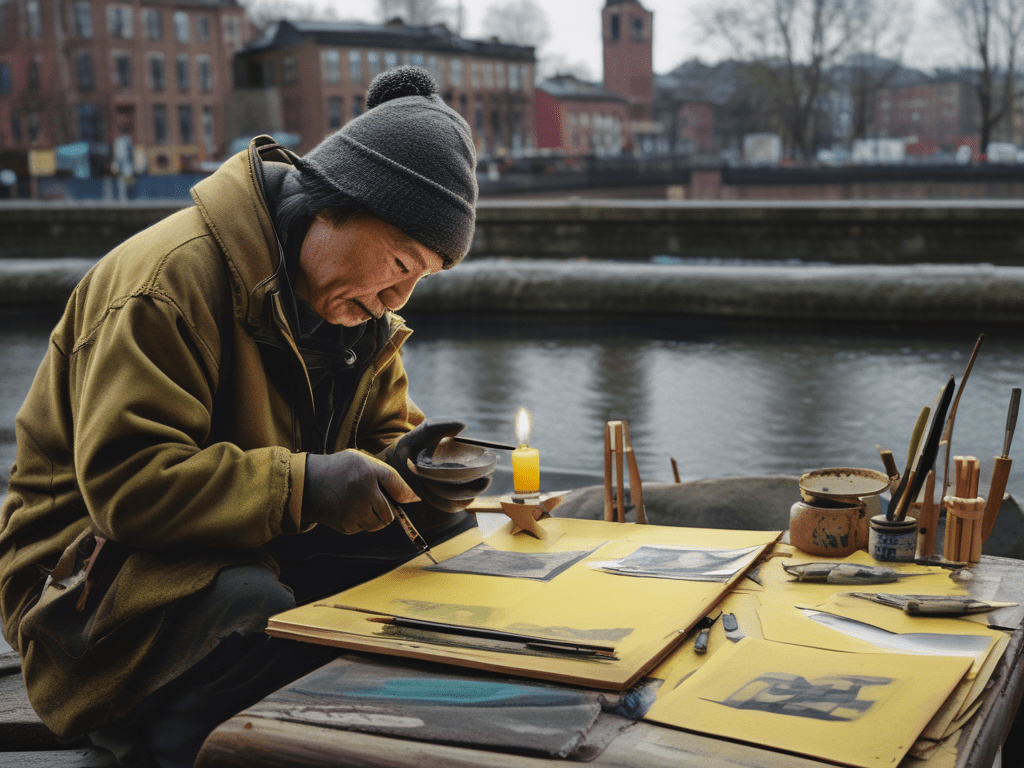
Chinese Painter at the Portland Waterfront – a poem by Heidi Naylor

Chinese Painter at the Portland Waterfront

Bent, bundled against damp and cold
Knit hat pulled low past a hoodie
Coat atop that, at his elbow an old

yellow lamp, and inkpots, for outline and fill.
Half-gloved grasp on his tiny black, tooth-marked
brush, with its single sprouted queued tendril

now quickswept in expert flourish, to whisker
his lobster, then shade claws of green
to ochre and mustard, now glazed in a blister

of pink. A fold of rust next, charcoal, ash, scrim of waterwash
and lift the basket, break it through a path of honeyed moonlight
into a junkboat, beneath which silver schools of fish flash

westward toward the Lunar Year
our shuffling crowd has long, so long forgotten is here.


Heidi Naylor is from Pittsburgh, Pennsylvania and made her way to Idaho in 1990. Her story collection, Revolver, was published by BCC Press in 2018. She’s a two-time Pushcart Prize and Best New American Voices nominee and received a fellowship from the Idaho Commission on the Arts. She loves Idaho trails and her family, including two little granddaughters. Find her at heidinaylor.net.

The Parables of Perspective, Enlightenment, and Longevity – by Robert Donohue

The Parable of Perspective

A man once had a friend, and this friend was behind on child support, had defaulted on a loan co-singed by his brother, and cheated on his fiancé, but he liked to drink beer and talk about science fiction, so the man thought he was a good friend. One day the friend asked the man for six hundred dollars. The friend said the man was his only salvation, because he couldn’t go to his untrustworthy brother, or devious fiancé. The man gave his friend the money without hesitation, and that was the last he ever saw of him. While drinking alone, with no one to talk to, the man often wondered why his friend had changed.

The Parable of Enlightenment

A scholar had awoken from a dream and wrote down what he had been shown about the lamp of the moon, and the lamp of the sun. In his excitement he overturned his oil lamp, which broke, but he didn’t care, because it only cost a penny.

The Parable of Longevity

The administrator at the department of Social Security who signed the checks for the oldest man in the country was so impressed by this man’s longevity that he made a pilgrimage to his home to learn his secrets. When the administrator made it to the oldest man in the country’s house, high in the mountains, his son said he wasn’t home. The administrator said he would wait, but the son said the man had been away for years. “Why did you continue to cash his checks?” The administrator demanded. The son answered: “He’ll want the money when he comes back.”

Robert Donohue‘s poetry has appeared in Better Than Starbucks, Freezeay Poetry, Grand Little Things and Oddball Magazine, among others. He lives on Long Island, NY.

From Mother, From the Soil – a poem by Carla Schwartz

From Mother, From the Soil

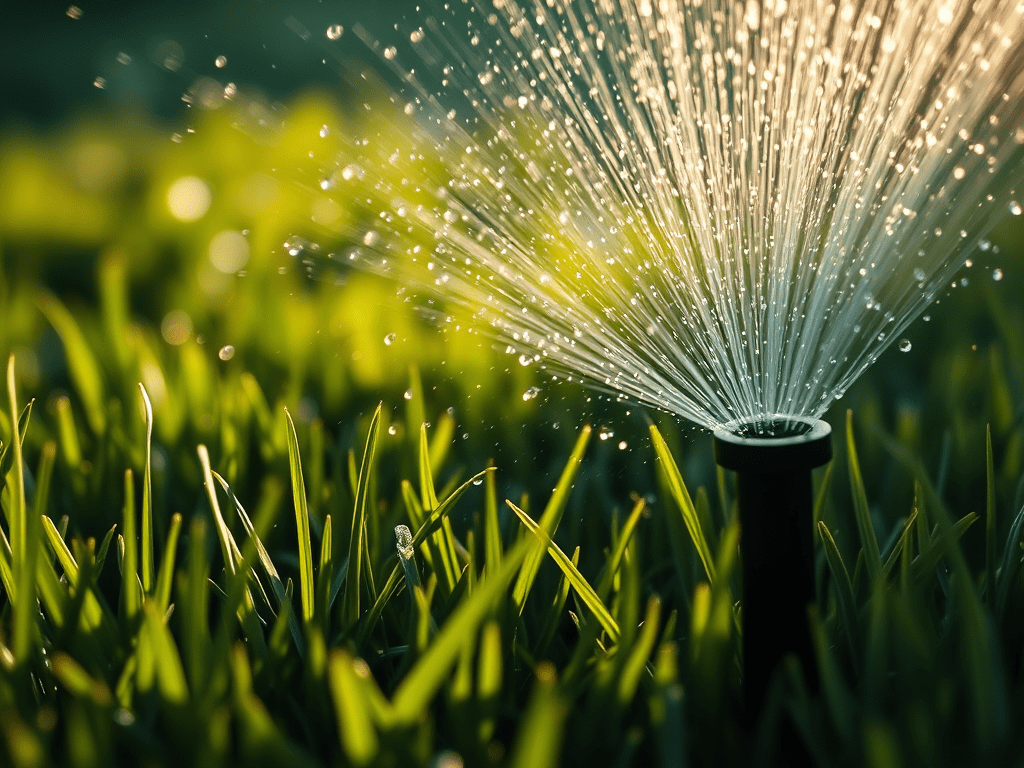
Your lawn, dear daughter, your lawn—
if you don’t water, will become wasteland.
Don’t forget those sprinklers I bought for you—
use them.

a drought here
global warming
the soil cracked, dried

I couldn’t help but listen along with you
to that book—The Invisible Bridge—
while you hauled wood chips
around your yard.

I cried too when I heard Gleiwitz, 1938.
I’ll never forget the flames, the broken glass.
I was just so young then,
but look here—my tears still.

Looks like you chipped that spout
on that teapot I made for you. Too bad
your repair didn’t take. Just pitch it
into your garden—feed it clay.

I want to squeeze clay between my fingers
again—wet the clay
and rub on slip as it dries.
I want to make you a new pot.

This time I would get it right—
knead out all the air,
bake it not too hot,
not too long.

But I’m trapped—
I can’t move through this packed dust—
I’m rooted like the invasives
you battle with.

I know how hard you try
(and don’t) to maintain all this—
I love you Dear Daughter
even though you fail at lawn.

Carla Schwartz’s poems have appeared in The Practicing Poet and her collections Signs of Marriage, Mother, One More Thing, and Intimacy with the Wind. Learn more at https://carlapoet.com, or on all social media @cb99videos. Recent/upcoming curations: Contemporary Haibun Online, Inquisitive Eater, Modern Haiku, Paterson Literary Review, New-Verse News, Spank the Carp, Drifting Sands, and The MacGuffin. Carla Schwartz received the New England Poetry Club E.E. Cummings Prize.

Stanzas for Edith Stein – a poem by Matthew Pullar

Stanzas for Edith Stein

Essentially, it is always a small, simple truth I have to tell how to go about living at the hand of the Lord.
(St Edith Stein)


Like so many of your century, you began
with complexity, with the way
the cosmos of self unspooled
at the terrors of the human heart on display.

The great certainties of the past crumbled
like lofty ruins, like those temple pillars
at Samson's last suicidal burst of force.
What remained? What lingered in the rubble?

Not knowing even yourself, you asked:
How could one self ever know another?
And from problem to problem you roamed, until
you found the smallest knowing nook to curl up in his hand.

How you remained, coiled in grace, in love,
when all about you tangled in hate,
was your life's simplest, hardest work,
the living work of your death, and ours.

Matthew Pullar is a Melbourne-based poet. In 2013 he was winner of SparkLit’s Young Australian Christian Writer of the Year for his unpublished manuscript, “Imperceptible Arms: A Memoir in Poems”. He has had poems published in Ekstasis, Poems for Ephesians and Reformed Journal.

A Good Day for God – a poem by John Claiborne Isbell

A Good Day for God


Today has been a good day for God.
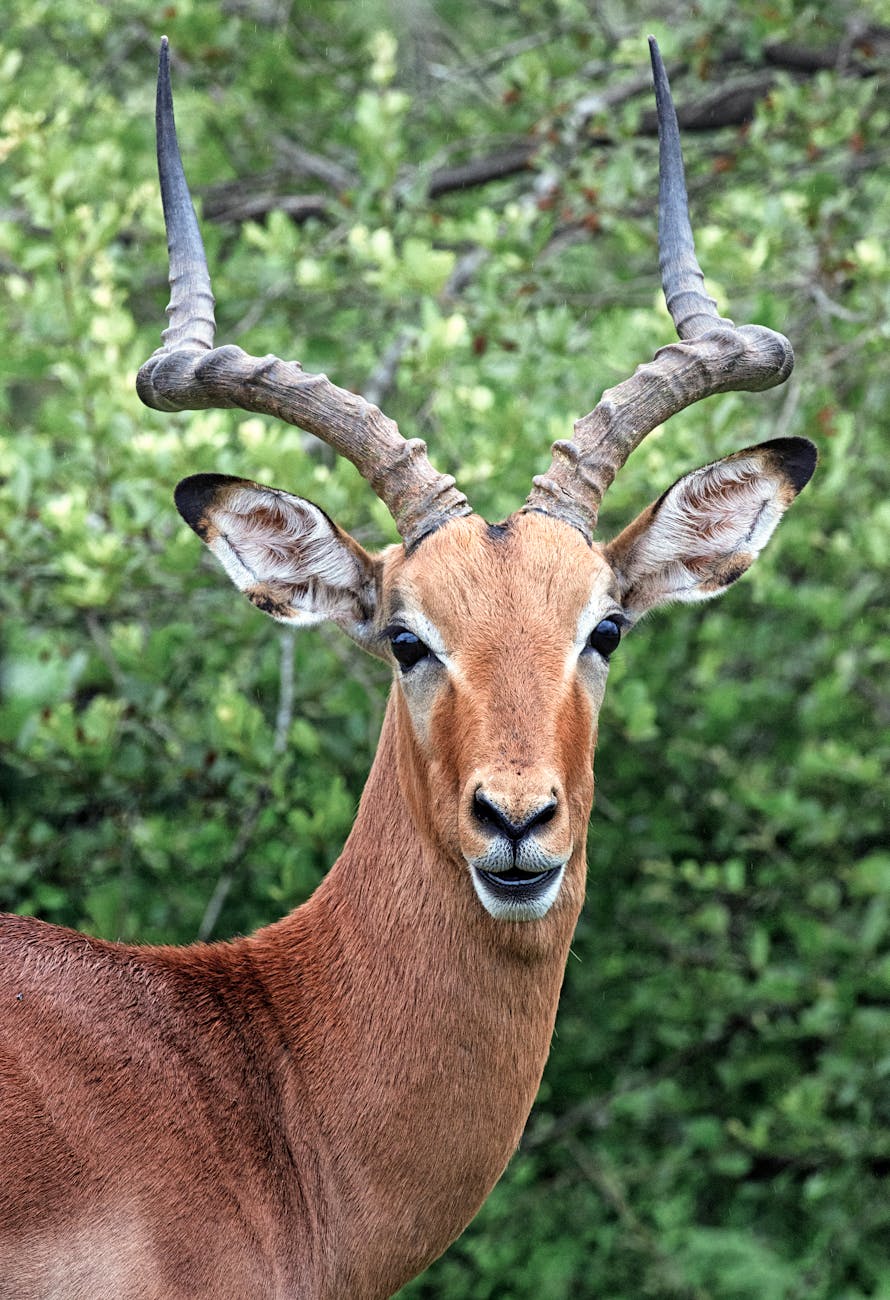
He has created colors and the antelope,
cafés and railway sidings and overpasses.

A billion billion leaves are singing His praises,
dancing in the wind that He unleashed.
He’s listening to Miles Davis.

And God has decided to sing.
What He sings is this:
“I am the alley and the cat,

the baseball and the baseball bat.”
With that, He is silent again.
And the planets spin,

and the galaxies spin,
and every electron in this universe
spins on its axis.


John Claiborne Isbell is a writer and now-retired professor currently living in Paris with his wife Margarita. Their son Aibek lives in California with his wife Stephanie. John’s first book of poetry was Allegro (2018); he also publishes literary criticism, for instance An Outline of Romanticism in the West (2022) and Destins de femmes: Thirty French Writers, 1750-1850 (2023), both available free online. John spent thirty-five years playing Ultimate Frisbee and finds it difficult not to dive for catches any more.

Whiteout – a poem by Laurie Didesch

Whiteout

The gray sky stretches endlessly like a convoy, and yet, the birdsong
is boisterous this morning, as if the crocuses were in bloom. Instead,
bands of snow close ranks. They form a wall—I walk through it like
a ghost. So too the spirit travels unfettered in this world. The large
flakes coat my lashes. They form epaulettes on my shoulders. The
lively warbler continues her refrain. The sun peeks above the clouds

to marvel at the sound before returning to beaches where the bathers
sigh in relief. They rub on oil. Here, the performer insists on a spring
that is yet months away. The New Year countdown was only yesterday.
Suddenly, the bird vanishes into the whiteness. A glow like a lantern
bobs up ahead: Is it a porch light or a street light or the bird in flight?
Who can tell on such a day? My own heart rustles like a pair of wings.


The poetry of Laurie Didesch appears or is forthcoming in Ibbetson Street, The Comstock Review, The MacGuffin, California Quarterly, Rambunctious Review, Third Wednesday, Young Ravens Literary Review, The Ravens Perch, Stone Poetry Quarterly, Adanna Journal, The Rockford Review, Westward Quarterly, Bronze Bird Review, The Awakenings Review, and more. Her work also appears in anthologies on Memory and Writing, among others. Her awards include being chosen to attend a juried workshop given by Marge Piercy. Laurie lives with her husband Alan and their three cats in Illinois. She is currently working on her first book.