A poem from the Shatakatraya (“The Three Hundreds”) of Bhartrihari – translated by Louis Hunt

A poem from the Shatakatraya

What’s the point of the Vedas, received traditions,
the reading of ancient tales and learned treatises?
Why these religious rites whose only fruit
is a heaven as narrow as a village hut?

Compared with that alone which gives admission
to the soul’s blissful innermost dwelling,
which burns in its fire the burden of suffering,
all the rest is merely a merchant’s haggling.

The Shatakatraya is a collection of roughly three hundred poems divided into three sections on worldly wisdom, erotic love, and ascetic renunciation respectively. They are single-stanza poems written in a variety of meters, ranging in length from 32 to 84 syllables. Sanskrit meters are quantitative, like Greek and Latin meters, and impossible to imitate in English. I have chosen to use a basically iambic meter with lines of varied length. These translations are obviously not literal, but they hew as closely as possible to the rhetorical and metaphoric structure of the originals.

Louis Hunt taught political theory at James Madison College, Michigan State University. He has published original poems as well as translations from Sanskrit in a variety of print and online journals including The Rotary Dial, Snakeskin, Lighten up Online, Metamorphoses, The Brazen Head, Interpret and The High Window. He is currently working on a volume of translations from the Sanskrit of Kalidasa, Bhartrihari and Nilakantha Dikshita.

Dusk – a poem by Philip C. Kolin

Dusk

Dusk, that bridge between the light
and the world of voles, ferrets, bats and hawks.
No one can hear the miracle
of the great sun dissolving into mists
or slipping over those distant
honey-colored hills. For most of us
dusk comes down to drawing
the curtains as wonder itself flares out
as the trees tether the sun’s last rays.

But isn’t dusk a prayer? The time
when priests across the Levant
beg for the return of light in the fullness
of time? When Jews praise God for dusk
and thank him for the night’s peace?
When Muslims hearken to the muezzin's Maghrib,
that last call at the eastern end of the day.

Also the time when boys in old Chicago
neighborhoods played a game, the winner
shouting, “First to see the streetlights on.”
Dusk’s sad knell.


Philip C. Kolin is the Distinguished Professor of English (Emeritus) and Editor Emeritus of the Southern Quarterly at the University of Southern Mississippi. He has published over 40 books, including twelve collections of poetry and chapbooks. Among his most recent titles are Emmett Till in Different States (Third World Press, 2015), Reaching Forever (Poiema Series, Cascade Books, 2019), Delta Tears (Main Street Rag, 2020), Wholly God’s: Poems (Wind and Water Press, 2021), and Americorona: Poems about the Pandemic (Wipf and Stock, 2021).

The Thin Places – Gunwalloe – a poem by Viv Longley

The Thin Places - Gunwalloe

I found it by chance.

Down through the heather
holding hard to the cliffs.
Lace topped crashing seas
thundering into the rocks then
smoothing over the creased sand
to just reach my feet.

High, rain-washed skies
white over the rim of the world,
spin drift salting my hair,
wind made sharp with grit
burning into my face.

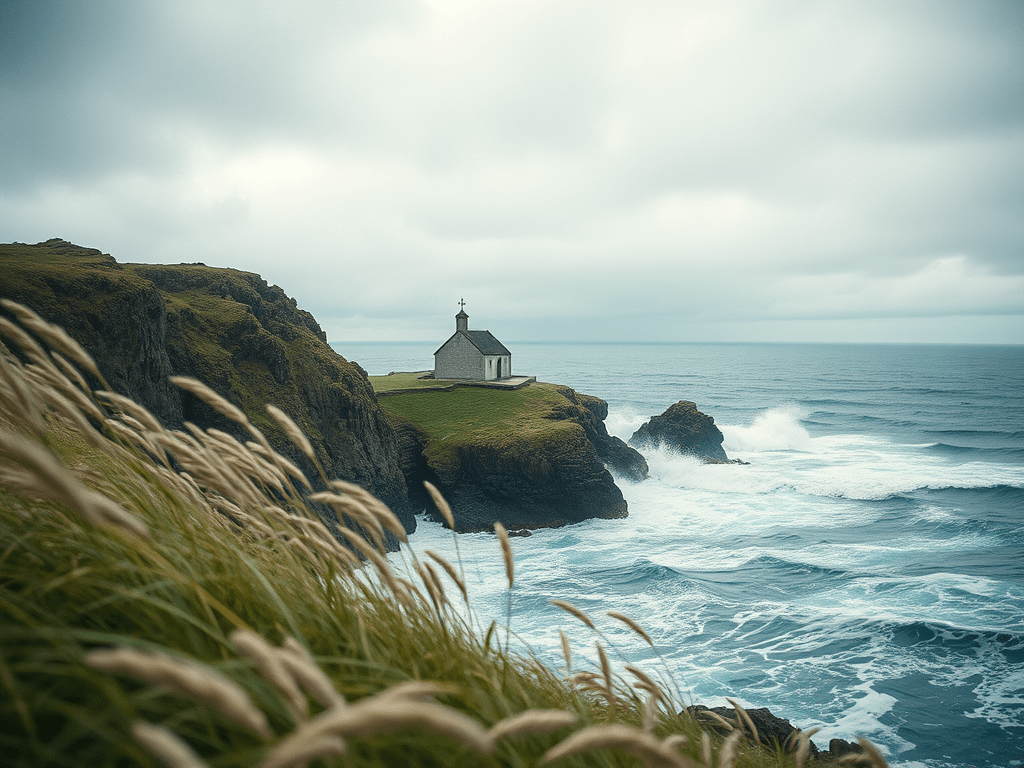
I turned away and saw a chapel
huddling behind the marram grass –
doors held open against the gale.
Plain Norman arches,
a wooden cross on a starched white cloth.
The prayers and pleas of centuries soaked into its stones –
a thin place resounding with quiet calmness
whilst the ocean raged.

Rooted in the niche of the bay
I let its solid affirming presence hug me, hold me,
open me up
to listen quietly,
and just be.

I am steadied, resolve is reformed
to take up my yoke again,
the load lightened.
Ready again to turn
and brace.

Viv Longley has been writing for her own pleasure since she was a child. Later in life she undertook an MA in Creative Writing at The Open University, specialising in poetry. As well as having one collection (Tally Sheet, Currock Press, 2021) she is undertaking a number of collaborative publications, notably, Daughters of Thyme. She is also preparing a second collection of her own and a number of essays – the latter to be called I am in a Hurry. ‘Now nearing my 80’s, you just never know how much time you have left!’

carry the dark – a poem by Jody Reis Johnson

carry the dark       

carry the dark
across the desert night
devoid of comfort
devoid of life
drag your body
your dry bones
over endless, starless dunes
carry the dark
for it must be borne
though water and rest
only cruel mirages
just beyond reach
still
carry the dark
until finally
emptied out
brought to your knees in the sand
your dust-strangled cry
breaks open the heart of the world
and you are carried
then gently laid
at morning’s doorstep

Jody Reis Johnson is an emerging poet from St. Paul, Minnesota, whose writing comes out of a contemplative practice of silence. Her essays and poetry have appeared in a variety of periodicals including Bearings, Amethyst Review, and Middlebury Magazine. Jody is a retired mental health professional who teaches contemplative practices, facilitates retreats, and provides spiritual guidance to individuals. She enjoys travel, cooking, and surfing with her family during winters in Hawaii.

Geese – a poem by Laurie Didesch

Geese

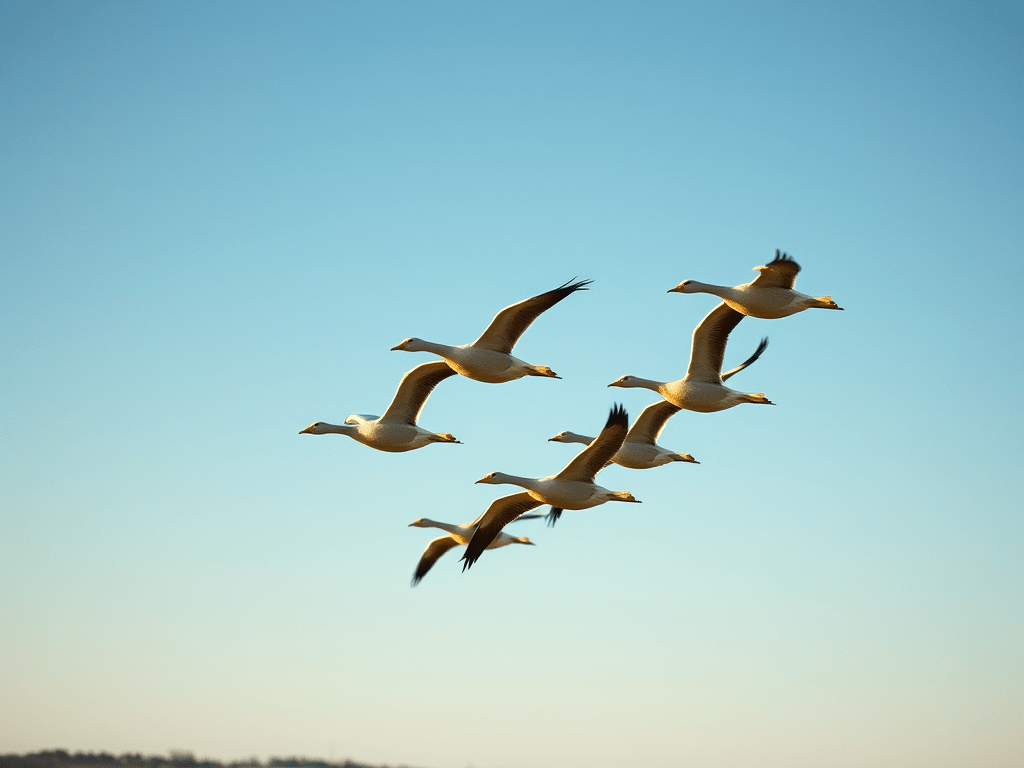
Alone, I am driving down a rural road. Suddenly, geese converge
from every direction. As I continue, they stay within my view.
Although miles high, they are nearby. Perhaps they are illusion.
The remote location, the expansive landscape might affect my
observations. As if on cue, they come into formation. Then they
float, no motion at all. They are still but do not fall. They remain
aloft longer than seems possible. Yet, they are calm. Then, they

slowly flap their wings, the span of which must have been con-
sidered when they took up position. Such instances widen our
perspective. We access life in another dimension. The geese as
a group point due north. We all have places we hope life takes
us. And we prefer to travel with ease. These possibilities are
always present. It is a matter of perception, a chosen direction.
In a moment, the geese are in the distance, beyond my vision.


The poetry of Laurie Didesch appears or is forthcoming in Ibbetson Street, The Comstock Review, The MacGuffin, California Quarterly, Rambunctious Review, Third Wednesday, Young Ravens Literary Review, The Ravens Perch, Stone Poetry Quarterly, Adanna Journal, The Rockford Review, Westward Quarterly, Bronze Bird Review, The Awakenings Review, and more. Her work also appears in anthologies on Memory and Writing, among others. Her awards include being chosen to attend a juried workshop given by Marge Piercy. Laurie lives with her husband Alan and their three cats in Illinois. She is currently working on her first book.

Reservoir Gods – a poem by Sharon Israel

Reservoir Gods


1.

We will meet in the afternoon
when the air is flavored with cardamon.
We will drink to the lamp that lights us.

2.

Anchors moor ships and have curved parts.
We will hear the ship’s creak and sailors’ voices
like echoes in a cavern.

3.

Lamps dim with faint light.
The earthmover will nod its head.
We will glow like red ants,
like far away beacons, like
a diamond ring lost in a storm.

4.

The earthmover toyed
with Slide Mountain.
Grasshoppers gathered
in a circle on emerald moss.

5.

Myles was afraid of Easter Island
but studied the statues diligently.

Stan saw eagles fly over Slide Mountain
and thought they were reservoir gods.


6.

Everyone’s quiet now. Blackbirds eat the lawn.
I don’t know why the tomatoes haven’t ripened.
I caught a harvestman and released him in the garden.
Tim knocked at the side door and invited us to his concert.
A bat squeezed my arm like a blood pressure machine.

7.

You are the rabbit that ran in the garden.
You stared at the throats of those nesting hummingbirds.

You were the rabbit that screamed at the knife.
I took the knife and threw it in the river.

You swam from the poisoned well.
You ate golden apples picked from phantom trees.

The orchard was forgotten as you burned every field.
I stood in the archway and imagined I saw you.

8.

At any moment, fish will leave the planet.
At any moment, wild thyme will cover the earth.
Mint will consume the village at any moment.
The earth can stop spinning at any moment.
I will fall asleep any moment now.

9.

Rabbitfish and Parrotfish nibble on a purple coral.
Later, they dart through another coral,
Half purple and half white on the ocean floor.

10.

I love the way stone people
look ahead, heads warmed
by the old sun. Their feet
buried deep in the earth.

I’d be scared to walk past them
after dark. Are they looking
for their gods? Have their gods
abandoned the island?

11.

Pyramids are tombs,
yet solar panels reflect the sun.
Everything shines like Abraham.

12.

T Rex has small hands
though the ocean is deep.
I am a fugitive from the Talmud.


13.

I will say yes to the grape, yes.
Yes, I will shout against thirst, yes.
I will try to smash the glass
against the wall. Yes. Glass
fragments will spell out yes.


14.

We will stand up straight
and dust our loved ones’ photos.
My father in Forest Park. Green
landscape, a drained pond.


15.

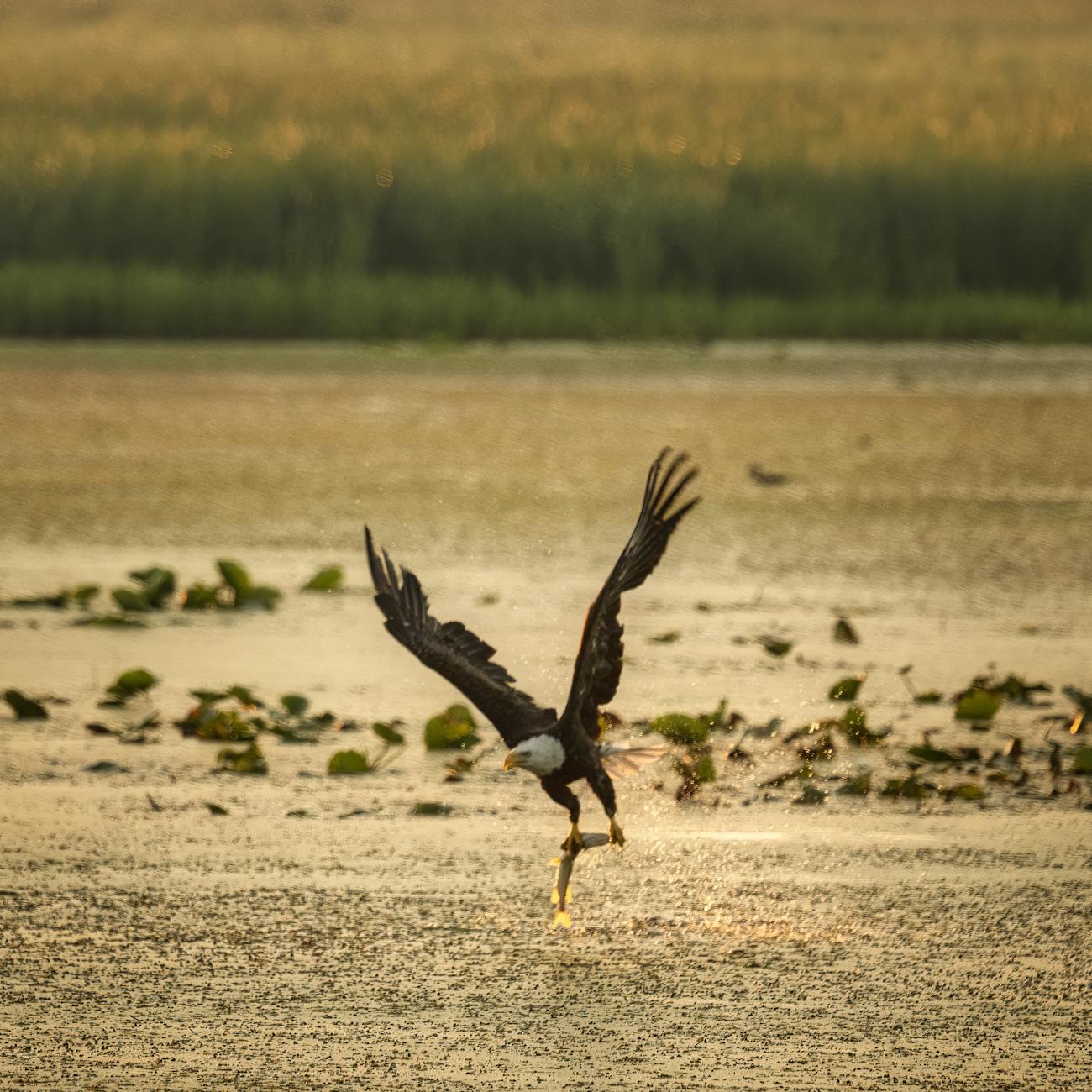
I love eagles.
I see them fly over Slide
Mountain. I saw one
in a tree off Barkaboom Road.
Does anyone think they are secret
reservoir gods, cold like the water,
looking for prey? Eagles know
how to be beautiful.
Heavy heads, strong beaks,
perfect talons, gold eyes.
I love them.


Sharon Israel, a Sephardic-American poet, was an early recipient of Brooklyn College’s Leonard B. Hecht Poetry Explication Award, was nominated for “Best of the Net” and won Four Lines’ 2020 winter poetry challenge. Her chapbook Voice Lesson was published by Post Traumatic Press. Sharon’s work has most recently appeared in Loud Coffee Press. Sharon hosts the radio show and podcast, Planet Poet-Words in Space, on WIOX 91.3 FM in the Catskills (available on YouTube Music, Spotify and Apple). Sharon is a member of the sound/poetry duo OrphicMix with composer Robert Cucinotta. Visit Sharon’s website Sharonisraelpoet.com or https://linktr.ee/sharonisraelpoet.

The Tu B’Shvat Branches That Held My Son’s Birth – a personal essay by Gabrielle Kaplan-Mayer

The Tu B’Shvat Branches That Held My Son’s Birth

Because my placenta began to quickly deteriorate during the thirty-sixth week of my pregnancy, my son George Chaim came into the world through an emergency c-section. He did not cry when he came out of my womb.

I had dreamed of becoming a mother since I was very young. At age ten, my pancreas stopped working; Type 1 diabetes forces you to take over all of the duties of that organ. Before my diagnosis, I’d never given a thought to pancreas.

In my late 20s, healthy and in a solid relationship, I considered getting pregnant. I weighed the risks carefully and was encouraged by my doctors to go ahead; I had the commitment to my diabetes control that was needed to carry and deliver a healthy baby.

For nine  months, I did all I could to make that dream possible: exercising, doing prenatal yoga, taking vitamins and eating healthy meals, along with nonstop adjusting of my insulin dosages based on my blood glucose levels. The technology for today’s continuous glucose monitors was not available then–instead I pricked my finger twelve to fifteen times a day, watching a droplet of my blood indicate my next move.

During my last trimester, my doctor tracked my baby’s heart rate three times a week, the protocol for moms with diabetes. I would stop by a clinic and get hooked up to a fetal monitor for thirty minutes. It was a time-consuming routine–I was still working–but I understood it was part of the deal. I usually brought a book along and took the time to read.

On the day before George’s birth, the tech’s face changed when she saw the baby’s heart rate numbers on the screen.“Let me run and get the doctor,” she said.

He came in to take a look. “You’re not in the ‘danger zone,’” the doctor told me, calmly. “But you should go home and rest. Keep counting the baby’s kicks. Call if anything feels off.”

Many times since that day, I’ve jumped back in time, put my arms around my younger self, that hopeful woman who was thirty-six and a half weeks pregnant. Then I grab that doctor by the coat, tell him: Don’t you dare send her home!

But in that version of the world, I listened to the doctor, went home, and tried to rest. When I woke up early the next morning, I couldn’t feel the baby moving at all, no kicking. I went downstairs and made a bowl of oatmeal–that always got Georgie going. Nothing happened. What I remember: screaming to my husband to wake up, my husband skidding over the icy roads to the hospital, the elevator ride to the maternity floor that took at least a thousand years.

From my hospital room, hooked up to monitors, an IV full of saline shooting into my veins, I looked out the window at snow falling on the trees. Thank God the doctors heard a heartbeat– but they also told us that the baby needed to be delivered immediately but immediately had to wait for five hours because I’d eaten that damn oatmeal and they couldn’t give me anesthesia for a c-section.

My husband held my hand; he was chanting Buddhist prayers. Staring at the trees, I remembered that when I was looking at my Jewish art calendar the other day, I noticed that Tu B’shevat, a minor holiday celebrating trees, was coming up. I counted days on my fingers…today, the day George was coming into the world, was Tu B’shvat. 

A few years before, a friend had invited me to join her Rosh Hodesh group for a Tu B’shevat seder. We sat on pillows on the floor and lit candles. One woman led a meditation, inviting us to imagine a favorite tree. Then, half-glasses of wine were poured to sip on and we said blessings. Four glasses to represent the seasons: white for barren winter, white with a drop of red for spring, next red with a drop of white for the fullness of summer and finally a full red cup for autumn. We read poems by Mary Oliver and passed platters of pomegranate and nuts, olives, dates, pieces of avocado, berries, figs and grapes. It was a magical night.

The trees outside of that window gave me some focus, grounding. I remembered a kabbalistic teaching that was shared at the seder: something about an upside tree, its roots in heaven,  branches reaching down to earth. 

The hours dragged on cruelly, nurses and residents rushing in and out of my room. Even with my husband beside me, doing his best to comfort me, I began to feel desperate and ashamed. This was not the way I’d visualized giving birth.

When it was finally time for the cold needle of anesthesia to enter my spine, I held my husband’s shoulders, winced only for a moment. During my c-section, I discovered that the mother exists in a liminal space: her heart beating, awake, hearing all that’s around her, guts open as a doctor untangles her baby from her womb. Not pushing the baby out of her, into the world. The only power I had, lying back on that sterile pillow, was my imagination. I held onto the branches of that upside down tree like I was in a storm. I held tight, for my child and me.

The doctor lifted George out, someone cut the cord. He was rushed away to the NICU where he would stay for ten days. I didn’t get to hold him. My placenta had started to deteriorate, they told us after his birth, and he wouldn’t have survived if we had waited at home any longer. 

“Shit happens,” the NICU doctor told me, not meanly, just matter of fact, when I asked him why he thought my placenta broke down when everything had been fine up to the day before George’s birth. Shit happens. Imagine what that NICU doctor has seen.

Shit. Leaves. Mud. Compost. Trees. Dreams. Babies. Tu B’shvat was once a tax day, then a thousand years later mystics felt branches reaching down to them from heaven and then on the day of my son’s birth, those branches reached down to me, helped me hang on and give George his life.

For my husband, the potent symbol is the lotus, the beautiful flower that can only grow in mud. Over ten days, George’s lungs developed, his blood sugar stabilized, I held him and learned to feed him. Every night, I wept on the car ride home when we had to leave him in the NICU.

It was a bright and freezing winter day when George came home with us. Every day after that, I wrapped him in his snowsuit, held him in a pouch against my chest and we walked along snowy streets until January became February. One day it was March and we saw something yellow against the snow. “That’s a forsythia,” I told my child, my Tu B’shvat baby. “You were born in the winter and soon it will be spring.”

Gabrielle Ariella Kaplan-Mayer is a writer and spiritual director based in Philadelphia, working on a memoir about intuition, ancestors and grief. She works as Ritualwell’s Director of Virtual Content and Programs and writes a weekly Substack called Journey With The Seasons. Learn more at gabriellekaplanmayer.com.

Illumination – a poem by Janet Krauss

Illumination

Sand releases itself
into the ocean
shares its saffron color
a monk wears
with the blue
of Mary’s robe
reflecting the unseen reaches
of the sky, reflecting
the light of illumination
within the soul, the light
that carries me forward
into the depths of life.

Janet Krauss, after retirement from teaching 39 years of English at Fairfield University, continues to mentor students,  lead a poetry discussion at the Wilton Library, participate in a CT. Poetry Society Workshop, and one other plus two poetry groups. She co-leads the Poetry Program of the Black Rock Art Guild. She has two books of poetry: Borrowed Scenery (Yuganta Press) and Through the Trees of Autumn (Spartina Press).  Many of her poems have been published in Amethyst Review, and her haiku in Cold Moon Journal.

The Beginner’s Guide to Beginning – a poem by John Levy

The Beginner's Guide to Beginning
for Rupert Loydell

Begin thinking about almost
nothing. Begin asking if there can be a very

nothing. Begin thinking about the word

death spelled from the inside out. Begin
humming a song whose words

you think you’d sing in-

correctly at the beginning
and throughout, hence hum.

Begin thinking

of how you visualized a mouse trap when you
were a child and had only seen one in

a cartoon, perhaps, or

think of what a perhaps trap would be
if you wanted to catch a perhaps, which perhaps

you never have. Begin thinking of how many people

never, in a conversation with you, lapsed
into a rhapsody about anything you felt

rhapsodic about, but don’t begin

complaining. Begin with your earliest memory of
sequins, then hum.

John Levy‘s most recent book of poetry is 54 poems: selected & new (Shearsman Books, 2023). He lives on the outskirts of Tucson with his wife, the painter Leslie Buchanan.

Le campane del Lago d’Orta – a poem by Lizzie Ballagher

Le campane del Lago d’Orta

Across this mountain valley, bell
speaks to bell—tolling, turning, rolling:

first, that old flat bell—dead-march, riven with age—
so cracked the dumb mouth can no longer sing,
clapper a dull clang out of tune
with no echo for the air, none to knell
in limestone fissure or in rippled water.

Then a tenor bell sounds out:
ringing tongue resonant, robust,
reverberating from ruby trees far on the other side,
answered then by a third, a fourth, unseen
in shrines, in carillons higher up the mountain flanks.

Around.
A round of bells surrounding:
a roundel—note following note,
swinging in scale and semi-tone, resounding
in patterns of peals all rebounding to my breastbone,

sound slow-flowing like glaciers
that once crowned the valley—aeons ago—
created waters that chimed,
that chimed again with bells
forever calling the simple:

to silence, to awe,
to prayer.

Note: Poetry on the Lake is an annual poetry festival that has been held on the shores of Lake Orta in Northern Italy since 2001. https://www.poetryonthelake.org/

One of the winners in Ireland’s 2024 Fingal Poetry Festival Competition and in 2022’s Poetry on the Lake, Lizzie Ballagher focuses on landscapes, both psychological and natural. She was a Pushcart nominee in 2018. Having studied in England, Ireland, and the USA, she worked in education and publishing. Her poems have appeared in print and online in all corners of the English-speaking world. Find her blog at https://lizzieballagherpoetry.wordpress.com/