
Finding Space – a poem by Arvilla Fee

Finding Space

on days when noises
fly in my face
like a murder of crows,
cawing and squawking,

when movements
flash around me,
disco balls slicing
every optic nerve,

when a touch
feels like spider webs,
and I propel both arms
in windmill defense,

I want to float,
to curve my body
like a spoon
against the dark side

of the slivered moon,
take measured breaths,
explore the silence
like one explores

the space left
by a pulled tooth,
close my eyes,
and drift into the abyss.


Arvilla Fee lives in Dayton, Ohio with her family. Her passions are writing, photography, and traveling. Arvilla’s works have been widely published in both national and international presses, including Tipton Poetry Journal, October Hill Magazine, Rye Whiskey Review, Snakeskin, Rat’s Ass Review and others. Her two published poetry books: The Human Side and This is Life can be found on Amazon. Her third poetry book is Mosaic: A Million Little Pieces. To learn more, visit her website: https://www.soulpoetry7.com

After Long and Slowly Burn – a poem by Connor Patrick Wood

After Long and Slowly Burn

After long and slowly burn
the violet and final black,
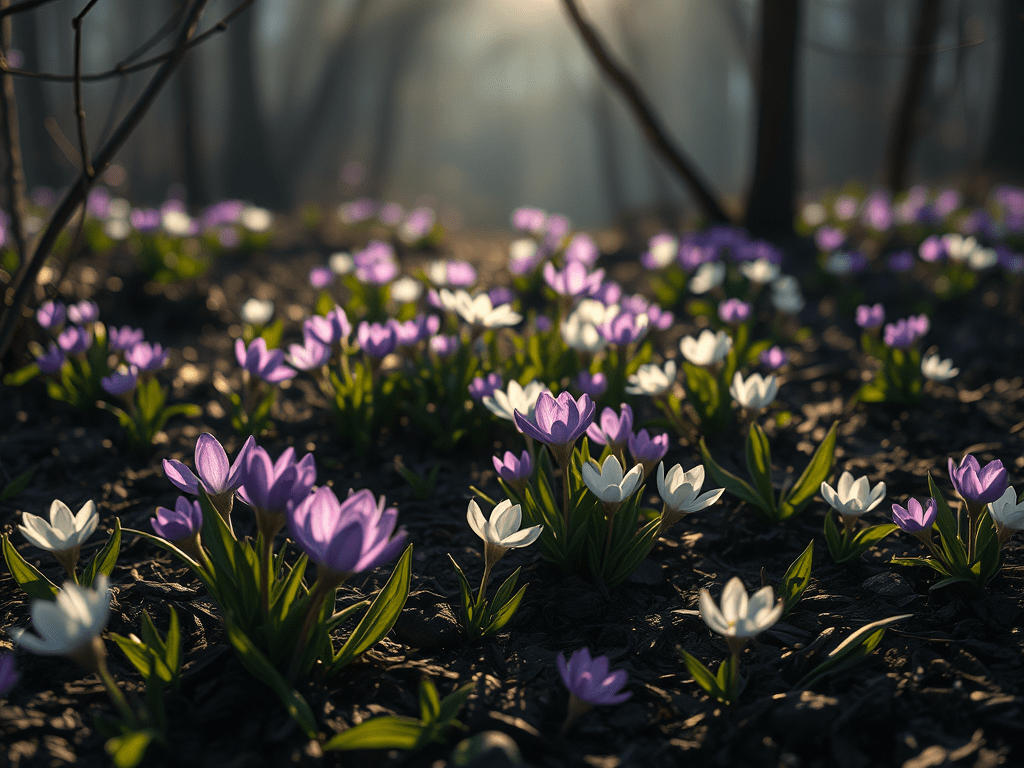
blaze the white of early turn
of year; floweret where yet lack

leaf and vine, the green deferred.
Dazzle light in lengthen day
so banish dark where song of bird
shall not ring, and rise the way

of sun in sky; shadows will flee
underfoot, so trample down
the dark. Petal and song agree:

birth redeemed, and all the ground
in light transform. The many shades
reunite, and sky remade.

Connor Patrick Wood is a poet and Substacker (https://cultureuncurled.substack.com) in Arlington, Massachusetts. He holds a BA in creative writing from the University of Wisconsin-Madison and a PhD in religion and science from Boston University. Before he left academia, Connor’s research on the cognitive science of ritual was funded by the John Templeton Foundation. He has published poetry at the Rabbit Room Substack, Ekstasis, and elsewhere.

Mourning Dove – a poem by Kimberly Beck

Mourning Dove

Somehow, your song
is softer, even
than the taciturn shade of your feathers
as they return to your sides, on folded wings.

And somehow, your eyes
are the eyes of a sage, warm
and watered, and closed
above the ink-dark band of your clerical collar.

You are bowed above me, on the branch of a tree
that was not supposed to live.
Its tender arms
are steeples in the dawn-light, and you
are a prayer.


Kimberly Beck is a poet from Washington State. She can often be found at a local therapy ranch, caring for a very special herd of Norwegian Fjord Horses. Her work has appeared or is forthcoming in Solid Food Press, Ekstasis Magazine, and Clayjar Review.

Psalm 113 – a poem by Megan Willome

Psalm 113

If walking could cure troubles,
if each sandprint truly erased a wave,
then, in one week, we walk off a century.

Before dawn, crystal jellyfish wash ashore. We step aside, in step.
At dusk, a blue sun umbrella bobs along the beach, looking for its mate.
At blazing noon, we are hand in hand while the dog circles ghost crabs.

At sea level we walk, lifted high.
Tearsalt evaporates, maybe forever.

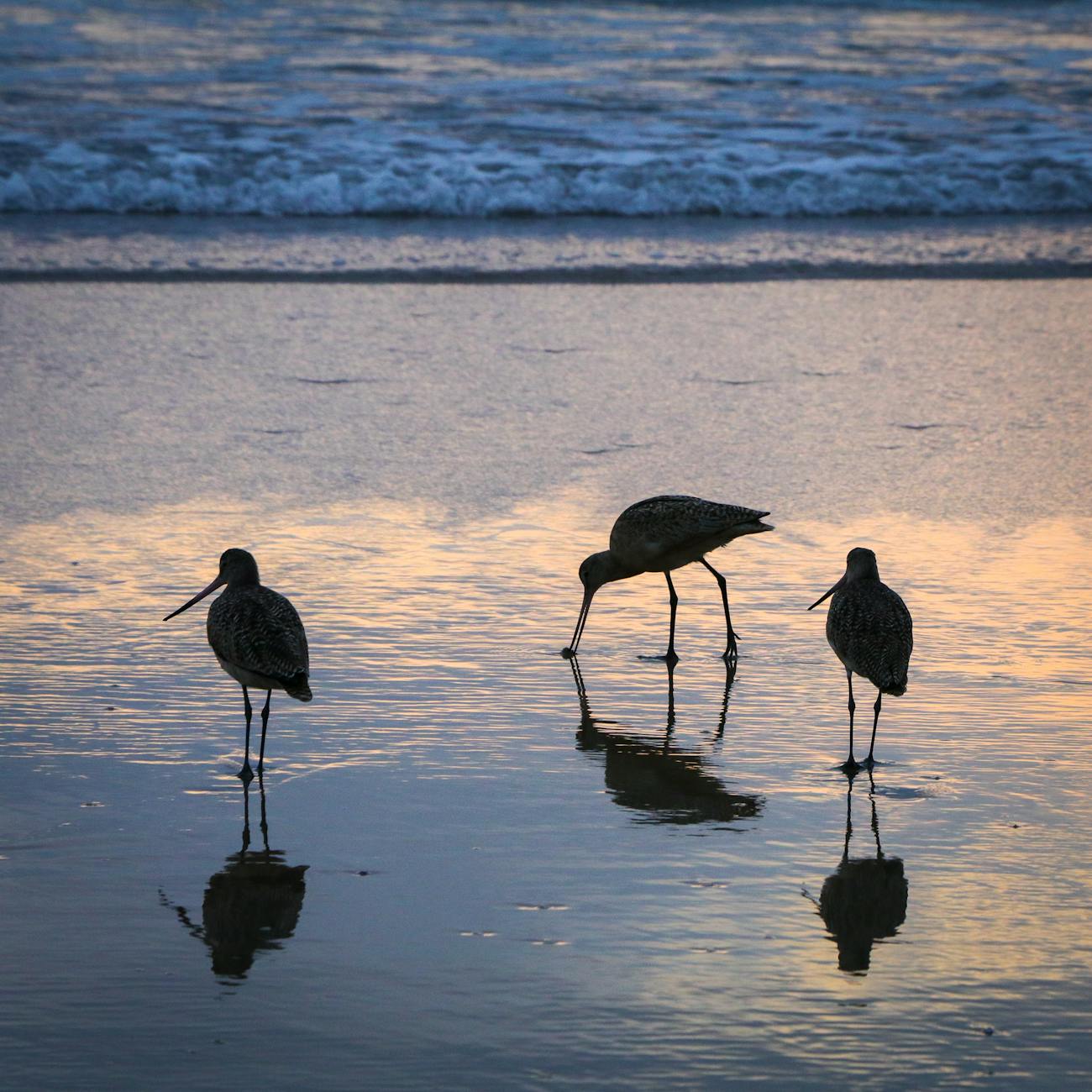
small sandpiper
large sea
God’s sun, God’s whole heaven

Megan Willome is the author of Love and other Mysteries, a poetry collection inspired by Song of Solomon and the Mysteries of the Rosary. She has also written The Joy of Poetry, a memoir, and Rainbow Crow, a picture book. Her day is incomplete without poetry, tea, a song, and a walk in the dark.

Spring Tea – a poem by Anita Pinatti

Spring Tea

slowly
the pond woke
to spring

Midori knelt
in her flowered kimono
with its tight, white obi
and measured
the value of silence
from a bamboo dipper
over powdered green.

Tell me more.

enough enough


Anita Pinatti is a native New Englander, amateur photographer, and a late-bloomer who began writing poetry in her late-fifties along with a meditation practice. Her poetry has appeared in a variety of journals including Earth’s Daughters, Evening Street Review, Glimpse, SALT, and Vallum.  

Transit – a poem by Stan Sanvel Rubin

Transit

Love tells you you are everything,
as the mystic says,

but the universe says you are nothing.
How can you persist this way,

a stalled cloud?
How can you know

if anything too large to measure
deserves to be called real?

That goes equally
for the very small,

not just the quanta,
but whatever keeps us going,

the spark we keep seeking
not knowing

if it’s large or small
and what we can use it for,

in love or pain.

Stan Sanvel Rubin’s poems have appeared in many US journals including Agni, Poetry Northwest, Georgia Review, One, and in Canada, China, Ireland, and Belgium as well as several anthologies. He has published four full length collections including There. Here. (Lost Horse Press) and Hidden Sequel (Barrow Street Book Prize). Born in Philadelphia, he lives on the north Olympic Peninsula of Washington state.

A Mere Crumb – a poem by Margaret Taylor-Ulizio

A Mere Crumb

The host presents itself but once a month
full and round
a complete image
and then on other days
it is but a fragment,
but we have always known and were always taught
that in the fragment
we find there the whole
in its entirety complete
the mere sliver notwithstanding.

Margaret Taylor-Ulizio is a canon lawyer, part-time Religious Studies instructor, and novice writer. 

Wholly Spirit – a poem by James B. Nicola

Wholly Spirit

One tale from so-called Scripture daunted me
as deeply as a passage from the Tao
until I learned that Myths, like poetry,
use metaphor to help a mind grasp how

one God, or The Divine Soul, from some Higher
Realm, or Heaven, thought of as above,
descends, from time to time. One Way is Fire.
Another, paradoxically: The Dove.

A forest burned makes fertile soil, however,
as does volcanic ash when cooled at last.
And after World War One, the world said never
again, as some, after The Holocaust.

Some, not all. Is The Dove returning, then?
Or will The Flame be visiting again?

James B. Nicola is the author of eight collections of poetry, the latest three being Fires of Heaven: Poems of Faith and Sense, Turns & Twists, and Natural Tendencies. His nonfiction book Playing the Audience: The Practical Actor’s Guide to Live Performance won a Choice magazine award. He has received a Dana Literary Award, two Willow Review awards, Storyteller’s People’s Choice award, one Best of Net, one Rhysling, and eleven Pushcart nominations—for which he feels stunned and grateful. A graduate of Yale, James hosts the Writers’ Roundtable at his library branch in Manhattan: walk-ins are always welcome.

To Scatter Where – a poem by Rob McClure

To Scatter Where


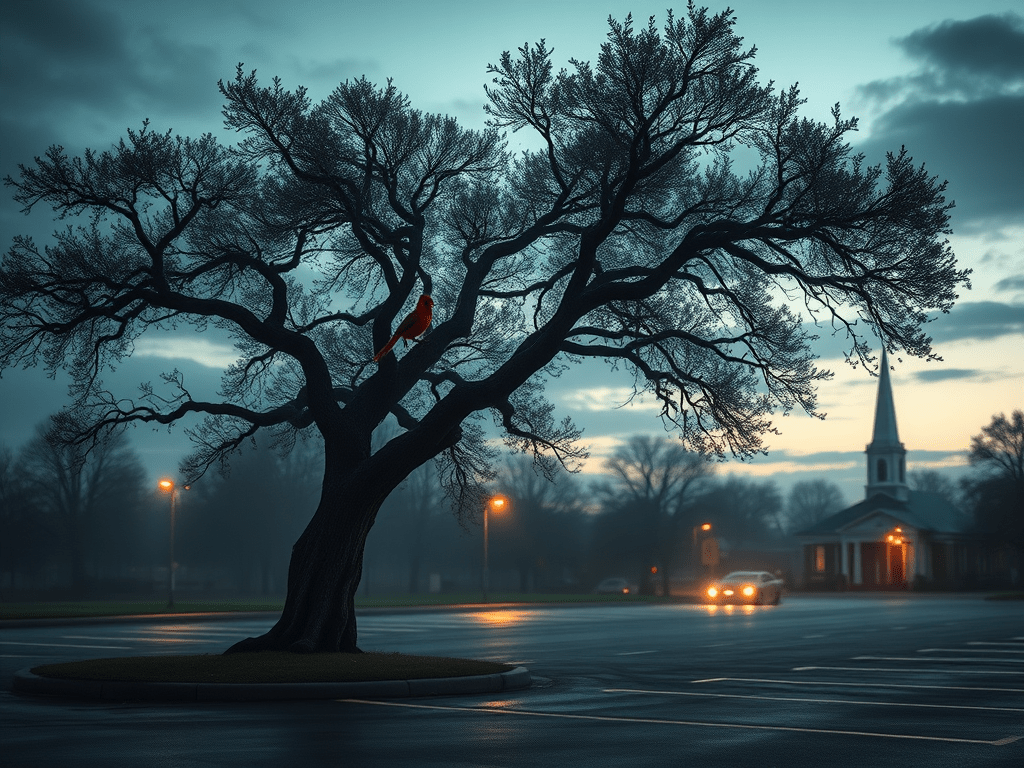
across the car park carrying the ashes,
the trees bereft
the birds have left
only the heft
of recorded church bells
unnatural chiming

to scatter where?

Does it matter?

a galaxy away the star whorls
in the vortex of a black hole
& light is no more
& time buckles
in the event
horizon
& what matter disappears
from the universe

when a cosmos collapses,
it overwhelms.

Roll away the stone,

the writhing things found beneath
think of me not
but I of them
make something

the universe breathes

on a cold oak bough
by a crematorium chimney,
that lone cardinal cheers,
his two-parted whistle chirped

to scatter where?

Here

black tarmac glistens
where the puddle ice cracks
I carried in these arms
& upon this back this black
pouch
heavy,
something remains
still
with death comes grief,
guilt-edged relief
perhaps belief.


Rob McClure‘s poetry has appeared most recently in Poetry Scotland, New Writing Scotland, Lallans, Anthropocene, Neologism Poetry Journal and Light. He is the author of The Violence (Queen’s Ferry Press, 2018) and The Scotsman (Black Springs Press,2024). Originally from Scotland, he teaches at Knox College in Galesburg, Illinois.

Meditation Instruction – a poem by Laurinda Lind

Meditation Instruction


The friend who phoned and fumed
couldn’t right himself to center so

I said how it might mend him if
he found his larger life, breathed

his longer breath, slipped inside
what was down inside, made his

way to his quiet mind. He said no
that would never work, but called

later in the week and asked how
long I’d done it. Sixteen years,

I said. Do you sit in the lotus
position, he asked, do your fingers

form a circle? No I don’t, I said,
no they don’t. Well, he said,

I checked out this library book
and I hate to rain on your parade

but without the pose, it was all
for nothing. I thought how hard

it had been not to think thoughts
so I’d get to a space of no space.

I smiled at the phone and said,
Oh, Eddie, you are exactly right.


Laurinda Lind lives in the U.S. in New York’s North Country, close to Canada. Some of her poems are in Blue Earth Review, Stand, and Spillway. Her first chapbook, Trials by Water, was released in summer 2024 (Orchard Street Press). She has won four international poetry competitions.