Ajanta Caves: Leaves from a Photo Album – a poem by Deepa Onkar


Ajanta Caves: Leaves from a Photo Album

From the window
of the bus, the caves –
black pits in the vast
stretch of craggy rock

*

Sun and wind and rain
of centuries: a bodhisattva stands
up close with impermanence.
The swarms of tourists
soon vanish

*

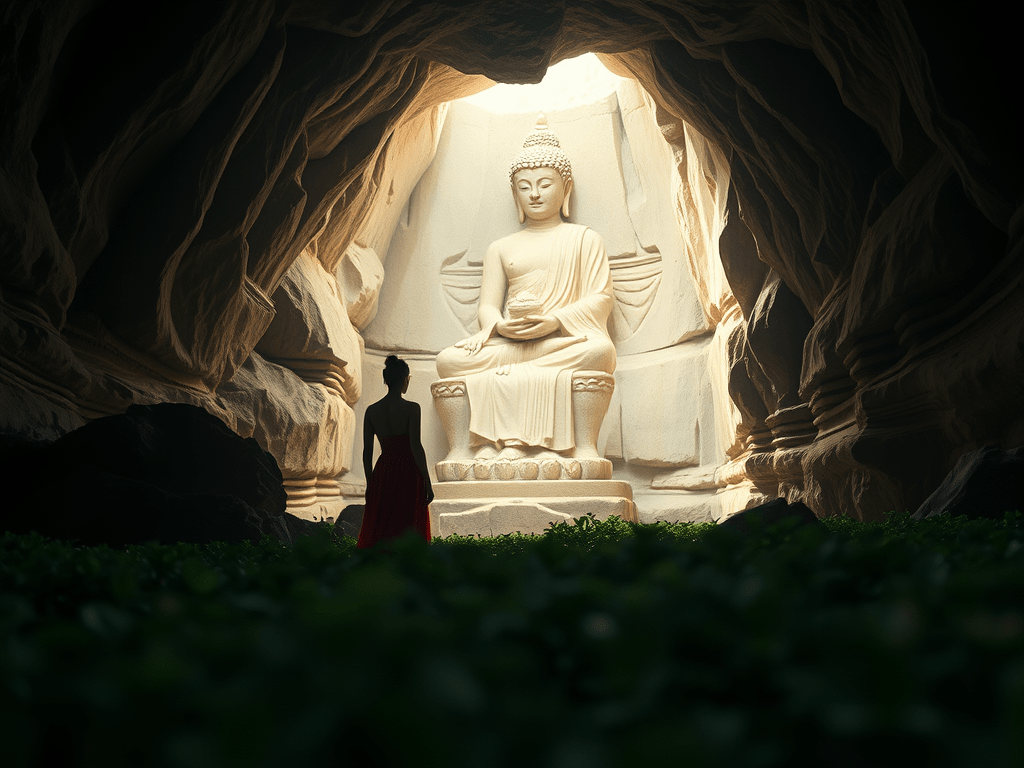
Buddhas spring
like lotuses
from the depths
of dank nothingness

*

I stand frowning in my red dress
in a field of wild mint: the peace
of the sculpted past is perhaps
already a memory

*

Light floods stone, smoothens it.
The Buddha lies, head cradled
in his arm. I listen – his words
still reverberate: be a lamp unto
yourself, be your own refuge


Note: bodhisattva: In Buddhism, a being who strives for Buddhahood and helps others to do the same.


Deepa Onkar is a poet from Chennai, India. She was a teacher at Krishnamurti schools, and a feature writer and literary editor with The Hindu, an Indian national newspaper. Her recent poems have been published at The Lothlorien, Mollusk Literary Magazine, and Sparks of Calliope. She currently divides her time between Chennai and Bangkok, Thailand.

the braid – a poem by Amrita Skye Blaine

the braid 

Taking happiness and suffering as the path requires the noblest aspiration, a kind and courageous heart, and skillfully developed endurance. —Chakung Jigme Wangdrak

but happiness and suffering
are the path
whether realized or not
the third, peace of mind—
three cords I live with
plaiting and twining
the braid of each day
into equanimity’s strand
offering strength
and securing the rest,
I weave gilded thread
as reminder—
steadiness, the gold
constancy, the way

Amrita Skye Blaine develops themes of aging, disability, and spiritual awakening. She received an MFA in Creative Writing from Antioch University in 2003. She has published a memoir and a three-novel trilogy. Blaine has been writing poetry steadily since she turned seventy. Her poems have been accepted by Braided Way Magazine, The Penwood Review, Delta Poetry Review, the New English Review, Soul Forte, and Chiron Review. Her first book of poetry, every riven thing, has been accepted for publication by Finishing Line Press and will come out mid-2025.

The Cynic and the Friar – a poem by Bruce E. Whitacre

The Cynic and the Friar

In memory of Mychal Judge

The Friar was an old family friend who took it upon himself
To check in on my boyfriend, the black sheep of a pious family.
He had introduced us to a gay strip club and we were eager
To show off our new place: garden views and a miraculous,

Five by five kitchen. Of course, there were cocktails and wine
Before the pasta. Even a discalced Franciscan has to live.
He had just returned from Medugorje, in Bosnia,
Where the Virgin appeared daily to six young people.

We knew of it. Back in Yugoslav days we had crossed
From Bari to Dubrovnik on a boat bursting with pilgrims,
Annoying, so many, so many loud Americans. We left
Them at the dock for sladoled along Medieval lanes,

The rocky beaches of “our” Yugoslavia, secular, polyglot paradise—
To think what was to follow.
Now, the Friar was back, with us, attention-getter, do-gooder,
Holding forth about his pilgrimage with a wheel chair-bound

Ex-cop wounded in the line of duty, searching for a miracle
They had failed to find at Lourdes or Knock.
“I can’t wrap my head around it,” the Friar said, serious and misty-eyed
As he sometimes got between jokes and laughs at himself.

“I was in the church, praying, with all these people,
And out of nowhere I suddenly smelled flowers, roses.”
He paused. “Yes? And?” I leaned in for more.
“Well, you know the scent of flowers is a sign the Blessed Mother is…”

His voice trailed off. “Hell, I don’t know.” He laughed.
I had this. I pressed the table for emphasis.
“It’s obvious. You’ve been conditioned. You expected to smell flowers,
So, of course, you did. It’s all in your mind. Not to worry.”

“Ah, yes. I see,” he mildly thanked me for denying his miracle.
We cut the cake and moved on, the decades since…
To think what was to follow.
I often smell roses in his words.

Bruce E. Whitacre: Good Housekeeping, 2024 from Poets Wear Prada, is a BookLife Reviews Editors Pick. The Elk in the Glade: The World of Pioneer and Painter Jennie Hicks, Crown Rock Media, was also a BookLife Reviews Editors Pick. Both books received awards from The BookFest.Richard Thomas has narrated the audiobook, to be released in late 2024. His poems have appeared in many anthologies and over thirty five journals. He has been nominated for Pushcart and Best of the Net. He lives with his husband in Queens, NY. More info at http://www.brucewhitacre.com.

Surely, the Lord is in this place – a poem by Michelle Stephens

Surely, the Lord is in this place  


Even a dragonfly's wing

silvery miracle
quivering on asters

in their moonlit vigil
silent

My cares vanish
over birches

too far from my reach
the anxieties, micro calamities

of self

Here, only my heart
which blooms in rhythm

to an earthen hymn
thrummed deep

beneath the moss
ardent flush

of fern

and my hands
open

—Some truths lean
towards skin

waiting, like plush
petals

like icy fire
of wings

or hem
of fulgent garment,

to be touched


Michelle Stephens is an alumna of Fresno State University, where she majored in English Literature with a minor in Classical Studies. Her poems have been published in HAIS: a literary journal and are forthcoming in Ekstasis and Orchards Poetry Journal. She makes her home in the San Joaquin Valley of California with her husband and their son.

Saltsilver/Repent – a poem by Claire Hellar Adderholt

Saltsilver/Repent

We found mercy on the way home bright as hope,

delicate as hunger in summer bones.


Deep and hungry forgiveness cracked us open,

bodies screaming to be screwed new, shattered

loose and glass-blown new.


Sanctification

is a hard going beloved.

Salmon
jumping upstream

raging.

A quick clean break of ripples overhead,
shocked sure for wave-break,

immense ache
all the way down.

Sin
singing as it goes
down to die.


A turn –
Sun shimmers on water.

We have come to sundered
and surrendered for the born-again
We have come to be
spliced open
for glory.

Heft of our souls
Salted to reft and ruin.

Bone-deep how repentance
shines everything up

Warmed to sun-streams and steady strokes,
we swim suddenly alive to grace in bright water,
bent to hope,

Made ready for glory, Holy Spirit golden
and free.


Claire Hellar Adderholt is a missionary kid who grew up in Papua New Guinea and, after living in California and Colorado, now lives with her husband in Birmingham, Alabama. She is a UCLA grad and loves Tolstoy, Taylor Swift, mountain hikes, and peonies. Her poems can be found in The Rabbit Room, Calla Press, Wilderness House Literary Review, and elsewhere. Find her on Instagram @claire_de_luned and on Substack at Lanterns in the Dark, where she publishes a new poem every week.

All Saints’ Day – a poem by David E. Poston

All Saints' Day

Music is simply decorated time—Sparrow


Friday night, at the Michael Franti show, I see my two grief counselors.
We group-hug and laugh about meeting each other out in the world.

The opener is a solo performer, guitar and a pair of didgeridoos
like tusks booming the deep-throated call of Aboriginal time.

When Franti leads a conga line through the crowd, I put my hand
on his sweaty shoulder. For a moment, we sway in time together.

Driving home, three thousand miles west of Tintern Abbey, I play
Warren Haynes and Railroad Earth performing 'Spots of Time.'

Time was, I had a playlist called The Well of Melancholy, full of
Jason Isbell’s existential angst and Lucinda Williams torch songs.

For the first time in months, I pull it up, and R.E.M. comes on.
All the way home, I replay 'Everybody Hurts,' with those rich

strings recalling a friend who played cello, gone much too young.
And Michael Stipe’s nasal voice is still echoing in my head

when we gather on Sunday, blurring with the voices of choir
and congregation until they drown in the organ crescendo

rising toward the angel band, the church triumphant and eternal
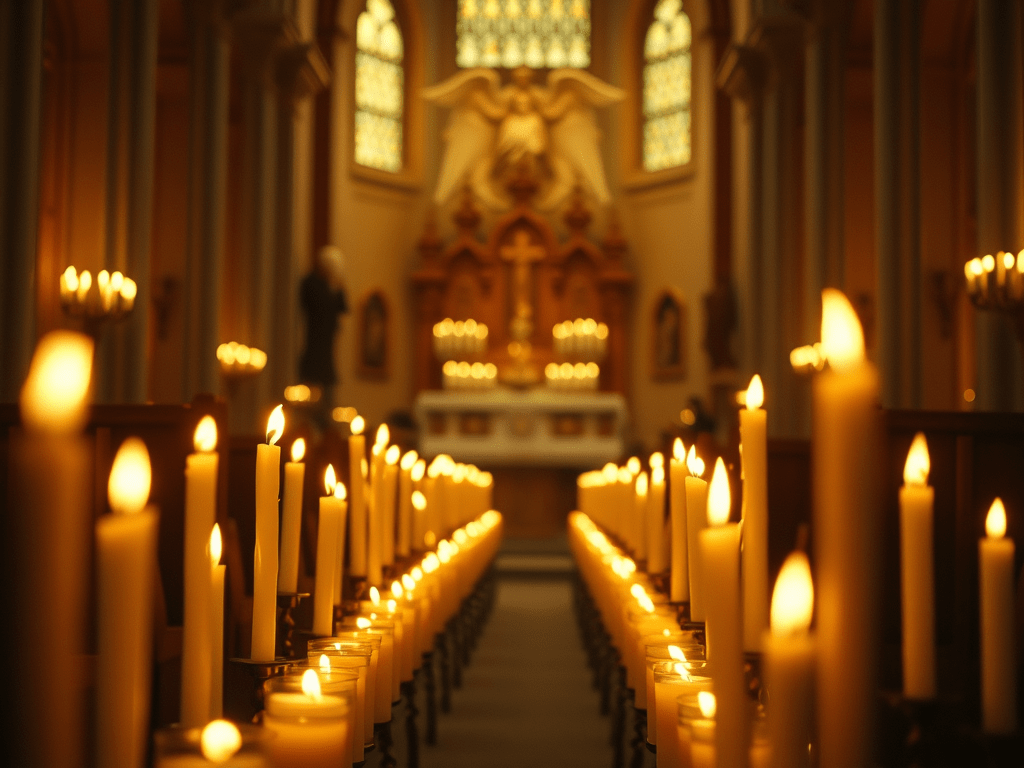
looking down at rows of guttering candles. Then stillness

as the names are read. Each one a brief shock, more or less.
This year no beloved, some dear almost-friends,

others whom I barely recall having passed
into the deep silence of dream time.


David E. Poston is the author of two poetry chapbooks, including Postmodern Bourgeois Poetaster Blues (which won the NC Writers’ Network’s Randall Jarrell Chapbook Award), and the full-length collection Slow of Study. His poetry, fiction, and reviews have appeared in Atlanta Review, Pedestal, Cider Press Review, Pembroke Magazine, The Southern Poetry Anthology, VII: North Carolina, Typehouse, and other journals and anthologies. A new poetry collection, Letting Go, is forthcoming from Fernwood Press in fall 2025.

Elegy to a Cancer Altar – a poem by Laura E. Garrard

Elegy to a Cancer Altar

After my diagnosis we moved West.
I set an altar in our living room
overlooking Lake Crescent.
For over two years I knelt here
staring at an apex of Creation.
Outside waves chewed my pain.
I longed for deep breaths, release of
resistance: pushed aside tears, the buried.

On the pine table I placed
dried sage in an abalone shell,
rattles, a drum, pipe tobacco.
Tools to petition, focus thought
toward Spirit, Inner Self.
Also, gifts of encouragement
in stones, charms, totems.

A leather medicine sac that
held a miracle ice-blue crystal
once curbing the backache
of my friend Ray,
offered to my palms in ceremony
before my bone marrow biopsy.

Another pouch, yarn woven,
contained consecrated eagle ash
bestowed by a half-Cheyenne sister.
I carried this to the Clinic in Rochester
& rubbed animal powder
on the hip that housed a tumor.

Plus, grandmother’s wooden round
case shrouding a silver cross,
a heart-shaped rattle from my doctor,
quartz elephant from a healed client,
prayer beads from my mother.

These symbols of care
formed a semicircle
atop a handsewn table runner
of eight colors, a chakra
rainbow undertow.

Often I touched the tokens
in relieving lamentation,
to sense family and friends,
support constant & surrounding.

And prayed by opening
the Four Directions,
lit bundled sage to smudge
the ions around my feet,
legs & hips,
torso, arms, head.
My energy extended.

I connected to Grandfather above,
Son & Mother, Mary Magdalene,
spiritual helpers. Earth’s wisdom,
elements & nourishment.
And All Relations who fly, crawl,
swim, stand & walk.
My light swelled in company.

I pinched sweet smelling tobacco
between index and thumb,
pierced it with tribute,
appeals for healing,
entreaties for kin,
our floundering civilization.
Then burned all on the shell,
smoke litany to Sky.

These pleas moved within me,
strengthened & blessed
my body, cleansed fear
& internal yelling.

One day, I examined the altar
& knew it was time to dismantle.
Tenderly tucked the keepsakes
into boxes, washed the ash
from the technicolor dream cloth,
folded & laid it in cedar.

Despair has departed these mementoes,
their purport stowed alongside hope,
the emotion now invoked when
I look at Lake Crescent.

I no longer yearned for needles to
fashion fear into sackcloth for tearing.
I no longer sensed my mortality
hung by thread.
I suppose, too, my grief
outgrew the talismans.

The table is spare & clean.
A chapter has concluded,
not the disease.
My blood is the altar
and swims.

Author Laura E. Garrard is also an artist and CranioSacral Therapist on the U.S. Northwest Peninsula, where she enjoys time with nature. Her poem, “Filled to the Brim,” appeared in Amethyst Review’s Thin Places & Sacred Spaces anthology. She is a member of Olympic Peninsula Authors and has received four scholarships from Centrum Writers Conference. Her poetry and prose have been published in journals like Bellevue Literary Review, The Madrona Project, Silver Birch, and TulipTree Review, which recently awarded her a Merit Prize. She writes a cancer poetry series, Poetry That Fits, on Penn Medicine’s OncoLink.org.

How to Blow Glass – a poem by Deborah Leipziger

How to Blow Glass

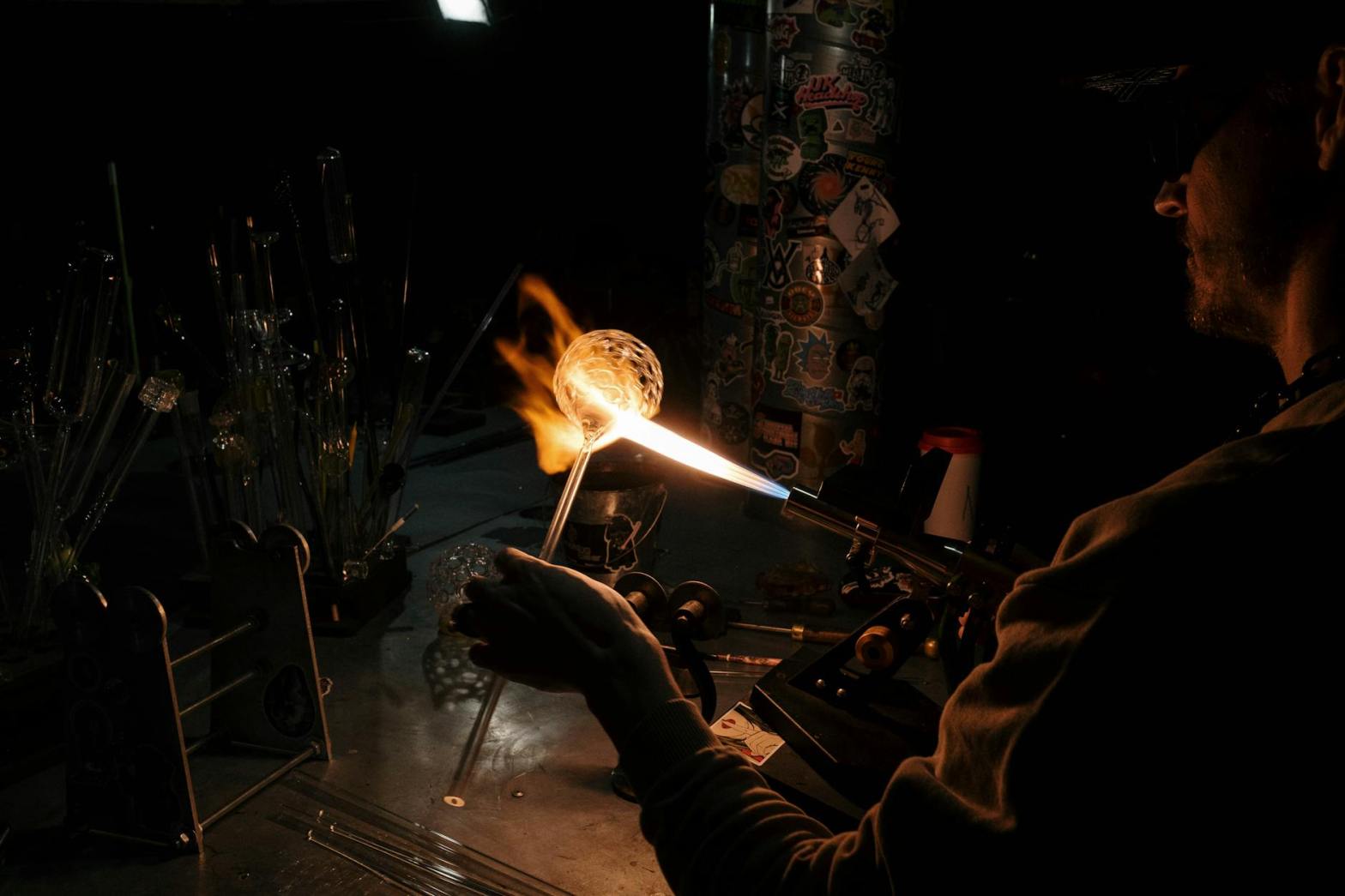
Reach into the crucible
for a gather of molten glass

to poise on your blow pipe.

Roll the glass on the wooden marver,
keep it in constant motion.

Glass cannot rest.

Select from the 400 possible colors: tangerine turquoise
cobalt amethyst

Roll the glass over the color.

Return it to the glory hole,
let it glow like a candy apple.

Blowing glass requires another human.

Slowly move the glass onto the punty.
This transfer to another person is tricky.

Trust the passage of the glowing glass.

Strike the glass so that is severs from your blow pipe.
Then into the annealing oven at 960 degrees.

Glass is hard to rescue.

Speak the language of the sun
as you blow words into the gather.

Blow prayers.

Notice the flames on the inside of the glass.
Cool off the other end of the blow pipe in a barrel of water.

Protect this slow cooling.

You never know if the vessel will break.

Deborah Leipziger is an author, poet, and advisor on sustainability. Born in Brazil, Ms. Leipziger is the author of Story & Bone, published by Lily Poetry Review Books. Her poems have been published in ten countries in such magazines and journals as The Bombay Literary Review, Pangyrus, Salamander, Lily Poetry Review, and Revista Cardenal. Her work appears in numerous anthologies, including Tree Lines: 21st Century American Poems. She is the Founder of the Lexicon of Change, a web-based platform devoted to the words we need for ecological and social transformation.

Weather Forecasting – a poem by Maryanne Hannan

Weather Forecasting

I loved her…
Wisdom 8:2


If Unknowing is a cloud, could Love be
A tornado, rope-wedging its way,
A stratosphere of search,
Seeding atmospheric
Draft, filaments of
Tang-ly breath
From every
Single
Cell?

Maryanne Hannan has published poetry in both All Shall Be Well: A poetry anthology for Julian of Norwich and Thin Places & Sacred Spaces. A resident of upstate New York, USA, she is the author of Rocking Like it’s all Intermezzo: 21st Century Responsorials.

Life-size St. Francis in Bronze – a poem by John Davis Jr.

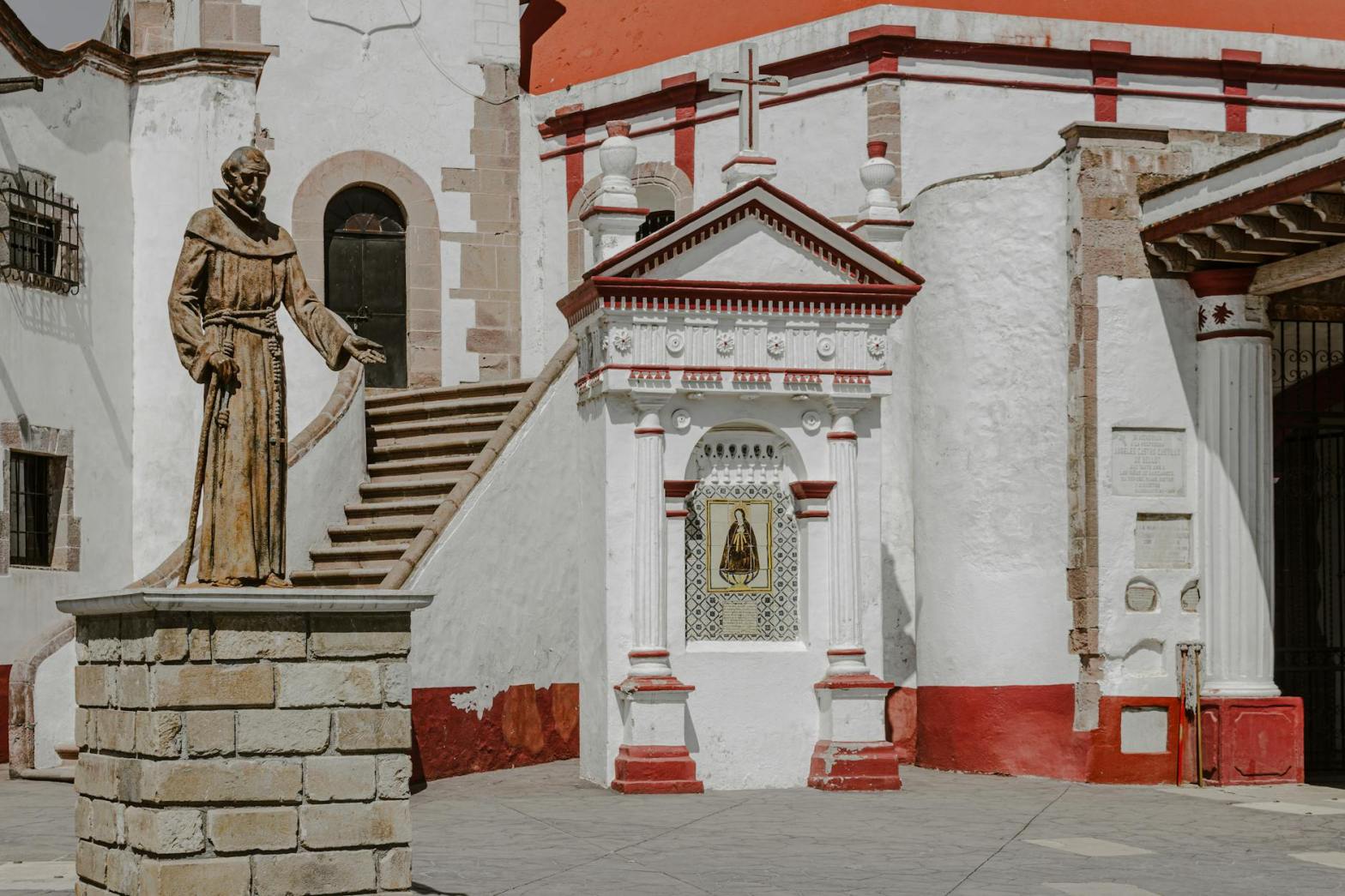
Life-size St. Francis in Bronze 
Santa Fe, New Mexico, 2013


I have reckoned with wolves.
Snarling killers need admonition
and an unclenched hand to grasp coarse fur
before the calm walk into town
for raw meat and understanding.

I have felt songbirds’ tiny talons
grasp my war-wearied knuckles.
Quick, clear eyes gleam divinity
as white-throated notes proclaim
Gloria Gloria Gloria

I have been cast by a maker
who forged peace upon my countenance,
who sandaled my feet in a forward step:
permanent happy progress
alongside His animal pilgrims.

John Davis Jr. is the author of The Places That Hold (Eastover Press, 2021), Middle Class American Proverb (Negative Capability Press, 2014), and three other poetry collections. His poems have appeared in The Common, Nashville Review, The American Journal of Poetry, and elsewhere over the last 25 years. He holds an MFA and teaches English and Creative Writing in the Tampa Bay Area of Florida, his native state.