
Holy Water, Human Water
Pluscarden Abbey and The Black Burn
I followed a narrow path high into Heldon Wood, searching for a spring. The earth was dry underfoot; there was no breeze. Just a few thin shafts sunlight made their way through the tall, close-packed trees. Common sense told me I was unlikely to find a spring this far up the northern slopes of the glen; it would have to be closer to the abbey. But there’d been no sign of one when, earlier that morning, I walked the gardens and orchards. So, I went deeper into the wood, expectations dwindling.
I’d come to Pluscarden Abbey hoping a swifter kind of water would have a story to tell. The Black Burn rises in the Morayshire hills and flows eastwards, dark and slender, until it meets the River Lossie just outside of Elgin. On its way, it passes the woods, gardens and orchards, the chapels, chapter houses and dormitories that make up the granite splendour of Pluscarden Abbey. Three hundred years of monastic life at Pluscarden came to a faltering end at the close of the sixteenth century, but in 1948 the abbey and its lands were bequeathed to the Benedictine community who now live, work and pray there. Since I’d caught my first glimpses of the abbey some eight years ago, I’d wondered if its sense of being rooted in place had something to do with the Black Burn. Had the Abbey’s founders, in the thirteenth century, searched for exactly the ‘right’ stretch of water? After all, water also plays a starring role in the bible, from the flood sent by God to punish the wicked of the earth, to John the Baptist standing waist-deep in the river Jordan. But these bible stories were pure spectacle – the stuff of Renaissance art and Hollywood movies. What about ponds and streams – weren’t these sacred too? Surely the Black Burn had to mean as much to the monks of the abbey as the ‘local’ spirits of well and burn had meant to the people of Morayshire before the coming of Christianity.
The truth had turned out to be plainer. When I’d arrived at Pluscarden Abbey the previous afternoon, I was greeted by Brother Finbar, a cheerful, bearded man, quick on his feet despite the weight of his pale Benedictine robe. He showed me to my room in the wing of the abbey reserved for ‘retreatants’, explained about meals and the religious routines, and wished me a peaceful stay. We shook hands.
‘Do you mind if I ask you a question?’ I said, thinking he’d be used to retreatants with things on their mind.
‘Go ahead.’
‘I’ve been wondering about the Black Burn and its connection with the abbey. I guess it goes back a long way, all the way to the Middle Ages.’
‘Well,’ said Brother Finbar slowly, as if the question required careful thought, ‘I reckon it must have been where the monks did their business.’
So not a holy stream at all. Just a filthy one. I tried not to look disappointed.
‘I don’t think they bathed in the burn,’ Brother Finbar added, ‘but they didn’t drink from it either,’ and went on to explain that, until a few years ago, water for the abbey’s kitchen and washrooms came from a spring. ‘Such a lovely taste,’ he said, coming remarkably close to licking his lips and talking at the same time. ‘I don’t know what happened, but we had to start using mains water. Some problem with the pipes maybe.’
I felt relieved. The Abbey did, after all, have an intimate connection with local water. The only problem was that the actual location of the spring had passed him by. ‘You might try the gardens,’ he suggested, without much conviction, and hurried away to attend to other duties.
An hour later I saw Brother Finbar again, in the company of the abbey’s other monks, about fourteen in all, as they ‘proceeded’ into the chapel for the office of Vespers. Sunlight poured through stained glass windows and the old stone of the walls and floor took on a soft glow, as if the light had fallen onto deep, still water. After a moment’s silence their voices rose in a slow, sonorous wave:
Deus in adjutorium meum intende; Domine, ad adjuvandum me festina
Were all the monks accomplished singers, or did the very fabric of the abbey make anyone’s voice sound so rich and honeyed? Either way, the very air now seemed as ancient as the abbey walls. As an unapologetic, fence-sitting agnostic, with barely a scrap of Latin to his name, I wasn’t able to share in the meaning of the words, but I could bathe in the music of plainsong. And, I promised myself, I could go in search of the music of spring water the next day.
And so I found myself on a rainless July morning in the midst of a Morayshire wood, looking for water. With every uphill step the chances of finding a spring grew slimmer, but by then I was keen to get a clearer view of the abbey and the Black Burn, to see if they helped make sense of one another.
Eventually, the trees parted just enough to catch a glimpse of the abbey. Even from a distance, its roof and walls appeared old, but not out of place. The field, orchards and gardens that surround the abbey gave it a neighbourly sort of look. After numerous additions and renovations, it belonged in its nook of Scotland. But it was hard to make out the Black Burn itself. I had to guess at its presence in a smaller wood beyond the orchard, between the abbey and the Elgin Road.
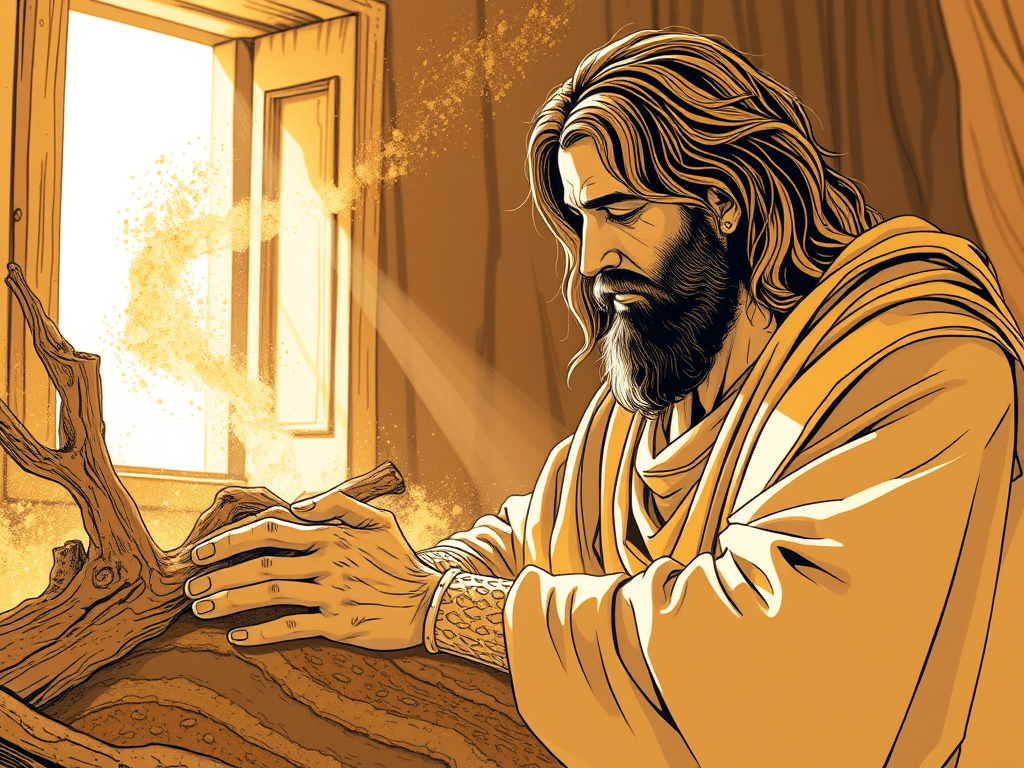
My gaze drifted higher, towards the far slope of the glen and rested on a patch of green above the tree-line. This had to be Thistle Flat where I’d first caught sight of Pluscarden Abbey on a similarly bright summer day eight years ago. I had travelled up from Dunblane to visit my friend, the writer and joiner Angus Dunn. After a cup of tea, and admonishments about my late arrival, he suggested we go on a wee tour. I had to walk fast to keep up with his new go-anywhere electric wheelchair, but after several hundred rough, grassy yards he spun round. The long sweep of Pluscarden Glen lay below us. Angus gestured toward the abbey and whispered me the story about how, a few short months ago, he’d strapped himself into the passenger seat of a two-person microlite and, minutes later, found himself flying low through the glen. A monk was busy in the abbey garden. Reveling in the near-weightlessness of flight, Angus yelled and waved at the monk, until the brother looked up, threw aside his hoe and waved madly back – sweaty, astonished and unmistakably joy-struck by such an unlooked-for visitation.
By the time Angus told me the story, he had no choice but to speak in whispers. Motor Neuron Disease had laid low his voice along with his body. But a good story was worth the effort, especially if it involved unlikely comings-together, when mystery met the commonplace, the sacred encountered the profane; when body and soul became bedfellows. The writer’s job, like the joiner’s, was to feel the grain of things, and evoke the happenstance of connection. In ‘Kernel’, the final poem in Angus’ posthumous collection High Country, he’s so entranced by the ‘acid orange streetlights’ at dusk, that they ‘release the taste of mango’. ‘What is it, after all,/but the taste of my life?’ Angus asks. ‘Unable to swallow it all/I blame the tightness in my throat.’
His throat certainly seemed tight up at Thistle Flat when he described the microlight flight. He died before summer ended. Now, in the summer of 2023, peering through the dense foliage of Heldon Wood, I couldn’t help but wonder if it wasn’t Brother Finbar who’d been busy gardening as Angus flew past. Why not ask him? I turned on my heels and headed back down through the trees towards the sunlit Abbey.
That evening, I found myself wandering through the little wood, south of Pluscarden Abbey, towards the Black Burn. I needed to discover for myself if it was a holy or filthy stream. Or both. In the end, I hadn’t asked Brother Finbar for more information about the burn. Nor had I mentioned Angus’ story. The idea that he was some kind of hoe-wielding Benedictine kindred spirit to Angus’ angel-impersonating joiner-poet, had taken such a hold in my imagination, I didn’t want it dashed by anything so trivial as the ‘facts’.
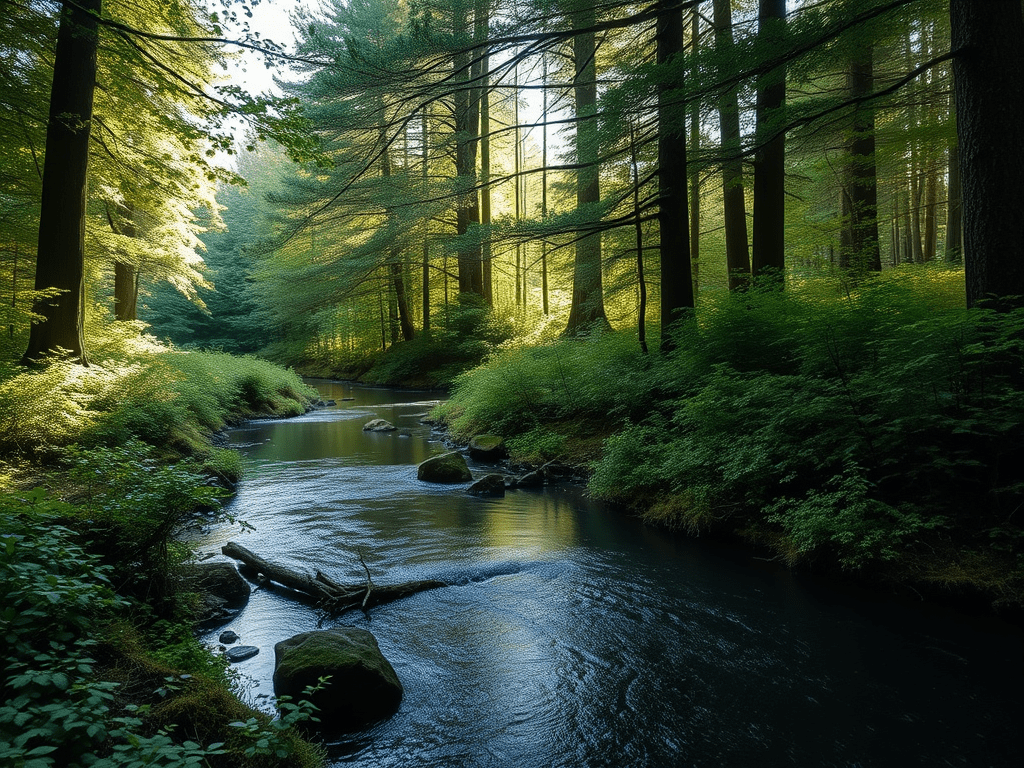
After a few minutes I arrived at the Black Burn itself. It was shallow, pleasant and entirely unspectacular. The only hint of drama came with a foamy riffling as it passed over some stones upstream. But it was serene. The sound of traffic on the Elgin Road, a few hundred yards away, was screened out by trees that overhung the banks, though I could just catch the day’s last birdsong as it merged with the breeze in the leaves and the quiet hum of the water. It all seemed one chorus, one chant, a gentler version of the plainsong of the monks I’d heard the previous evening, and the thought came that, right now, they’d be gathered in the chapel, the same sunlight falling through its windows, singing the office of Compline:
Noctem quiétam et finem perféctum concédat nobis Dóminus omnípotens
(May almighty God grant us a quiet night and a perfect end)
Maybe they didn’t need to invest too much faith in the waters of burn or spring when they had such a well of tradition to draw from. The ancient made new every day.
But the burn sang a different song. Its waters were not an attempt to arrest time, but the voice of its flow, pitch and rhythm changing with the seasons – the vagaries of wind and rain, sun and ice. It was good music to listen to and a good place to be. I decided to take a video of this ordinary, tree-shadowed burn, retrieved my phone from my trouser pocket, touched the video button, and watched the Black Burn fill the screen.
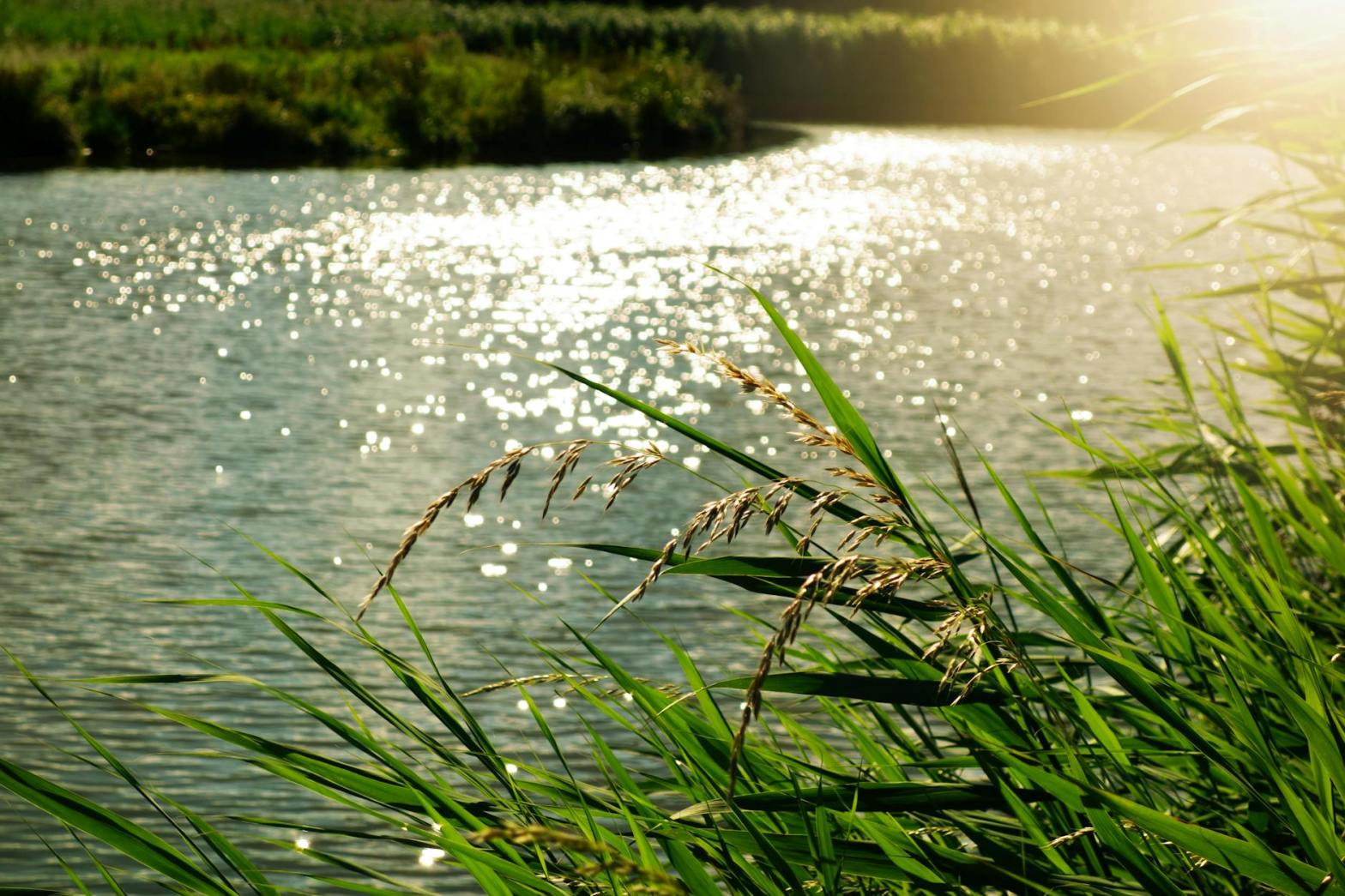
Suddenly the water wasn’t dark anymore, never mind black. It had been transformed from an earthy greenish-brown to a shimmering blur of blues and silvers, as dazzling as the scales of a leaping salmon. I tracked this impromptu dance of light up and downstream, but as soon as I pressed ‘Stop Record’ it disappeared. The burn was just a burn.
I pressed record again, and again the water seemed alive with light, but this time it wasn’t an image of salmon scales that came to mind, but the abbey’s stained-glass windows. The same radiance that gave the flagstones of the chapel the look of well-water, transformed the surface of the burn into a gallery of glittering windows. Was this some kind of miracle? Was I bearing witness to something divine?
The thought lasted all of three seconds before another explanation popped into my head. My phone was cheap; so was its camera. It simply couldn’t cope with the vibrant interplay of tree shadow, stream and sunlight. I laughed – at my own foolishness, I thought – but when the laugh kept going, I realised I was laughing at the brilliant coincidence of ancient abbey, sunlight on water, and dodgy technology. And I imagined Angus laughing at such spontaneous joinery: a microlight and a monk, a dodgy camera and a sunstruck stream – the miracle of coincidence, the purely-by-chance gifts of a universe always on the move. Everything is real, one way or another. The trick, as Angus knew, is to notice the connections and write them down. To do the joining.
I took one last look at the Black Burn and made my way through the evening wood back to the abbey, to its stone and song.
Chris Powici lives in Perthshire where he writes poems and essays, often about how the human and natural worlds overlap. He is co-editor of New Writing Scotland and one of the writers behind Paperboats (paperboats.org). His latest poetry collection is Look, Breathe (Red Squirrel Press).




 Amethyst Review