
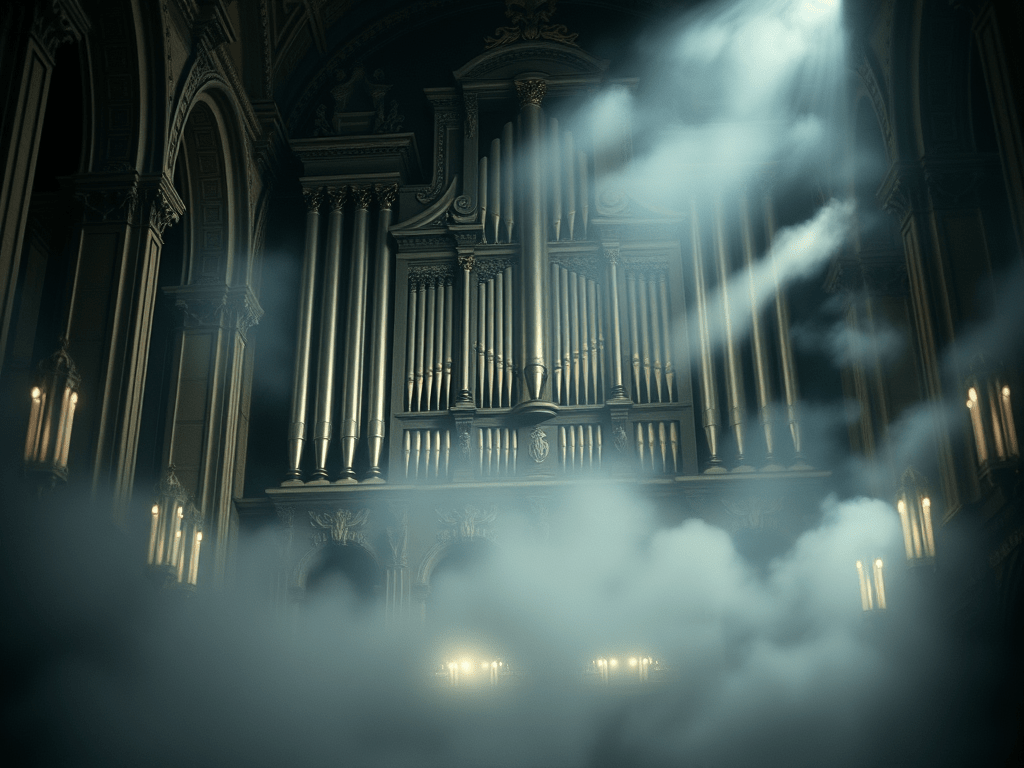
John Cage: Organ²/ASLSP (As Slow As Possible)

On Monday, February 5, 2024, after a period of two years, a chord was changed in the longest musical composition in history. There have been only sixteen chord changes since the work, written for organ, began in 2001; the piece is slated to finish in the year 2640.

with a phrase from Pierre Teilhard de Chardin

White-gloved and rigid, they slide two more pipes
into place, solemn as gray-haired priests
bending over the Blessed Sacrament. Women adorned
in facemasks and fanny packs stand, eyes closed,
lit with a rapture usually reserved for discalced nuns.
Here, in Halberstadt, they take time seriously.
Truth takes the time it takes, and so they are satisfied
to eke out transcendence over centuries.
No matter. No matter, either, that the long-awaited chord
is less than lovely, that after two years of the same
pitches, an endless far-off buzzing like a leak
you can never find, the new notes do nothing
to make the music prettier. Pretty was never the point.
There is beauty enough in the world if you are willing
to seek it out. Hope is harder to find. But today
we come together, listen to a piece of music meant
to last six hundred years, affirm our faith in the slow
work of God, a psalm stretching into infinity,
the promise that someone will be in this cathedral,
listening, when it ends.
Erika Takacs is an Episcopal priest, teacher, and poet originally from Wilmington, Delaware. Her writing has been published in Earth & Altar, The Christian Century, Braided Way, The Orchards Poetry Journal, and as a part of the North Carolina Poetry Society’s Poetry in Plain Sight. Outside of her work and her family, her three great loves are the music of J.S. Bach, books, and baseball. She currently resides in North Carolina, where she and her husband serve at the pleasure of their very spoiled beagle.
 Amethyst Review
What an interesting and beautiful poem.
LikeLike