What Can I Say About Eating Raisins During the Storm? – a poem by Laura E. Garrard

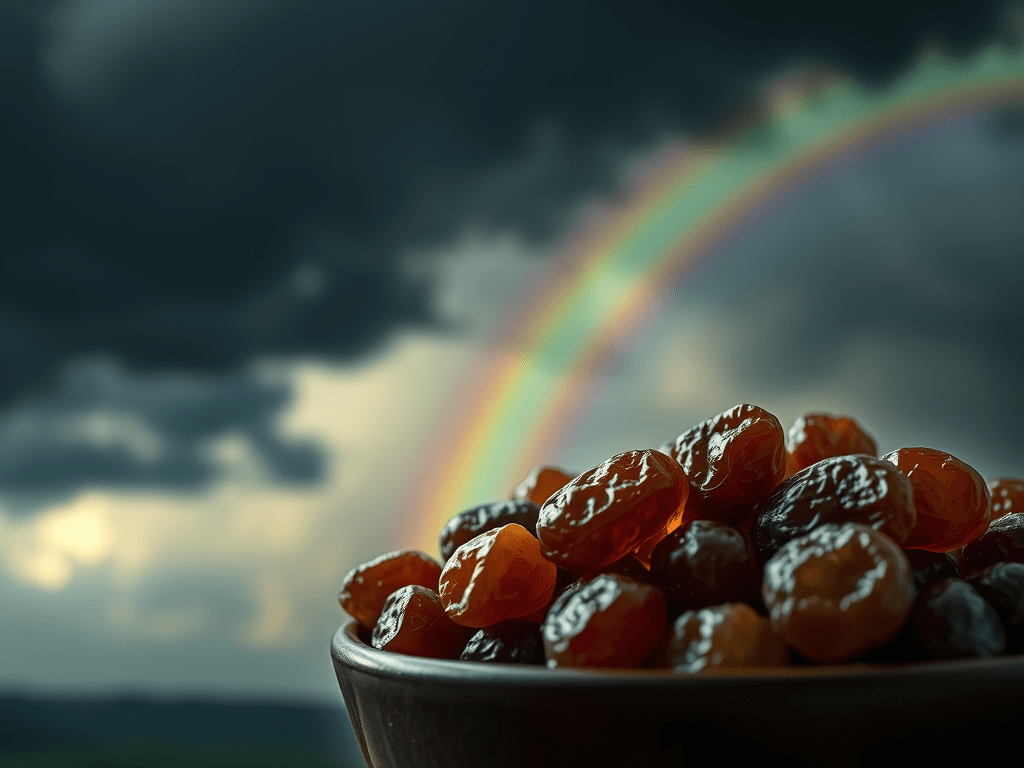
What Can I Say About Eating Raisins During the Storm?

I’m not confident
the storm’s end has come.
It hasn’t flattened my home
nor tattered my hope.
All will ride the rainbow
to the other side,
We don’t know when.
The present wind,
no matter
direction
is now my friend.
None of us controls weather
and fear is a lying dictator.
Let my master be the one
who’s always been there with me
even in the dismantling.
Living on the edge, I look directly into the sun.

Author Laura E. Garrard is also an artist and CranioSacral Therapist on the U.S. Northwest Peninsula, where she enjoys time with nature. Her poem, “Filled to the Brim,” appeared in Amethyst Press’s Thin Places & Sacred Spaces anthology. She is a member of Olympic Peninsula Authors and has received four scholarships from Centrum Writers Conference. Her poetry and prose have been published in journals like Bellevue Literary Review, The Madrona Project, Silver Birch, and TulipTree Review, which recently awarded her a Merit Prize. She writes a cancer poetry series, Poetry That Fits, on Penn Medicine’s OncoLink.org.

The Answer Lives Inside – a poem by Susan Jackman

The Answer Lives Inside


I could tell you about this city, the rows of windows
up and down the bodies of buildings, illuminated
at night from within. All those rectangles of glass
like the lines along the fuselage of airplanes
that make me wonder who’s behind them.
Who’s living the secret lives inside?

Morning sun glints off the panes like a Marian apparition.
The feast day of Our Lady of Guadalupe is 12/12,
which, if you believe in the life of numbers, is double
what’s needed for completion: months of a year,
a dozen eggs, the twelve signs of the Zodiac
with their individual architectures of behavior.

Our Lady gave Juan Diego a cloak of roses, emblazoned
her image on the cloth so people would believe him.

How many of us need that?

My friend told me how a child asked Agnes Martin,
“Agnes, what are your paintings about anyway?”
The artist took a rose from the vase on the table and asked,
“Is this flower beautiful?”
Yes…

Agnes hid the rose behind her back.“Is the flower still
beautiful?” Yes spoke the child.
“Well, that’s what I paint.” The power of beauty
to be present even in its absence…

Making the invisible visible — pulling threads
from the air and arranging them on canvas
or paper. The lines and rhythm of breath
suddenly seeable.

Susan Jackson‘s two poetry collections, Through a Gate of Trees and In the River of Songs, were published by CavanKerry Press. All the Light in Between is a Finishing Line Press chapbook. She is currently completing a new book, Geography of the Possible. Jackson believes in the power of literature and the arts to build community as well as forge greater understanding across world borders. In addition to her writing, Jackson has a healing practice using a number of hands-on healing modalities.

The St. Jude Dog Lady – a poem by Jeffrey Essmann

The St. Jude Dog Lady

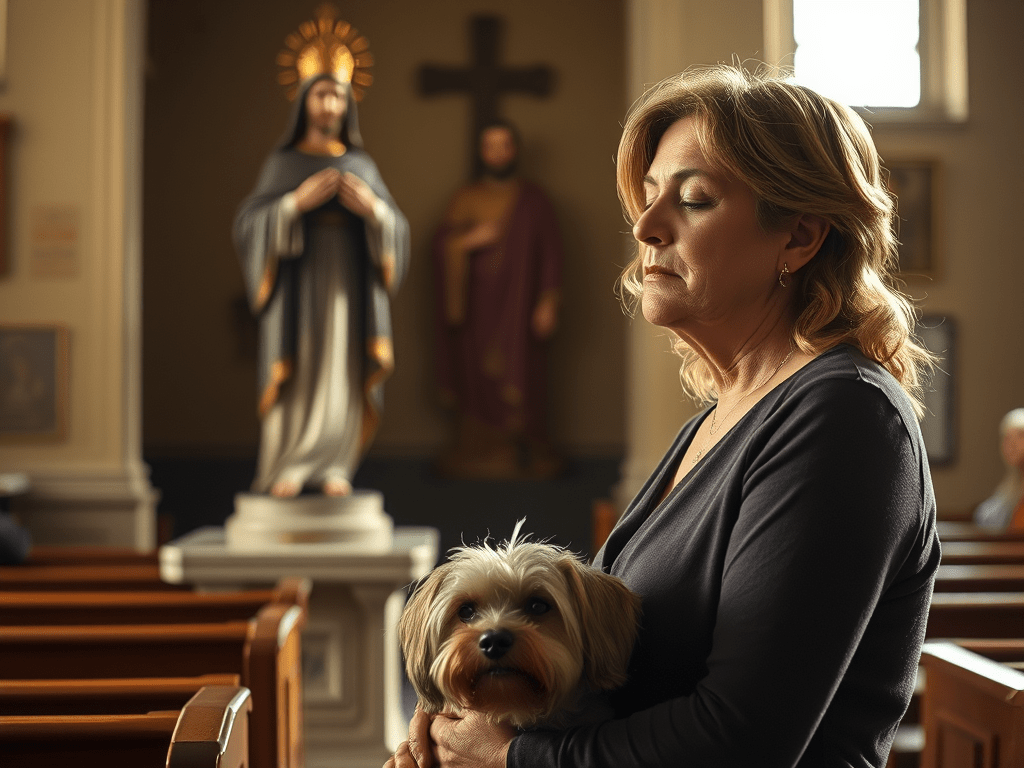
It’s always just ‘bout halfway through the Mass:
She and her ratty little dog walk past
The rite itself, the priest, the weekday crowd
Of faithful folk upon their knees and praying.
It must be said at least she isn’t loud:
She stands before the statue of St. Jude,
Eyes tightly closed and hands upheld, displaying
A proper reverential attitude.
I wonder what her hopeless cause might be
That brings her daily to the effigy.
What situation can she not surpass
That drives her on and feeds her monologue
So fervently? Some personal morass
Or is she simply praying for the dog?

Jeffrey Essmann is an essayist and poet living in New York. His poetry has appeared in numerous magazines and literary journals, among them Dappled Things, Amethyst Review, the St. Austin Review, Pensive Journal, America Magazine, The Society of Classical Poets, and various venues of the Benedictine monastery with which he is an oblate. He is editor of The Catholic Poetry Room.

Well – a poem by Sheila Murray-Nellis

Well

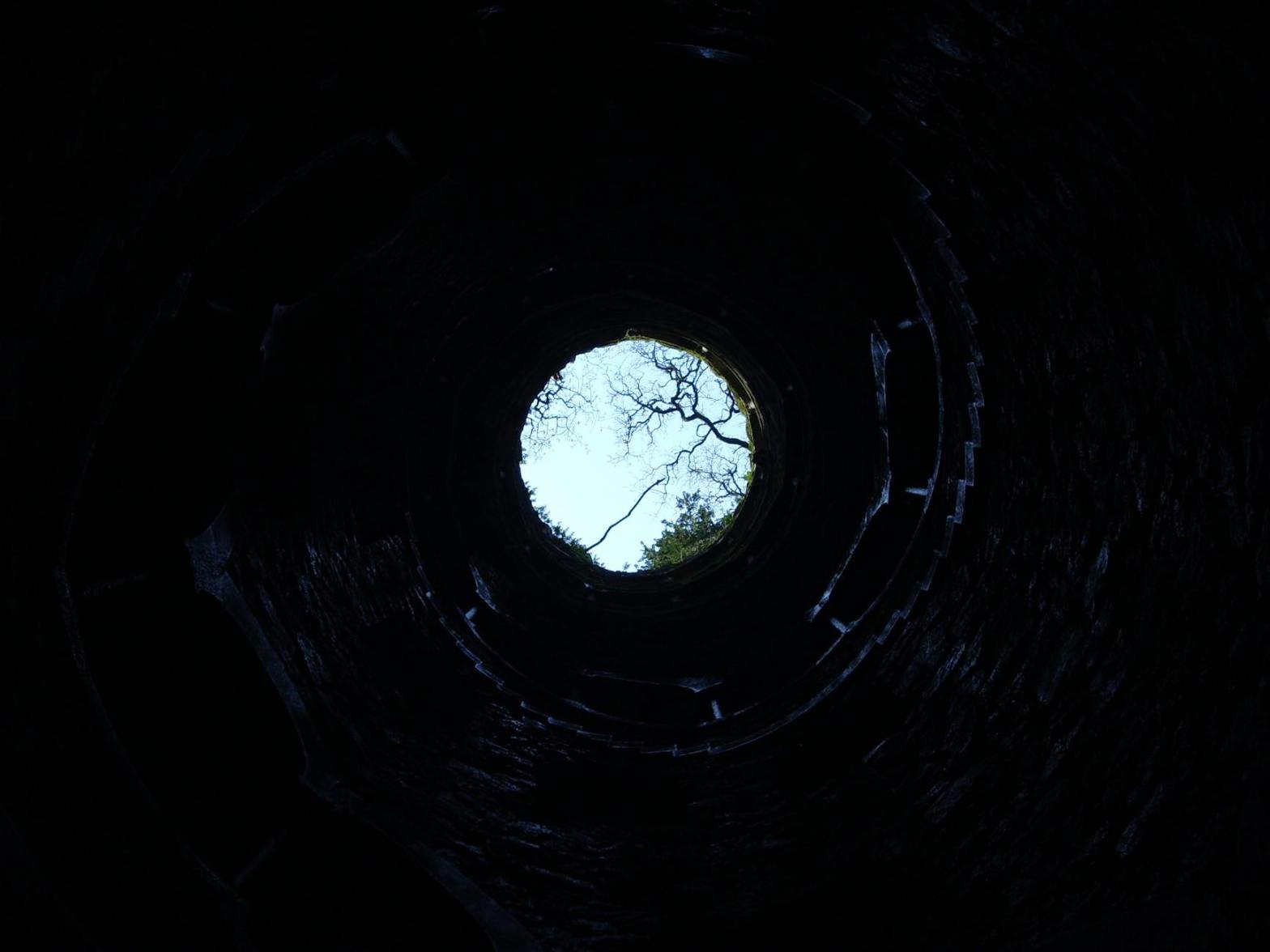
A small circle of light swirls
through layers of clay and sand like an eye
from the depths of the earth.

You are so delighted!
You worked with such persistence
despite the odd looks of those that passed you;
with an auger and your brute strength,
you bore through the gravel

and the layers of sand and clay
and finally found what you were looking for,
what you knew was there:
the well that will allow you to stay

even when the winds whip up and the temperature drops
and the snows cover the earth with shivering silver.
You found the spring of living water welling up,

from within the heart, the heart reflecting
that small circle of light.

Sheila Murray-Nellis is a poet and children’s author living in British Columbia, Canada. She and her husband, an Orthodox priest, are building a stone chapel on a property surrounded by the Purcell Wilderness Conservancy which they call St. John in the Wilderness Orthodox Sanctuary. Sheila has had poems published in St. Katherine Review, Windhover, Catholic Integrated Life, Mslexia, and elsewhere. For the past four years she has been Poetry Editor of St. Katherine Review, a position that gives her great joy. Her published work includes her book You Are Meant to Be Like Fire and several children’s chapter books.

On a Nearby Power Line – a poem by Jeannie E. Roberts

On a Nearby Power Line

Expect nothing. Live frugally on surprise. —Alice Walker


Perhaps the unforeseen nod appears as a blue ribbon
presented to the best cross-stitch at a county fair
or a one-hundred-dollar payout after the purchase
of a two-dollar lottery ticket,
or even a first-place award given to the standout poem
in a statewide poetry contest.
Whatever the amazement,
a sense of elation rushes through the body,
akin to a shift in weather.
As if an updraft on litterfall,
the feeling of exhilaration expands outward.

Once, my cousin, Katie,
experienced prize-winning success on national television.
A chain reaction of joy occurred during the game show
and within the family.
Like the thrill of observing dominoes as they tap one another
then drop into the ecstasy of effect,
why not celebrate the blessings of everyone?
Gathering exuberance from the world’s wellspring
can free the tension of expectancy.
Why not live without expectation?
Ease can replace the nature of anticipation.
How does the frugal surprise arrive as the unexpected gift?
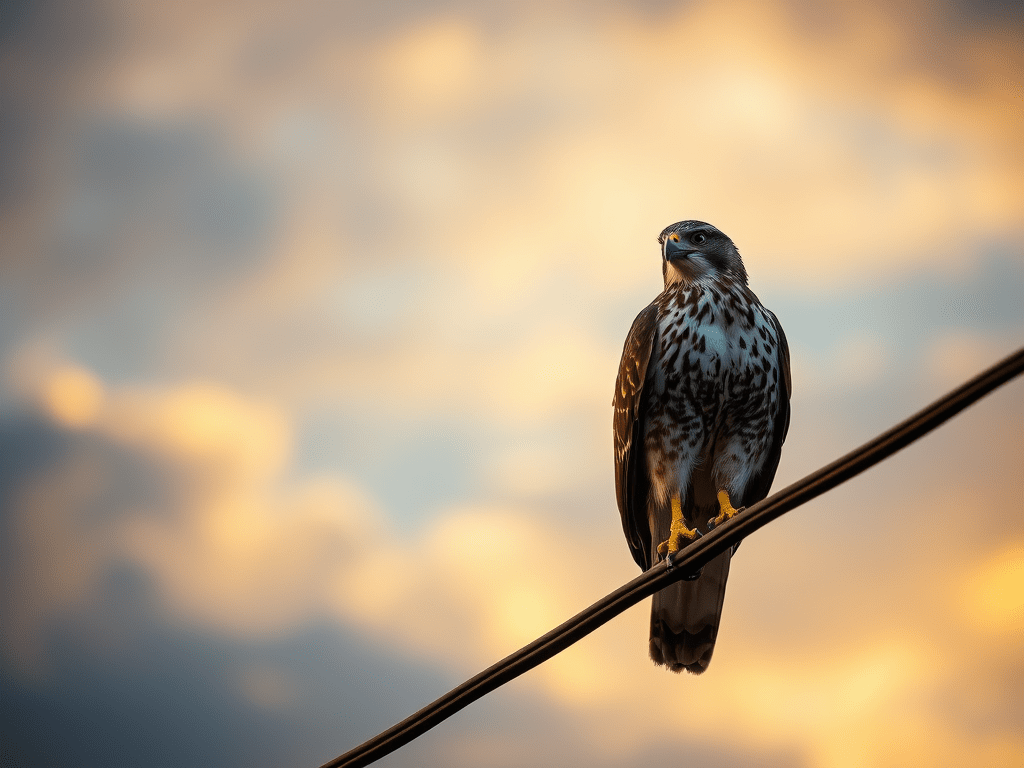
Yesterday, a Cooper’s hawk landed on a nearby power line.
I got a good look.


Jeannie E. Roberts is an artist and the author of several books, including her most recent title The Ethereal Effect – A Collection of Villanelles (Kelsay Books, 2022). On a Clear Night, I Can Hear My Body Sing is forthcoming from Kelsay Books in 2025. She serves as a poetry editor for the online literary magazine Halfway Down the Stairs, is an Eric Hoffer and a multiple Best of the Net award nominee. She finds joy spending time outdoors and with loved ones.

The Handle is on the Inside of the Door – a poem by Alfred Fournier

The Handle is on the Inside of the Door

after John O’Donohue, with a passage from Anam Ċara


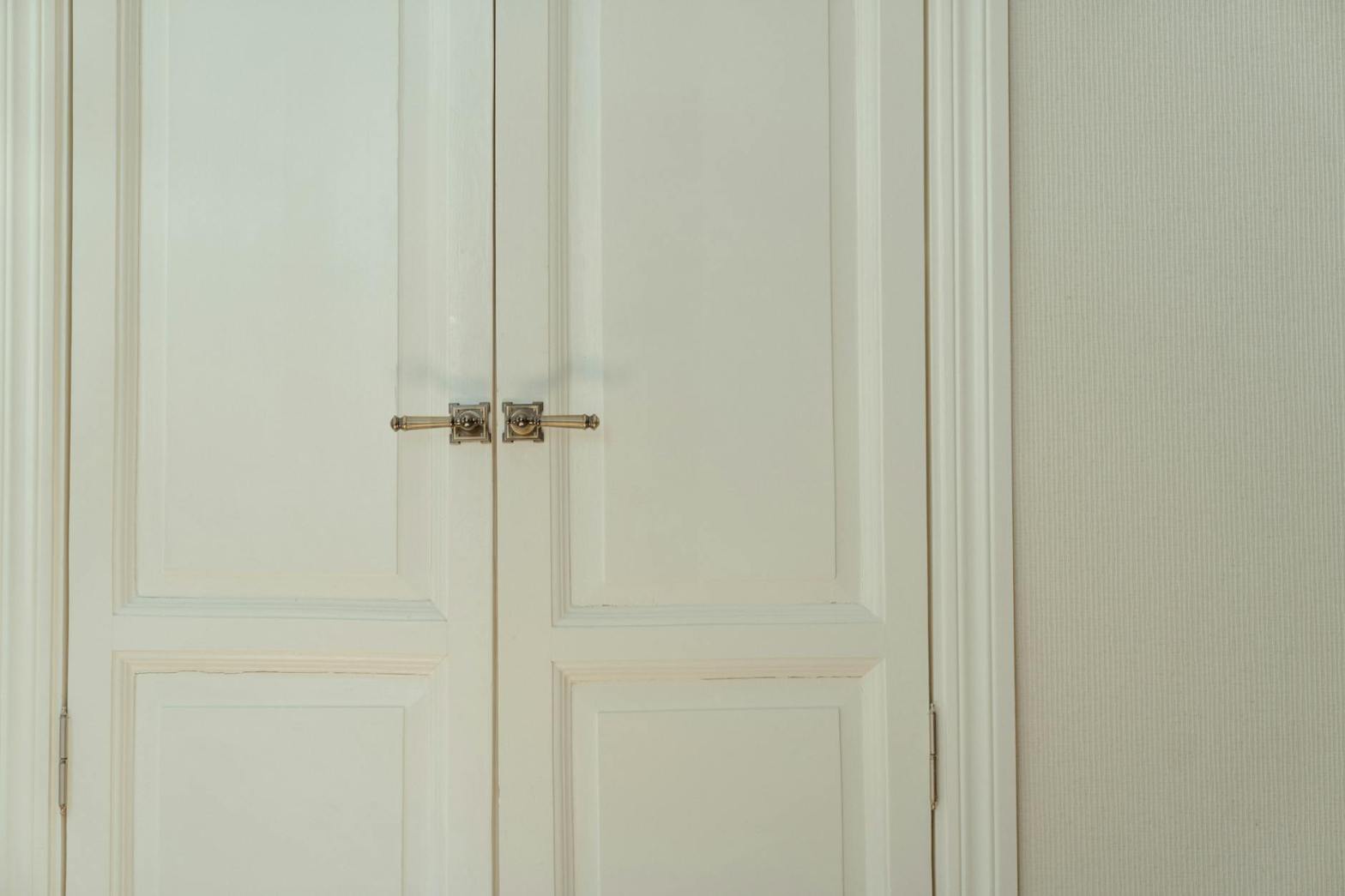
The door is white.
The room is white.
The rest is up to us.
Sometimes we are locked inside,
moving wall to wall,
windowless.
Some may make a skylight
and the stars offer curious company,
while others make the bed
with crisp, tight corners
yet fail to hear the song in silence.

The room is only as empty
as our imagination.
It might be a wild jungle
across the sea
as in that book by Sendak.
Only you can build the boat,
can lead the monsters dancing.
It is in the depths of your life
you will discover the invisible necessity
that brought you here.


When your restlessness expands
like a blaze inside you,
a storm will rise in the center
of the room. The urgency
of what you were born to do
will rush over you, and you will claim
what has always been yours.
You will turn the handle
and step outside,
where Heaven and Earth
will celebrate your arrival.

Alfred Fournier is the author of A Summons on the Wind (2023, Kelsay Books) and King of Beers (March 2025, Rinky Dink Press). His poems have appeared in Amethyst Review, South Florida Poetry Journal, Indianapolis Review, The Sunlight Press, Hole in the Head Review and elsewhere. He lives in the foothills of South Mountain in Phoenix, Arizona, with his remarkable wife and daughter and two birdwatching cats.

Mysteries – a poem by David Chorlton

Mysteries

after Tom Russell's Guadalupe

About faith they were never wrong, the desert
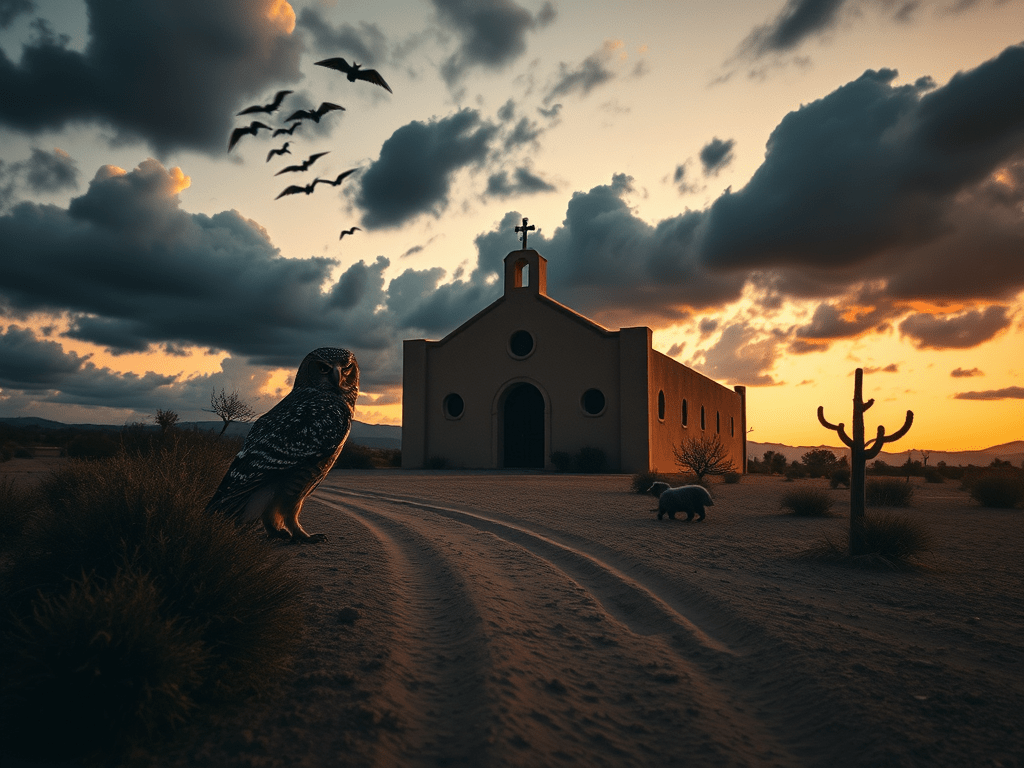
angels. Black clouds
above the mission church, an owl
at night for each departing soul
and prayers for rain ride the thermals
every day. An echo, echo
marks the closing
of the wooden door as footprints
leave a dusty trail to midnight. Skunk time,
bats are saints flying in sacred space
and ringtails find a way
to bind their tails around belief.
Darkness is the miracle
that makes miracles
complete: the crops smile again, roadkill
comes back to life and inside
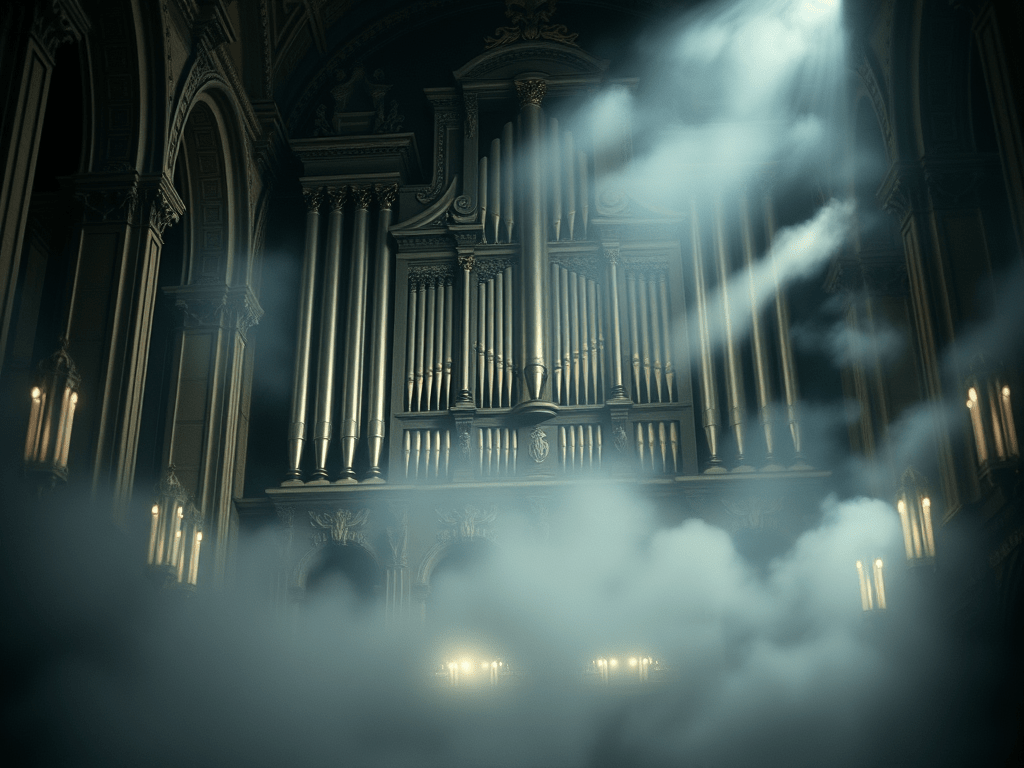
old adobe walls the organ plays without
the hands of a musician. Listen:
the notes
are walking on their toes
uphill on the stony trail
to be closer to the stars.

David Chorlton lived in Manchester and Vienna before moving to Arizona and beginning to learn from the desert and its creatures. He occasionally returns to his other long term pursuit of painting. The Bitter Oleander Press published his book Dreams the Stones Have in 2024.

John Cage: Organ²/ASLSP (As Slow As Possible)

John Cage: Organ²/ASLSP (As Slow As Possible)

On Monday, February 5, 2024, after a period of two years, a chord was changed in the longest musical composition in history. There have been only sixteen chord changes since the work, written for organ, began in 2001; the piece is slated to finish in the year 2640.

with a phrase from Pierre Teilhard de Chardin


White-gloved and rigid, they slide two more pipes
into place, solemn as gray-haired priests
bending over the Blessed Sacrament. Women adorned
in facemasks and fanny packs stand, eyes closed,
lit with a rapture usually reserved for discalced nuns.
Here, in Halberstadt, they take time seriously.
Truth takes the time it takes, and so they are satisfied
to eke out transcendence over centuries.
No matter. No matter, either, that the long-awaited chord
is less than lovely, that after two years of the same
pitches, an endless far-off buzzing like a leak
you can never find, the new notes do nothing
to make the music prettier. Pretty was never the point.
There is beauty enough in the world if you are willing
to seek it out. Hope is harder to find. But today
we come together, listen to a piece of music meant
to last six hundred years, affirm our faith in the slow
work of God
, a psalm stretching into infinity,
the promise that someone will be in this cathedral,
listening, when it ends.

Erika Takacs is an Episcopal priest, teacher, and poet originally from Wilmington, Delaware. Her writing has been published in Earth & Altar, The Christian Century, Braided Way, The Orchards Poetry Journal, and as a part of the North Carolina Poetry Society’s Poetry in Plain Sight. Outside of her work and her family, her three great loves are the music of J.S. Bach, books, and baseball. She currently resides in North Carolina, where she and her husband serve at the pleasure of their very spoiled beagle.

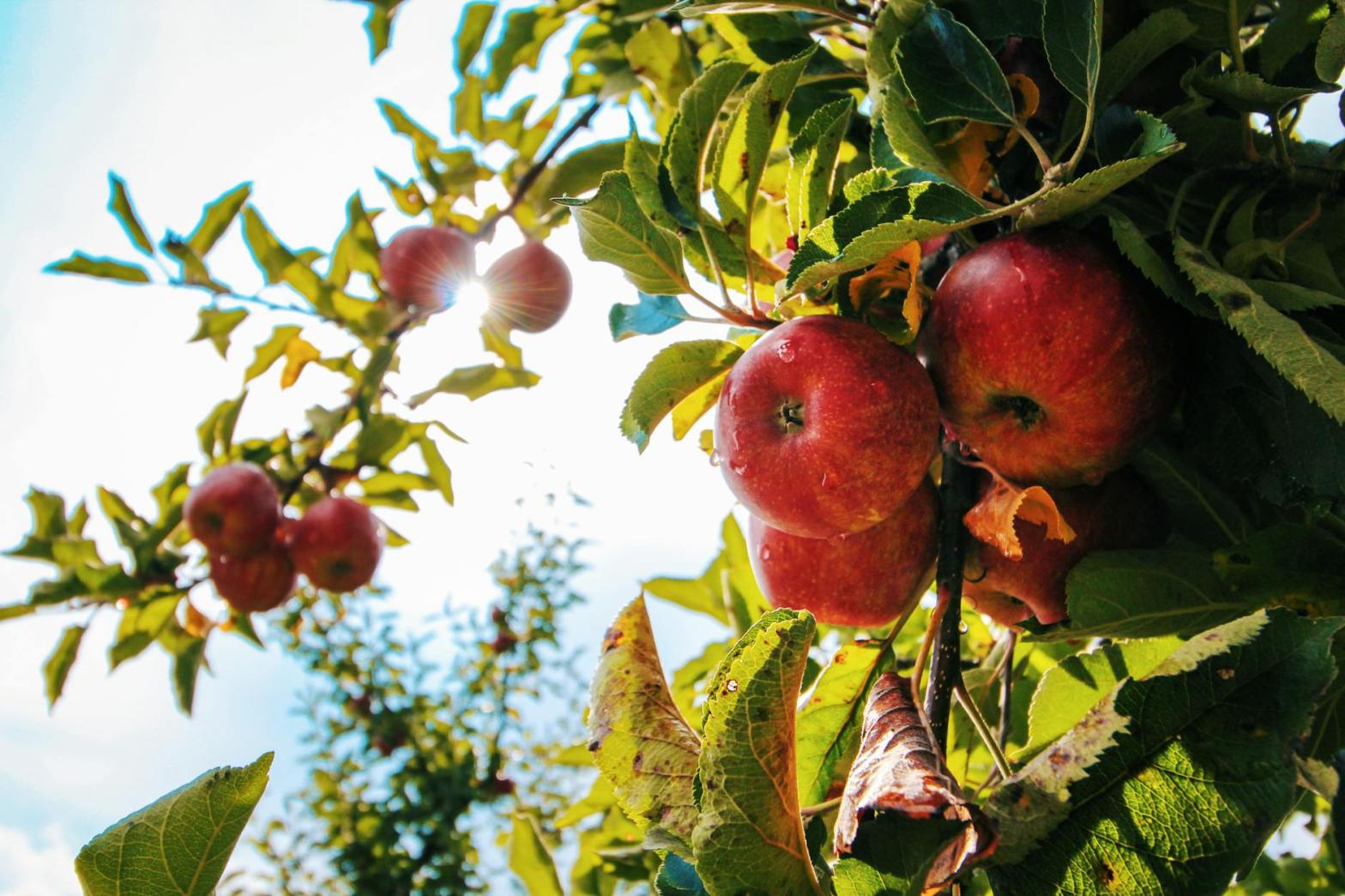
Apple – a poem by C. John Graham

Apple

bite &
break open
cricket tunes

ambrosial blooms
white flesh
and incandescent

cocoons swoon
& fancy bee dances branch-tangled
moon lantern leaf

green susurrus
root vein
heart wood un

pretentious
chalice of light
turning

whereto who
discovered the seed and
the original fruit?


C. John Graham’s poetry has appeared in The Laurel Review, Birmingham Poetry Review, Painted Bride Quarterly, Kestrel, Taos Journal of Poetry and Art, and the anthology Off Channel, among other publications. Graham lives in Santa Fe, New Mexico, and before retirement, worked for a rocket engine manufacturing company and a particle accelerator facility. He is now owns an aerobatic aircraft and serves as a volunteer search and rescue pilot while continuing a lifelong spiritual inquiry. A selection of published work may be found at https://sites.google.com/site/cjohngraham/home/poetry.