A Tree’s Hashkiveinu – a poem by Katherine Orfinger

A Tree’s Hashkiveinu

Let my roots dive deeply and drink
of soil that has never been tainted
by blood unjustly or otherwise spilled.

Let my trunk grow so wide
that no one can encompass me
alone. Let my strength
make parent and child,
refugee and soldier,
rabbi and stranger and
lover and lover and lover
join hands to embrace me
and then each other.

Let my branches become
weighted with the privilege
of bearing nourishing fruits
more valuable than rubies
for any who hunger
for sustenance and sanctuary,
for those who do not have
the means to shelter themselves.
Let my leaves be a canopy
for those who need solace and rest

And do not let your enemies—greed and fear
and wickedness—sully your heart and
cause you to take up your swords and your axes against me.
Instead, polish your metals
until they shine, and
eschew the mirror.
Raise them skyward,
and ask God to look at Himself.

Katherine Orfinger is a writer, artist, and MFA candidate at Rosemont College. She draws her inspiration from her Floridian hometown, love of nature, and Jewish faith. Katherine’s work has appeared in The Write Launch, Beyond Queer Words, Touchstone, Aeolus, and many others. She currently resides in Pennsylvania with her partner.

Higher Order of Being – a poem by Russell Rowland

Higher Order of Being

Blurred hoofprints in the mud here
suggest something drank recently from the brook:
I think a deer.

Quenched thirst is immediate, like daily bread.
The sound of water drew a deer
unlikely to consider it the answer to a prayer;

unable to number
seven waterfalls far down the gorge, or identify
a lake at the outlet—

and what small brain in such a narrow cranium
even dreams that “all waters flow
toward the one sea, yet the sea is never filled”?

I was born to find
the moment beautiful—but then Preacher put
eternity into my head.


Russell Rowland
writes from New Hampshire. Recent work appears in Red Eft Review, Wilderness House, Bookends Review, and The Windhover. His latest poetry books, Wooden Nutmegs and Magnificat, are available from Encircle Publications. He is a trail maintainer for the Lakes Region (NH) Conservation Trust.


Among Olive Trees – a poem by Jeffrey Essmann

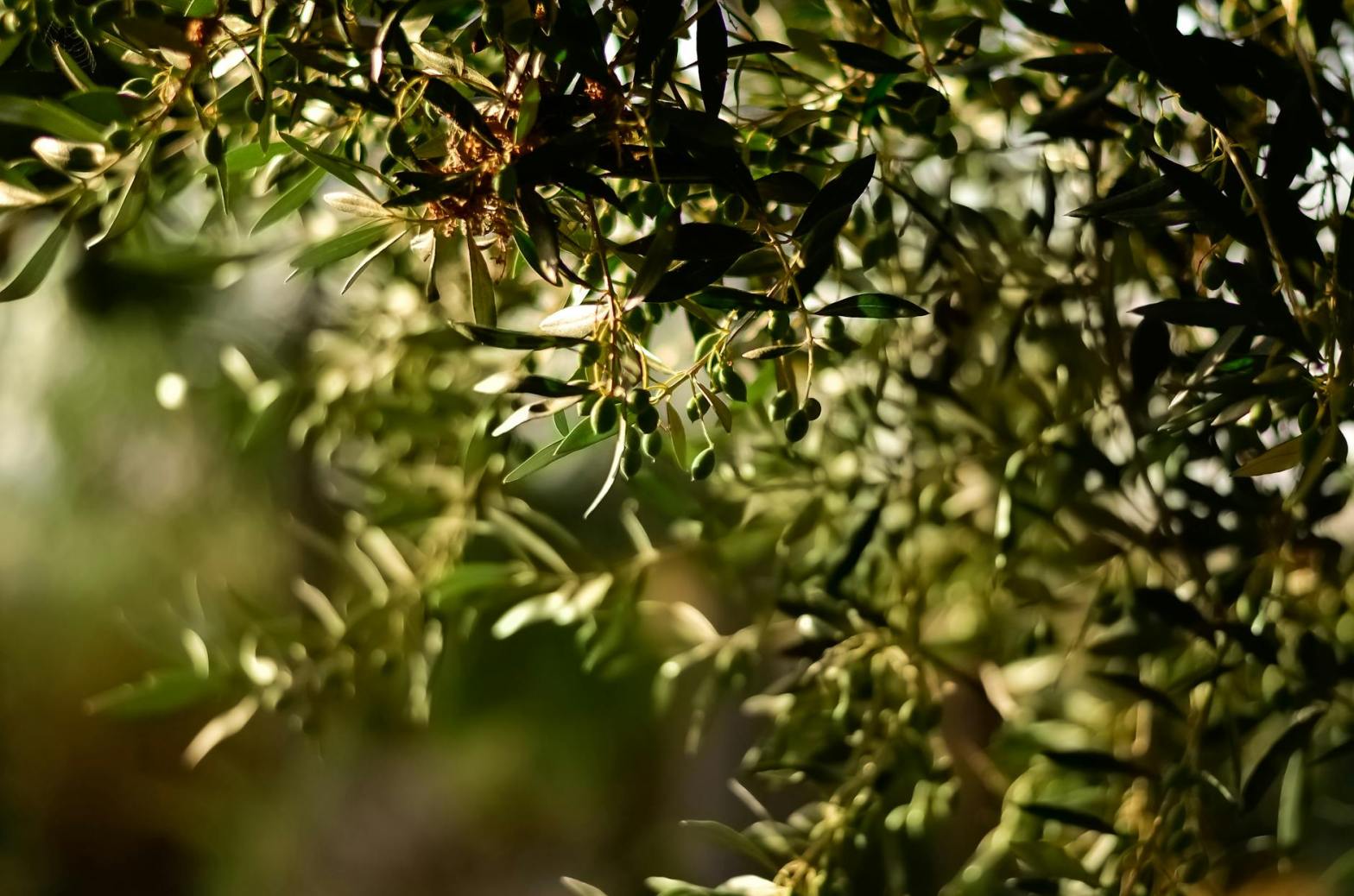
Among Olive Trees

We slowly grow, we olive trees, but live
For many years. Our memories are old,
Are seeded, bedded in the earth and nursed
On earthly time. Our memories are rich
With loam, with stories passed from root to root
Until they’re written in the gnarled twists
And tortured turnings of our ancient trunks.
For we’re a knotty yet a noble race;
We’ve not the levity of willows nor
The elegance of elms. We envy not
The fabled strength of oaks and feel no call
To emulate the aspen’s chaste demean.
We some of us have lived a thousand years
And some have even more. We know ourselves
And know the steady ache of time; have inch
By inch and year by year our skyward push
Maintained as empires around us far
More quickly grew but of a sudden fell,
The names of those who ruled them unrecalled.
We find that human stories come and go,
But now and then a simple moment claims
Its place in memory, will not give way
To Time’s corrosive chafe. Our eldest tell
Us of a time long past, an evening when
A man—a rabbi, so they said, or some
Such thing—had come among us, fallen to
His knees and cried aloud into the face
Of death while farther off his friends were all
Asleep. And then some people came, were rude
And rough and quite abruptly took him off.
We always wondered what became of him.
(The friends woke up but quickly ran away…)


Jeffrey Essmann is an essayist and poet living in New York. His poetry has appeared in numerous magazines and literary journals, among them Dappled Things, the St. Austin Review, Ekstasis Magazine, Amethyst Review, The Society of Classical Poets, Modern Reformation, and various venues of the Benedictine monastery with which he is an oblate. He was the 2nd Place winner in the Catholic Literary Arts 2022 Assumption of Mary poetry contest and 1st Place winner in its Advent: Mary Mother of Hope contest later that year. He is editor of the Catholic Poetry Room page on the Integrated Catholic Life website.

Undertones – a poem by E.C. Traganas

Undertones


‘The trumpet does not more stun you
by its loudness, than a whisper
teases you by its provoking inaudibility’
— Charles Lamb


Does a speck of lint
make a sound when it drops
into a wastebasket?
I only ask because
souls are weightless, too,
flaking off traces of deadened thoughts,
sins, bruises, and abraded threads
of paths long gone awry
as they make their way
down life’s buckled corridors.

My ears are attuned and entwined
with the spiral of sounds
stretched out and taut
with the snap of catgut,
a string that resonates
with each shifting of sound.

Will a footstep be heard
in a snow-covered glen?
Will the leaves of crisp maple
intone in accord when the wind
draws its bow through their veins
in a pulsing of rhythm?

I grow fainter and lighter
as each thought is shed,
diaphanous as the snow.
Conjoined with the chorus of trumpets,
the deafening knock of each blast
carries me further, hammering footfalls
burying my prints soundlessly,
weightlessly, in mounds of dust
humming louder and louder
with the clarion roar and cry
I silently follow towards home.

Author of the debut novel Twelfth House, and Shaded Pergola, a collection of haiku and short poetry featuring her original illustrations, E.C. Traganas has published in over a hundred literary magazines including The Brussels Review, The Society of Classical Poets, Amethyst Review, Story Sanctum, Penwood Review, and others. She enjoys a professional career as a Juilliard-trained concert pianist & composer, has held over 40 national exhibitions of her artwork, and is the founder/director of Woodside Writers, a New York-based literary forum. www.elenitraganas.com

Walking for God – a story by Shivani Sivagurunathan

Walking for God 

Aham Brahmasmi. If Gauri keeps repeating I am Brahman, maybe the stickiness of the early afternoon will evaporate entirely like last night’s conversation between her and Mo about her perennial self-sabotaging behaviour. Mo knows how to dig up her flaws and dangle them in front of her.  Talented Yogi. 

“If you remember you’re the vastness of consciousness,” Mo said just after the first half of their epic wander along the east coast of Peninsular Malaysia, moonlight glinting on the ocean like underwater flashlights, “and not the thoughts in your head, not even your emotions or anything you can observe, then you’ll stop hurting yourself. You won’t need to ban yourself from good things. You won’t have designed flawed presentation slides at work on purpose, you won’t tell the people who love you to leave you because you’re cursed, you won’t let others take what’s yours to enjoy.” 

Gauri didn’t say a word. She threw shells into the sea and watched the water jump. They’d opened the single packet of coconut buns they received from their latest round of begging. The buns stuck to each other like co-dependent friends. Mo tore the first bun off the second and handed it to her. She wasn’t hungry even though they hadn’t eaten in a day. That was the practice, Mo said before they set off from Kuala Lumpur for their month-long wandering trip, we beg for everything, food, transport, a place to stay, it’s the route to God.   

“And listen,” his voice suddenly soft and kind, “we’re walking for thirty days to shed our ignorance, our false self. You can’t reach the light if you’re holding on to the rubbish. Stop going against yourself, Gauri.”

She bit into the spongy bun, gifted to them by a tailor from Punjab who volunteered at the Sikh temple where they had their last meal of chappatis and thick, salty dhal. The tailor was poor, she lived in a tiny, musty room decorated with abandoned cobwebs and mysterious dark markings on its four chipped walls, but she insisted on buying them a packet of coconut buns from the sundry shop opposite the temple, next to her humble room. “You’re walking for God,” the woman whispered, reverence in her voice, “I have to help you. It’s my duty.” The tailor couldn’t believe people still did things like this, wandering through the wilderness of the world with nothing but a single cloth bag and trust. “This is like a story from the holy books,” she continued, “you know those wise men who gave up everything and travelled naked through forests and villages, wanting nothing, needing nothing. Cruel people threw stones at them, but there were also good people who gave them food and shelter. I have nobody here in Malaysia. My family is in India. I have very little but to give you both some food is what brings riches to my small life. You must sleep here for one night. Take my bed, I will sleep on the floor.” Gauri immediately felt guilty. She had no right to be parading as a holy woman. In her pre-wandering life, she had accidentally poisoned a cat, she’d actively practised lying, she got high on Ganja, she cursed at her parents in private, and she mainly didn’t wish people well because people mainly didn’t wish her well. She openly wept in front of the tailor and the next morning, she found a beautiful white cotton bag beside her, surreptitiously sewn by the tailor while they were sleeping. 

Gauri scrunched up the bag to her nose. It smelled of poverty and kindness. She wanted to cry. She had no right to be here, enjoying the tailor’s hard work, her gift of buns. In front, the sea was gorgeous and it looked as though stars were dropping from the sky. What did she do to deserve this type of beauty? This type of generosity?     

“Embrace your life, Gauri,” Mo said, as though he’d entered her mind, “Your problem is that you don’t value your existence. So, you throw it around, give it away to whatever and whomever is there to take it. And there are always cannibals waiting to gobble up what they can to make them feel a false sense of power.” 

“Tell me what to do.” She swallowed the bread, thinking about the poor tailor and what the woman had done for them. More stars fell from the sky, lighting up the ocean with silver fire. Tears rolled down Gauri’s cheeks. 

“This is your problem, Gauri. You haven’t blessed yourself. The whole universe can bless you but if you don’t bless yourself, nothing will ever happen. Nothing.” 

The conversation stuck to her like antique bubble gum. It didn’t leave her alone all night, all morning, and now, on the second leg of their wandering journey, she can’t shake the damn thing off. But what should she do? She can repeat Aham Brahmasmi over and over again but for what? She doesn’t feel like the vast ocean of consciousness Mo and the scriptures say she is. What she really is, she wants to say but is too afraid to admit because she’s meant to be transcending it all, is this rigid, frigid woman who doesn’t know what she should do to atone for every shitty thing she’d done in her life.

Meanwhile, Mo is peaceful. He’s sauntering up ahead, immersed in Brahman. Is that called a walking Samadhi? Lucky bastard. Being a Yogi has nothing to do with it, he claimed, he was just good at forgetting. Mo, the prodigious Yogi she met by accident at a bus stop three years ago. He was sitting cross-legged on the ground, chanting loudly: Om Asato Ma Sadgamaya Tamaso Maa Jyotir Gamaya Mrytyor Maa Amritam Gamaya Om Shanti Shanti Shanti. She was at that point in her life when her aloneness was no longer cute or funny, it was dangerous and sad; she’d left home, fought with every friend, curated her own firing from the job of her dreams, had exactly twenty-five ringgit in her bank account, one loaf of semi-green bread and half a packet of processed cheese in her rented room which also, she discovered the night before, had developed an ant-infestation problem. She was ready to swallow Mo’s chants. He didn’t particularly want her, he confessed later, but he pitied her and decided to help her transform out of her wretchedness.       

Which is why they’re here on this east coast beach, to jump over the world. They’re here to throw themselves into Enlightenment. 

She has to fight for this because he had to fight for this for her. 

The late morning sun singes her head. They’ve walked over ten kilometres, mostly on coarse-sand beach, pristine and empty apart from thousands of silent hermit crabs. She stopped to stare at them two kilometres ago, Mo marching in front of her, oblivious to her revelatory communion with the scrambling crustaceans. Light bounced off their pearly shells, shocked her into a moment of paralysed bliss. Her tongue remained stuck in its cage. She wanted to scream, “what beauty!” like a silly foreign tourist but she didn’t because she couldn’t. It wouldn’t have mattered anyway. There was nobody around to hear her. Best part was she didn’t care if anyone witnessed her. Didn’t need others to make her feel good. No money in her bag, the last coconut bun consumed two beaches ago—they agreed to travel for a month on faith and surrender—she’d never felt this happy. 

But inside her is the feeling she’s had most of her life: none of this will last, don’t get too comfortable. 

Her feet squish into soft, sinking sand. Even after ten kilometres, each time her feet go in, she imagines them never coming out. It feels like quicksand, she complained to Mo and he told her to conquer her mind. Titiksha, he reminded, you have to develop better titiksha, otherwise your mind will always be shaky. Transcend your febrility, Gauri. Then he returned to silence. 

This is their twelfth day roaming streets and beaches without money, without pre-determined accommodation. And still she doesn’t know what he means by self-blessing. Go off on your own, Gauri, give yourself permission, Mo had said while they waited by the road for free transport. What does it mean to give herself permission, permission for what? 

“Mo!” 

She shouldn’t be calling out to him, she knows, especially since he sealed them both off in silence, to heighten their practice. They’re here not without intention, he often reminded her. They’re not here to sunbathe, not to have a holiday. They’re here to fulfil the highest goal of human civilisation. It’s what the Buddha did three thousand years ago, and Shankaracharya, and the Rishis of the Vedas.

“Mo!” she insists. 

He’s racing ahead. She quickens her step, to keep up. She has to clarify what he means by self-permission, self-blessing. 

“Mo!” 

“Mo!” 

“It’s important, Mo! It’s about the practice!” 

But with each shout, he skips and runs. She should stop now, let him be, but she’s afraid. Why is he doing this to her? What kind of punishment is this? 

“Mo!” 

She can barely see him now. He’s sprinting off the beach. She keeps running. He’s not looking back. Had he always been this way? 

“Stay detached,” he once told her, “that’s the way to inner strength.” 

Is detachment cruel? Is it cold? Dismissive? 

This must be it. He’s detaching himself from her, throwing her off a cliff and asking her to find her own way out of the inevitable. Mo, but wait, I want to tell you I am finding it hard, my head spins badly and I’m not ready to be alone or to be Brahman, I just need a bit of time, I can’t do this, I don’t even know what I’m supposed to do, oh my god, oh my god, please wait. 

But Mo has vanished. 

She wants to ask him how she’s meant to bless herself, the whole concept of self-blessing is foreign to her, this whole beach and planet and human life is foreign to her, she’s never been shown the way, what is the way, oh my god, oh my god, I am not holy, I am not worthy of the hermit crabs, of the poor tailor’s gifts. She slows down. Her entire body burns in the midday heat. Her feet ache from the run. She tries to neutralise her panting but nothing happens. Her breath is going out of control. Focus on the in-breath, the out-breath, that’s what Mo taught her, but there is too much chaos in her breath for that to work. She collapses on the sand. She clutches the white cotton bag the tailor sewed for her while she slept. She hugs it tightly and feels a burst of warm air in her chest. She keeps the bag in her arms, sobs into it liberally, indulgently, and stays there, roasting in the noon heat. 

She opens her eyes. The sky twists and turns. Birds squawk shrilly. The world swirls in lurid white light. It feels like the ending of something, like the long-awaited arrival of death. 

Gauri sits up, scoops sand into her hands, squeezes hard and hurls the damp clump at the water. It lands just at the edge of the shore. She stares at the gentle waves and screams, “Mo, Mo, you bastard, Mo, I know what I will do now. Get out, get out, I don’t care! Be as evil as you want. It’s your contract with God, not mine. I have my own plans, Mo, Mo, you bastard Mo.” 

It will take her a day and a half, at least, to walk back to the tailor’s home. She knows how to beg for food and water along the way, Mo taught her that. Gauri has no plans for what she will do once she arrives at the tailor’s home. Perhaps thank the woman, embrace her, confess her sins, make the tailor a cup of tea, whatever. It doesn’t matter. Gauri isn’t worried. She’ll figure it out the moment she lands at the place she experienced the first real glimpse of God in her life.   

Shivani Sivagurunathan is a Malaysian author. Her first novel, Yalpanam, was published by Penguin Southeast Asia in September 2021. 
Her poetry collection, Being Born (Maya Press) and her book What Has Happened to Harry Pillai?: Two Novellas (Clarity Publishing) came out in 2022.


Salvation – a poem by Wally Swist

Salvation


The blind Italian tenor,
Andrea Boceclli, sings the phrase
“Thine is the Kingdom”
from The Lord’s Prayer
on the recording while you sleep
and I stroke your hair, holding one
of your hands across your chest,
when you awaken and say,
“I’m glad you’re here; it’s a salvation
for me.” I respond, “Thank you
for saying that. We have good days,
we still have more ahead of us,”
and your face shines in semidarkness
then your eyes begin to tear
before I tell you I need to leave for
the day, you telling me that you don’t
want to see me go but understand
I have things to attend to,
as the recording progresses
to end in powerful flourishes,
making me think about
the Thomas Gospel in which it states
that “the Kingdom of Heaven is
spread across the Earth but men
do not see it,” in concert with you
saying “it has always been
deep between us,” that you
understood all that you’ve
been through, all the suffering
you’ve had to endure was
made apparent in this moment,
the peace spreading through us.

Wally Swist’s forthcoming books include If You’re the Dreamer, I’m the Dream: Selected Translations from Rilke’s Book of Hours (Finishing Line Press) and Aperture (Kelsay Books), poems regarding caregiving his wife through Alzheimer’s. Recent essays, poems, and translations have or will appear in Amethyst Review, Chicago Quarterly Review, Commonweal, Full Bleed, Healing Muse, Illuminations, La Piccioletta Barca, Presence: A Journal of Catholic Poetry, and Your Impossible Voice. His book Huang Po and the Dimensions of Love (Southern Illinois University Press, 2012) was selected by Yusef Komunyakaa for the 2011 Crab Orchard Open Poetry Competition.

Faith – a poem by Jeffrey L. Taylor

Faith

Faith asks me to trust the teaching
to walk in the dark, on the faint
path that she assures me
has been trodden before.
To follow where it leads
down from the high mountain
into the canyon
with the wild rivers running,
scaling cliffs that seemed
impossible from a distance,
to gain a further mountain
though I see not the path
until I walk it. Knowing
its presence only
through the soles of my feet when
the dark night, the dark woods
leave sight useless. Faith
is the evidence of things hoped for,
the presence of things not seen
until the moon rises,
once more showing
the path I am on.

Jeffrey L. Taylor is a retired Software Engineer. Around 1990, poems started holding his sleep hostage. He has been published in The Perch, California Quarterly, Loud Coffee, Texas Poetry Calendar, and Texas Poetry Assignment.

Instructions for Angels – a poem by Rupert M. Loydell

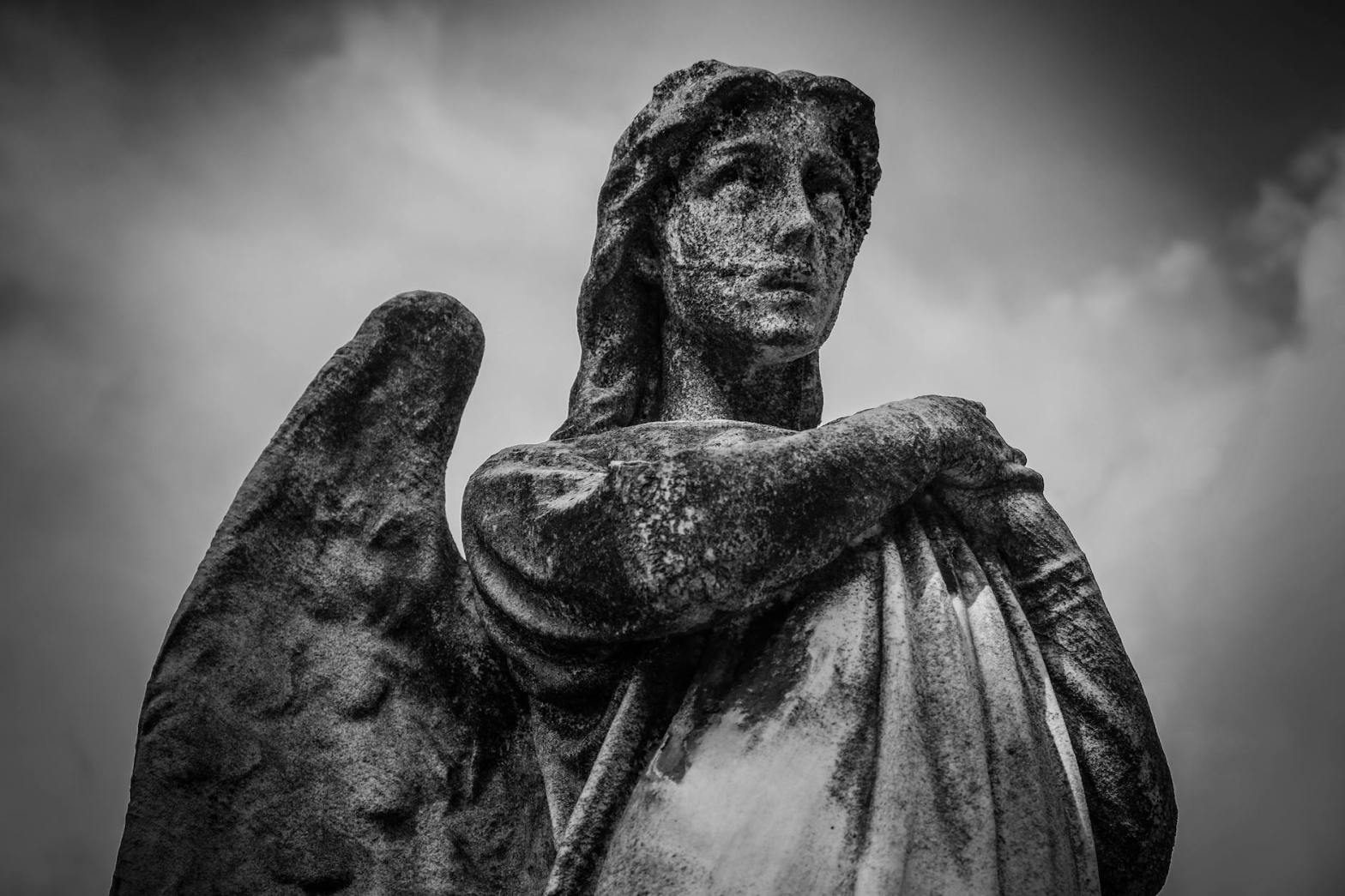
Instructions for Angels

Don't trust the labels,
don't lose the plot.
Don't. Just don't.

Pay attention to the signs,
the way the wind blows,
to how the shadows fall.

Always read the small print,
say what you mean to say
and suffer the fools gladly.

Listen to the water.
Right the wrongs,
rewire the subtext.

Disconnect.
Put that light out.
Please mind the gap.

You must pretend you know
the answer to the question.
Once more with feeling.

Please arrive in plenty of time
for your annunciation.
Listen for the judgement call.

It is not theologically sound
for an angel to doubt.
You should hear yourself.

Grasp faith by the horns
and pick up the pieces.
Now is not the time to be lost.


© Rupert M Loydell

Rupert M Loydell is a writer, editor and abstract artist. His many books of poetry include Dear Mary (Shearsman, 2017) and The Return of the Man Who Has Everything (Shearsman 2015); and he has edited anthologies such as Yesterday’s Music Today (co-edited with Mike Ferguson, Knives Forks and Spoons Press 2014), and Troubles Swapped for Something Fresh: manifestos and unmanifestos (Salt, 2010)


At the Tibetan Cultural Center – a poem by John Claiborne Isbell

At the Tibetan Cultural Center


This being Indiana, there’s a hoop
at the Tibetan Center, and we play,
the monks and I, in saffron and in jeans.
We do not score a lot, but we set picks
and pass the ball and rebound our missed shots.

That’s how it goes – for we are not The Knicks,
we’re five foot something. On a sunny day,
we head outside. I too am in the loop,
I water daisies and forget-me-nots
like Milarepa. I know what it means

to meditate. Is there another way
to free each sentient being? Just for kicks,
we play at ball; the flowers do not droop.
Life goes its round, and in our in-betweens,
we laugh and joke. These are our little plots.

John Claiborne Isbell is a writer and now-retired professor currently living in Paris with his wife Margarita. Their son Aibek lives in California with his wife Stephanie. John’s first book of poetry was Allegro (2018); he also publishes literary criticism, for instance An Outline of Romanticism in the West (2022) and Destins de femmes: Thirty French Writers, 1750-1850 (2023), both available free online. John spent thirty-five years playing Ultimate Frisbee and finds it difficult not to dive for catches any more.

Eclipsed – a poem by Rachel Landrum Crumble

Eclipsed

Confession: I steal a glance through cloud cover.
I see the shadow of God’s shoulder
crescent the sun.

New spring leaves reflect their unison
light, turn the air green for days.
Sparse and pensive birdsong unbraids
and flaps its solos in the breeze.

One might think a storm is coming
as white cloud cover with gray underbelly
slides across the sky. Pinholes of blue,
like my shadow box, reveal little.
Though the ophthalmologist says they’re fine,
four days later, my eyes are still aching.

Rachel Landrum Crumble is a life-long poet, fledgling fiction writer, and retired teacher, having taught kindergarten through college. She has published in The Porter House Review, Spoon River Poetry Review, Common Ground Review, Poetry Breakfast, Humans of the World, among others. Sister Sorrow (Finishing Line Press) is her first book. She lives with her husband of 43 years, a jazz drummer, and near two of her adult children and three grandchildren. Find her staring out the window, singing or on Substack or at poetteachermom.com.