God in the Garden – a poem by Janina Aza Karpinska

God in the Garden

In the light of owl eyes,
orb of alium seed-head,
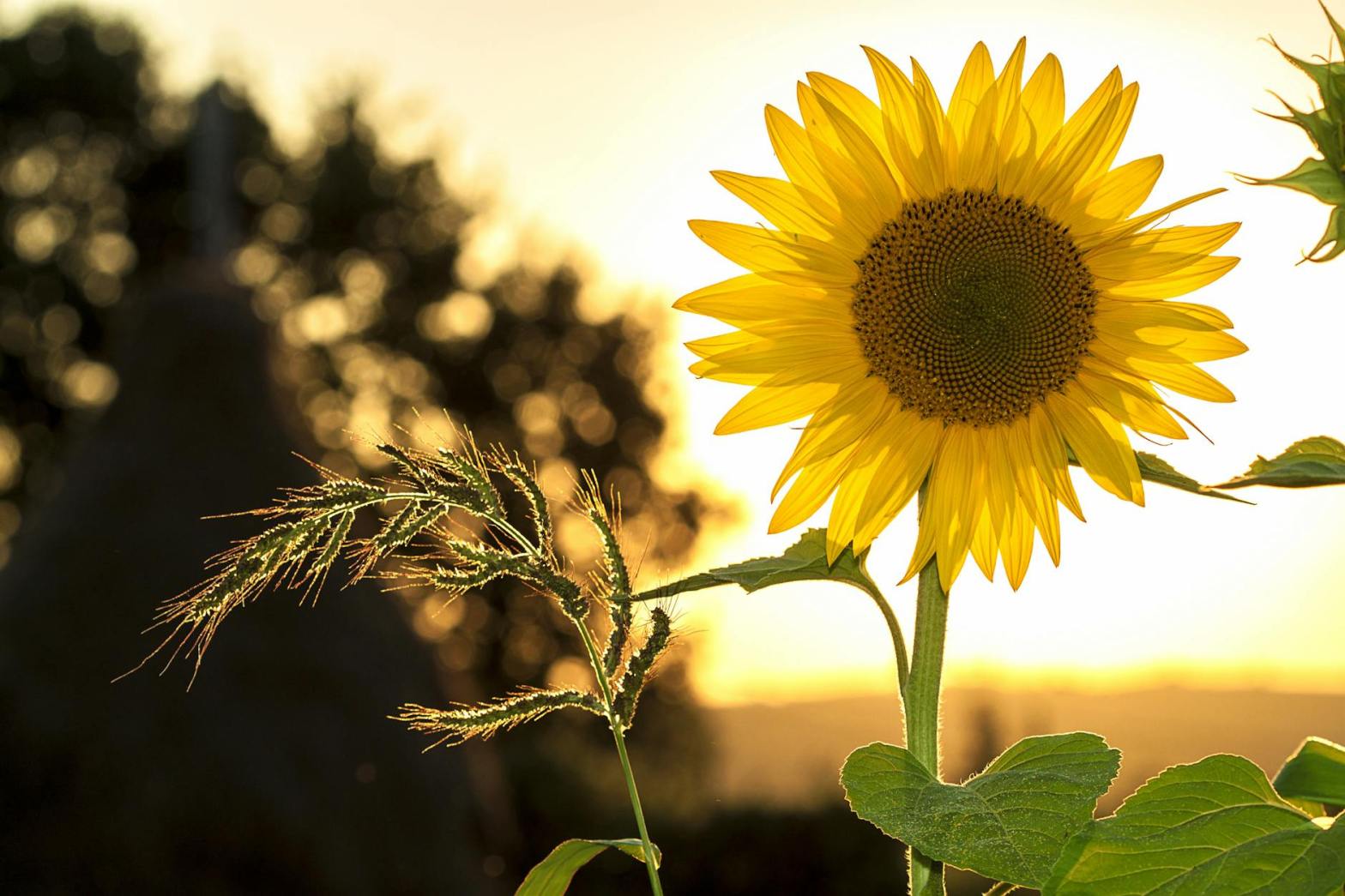
centre of sunflower's crown
God appears,
and I am calmed.

In grain of sand; hole of hag stone;
spreading radius of rippled pond;
crossed loops of waggle dance ~
eyes grow wide in wonder:

God is here.

Janina Aza Karpinska achieved an M.A. in Creative Writing & Personal Development, with Merit, at Sussex University, and won 1st prize in The Cannon’s Mouth Poetry Competition shortly after. Her work has featured in Magma #85: Poems for Schools; Poetry in the Waiting Room; Drawn to the Light; Ekphrastic Review; Cold Signal; Raising the Fifth; Sein und Werd, and Epistemic Lit among others. She lives in a house full of books on the south coast of England, and makes writing a daily practice, drawing on a wide variety of styles.

Good Enough Church – a reflection by John Janelle Backman

Good Enough Church

Sunday attendance is sparse these days, which does our sumptuous chapel an injustice. So many treasures of the Episcopal Church in one cozy space: deep crimson carpet, old stone walls, dark wood, assorted saints in stained glass windows, Jesus reigning in heaven from the front, his mother high above the chapel’s entrance.

I’ve come here for twenty years, but that’s nothing in this place. Take Doris: she adored the Jesus window from her very first visit four decades ago, as she told me once. Did she look as magisterial then as she does now? No one remembers, not even old Clarence wearing his bolo tie and pink shorts whatever the weather, in the front pew with his three-day stubble and the unforgettable HA-HA-HA that he unleashes during the sermons. He stoops a bit, like Bob did, seated in the back pew behind me, swimming in his oversized ecru suit, shuffling with the offering plate to the altar despite his ninety years. Across the aisle, tiny Abigail, who late in life married the drummer in a cover band (sixties rock, of course, the music they grew up with) and bitched about his deafening practice sessions in their shoebox house. Next to her was Katharine, the youngest of our “old guard” at fifty-nine, who held Abigail’s hand when the older lady teared up, which was often. In the very back, Marian with the snow white hair, sitting on her walker because her legs couldn’t carry her further. 

I wouldn’t say we knew each other, not exactly. True, some of our secrets would seep out from time to time. Once or twice I thought I smelled gin on Abigail’s breath. One Sunday Bob told a story about his childhood in a fundamentalist church; only by “listening between the lines” did we realize he was gay. Occasionally Marian would allude to an adult child in trouble, but she never provided details, just sighs.

In that way she was like the rest of us. Nothing truly intimate: instead we’d natter about grandchildren, the price of meat at the grocery store, our gardens (Katherine used to decorate the altar with her exquisite roses). We’d moan about the church roof and, every now and then, mention God. Each new priest received a warm welcome and a chair at our table during coffee hour, but in the end priests come and go, and we remained.

I could tell this way of doing church was good enough—for me, anyway—when Bob disappeared and his departure punched a hole in my solar plexus, a blow more painful than you’d expect for a back-pew acquaintance. I ached when Abigail vanished as well. Did anyone try to call her? Maybe she couldn’t hear the phone with her husband riffing in the background. Then one day last year the walker wasn’t in the back of the chapel, and we sighed over that too. 

Even now, during coffee hour, their names come up. Doris still raves about the brilliant sweaters Abigail knit—one a week, though what she did with them Doris never knew. Clarence booms with laughter when he recalls (but, thankfully, does not retell) Marian’s off-color jokes. We all bemoan the loss of Katharine’s bouquets as we bemoan the loss of Katharine, three months ago, too soon for our taste. 

Yet their scents, like the psalms recited at an ancient monastery, have penetrated the walls. I still inhale the waft as I find my pew and hear Clarence whispering his pre-service prayers. Doris clenches my arm and smiles like always, and I see genuine affection though I’m not sure why. 

We’ll all leave eventually, all of the old guard, in our own ways. One thing’s for sure: as long as two or three of us show up on Sundays, we’ll slide into our pews, open our bulletins, and take a quick look round for the rest, even those who left our sight years ago, lifetime strangers who found their way into our hearts. 

#  #  #

John Janelle Backman (she/her) writes about gender identity, ancient spirituality, the everyday strangeness of karma, cats, and whatever else comes to mind. Janelle’s work has appeared in The Citron Review, Catapult, the tiny journal, Typehouse, HerStry, and Amethyst Review, among other places. Her essays have made several contest shortlists and earned a few Pushcart nominations. Find her at http://www.backmanwriter.com.

The Gates at the End of the World – poetry by Marc Janssen

What is there left to say about Marc Janssen, other than he should eat more vegetables? Maybe his verse can be found scattered around the world in places like Pinyon, Orbis, Pure Slush, Cirque Journal, Two Thirds North and Poetry Salzburg; also in his book November Reconsidered. Janssen coordinates the Salem Poetry Project- a weekly reading, the occasionally occurring Salem Poetry Festival and keeps getting nominated for Oregon Poet Laurate. For more information visit, marcjanssenpoet.com.

When I Was a Child I Knew I Was Water – a poem by Linda Carney – Goodrich

When I Was a Child I Knew I Was Water

I’d sneak into lovely of the dark street.
Such relief. No eyes
would see me go to the beach,
shed body, dissolve, float, and rise.
I’d relax out the fold of myself,
enter canopy of sky.
I knew then the secret
returning to body. Water in shell.
knew I had emerged from foam, though
they said I came from a woman’s body.
One day, they say I nearly drowned.
They forced me back to earth and stone.
I had tried my experiment of becoming
water in the public light of day.
Crawled head first into the blue and gray.
Waves took me, sand below fell away.
I was meant to be water.
Sudden alarm, fingernails tore my arm.
A sister snatched bathing suit straps,
dragged me to shore. A mother screamed,
slapped me back in the body once more,
disrupted and chastened, skin-scraped.
My soul then a rock in the pocket of my body.
Waiting.


Linda Carney-Goodrich is a writer and teacher from Boston whose work appears in Lily Poetry Review, The MacGuffin, Anti-Heroin Chic, Muddy River Poetry Review, and Literary Mama, among others. Her first book of poetry, Dot Girl was published Feb 2024 with Nixes Mate Books and was a finalist for the Sheila Margaret Motton Poetry Prize. You can find more about her at lindacarneygoodrich@yahoo.com.

Fireflies – a poem by Donald Adamson

Fireflies

They’re like Christmas lights,
twinkling points in the hedge and in the grass
until you catch the jink and swerve of them,
the small dyings and fadings

of creatures invisible by day, unless
an entomologist with ground-fixed eyes,
hunkered, finds a plain, dull carapace
and says the Latin name. Now, in the gloaming

they flash on-off, on-off, like lighthouses
on airy capes, transient brightnesses
with darkness in between, each a tale
in our own mortal book –

lives like sparks of flame, photons
that take wing when the sun sets
and signal to their fellow travellers
across the universe.


Donald Adamson is a poet and translator from Dumfries, writing in English and Scots. He currently lives in Finland. He was a lecturer in the universities of Helsinki and Jyväskylä, Finland, and has translated Finnish poems by Eeva Kilpi, Lasssi Nummi, and others. He has won prizes in many poetry competitions; also translation competitions, including first prize in the Sangschaw Competitions in 2017 and 2022. His collections include Bield (Tapasalteerie, 2021) and a co-authored collection, A Beatin Hert: Poems and Photographs from Rheged (Hatterick’s House, 2023).


Praising the Driveway – a poem by Joel Moskowitz

Praising the Driveway 

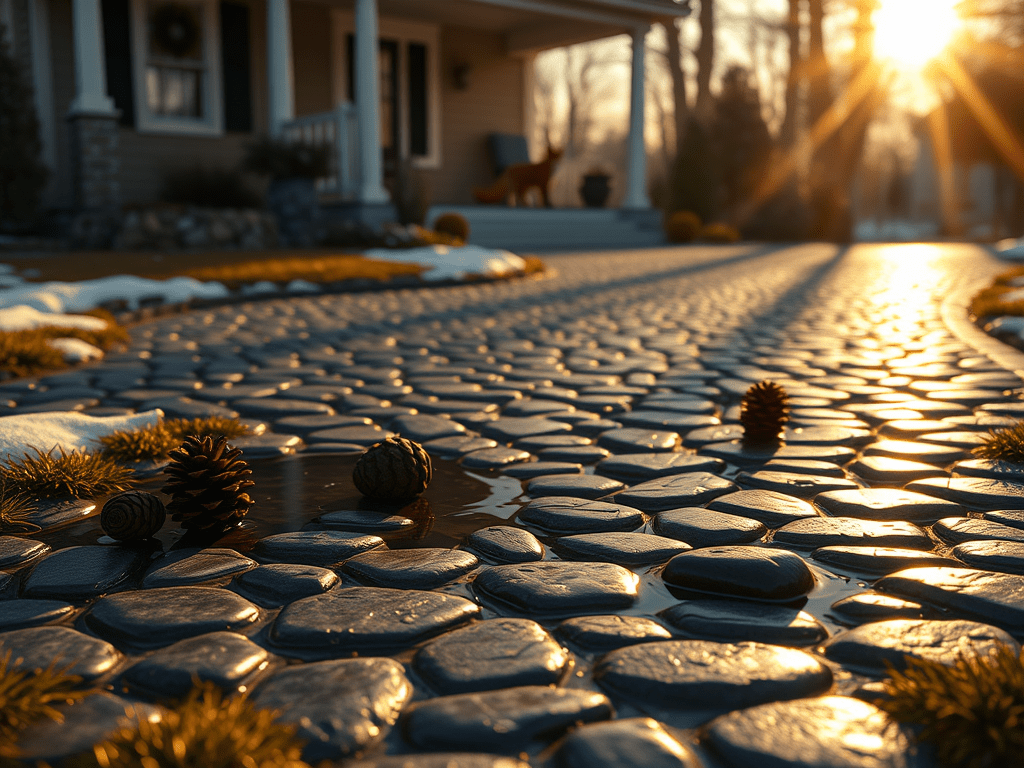
The sunlight, the puddles, the peastones…
millions of them… dimpled minerals
under the cold sky. I lift a handful;
feel their bumps, crevices, slick edges;

pocket one tiny worry pebble;
let the others drop, glint, be rinsed…
all pressed flatly together now
by wheels rolling over and over the ribbon of them
leading to the street…

My driveway!
Here, where your bare spots grow fresh grass tenderly;
here, where you’re strewn with smashed pinecones;
and here, by the garage, under clouds veiling the light,
blown by wind, and passing over Tippling Rock…

And I have a front porch to watch it all from:
a visitor leaving a feather, leaving a dollop of poop,
a colony of ants flowing en masse like maple syrup over
the stones, a fox trotting briskly on them at dusk,
some thin-tailed prey in its mouth…

Let’s wait
for the evening shadows of wires and trees,
for the ringing of town bells in the small hours,
for the stunning grace of a full-grown doe
caught in a bar of moonlight.


Joel Moskowitz, an artist and retired picture framer in Massachusetts, is writing a book of poems about moving into a new house at the edge of a forest. His poems have appeared in The Comstock Review, Ibbetson Street Press, J Journal, Midstream, Naugatuck River Review, The Healing Muse, Muddy River Poetry Review, Boston Poetry Magazine, Amethyst Review and Soul-Lit.

Leaving an Impression – a poem by Philip E. Repko

Leaving an Impression

I’d like the last impression to be sharp
and clear down to the cellular degree;
I’d like to think your gesture left my mark
upon the rough-hewn cloth, and on the street.
I’d like to know that tongues will wag - or swell
depending on the volume of the cry.
If you should show the courtesy to douse
and by your love and care, suborn my lie;
that is, I’d like the image transferred hence
to be enhanced by its highlighted flaws.
The blemishes infused by force of truth
and rendered on a remnant, or a shawl.
I’d like to think that each and every climb,
and every fall was crucial to the cause,
that what one human brings to his one term
is crucial in the grandest scheme of things.
The crucial is the crux. The crux the cross.
Thus all are critical. Each soul. Each heart.


Philip E. Repko is a sixty-three year old Pop-Pop, dad, husband and purveyor of poetry and prose. Professionally, he has held down the educational fort better than of the past 40 years. In the way of an ‘exciting update,’ Phil recently learned that his first book of poetry has been accepted for publication by Anxiety Press, and is in production.

Anchorite – a poem by Wally Swist

Anchorite

for Michael Miller


To find you in your realm,
not noticing I slipped through
the front door you left open
a crack, bringing bags of groceries
because you couldn’t go out,
because you had fallen and were
healing, my being careful not to
crinkle the paper bags to alert you
of my entry into your apartment.
You are revealed to me in
the heat of composition, making
your marks on a yellow pad,
smiling comtemplatively, a faint
glow around your face, exhibiting
deep quiet as you ply your trade
of making poems, as I accomplish
crossing your threshold to place
the bags of groceries on
the counter of your galley kitchen.
I am grateful to have seen you
in your true element, the practice
of poetry leading you to
your many layered solitude,
an anchorite annotating margins
in an illuminated manuscript,
drawing up the initial letters
to each verse of your poems
with their taut lines, scrubbed
of any extra verbiage, their intent
to portray the rhythms of life
in all of their fullness, opening
both the mind and the heart
with the pure strokes of your pen.

Wally Swist’s forthcoming books include If You’re the Dreamer, I’m the Dream: Selected Translations from Rilke’s Book of Hours (Finishing Line Press) and Aperture (Kelsay Books), poems regarding caregiving his wife through Alzheimer’s. Recent essays, poems, and translations have or will appear in Amethyst Review, Chicago Quarterly Review, Commonweal, Full Bleed, Healing Muse, Illuminations, La Piccioletta Barca, Presence: A Journal of Catholic Poetry, and Your Impossible Voice. His book Huang Po and the Dimensions of Love (Southern Illinois University Press, 2012) was selected by Yusef Komunyakaa for the 2011 Crab Orchard Open Poetry Competition.

Mother, Don’t Start Weeping Now – a poem by Linda Meg Frith

Mother, Don’t Start Weeping Now

I hang on to the experience of the strange light
shining through the fog
and when the ice melts
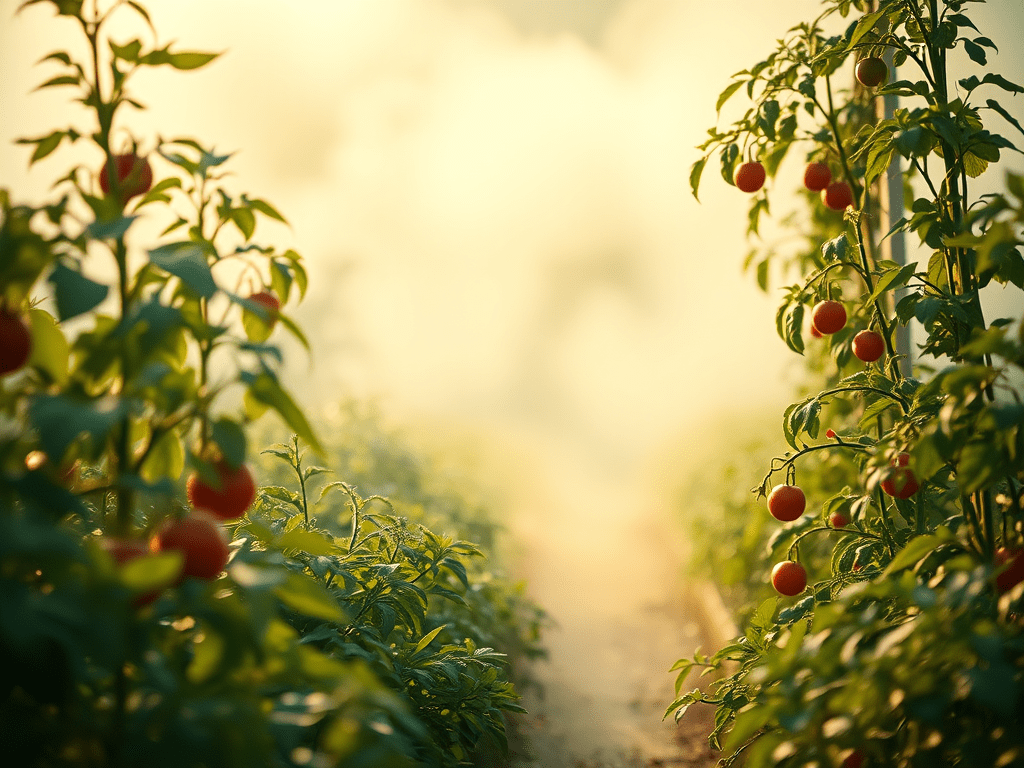
I will find you in the vegetable garden
watching tomatoes grow.

You seem to enjoy walls built by silence
You seem to think that unicorns sleep
behind the moon

While I ponder on the things you didn’t teach me
I come across a path to where I used to be –
access a gurgling fountain spring
move through words, through time
through space -- through the majesty
and mystery of God.

Since yesterday becomes tomorrow soon enough
and since today is nothing more than a dream
Mother, stop crying,

Your time is gone and I am listening
to the language of my dreams
I know nothing of the new magnetic fog
the length of what is blue the weight of what is yellow.

Linda Meg Frith is a retired Social Worker and long time member of Green River Writers. She credits them with most of her growth and development as a poet. She has published poetry in eMerge, River and South Review, Rainy Weather Days, Women Who Write, and the Dallas Rainbow NOW newsletter. Linda Meg lives with her Chihuahua in Louisville, KY.

River of the Night – a poem by Richard West

River of the Night

We call it the Milky Way – the gleaming
sweep of stars that crosses, bridge-like,
the clear night sky. But through time
others have done better.
The ancient Maya called it the “World Tree”
and in the Kalahari Desert it is named
the “Backbone of the Night.”
But most cultures see this rift of stars as
a road or river in the sky. The Incas called it
Quechua – the “Sacred River,”
the Chinese call it the “Silver River,” and
in Japan it is known as the “Sky River,”
or as the “River of Heaven.”
These are better names than ours, by far,
but still they sell the sacred river short.
We know today the Milky Way is what we see
of our own galaxy from near its edge –
and how do you aptly name the view
of our vast celestial home, of heaven’s gate –
the starry path that beckons us,
night’s shining river that
reaches to and from forever?

Richard West” was Regents’ Professor of Classics in a large public university and has published numerous books, as well as many articles and poems, under his own name or various pen names. He now lives with his wife Anna in the American Desert Southwest, where he enjoys cooking and attempting to add flavor to his poems.