Why Is Everything Spinning? – a poem by Megan Wildhood

Why Is Everything Spinning?

God drove out the man, and at the east of the garden of Eden,
God placed the cherubim and a flaming sword
that turned every way to guard the way to the tree of life.
~Genesis 3:24


It’s only when we’re disoriented that we get it.
We fall, hit our head, and then it’s like we see
things as they really are according to science:

every particle of the universe is whirling.
It’s not a problem that everything is spinning.
It’s just a problem that we can only feel it

when we “fall.” It’s actually when we fall
that we get up. Science still seeks
the reason for twirl from top to bottom,

but they are barking up all the wrong trees,
unable to see the forests for all of them.

We who have fallen know why
everything is
spinning.

Megan Wildhood is a writer who helps her readers feel seen in her monthly newsletter, poetry chapbook Long Division (Finishing Line Press, 2017), her full-length poetry collection Bowed As If Laden With Snow (Cornerstone Press, May 2023) as well as Mad in America, The Sun and elsewhere. You can learn more about her at meganwildhood.com.

Sometimes Grace – a poem by Carolyn Martin

Sometimes Grace 

arrives like sun leaking
through arrogant evening clouds
or like a breeze rustling
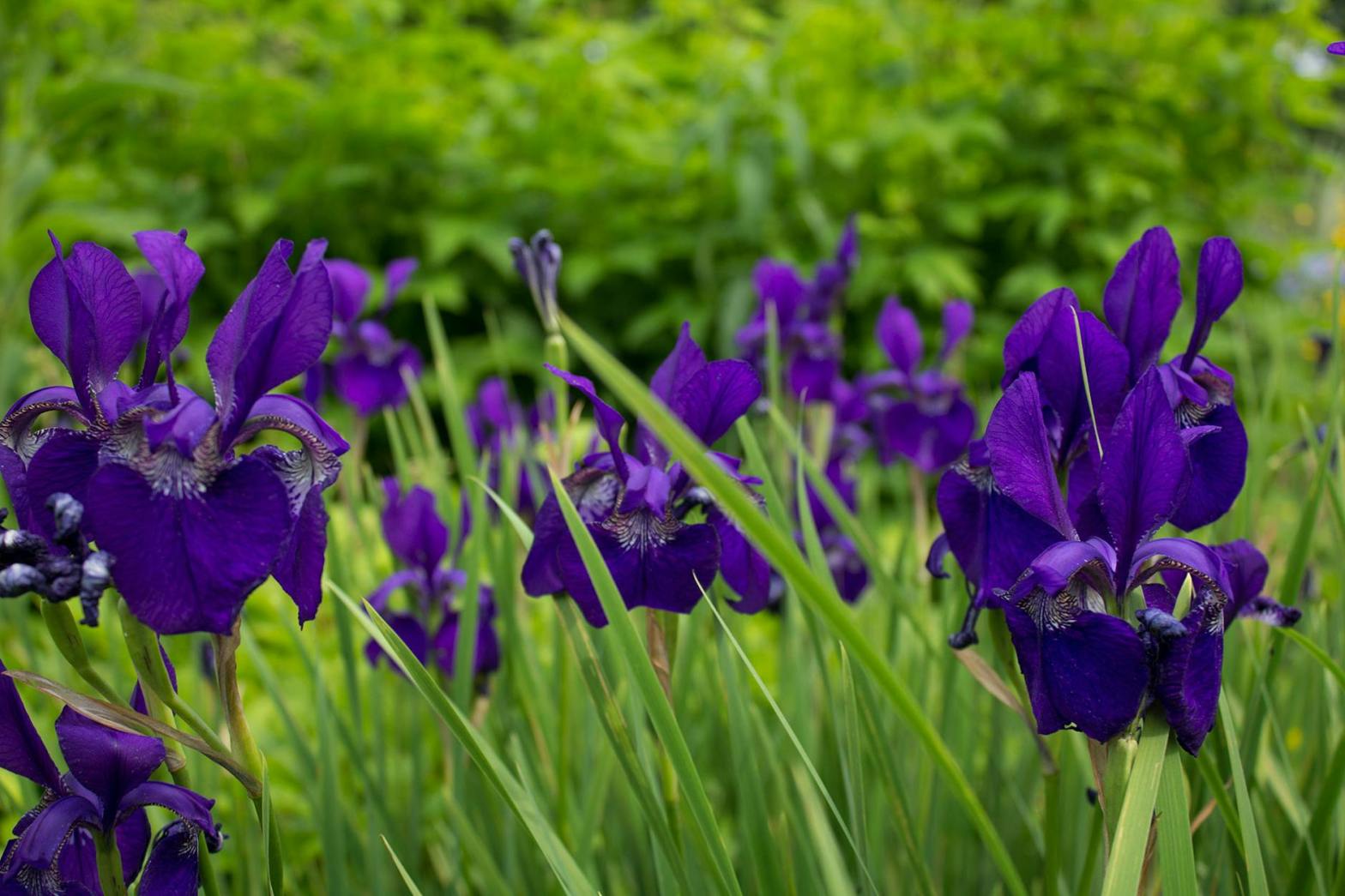
full-bodied iris leaves
or like embers whirling
around a muttering fireplace
and sometimes
it’s disguised as an angel
sifting through the world
finding truths veiled in rules
craving revisions every day
and sometimes
it’s the latest god or whatever
this abstraction’s called
who loves ambiguity
and turns regrets
into disappointments
into surprise
and sometimes
it announces amiably
humans are human
on both sides of a storm
where nothing is just itself
nor has ever been


Carolyn Martin is a recovering work addict who’s adopted the Spanish proverb, “It is beautiful to do nothing and rest afterwards” as her daily mantra. She is blissfully retired––and resting––in Clackamas, Oregon where she delights in gardening, feral cats, and backyard birds. Her poems have appeared in more than 200 publications throughout the U.S., Europe, and Australia. For more: www.carolynmartinpoet.com.

Murmuration – a poem by Ellen M. Taylor

Murmuration

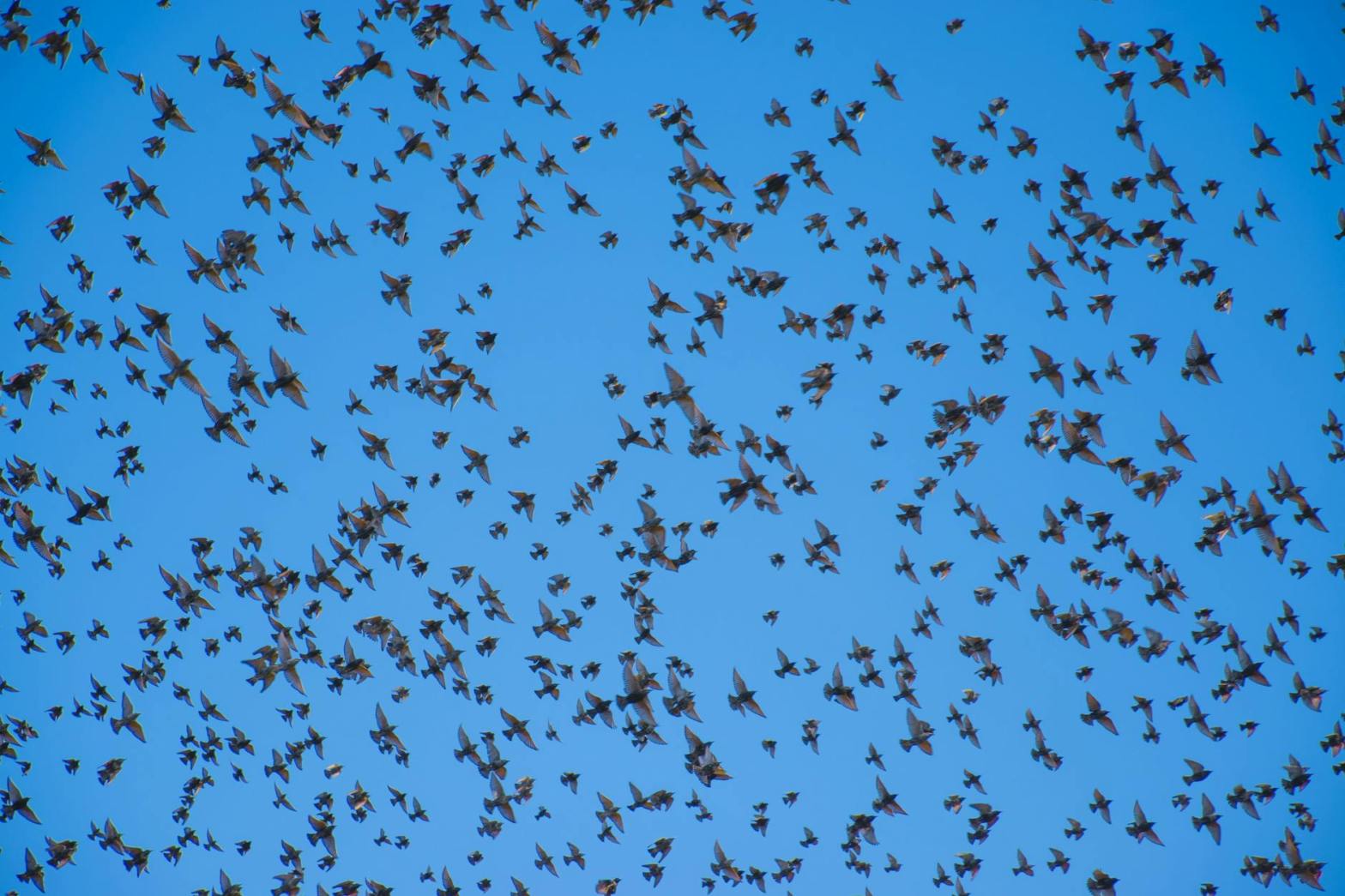
A word to love: “Murmuration,” a kaleidoscope
of Starlings sweeping and swooping. Call it poetry,
call it a song, call it mesmerizing as a cloud
of black-tipped wings spreads and funnels -
an avian air show beyond the window
where we watch, distracted from
our morning activities,
our earthly anchors,
our wishful
vespers.

Some say this mass movement protects the flock
from prey; others say it’s an ornithological banquet,
a coffee klatsch, a swirl of chatty birds jazzed up
on fermented blackberries or ripened rose hips;
still others say it’s an invite, “Hey, over here,
we’ve got grubs, we’ve got bugs, we’ve got food
to spare, come on.”

Our murmurs know no such performance;
warped heartbeats from blood flowing
through tight valves or vessels blocked
like summer traffic or tourists gawking
at an accident. Only a stethoscope
can pick out our heart sound –
When my lover murmurs in his sleep,
mostly it sounds like distress, a bad dream
playing out alone in the theater of melatonin
that he can’t remember to share in the morning.

Starlings, you socialites, your swarms invite other families -
together, gregarious aviators, you mimic red-tailed hawks, quails,
Bobwhite crows and more, humans, phones, car alarms. Oh, Starlings,
original chat GPT, you out-Bot us all with your winged iridescence,
your stand-up, beat-all communal voice, your seminal song dance,
while we, ground-bound, watch you
from below, our hearts tick-ticking as we hopefully
flap our missing wings.

Ellen M. Taylor teaches writing and literature at the University of Maine at Augusta, an open access university, and in the Maine Prison Education Program. She has published in regional and national journals and has three poetry collections published by Moon Pie Press. She lives in the hills of Appleton, Maine.

Surprise Visit – a poem by Joseph A. Carosella

Surprise Visit
June 7, 2024

A dream like none I've ever had before,
a visit from the light.
A presence felt - and known - from crown to core.
A meeting with a deep and warming flame.
A call to reunite
with one transcendent. You would know his name.
So unexpected. Why? We'd never met.
At least, not that I knew.
Or I'd rejected each approach... Forget
that past
, the message was. No words exchanged,
but light and love came through.
And just like that, we are no more estranged.

Joseph A. Carosella firmly believes that if you look, Every Day Is a Beautiful Day.  He hikes avidly in the Adirondacks, Spain and the UK.  He loves nature, reading, ice cream, travel, language(s), and spends a lot of time writing poetry and dialogues with God.  His first book, Making Friends with God: A Year of Dialogues, is available at Amazon KDP.  His poems have appeared in Adirondac, Adirondack Almanack and Ridgeline.  [Instagram: josephaicarosella; Substack: josephacarosella]

Peticiones – a poem by Carolyn Chilton Casas

Peticiones

I know asking for a life without worry
is not a reasonable request,
and the sun cannot shine down
on me brightly every day.
And still, I long for a reprieve
from the crazy world’s cares.
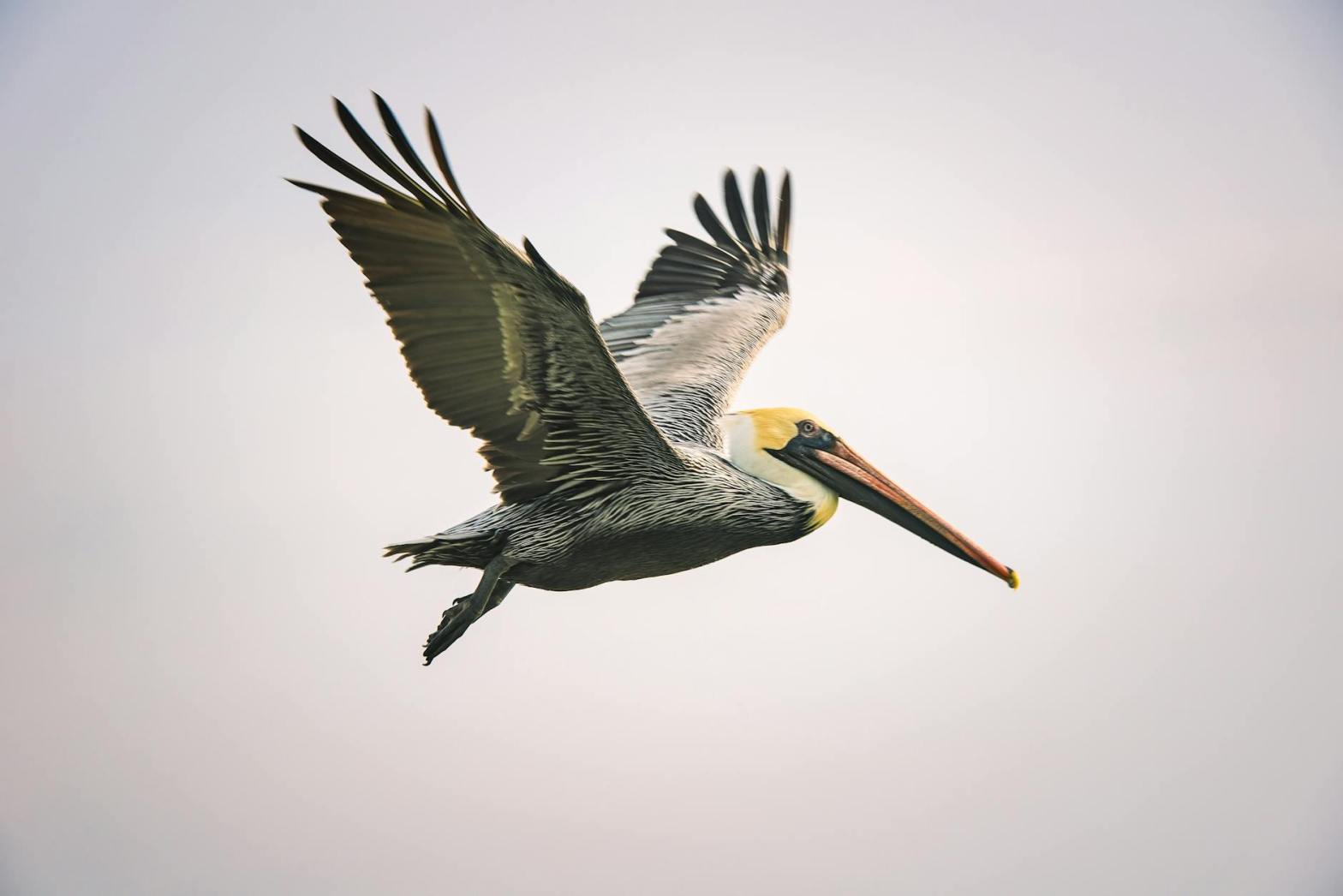
Give me a pelican’s confident plunge,
the sandpipers’ humorous offering,
ospreys floating humbly
on waves of wind.
Give me the glistening ocean foam
and sandy bottoms
where I can touch down unharmed.
Give me a warm autumn breeze
lofting scents of summer and salt,
fresh air that fills my wishful lungs.
Give me light and all-encompassing love.
More light and love.
I know, I always ask for so much.


Carolyn Chilton Casas is a practicing Reiki master and teacher who often explores ways of healing in the articles she writes for energy and wellness magazines in several countries. Her poetry has been published in numerous journals and anthologies including The Wonder of Small Things: Poems of Peace and Renewal and Thin Spaces & Sacred Spaces. She lives on the central coast of California where she enjoys nature, hiking, and beach volleyball. More of Carolyn’s work can be found on Facebook or Instagram and in her newest collection of poetry Under the Same Sky.

Garden House Speaks again – a poem by Maggie Warren

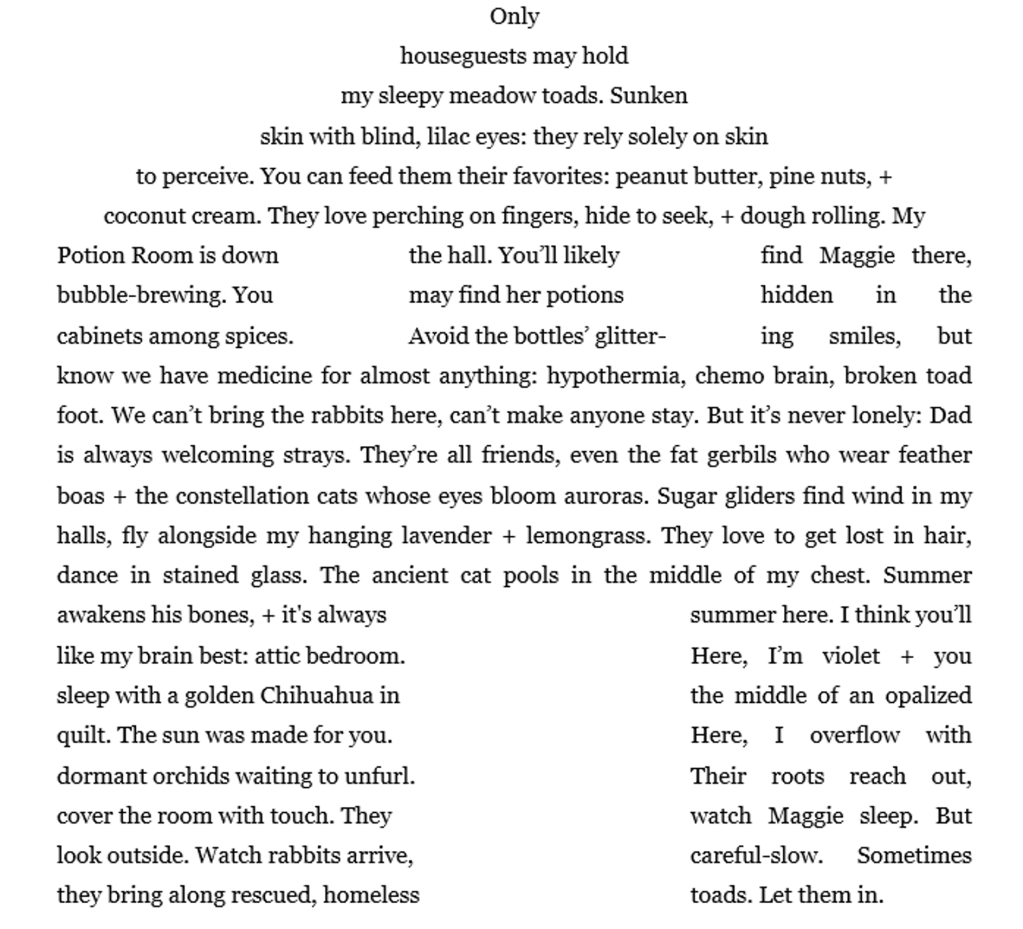
Garden House Speaks Again

Maggie Warren is a queer and disabled poet who writes about love and toads. They work as an adjunct English instructor at the University of Missouri-Kansas City, where they earned their Master’s Degree of Fine Arts in Creative Writing and Media Arts in 2024. Their work has appeared in Hayden’s Ferry Review, Half Mystic Journal, and Bear Review. You can find more of their work at www.maggiewarren.com.

In Time – a poem by Charles Hughes

In Time

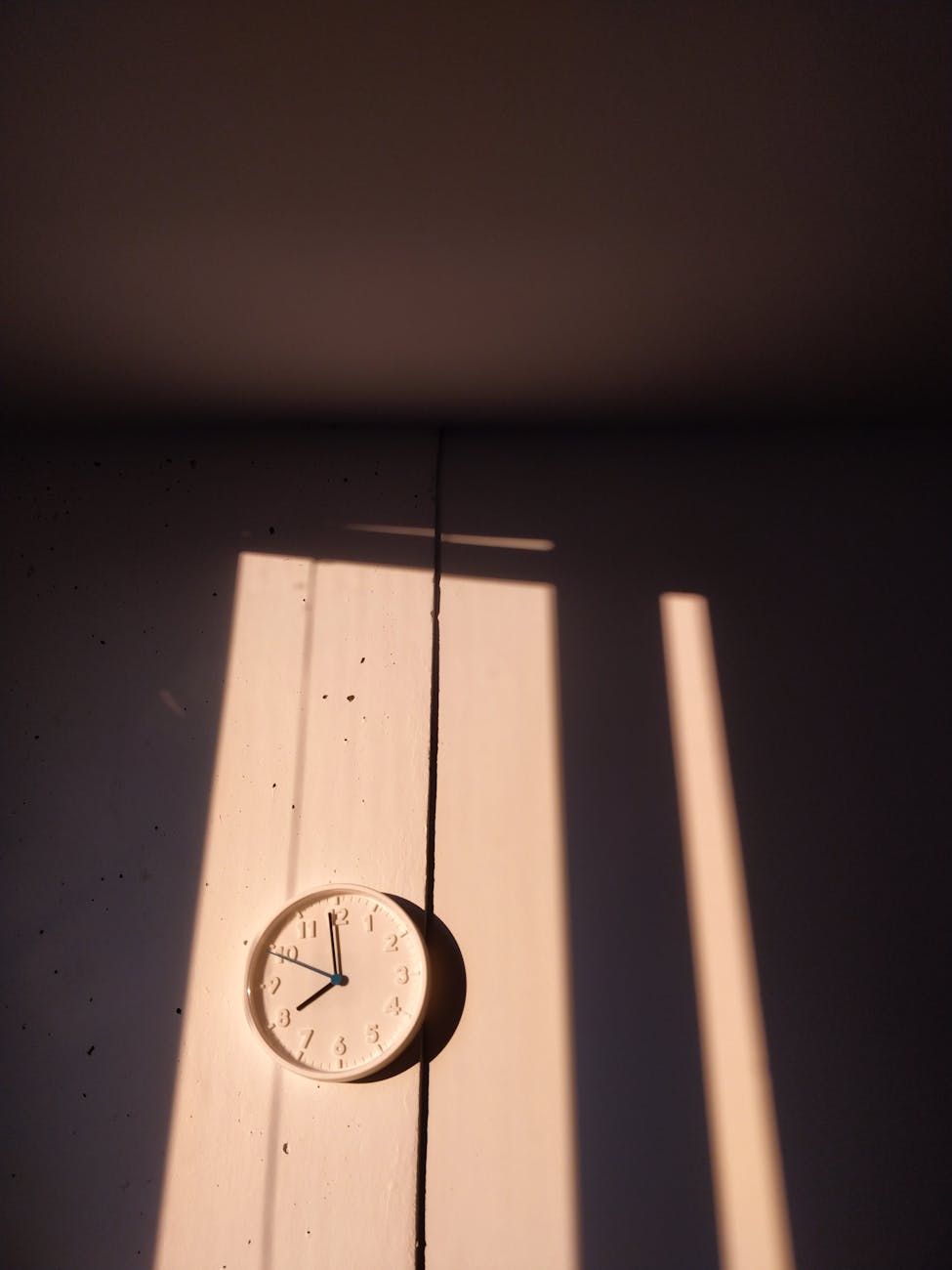
Watches don’t make good gifts for children,
Certainly not the very young,
To whom time seems at first a foreign
Country where children don’t belong.

They learn. We learn. Time overtakes us
The way a language will if we
Must daily speak that language only.
We’re students of necessity.

My friends died, in their early forties,
Two friends from high school and before.
Time dims the light. I didn’t mourn them.
I hardly knew them any more.

But now, in age, I know them better.
I see them now through younger eyes.
Time weakens, and the light grows stronger,
Till in God’s mercy, children rise.

Charles Hughes is the author, most recently, of Ifs, a Few Buts, and Other Stuff, a book of poems for children, published by Kelsay Books, and of two previous poetry collections, The Evening Sky and Cave Art, both from Wiseblood Books. He worked for over 30 years as a lawyer and lives in the Chicago area with his wife.

Lodgepole Pine and Moon Slivers – a haibun by Cit Ananda

Haibun: Lodgepole Pine and Moon Slivers

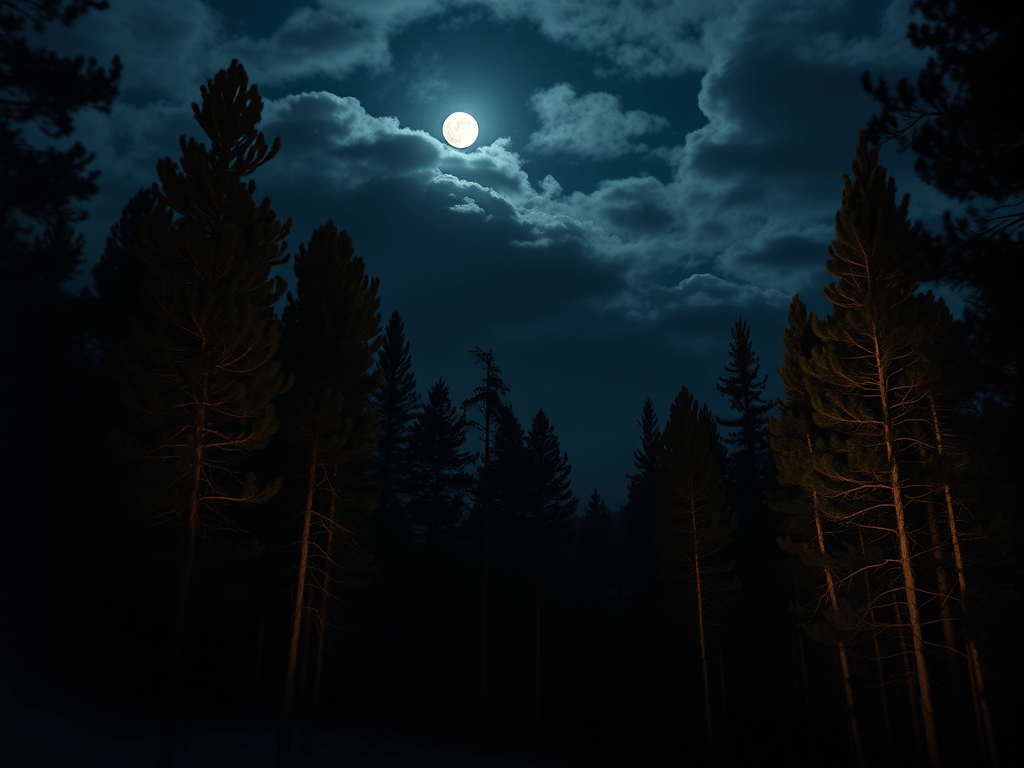
under the moonlight
a powerful night snares me—
confronting demons

Dictum suggests waiting. I do not wish to wait. The path before me is narrow but true. I take my first step as a chill rises through my spine. The trees open, shed their needles and dance as I walk tentatively forward. Where am I going?

The wind sings a whispered tune through the canopy of this lodgepole pine forest. It harkens angels and demons. The latter come first in the roar of the impending clouds and darkening skies. But once the rain begins, the whispers grow soft, and moonlight slivers the highest peaks with silver radiance. I am certain the voices of the dead no longer linger here, their silence a tribute to the way light flickers and beckons the heart forward. A quiet carpet of soft needles beneath the moonglow now feels like an invitation. I hear the music of the spheres in the resonance of the trees.

And so, I step, one more step, onto the path and ask that the voices in my head that have been so unruly listen to the silence, listen for my footsteps. I ask that the wisdom of the sky flood my mind, knowing full well that this means these voices must eventually become the silence, cocooned in moonbeams.

wind serenades trees
opal coy moon shines above—
my bucket brims full


Cit Ananda’s poetry is inspired by direct experience, captured in moments between perception when the mind falls quiet and deep silence shares an offering that touches the mystery of life. She will tell you she catches poetry on the winds of the universe. She has had work published or forthcoming in The Mountain Path, Tiferet Journal, Amethyst Review, Offerings: A Spiritual Poetry Anthology from Tiferet Journal, El Portal, and Medicine and Meaning. She is also the author of When Silence Speaks: Messages from the Heart, a full-length poetry book. Explore more at https://www.beingcitananda.com/publications.

a pilgrim’s faith – a poem by Karlo Sevilla

a pilgrim’s faith

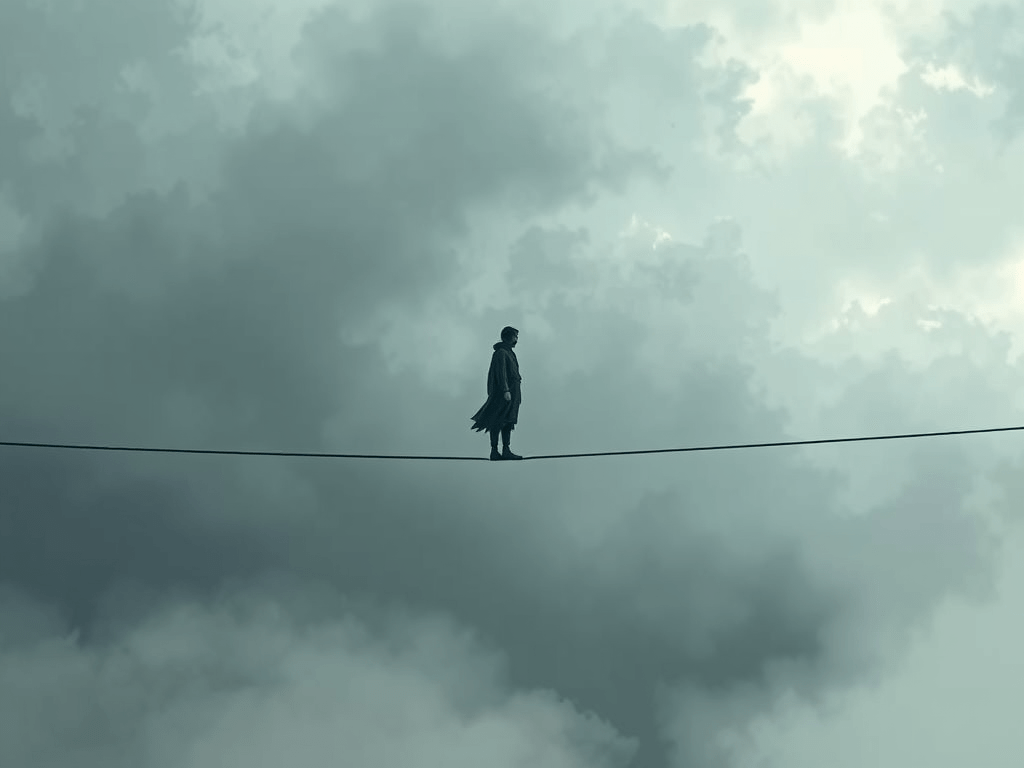
gray overcast afternoon
he stands foot forward atop
one end of a tightrope so high
looking down
the deep is just a blur
almost imperceptible

the martyrs say it’s best to refrain
from downcast glances
so he fixates forward
the invisible other end
a destination so far
beyond there’s not
a single hint of horizon

all around mostly silence
as with his every cautious step
and few and far between
a dirge hums across the mesosphere

the pilgrimage so long
it seems mid-journey in perpetuity
no matter how much distance
his caved soles have covered

and nobody knows that longing
itself secretly longs
to cease being a word
but he’ll get there
first


Karlo Sevilla is the author of seven poetry collections, including the full-length Metro Manila Mammal (Soma Publishing, 2018) and the self-published Figuratively: A Chapbook of Shape Poems (2024). Shortlisted for the 2021 Oxford Brookes International Poetry Competition and thrice nominated for the Best of the Net, his poems appear in Philippines Graphic, Philippines Free Press, PILGRIM: A Journal of Catholic Experience, The Catholic Poetry Room, Academy of the Heart and Mind, and others. He is a 2024 International Fellow of the International Human Rights Arts Movement (IHRAM) for poetry.

Inventory – a personal essay by Carolyn Alessio

Inventory

“How will I know?” my mother asked in a thin voice over the phone. If we’d been joking around—something she still relished with advanced cancer—I might have replied, “It’s like what the Supreme Court said about pornography; you’ll know it when you see it.”

But that night my elderly mother was pensive, her words unusually clear despite the heavy pain medication. “Nobody can tell me the signs,” she said. “How will I know when it’s close?”

I glanced at the rosary on my night table, tangled with a phone-charger and wrapper for a collagen face mask. “There’s signs,” I said, my throat thickening. Sleeping most of the day while drinking and eating less were huge clues, I suspected. My mother could check off both.       

“Want me to call hospice?” I said. “Or ask Brenda?” My cousin was an oncologist.      

My mother paused, and I could hear her drawing in air. “It’s hard to pray right now,” she said. “I’ve read it can be like that.”

In the past, I had suggested meditative exercises that I learned from the Examen of St. Ignatius. A former soldier, Ignatius had secluded himself in a cave and composed a frank self-inventory. But TBH, as my high school students would say, now I wasn’t praying much either. 

“Mom,” I said. “How are you on medicine? Paperwork?”

U.S. Insurance plans tend to cover grief counseling for 13 months, purposely extending four weeks past the anniversary of one’s loss. Three years after my mother’s death, I still wonder if her skill at comforting others may have inadvertently stunted my own ability to calm myself, like a baby who never learned to “self soothe.”

During her final months, I sometimes slipped into the small school chapel at work. For weeks, I tried to offer specific intentions for my mother, but my mind balked. Remaining in the pew felt wrong, like an insomniac lingering fruitlessly in bed.       

“My mom had the most frightened look on her face when she died,” my mother told me one day. “Not like those people who see a light.”

I sat up on her carpet where I was deflating my air-mattress. “You sure, Mom?” I said. “Maybe she was squinting?”  

My mother shook her head. “It was the most awful thing, seeing the look in her eyes.”

The mattress sagged as I tried unsuccessfully to recall my Grandma Curtin’s pale blue eyes from visits to her hospital bed, some 30 years before. 

“The soul does what it needs to,” our second hospice nurse told me shortly afterwards, when we moved my mother into a unit, and I had sheepishly asked if she knew how long my mother might have left.  

I tried visiting the school chapel again, two weeks before my mother died. Looking over at the altar for the Virgin of Guadalupe, I stared at her starry green cape and remembered something. More than a decade before, when one of my promising teen students had died violently, our stunned school held a memorial service. But at the time, I felt too filled with shock and anger to even think about praying. I remembered telling my mother that I felt like a teen myself, blaming God for everything bad.      

My mother listened and said, “Try praying to Enrique.”   

Praying to a bright and sarcastic teen didn’t strike me as the best solution, but a quick and awkward attempt showed it might create more opportunities for honesty. The thick tightness in my chest had loosened just a little. Now, as I sat back the pew years later, I tried my mother’s method again.    

Grandmother, mother, daughter: we all helped carry each other’s anxiety, part of the genetic twisting that marked us kin. Shortly after my mother moved to hospice, my family and I spent the afternoon with her. We updated her like normal, about my daughter’s college science classes and part-time job selling doughnuts, my son’s new clarinet lessons, and even the plot of the film “Gattaca.” Despite heavy sedation, my mother’s pale face had flickered with recognition at our banter. When we left that day, we had crowded around my mother’s bed and said her favorite prayer, from St. Francis of Assisi. 

Lord, make me an instrument of your peace.
Where there is hatred, let me sow love;
where there is injury, pardon;
where there is error, the truth;
where there is doubt, the faith;
where there is despair, hope;
where there is darkness, light;
and where there is sadness, joy.

A few hours later, my brother called to say that my mother had passed away while he and his family sat with her.  

“Was she scared?” I asked in a trembling voice. 

“No,” my brother said. “The nurse told us that after you guys left, it was like she was ready.”

O Divine Master, grant that I may not so much seek
to be consoled, as to console;
to be understood, as to understand;
to be loved, as to love.
For it is in giving that we receive;
it is in pardoning that we are pardoned;
and it is in dying that we are born to eternal life.

Carolyn Alessio lives and works on Chicago’s Southwest Side. Her writing has appeared in The Pushcart Prize anthology, Chicago Tribune and Sweet. Two of her essays were named Notable for Best American Essays.