
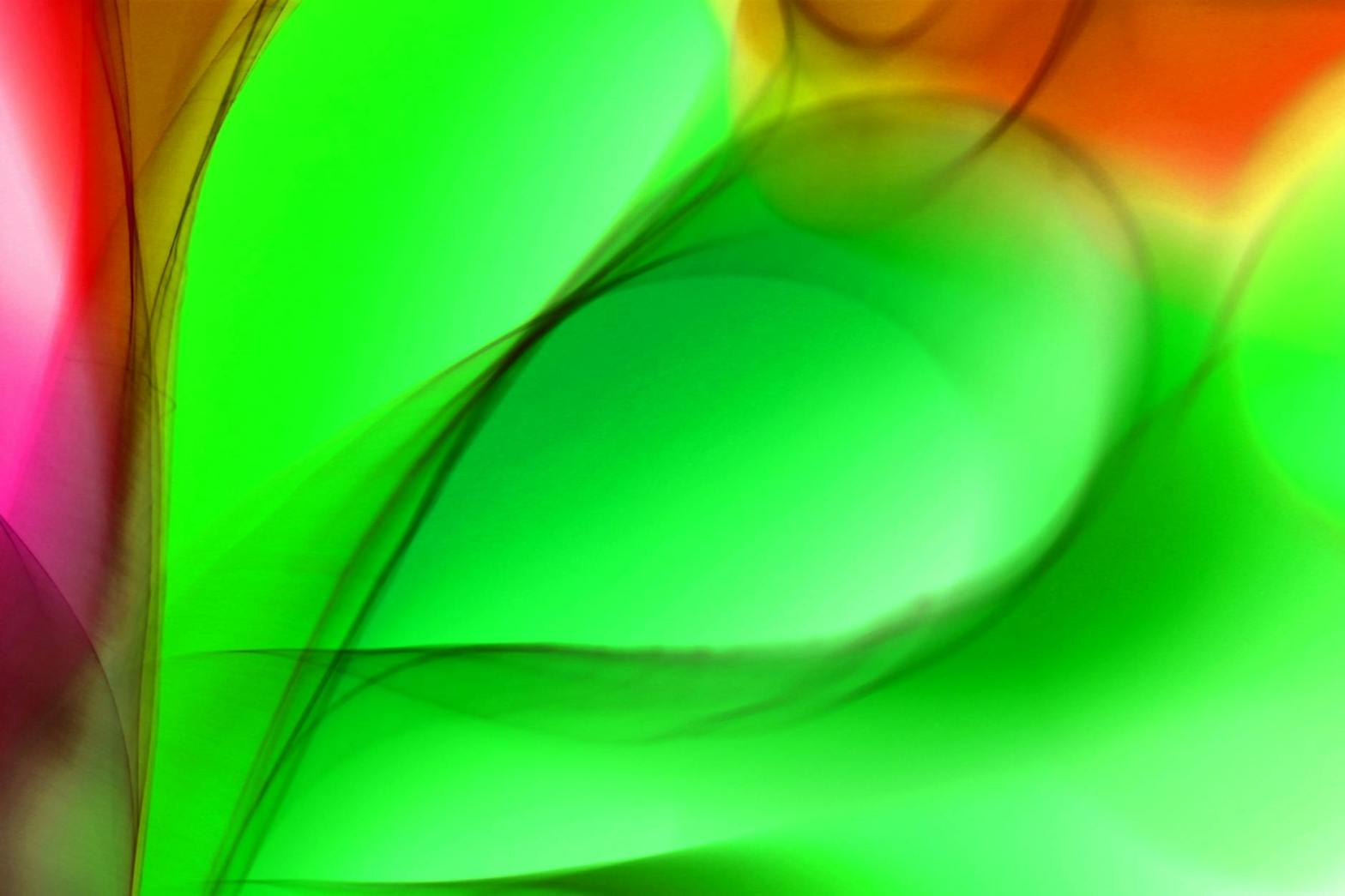
This Abstract Painting
You put down one stroke of a color you love, say alizarin crimson, then pthalo green beside it. They whisper. Hum. Silently nod or sharply turn away from each other. Every stroke’s a gesture in an open-ended conversation you’re a little afraid of. A love affair you end up painting over. Or you scrape down the layers in the manner of a gritty, soulful excavation.
Once you painted while listening to Heinrich Biber’s Rosary Sonatas for violin, composed around 1676, rarified and difficult to play in part because of their odd tunings, beautiful in a tortured way, especially the ones about the crucifixion and everything leading up to it.
Mostly you let the twisting, knotted notes sear your brain. Suffering disguised as beauty. Mostly your sins are ones of omission. Old failures of nerve.
Always you run the risk of scraping down too far, down to the board, back to where you began, then where would you be? With scissors, nails, old credit cards, you scrape with the intensity of a woman on the verge of an archeological discovery. Suddenly an old color erupts by happenstance and makes you happy. And then you get out the paint again. It all comes down to this, doesn’t it, the swirl of paint on and under your brush, your fingers feeling the resistance of another form to work with, another life.
Kathleen A Wakefield‘s first book of poetry, Notations on the Visible World (2000), won the 1999 Anhinga Prize for Poetry. Her second book Grip, Give and Sway was published by Silver Birch Press (2016). Her poems have appeared in such journals as the Alaska Quarterly Review, Blue Line, The Georgia Review, Hubbub, HumanaObscura, Image, One, Poetry, Rattle, River Styx, Sewanee Review, Shenandoah, and Visions International. She has taught creative writing at the Eastman School of Music, the University of Rochester, as a poet-in-the-schools, and share poetry through public libraries.
 Amethyst Review