Transformation – a poem by Mark J. Mitchell


Transformation


There’s tender alchemy to a warm night:
You search for meanings that you never touch
while fireworks battle your soft inner eyes.
Then stars transmit power and your old mind
blazes. You linger outside, question life,
quoting long lost books. Memory’s a knife—
quick, sharp. Open the frayed almanac. Find
out how far money went and just how dry
this land once was. It’s all subtle. Much
stays left unsaid, Your mind glows with new light.

Mark J. Mitchell has been a working poet for 50 years. He’s the author of five full-length collections, and six chapbooks. His latest collection is Something To Be from Pski’s Porch Publishing. A Novel, A Book of Lost Songs will be published in March by Hstria Books. He’s fond of baseball, Louis Aragon, Dante, and his wife, activist Joan Juster. He lives in San Francisco where he points out pretty things.y things.

Inner Journey – a poem by HM Ayres

Inner Journey

Please bring strange things*
on this venture into new territory.

My reflection in the window startles me.
I don’t like what I see.

I have never felt this way before.
I am uncertain what I need.

If it's true what they say,
please bring love, all you have.

Hold me in your heart
through the long dark days.

Point out a blue sky
on a crisp cold day.

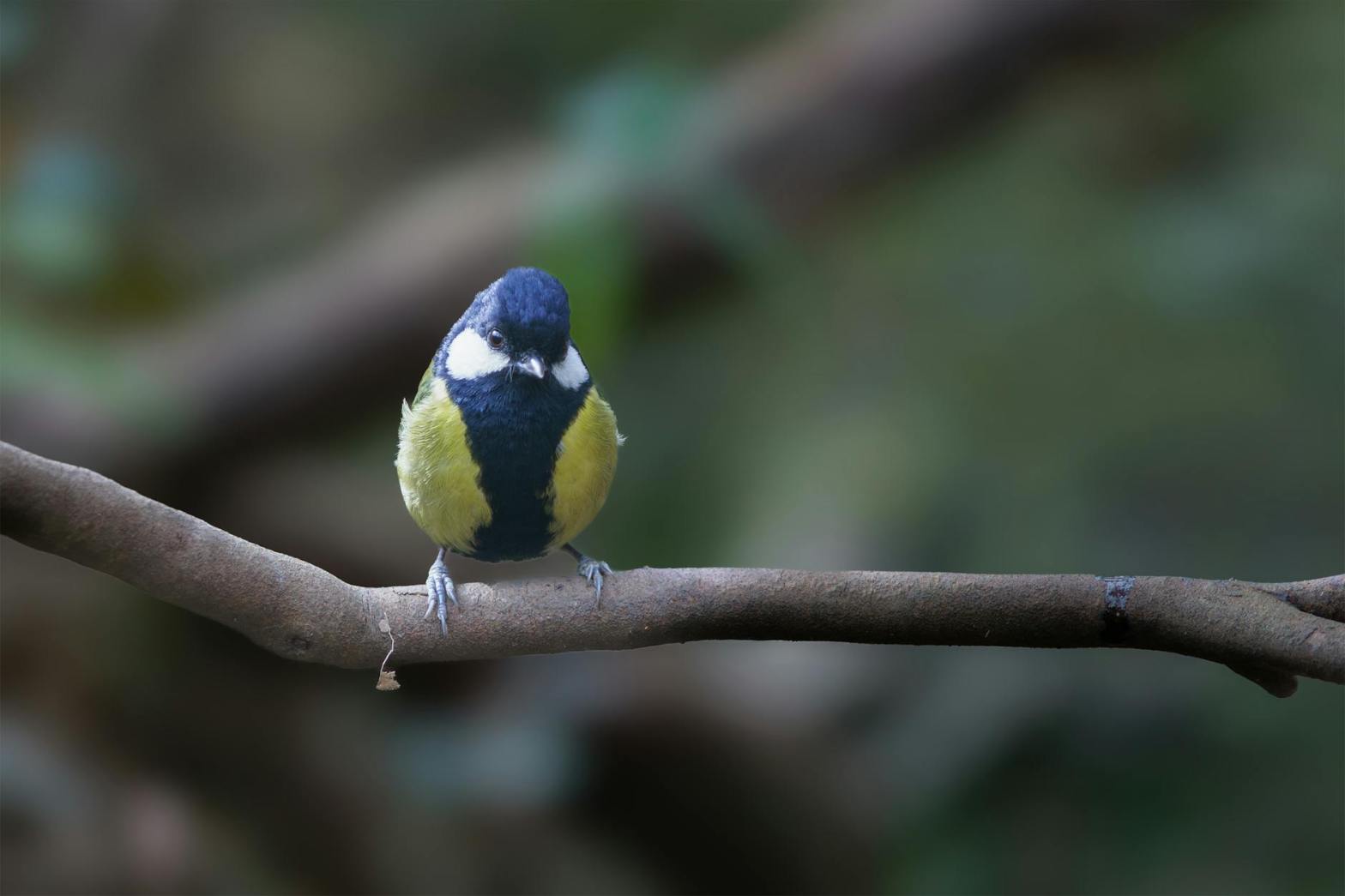
Send me a tiny, brightly colored bird
despite the chill in the air.

In the depths of despair
gratitude always helps.

Leave your judgment behind.
Accept me, as I am.

Broken, but healing.
Not the best company.

Laughter lightens every load.
Every smile soothes.

Visit me in my grief.
Your friendship brings me comfort .


*From Initiation Song from the Finders Lodge, Ursula LeGuinn


HM Ayres grew up in Northern New Jersey. She retired and moved to Cape Cod, MA in 2021 after a 43 year career in college student affairs administration. Since retiring Helen has been devoting her time to writing poetry, exploring the Cape conservation areas, bike paths, waterways and beaches and is engaged in several social justice and community volunteer efforts.

Circle of Protection – a reflection by Scott Hurd

Circle of Protection

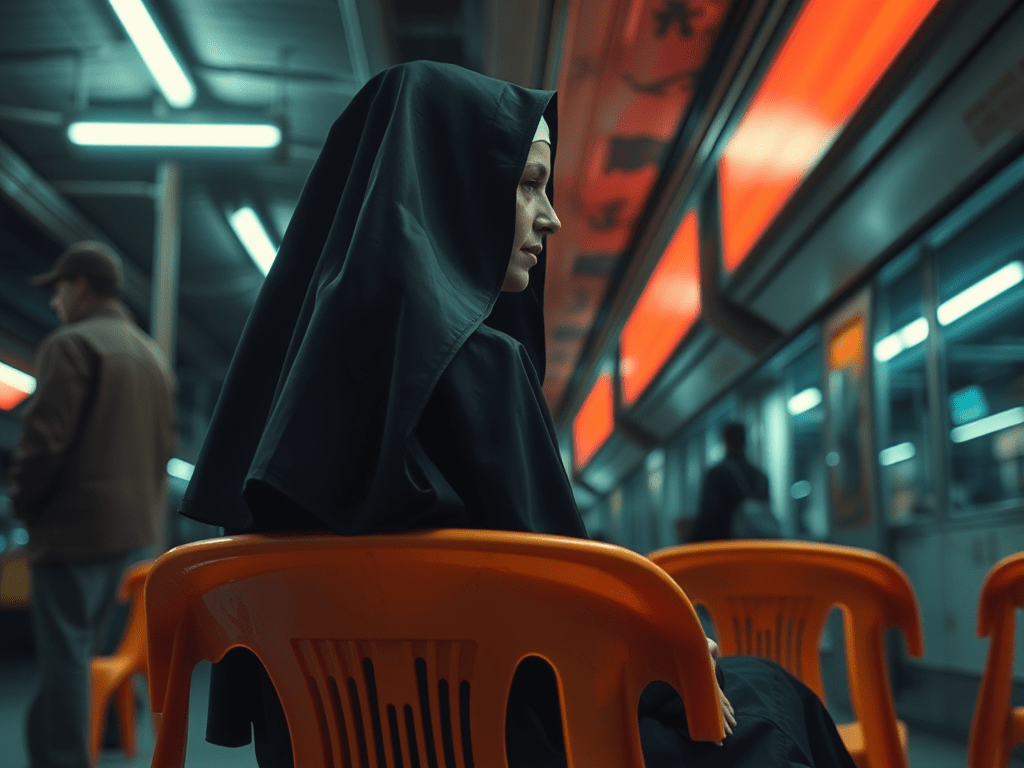
Cage bars of fluorescent lights glared down upon the Pittsburgh Greyhound station’s scattered denizens well after midnight.  Bare walls of dingy tiles framed with blackened grout encased foul odors of cheap booze, diesel fumes, and unbathed bodies under unwashed clothes. Rough characters with menacing glares, weather-beaten ramblers clutching one-way tickets, and runaway teens fleeing to anywhere slouched in sticky, crumb-covered orange plastic chairs, threaded with cracks and splinters, and bolted to a buckling linoleum floor with a patina of accumulated funk. It was the summer of 1988.

I’d arrived there through a combination of young love and stubborn pride: love of a college girlfriend living several states away, and pride over paying my own way to see her, in spite of my dad’s offer to help. I was an adult, I had insisted, and should be responsible for my own travel expenses – a principled stance I’d now come to regret. As airfare was out-of-budget for an undergraduate with an hourly wage, Greyhound appeared my only practical option. Plus, the romantic in me had a nostalgic image of a cross-country bus trip through small towns and rolling farmlands – a slice of classic Americana lifted straight from a Woody Guthrie song. 

The Pittsburgh station’s filth and palpable desperation shattered whatever remained of that illusion, leaving me feeling vulnerable, foolish and scared – until a new arrival appeared. Dressed in black, prim and pressed, she sat perfectly straight in her plastic chair as if in a pew. Sensible shoes, a veil upon her head, and a cross around her neck identified her as a nun. I moved to be closer to her and place myself within what I imagined was a circle of protection.

We didn’t exchange a word. I wasn’t Catholic, and had never spoken with a nun before. I didn’t know what to say, and we sat in silence. But it didn’t matter. Her habit spoke for her, hinting that light can always pierce the gloom, and goodness intrude where it seems conspicuous by its absence. And insisting that there are those not too proud or privileged or petrified to find themselves seated amongst such company. Unlike me. 

Scott Hurd has authored five books, including Forgiveness: A Catholic Approach. His books have been translated into Korean, Polish, and German, and won awards from the Association of Catholic Publishers and the Catholic Press Association. His essays, reviews, and poems have been published in numerous journals, newspapers, and magazines, and he has twice been nominated for a Pushcart Prize. He is married to fellow writer Diane Kraynak.

Communion – a poem by Catherine Kennedy

Communion

Two women stand still as statues
in the neighbor’s yard in winter.
Looking up into the bare branches
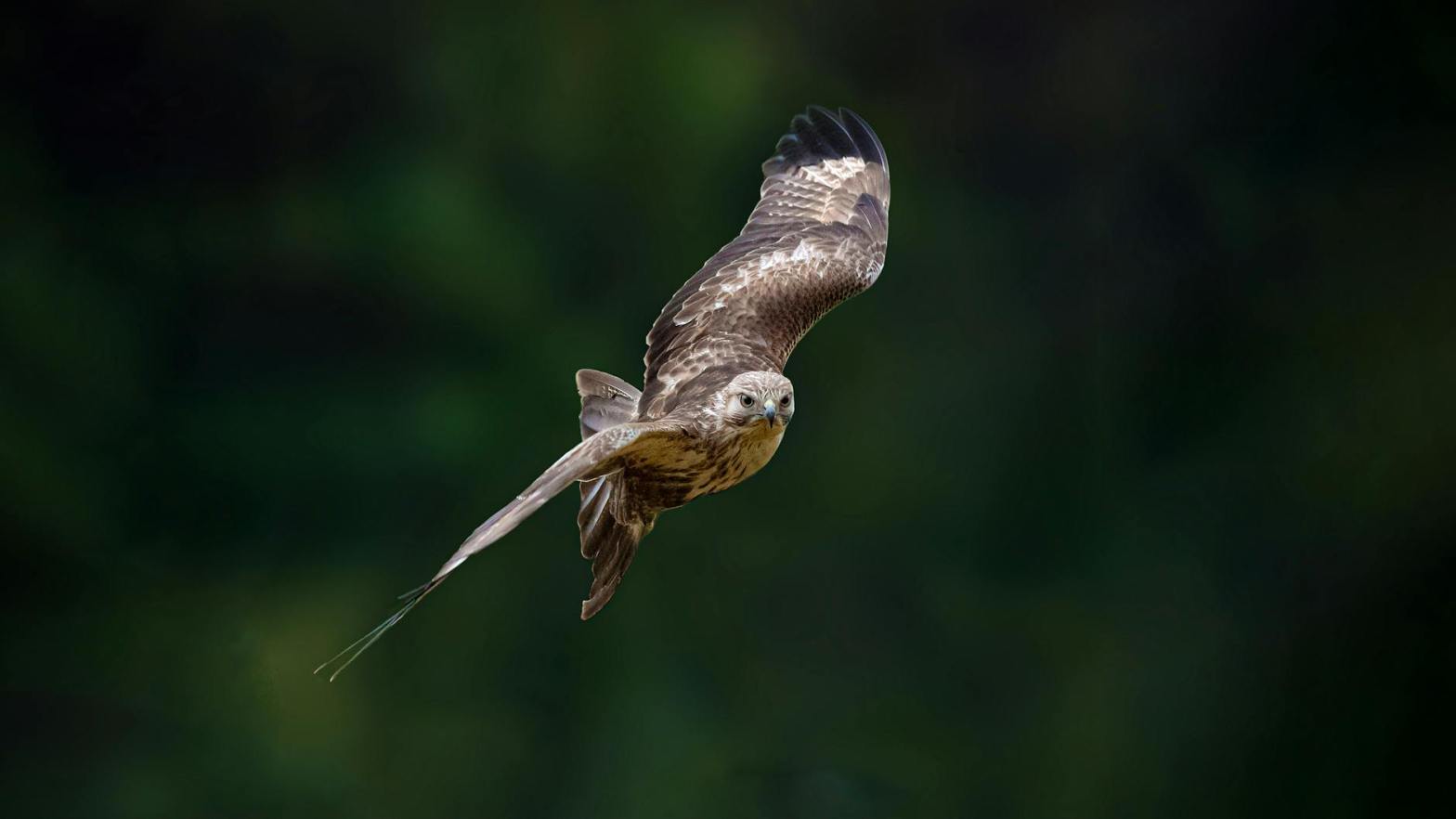
of a tall elm, they watch a large hawk
perched high overhead and doing
very little. Another and then
another passerby is drawn in,
faces lifted to the sky, strangers
otherwise, standing shoulder
to shoulder to shoulder.

We are no longer in a time of churches.
The world, nevertheless, draws us
together—the cars backed up
at rush hour, onlookers curious
for the flashing red and blue lights,
the violence of the torn metal
and shattered glass. There is praying,
so many prayers—as many
as there are harried curses—
I’d put my money on it.

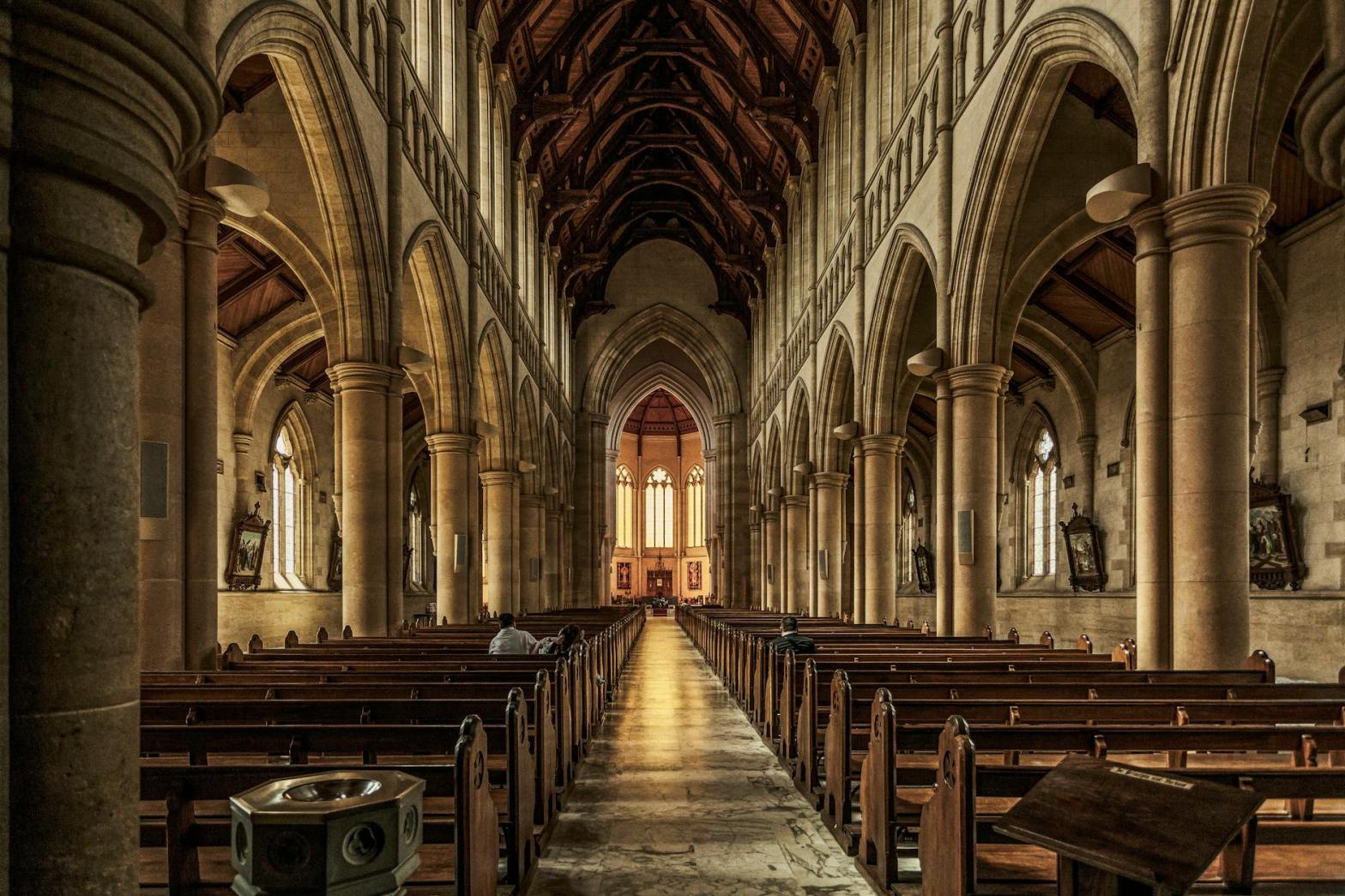
Here in this cathedral, the one
that has no name but earth,
that has no entrance but here,
we are called to the altar
of our own being, only to find
that we are not alone.
This is the hope of wonder
and a reason for suffering—
to arrive where we are
in God’s sanctuary,
knowing already
how to worship,
knowing already how
to accept each gift,
not the least of which
is each other.

Catherine Kennedy studied creative writing and poetry as an undergraduate at Denison University and is a former children’s publishing editor. She splits her residence between Columbus, Ohio, and St. Simons Island, Georgia, and not-so-creatively named her two cats Simon and Georgia. Catherine draws inspiration from place and nature, which reflect her midwestern and southeastern roots as well as her travels, as much as her life will allow. Learn more at http://www.catherinestewartkennedy.com.

Claritas – a poem by Larry D. Thomas

Claritas


The rising sun this morning is wild,
striking everything it touches into fire.

It’s as if each pellucid piece
of the wind-bell were scrubbed

for hours on end with Windex,
to give each tinkling of glass

against glass a savage purity:
each pellucid piece pendulous

in the early breeze and clear
as the interior of diamonds:

this morning a tapestry
stitched with strands of glass

dazzling the lead crystal
chalices of our eyes.


Larry D. Thomas, a member of the Texas Institute of Letters and the 2008 Texas Poet Laureate, has published twenty-three print collections of poetry and several poetry chapbooks, both in print and online. His poems have been published in Amethyst Review, St. Austin Review, Relief: A Journal of Art and Faith, and elsewhere. Buttonhook Press recently brought out his online chapbook, Letting the Light Work: Poems of Mexico, and two online poetry pamphlets, Gems and Bestiary: Far West Texas.

Needle Biopsy – a poem by Brett Warren

Needle Biopsy


The room was neutral, hushed
and dim, except for sconces
that glowed like modest bouquets
and a cone of light budding
from the end of a flexible stem.
It seemed like a lot of people
for a simple biopsy: a doctor
to guide the needle, a nurse
to give and receive, another
who came in just to hold
my hand. There are all kinds
of love in this world, here
to be gathered, carried,
pressed between pages
as our grandmothers did,
knowing they’d forget
how something unexpected
arose and shimmered
on a particular day,
wanting to remember.

Brett Warren (she/her) is the author of The Map of Unseen Things (Pine Row Press, 2023). Her poetry has appeared in Canary, Cape Cod Review, Halfway Down the Stairs, Hole in the Head Review, ONE ART, Rise Up Review, SWWIM, Westchester Review, and other literary publications. She is a 2024 Pushcart nominee and was a triple nominee for Best of the Net in 2023. She lives in a house surrounded by pitch pine and black oak trees—nighttime roosts of wild turkeys, who sometimes use the roof of her writing attic as a runway. http://www.brettwarrenpoetry.com

Who sweeps a room…- a poem by Susan Brice

Who sweeps a room…
(George Herbert, The Elixir 1633)

Rub bees wax
onto the faces and
wings of angels.
(They would fly from
the reredos were they
not fixed in time, in space
)

Sweep the stone floor.

‘Who sweeps a room’?
I do:
‘Who swept?’
She did.

My mother cleaned
the village church,
took me with her.

I liked the smells,
the dark shapes,
the eye of the brass eagle,
I liked the pulpit.

I climbed its wooden steps
stretched up, peeped
at empty pews.

Outside birds sang,
trees shushed,
cows lowed.

Inside the metal mop-bucket
scraped the stone floor,
broom shushed,
hoover hummed.

She swept the room as for His laws.
She made that and the action fine.

Light is mottled,
scents remain.

Who sweeps?
I do
My mother is gone
I am here

Who will sweep?
I do not know
I shall be gone.


Susan Brice lives in Derbyshire. She has worked collaboratively with Viv Longley and Jane Keenan to publish two anthologies – Daughters of Thyme (available from dotipress.com) & Homethyme (available from Amazon). They are currently working on a third anthology, Makingthyme. Susan’s collection Brushstrokes of the Ultimate Artist (October 2024) is available from Amazon.


Recently she volunteered to go on the church cleaning rota. Her first session with the mop reminded her of George Herbert’s poem ‘The Elixir’. Cleaning the church gathered the past, present and future into one place.

Strata – a poem by Dan Campion

Strata

Some children play at games decidedly,
some with at least a sense of style, and some
so hesitatingly it’s clear they’ll be
the one who’s chosen last next time. So, from
ten minutes’ observation in the school-
yard, you can peg who’s who, who’s what, who’s fast,
who’s slow, who’s sharp, who’s dull; but they can fool
you, changing places so the first runs last.
Seek out the child who flat refuses play,
who stays inside at recess reading books
or staring out the window. They’ll turn gray
still in a book or giving skies long looks.
So long as there are words or clouds to read,
their steadfastness is almost guaranteed.

Dan Campion is the author of Calypso (1981), The Mirror Test (2024), A Playbill for Sunset (2022), and Peter De Vries and Surrealism (1995) and is a co-editor of Walt Whitman: The Measure of His Song (1981, 2nd ed. 1998, 3rd ed. 2019). Dan’s poetry has appeared previously in Amethyst Review and in Able Muse, Light, Poetry, Rolling Stone, THINK, and many other magazines.

The Arrival of Light – an essay by Philip Matcovsky

The Arrival of Light

They see you enter the room and they walk toward you, and you think, it never fails, and you’d be right. Your energy precedes you. It is free of judgment. It taps on the shoulders of those who need support, opens them up to communicate, to trust. You radiate freedom, liberation. Who wouldn’t be drawn to you?

Always in service, you feel their vibes, their thoughts, the messages carried in their expressions and glances. This is who you are, your way of being in the world, since childhood. You see how it is for them, because you see what they feel. Yours are the eyes of God.

At once, without effort, your essence washes over them like a sunrise. You heal others by having compassion alone, by your intent in the world, by thought and projection.

You are a lightworker — your presence is the arrival of light, dissolving darkness (which is, in truth, only the absence of light). Naturally, people appear to recognize you, to know you, because of who you are, a friend, although they have never met you. This process of reading others and being read, this concurrence, feeds your mission. It encapsulates itself in oneness, the shared energy of your souls, one energy, without separation, unity.

Know this, Lightworker — this one energy is the energy of all things divine: our souls, angels and guides, the cosmos, our creator and creation itself. It channels through you to heal, yes, but also to guide everything associated with your life, to create, to manifest, to foster synchronicity. Call on it, permit it, trust it. It creates through your consciousness, your expectations, your wishes, your thoughts and words. Think and breathe abundance, Lightworker, abundance, it is your birthright.

For you, in this one energy you breathe in and out, service is not a job, an event, a plan, or a chore. It is a lifestyle, a mission. For you, words of fear or distress are a call to service; as are words that restrict, judge or control. You channel high vibrations to “victims” so they may have the consciousness to heal, to retain joy in life; and to “perpetrators” as well, so they may awaken and shift to a heart-centered life. You function with the knowledge that, at our core, we are all pieces of our creator, brothers and sisters in light. You are a lightworker. 

Philip Matcovsky is a lightworker and a cosmic traveler, though New York is his home. He has published or forthcoming in Braided Way Magazine, Aethlon, Pangolin Papers, Odyssey Magazine, DarkWinter Literary Magazine and Brilliant Flash Fiction.


Writing Joy – a poem by Diane Gottlieb

Writing Joy

Is it possible,
when loss

scrapes across my page
disturbing letters, scattering words,

slicing air? A midnight rain
pounds against windows

of wide white space,
one cruel force of spirit

sent to break mine.
It takes sharp vision

or God’s imagination
to see each drop as its own

sacred animal, inking
wet wild teeth

into paper
cut from trees.

Diane Gottlieb is the editor of Awakenings: Stories of Body & Consciousness, the forthcoming Manna Songs: Stories of Jewish Culture & Heritage and the Prose/Creative Nonfiction Editor of Emerge Literary Journal. Her writing appears in Brevity, Witness, Florida Review, River Teeth, The Rumpus, Huffington Post, among many other lovely places.