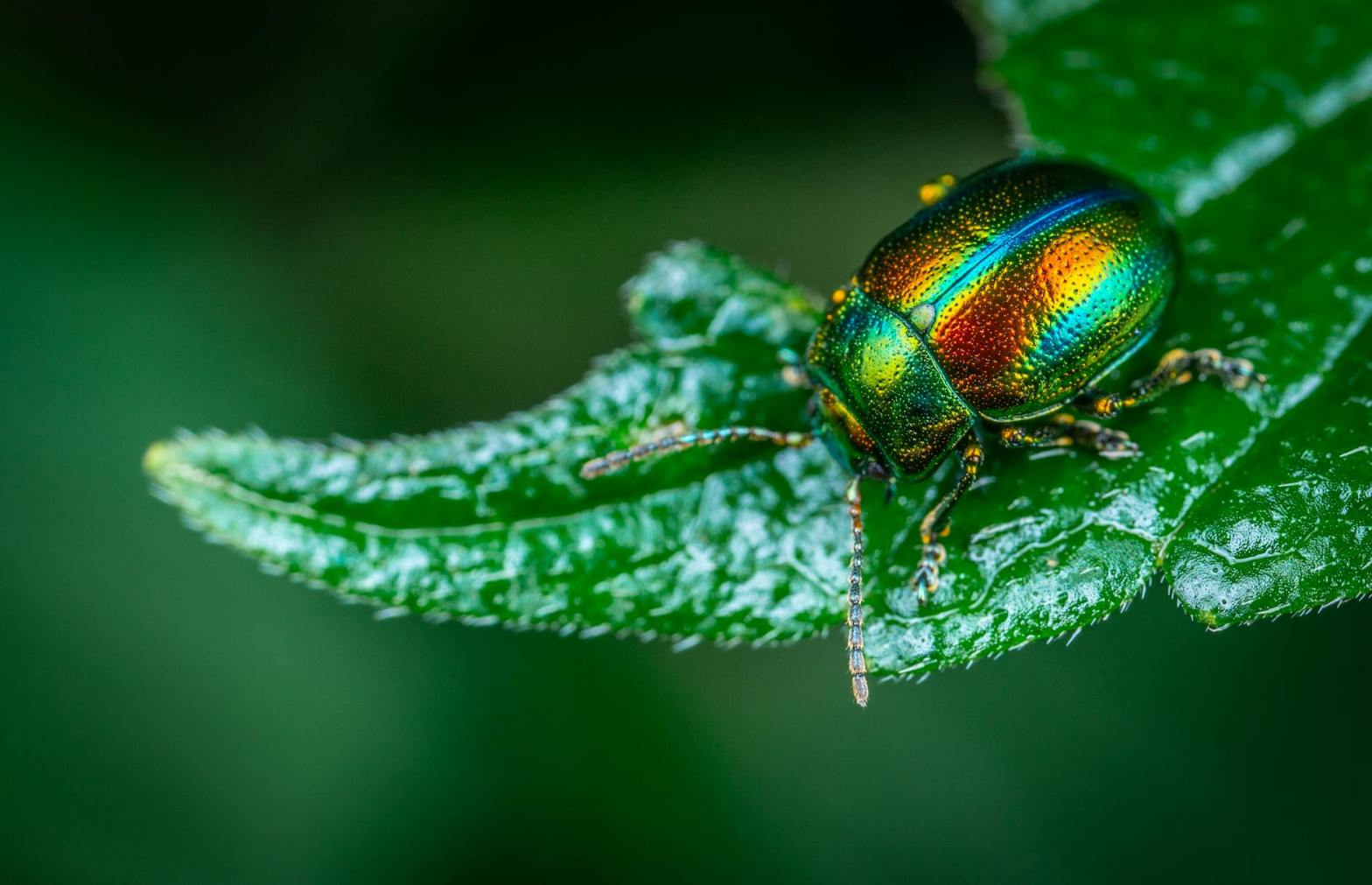
Whether you like it or not – a poem by Kali Higgins

Whether you like it or not 

A quiet rise and fall—life
Flows like the shiny line that follows
the slug down the road, iridescent,
magnificent or miniscule
it keeps going.

And then it stops
(at least in physical form).

Like a cloud of fog
appears on the window
of a cold night,
from the breath of a peering child—
knocking at the door.
Our troubles, our wins,
Our hopes, our dreams,
Our fears and our sorrows,
They faintly leave a mark.
And yet, nothing stays,
and, everything is written.

Kali Higgins writes essays, short stories, and poems about how her everyday experiences as a mother, transracial adoptee, and spiritual seeker intersect with healing. Her work features topics that cover loss, mental health, sexuality, and trauma and how that impacts her relationship to herself and to others. When Kali isn’t writing or being a mom, she is busy with her wellness practice offering astrology readings, yoga classes, and sound healing.

Epiphany – a poem by John Claiborne Isbell

Epiphany


The heart is slowly crushed. Commence
to contemplate the gap there is
from us to God. The difference
is fact, not some hypothesis.

A vision at the edge of sense
fills our bright mind. God does not miss.
All the deceit, all the pretense
we walk in is no path to bliss.

The things we thought we knew were so
are not. Now, like light on a glass,
God touches us. A tremolo

runs through us and it comes to pass
that we are rinsed as clean as snow
in this brief war, in this morass.

John Claiborne Isbell is a writer and now-retired professor currently living in Paris with his wife Margarita. Their son Aibek lives in California with his wife Stephanie. John’s first book of poetry was Allegro (2018); he also publishes literary criticism, for instance An Outline of Romanticism in the West (2022) and Destins de femmes: Thirty French Writers, 1750-1850 (2023), both available free online, and Women Writers in the Romantic Age (forthcoming). John spent thirty-five years playing Ultimate Frisbee and finds it difficult not to dive for catches any more.

Path of Totality – a poem by Stephanie Ross

Path of Totality

moon’s shadow creates
a curved trail across Earth’s surface
an umbra of darkened sky, eerie silence
four Monday minutes of false twilight
122 miles of moon covering sun’s face

immerse in an experience outside yourself
--some scientists say
life’s sustenance devoured by a dragon
--some mythologies say


What does the Theory of Totality say?


path of all life curves at each choice
bending with relationships, entwined experience,
a light nudge at the grocery store
four Monday minutes affect more than you can see
100s of lifetimes of False Self shadowing Original Face

immerse in an experience inside yourself
–-the practices say
life’s sustenance actualized through pattern illumination
–-the teachings say


False Self creates a life eclipsed.
True Self enlightens true life.


*Path of Totality: the area on Earth where the total solar eclipse is visible
*Theory of Totality: a foundational theory of Ren Xue by Yuan Tze


Stephanie Ross is a Ren Xue Yuan Qigong teacher and Vancouver Island poet. She found her writing inspiration during a 3.5-year South Pacific sail with two young children. She’s passionate about her inner world as a lifetime adventure. Her publications include Passionfruit Review, RXA Qiblog, Valiant Scribe, Roses & Wildflowers, and The 2023 Poetry Marathon Anthology. Connect with her: https://www.stephanierossauthor.com
https://www.facebook.com/StephanieRossAuthor/
https://www.instagram.com/stephanie.ross.author/

Defining Enshrinement – a poem by Stephen Mead

Defining Enshrinement 

Belief in love beyond death's dominion gives this drawer lightness
though no sun rays or moon pass.
Imagine ash as pure calcium, silica-sifted
to sheen all the bones horizon-radiant.
Surely these have weathered such blue-flaming transformation,
a rite of passage in an end meant to promise everlasting peace.
That is holiness enough for anyone
omitting the semantics of religion
where some declare such blasphemous
without the body to rise re-atomized
at God's Abracadabra.
Oh foolish nitpickers of apples vs. oranges
even in the face of finality, let tongues lie silent
breath-held in solemnity as if for a host like a lozenge.
Must respect be pictured as coins upon lids to pay the ferryman?
Why not allow these small spaces sliding to shutting
as a blessing of serenity be they rose-quartz, granite or marble?
Stone holds this still quietness as a sacrament
& the sanctified flesh as the pearl grit of sand.
Breath is molecular everywhere
even when apparently there is no air movement
while the chants of monks rise like paper lanterns nearby.
Heaven passes such distances as origami cranes
after the crafty fingers have vanished
with the intricacy of filigree, that silver, then tarnish
mirroring the patterns of becoming nothingness
surely as cotton white mourning clothes sky-delivered by smoke.
That blackness too is a disappearance
while it happens as memory screen-projected
though perhaps no drummer boy of all the five senses
is even there to bear witness
for what ossuary fields should be filled with poppies,
red even for the citizens, the peasants, gone to soldiers everyone
where heads should be tossed back at the very least
as mouths howling to know the least of these unknown,
like an x as a cross for all the unmarked spots.


Stephen Mead is a retired Civil Servant, having worked two decades for three state agencies. Before that his more personally fulfilling career was fifteen years in healthcare. Throughout all these jobs he was able to find time for writing poetry/essays and creating art. Occasionally he even got paid for this work. Currently he is resident artist/curator for The Chroma Museum, artistic renderings of LGBTQI historical figures, organizations and allies predominantly before Stonewall. This is an online site.

With Me – a poem by Felicity Teague

With Me
April 1999

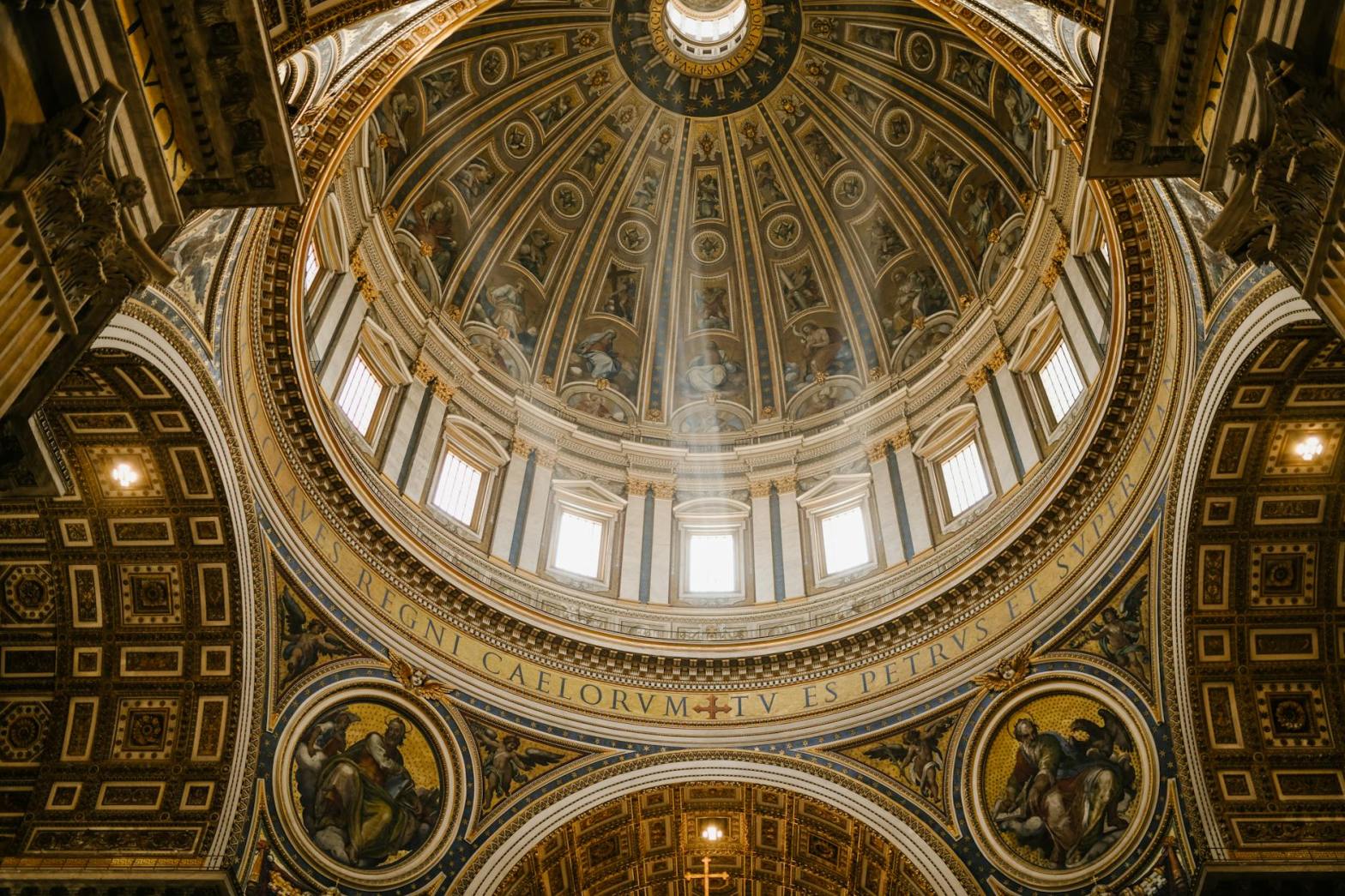
This isn’t like St. Peter’s Church back home
in Winchcombe; I had thought our church quite grand,
but here, in the Basilica in Rome,
my legs are shaking slightly as I stand
inside the entrance. There had been a screen
of scaffolding outside, withholding all
these arches, all this gold-and-silver scene,
these figures from my thoughts. I am so small
and insignificant within this world
of massive saints displayed so high above.
One shows a hefty hand, three fingers curled,
the index pointing outwards to the dove
upon the window, awe-inspiring art,
yet with me, in this space, inside my heart.

Felicity Teague lives in Pittville, a suburb of Cheltenham, UK. She has had inflammatory arthritis since she was 12 yet is able to work from home as a copywriter and copyeditor, with her foremost interests including health and social care. Her poetry features regularly in the Spotlight of The HyperTexts and elsewhere. Her second poetry collection is due out this or next year; other interests include art, film, and photography.

Year of the Cross – a personal essay by Britni Newton

Year of the Cross

December into January, the nails pierced the nerves on the left side of my face as I slept. After the emergency room, I blacked out for 10 days and was resurrected with a prescription for muscle relaxers, an order for a brain MRI with and without contrast, and one suspected ankylosing spondylitis diagnosis – that explained why my teeth kept breaking, why my jaw became arthritic overnight. What remained of winter was a blur of grief, denial, and a deeply ingrained search for purpose inside of pain. Did I wish hard enough for my neighbor? My sister? Both knees with hands clasped, incense smoke infiltrated my lungs. Newly dyed dark blue hair with oversized t-shirts and sweatpants became my version of modesty.

March and April consisted of preparing for rebirth/afterbirth. Every youngest son and every eldest, only daughter. I knew he would never really marry me but the jokes between us, paired with 150mg of bupropion and too many ounces of coffee, helped me to ignore the sorrow. I imagine(d) 13 eggs left, probably 6 (were) are viable, but the mental torment is genetic. I wouldn’t, in good conscience, pass it on. I tried taking the two 100mg tablets of bupropion again, but the insomnia further fatigued me. If my OCD ritual consisted of 1-2-3, 1-2-3, 1-2-3 knocks was I inevitably mocking the trinity?

In May, I reluctantly stabbed the tip of the first biologic injection into my ghostly pale right thigh. A week later I was in the ER, staring at the crucifix on the wall, an overwhelmed Catholic hospital turned into an “inner city” trauma center. Blood, urine, and nasal secretions were collected. My weakened immune system was fighting a war with some mutated, too close to antibiotic resistant version of Staph, for my comfort. The fever came and went as I explained the stories of Sarah and Abraham to a man who wasn’t forced to center his whole life around a vengeful father. Hagar’s place within the narrative will always be complicated. I began to feel sympathy for her. In and out of fever dreams I questioned “who determined her path?”

Early June, 6 months before my 34th birthday, turned into 6 weeks of antibiotics. I didn’t mind the bitter taste of Bactrim, but the bottle of Macrobid had a weird smell. A rainy Monday morning, my mom skipped a step and the only shoulder I had to lean on was broken. On the advice of an Instagram astrologer, I calculated that my tarot cards for the year were The Hermit and The Moon, a watered-down version of The Tower. Between grocery orders and graduate school, I didn’t have time to be entirely cognizant of all that was crumbling before me. My hair faded to seafoam, so I covered it with a bottle of dye resembling red wine. I needed control. My hands swelled and ached for the next 6 days.

During the peak humidity of summer, my chest tightened. I tried to ignore it but anxiety will never really leave my side, an entity that can’t be exorcised. In a past life I had learned the importance of troponin levels, and I couldn’t calculate those at home. The same ER but a new intern, whose curly hair reminded me of a more recent “Grey’s Anatomy” character. The resemblance provided some weird level of comfort, although I would have preferred Cristina Yang. Eventually, the lab results returned and reiterated that I would live another day. I was tempted to tell the young doctor how much was ahead of him, as the combination of Ativan and Toradol hit me like a ton of bricks. For the first time in a long time, I slept peacefully, Meredith’s monologues in the background. 

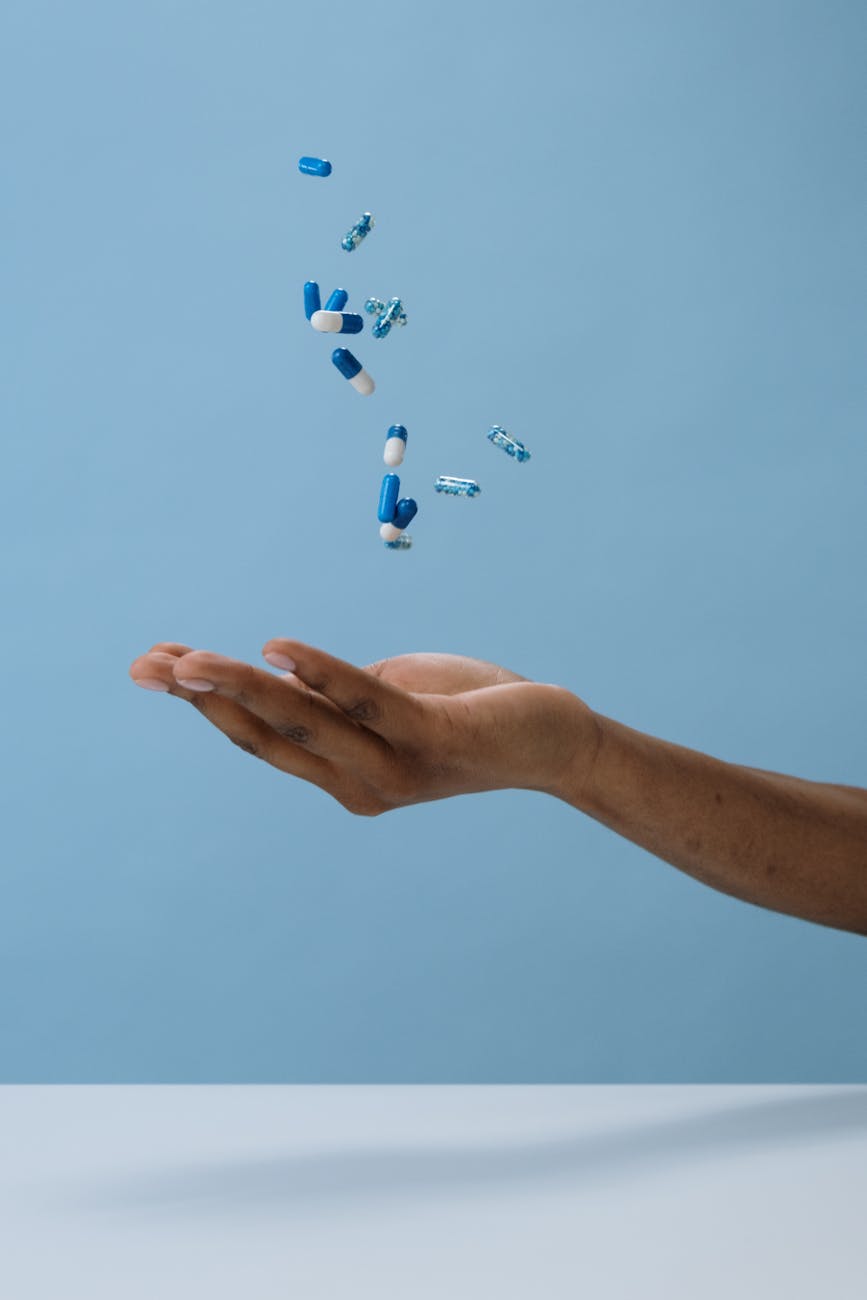
Two weeks later my solid black cat, Salem, remained curled in bed with a fever of unknown origin. It was the morning of my second CBT session. I wondered if my body, full of chaos, had made him sick too – my great grandmother’s superstitions lingered in the back of my head, and I couldn’t stop tapping as I waited for the phone call. I don’t remember what I ordered at IHOP, my mom across from me and now free of her sling, probably some kind of omelet. A few hours later the fever broke, and he was discharged. The vet prescribed a dropper of antibiotics and prednisone cut in half, a pharmaceutical communion. I never found the half he spit across the room. 

As the weeks shifted into August, a staircase tried to kill me. Mid menstrual migraine, I forced myself to drag a vacuum and basket of laundry down the uneven wooden steps of a 1922 bungalow. I’ve always struggled with my sense of value beyond productivity and deeply ingrained gender roles. God was exceptionally clean and organized, or so I’m told. The front desk receptionist of the ER I had become so familiar with wore gold nail polish and a look of concern, “did you fall or were you pushed?” I found a green mouse cat toy in my pocket, Salem’s favorite, and twirled it between my fingers like a rosary. The NP didn’t feel the need for a head CT and I felt the need to take an extra Klonopin before bed. The burgundy and purple bruises both spread and healed over the next few weeks. Dizziness associated with mild concussion symptoms came and went, it was eerily similar to being on a rocking ark.

I don’t remember September beyond packing and another broken molar extraction. October became a blur of duffle bags, Airbnbs with stiff beds, and 3 stressed cats next to me in the backseat. I took in a calico kitten from the neighborhood colony and named her Opal; a stone associated with harmony in Vedic astrology. But I couldn’t save her feral mother before the bungalow sold, I asked for St. Gertrude to keep her safe. I made it down the attic steps one last time and didn’t look back, Lot’s wife taught me better than that. The Sunday before Halloween, I swore I could smell the frankincense trailing out of the Catholic church across the street from my temporary home and briefly, I considered going to confession.

November felt vaguely like purgatory, the nonstop waiting for something bigger than myself. The day after the election, I was too tired to flip tables because of false worship. Instead, I dissociated through meditation with my Hindu therapist and spent an hour with an allergist/immunologist. More blood, urine, and nasal secretions were scheduled to be collected. I was finally getting answers, with the help of Medicaid, bittersweet irony. Later that week the exhaustion took hold, and I spent Saturday in bed, paying for someone else’s sins, likely in the form of unwashed hands. As the temperature dropped and the sun started to set at 4:30, I functioned like a one-woman skeleton crew. Coffee, laundry, sleep, and school. The day after Thanksgiving, Salem tested positive for Giardia, Opal was likely the source. All pets in the home were prophylactically treated for pestilence.

December 1st and 343 days since the pain appeared. Another Airbnb in Central Illinois, cycling through the same band t-shirts and black turtleneck as the moving process was finalized. One of the men carrying boxes of books asked me what I liked to read, and I was too nervous to admit it was full of vampire novels and numerology. The first sleep in our new home, a cold basement apartment with a brick fireplace but no kitchen, the cats and I curled together on my $300 Amazon mattress. And we stayed like that for weeks. Due to anxiety of the nails, I wore my nightguard religiously. A stack of post-colonial literature books and a dwindling bottle of Vitamin D acted as bedside décor. My hair slowly transitioned back to blue, an ode to Earth and her luteal phase. In the snowy stillness, my 34th birthday came and went without incident. The same King Von psalm in my headphones as I combed through boxes of old journals, crystals, and incense; my gold evil eye anklet snapped and fell to the floor. Even so, I knew I had been protected. What’s done is done and I’m still here.

Britni Newton’s words can be found in Anti-Heroin Chic, Funicular Magazine, Ghost Girls Zine, and others. Currently in graduate school and working on a thesis in poetry, her creative writing routine leaves something to be desired, but her work is typically forthcoming elsewhere. She takes inspiration from both the pain and pleasure of everyday life, familial folklore, and occasionally the antics of her three spoiled cats. She’s based in the Midwest.

Goddess – a poem by Liz Kendall

Goddess

She is there in damp grasses,
the heavy swathes of them;
thick hair brushed from the earth’s plain face.
In the dewdrops that cling
to each broad, meaty blade,
fed by rain and the soil’s depth.
She sparkles in the dew;
the green fire and the red;
the sun caught in its rising,
seeded in droplets.
She is held in the mists of spiderweb,
knitted fine and slung across
secret tunnels through the roots.
Bend down, see.

As Goddess she is painted,
carved and moulded;
tall and swelling, sea-waves in her form.
The spreading and rolling land of her,
the clouding and raining and clearing sky.

Her true place is here,
among the small things;
the scurrying ones,
the spinners and weavers;
their legs as fine as cotton thread.


Liz Kendall works as a Shiatsu and massage practitioner and Tai Chi Qigong teacher. Her poetry has been published by Candlestick Press, The Hedgehog Poetry Press, Clarion, and Mslexia. Liz’s book Meet Us and Eat Us: Food plants from around the world is co-authored with an artist and ethnobotanist. It explores biodiversity through poetry, prose, and fine art photography. Her website is https://theedgeofthewoods.uk and she is on Facebook @rowansarered and Instagram @meetusandeatus.

Flightless Gospel – a poem by Patrick G. Roland

Flightless Gospel

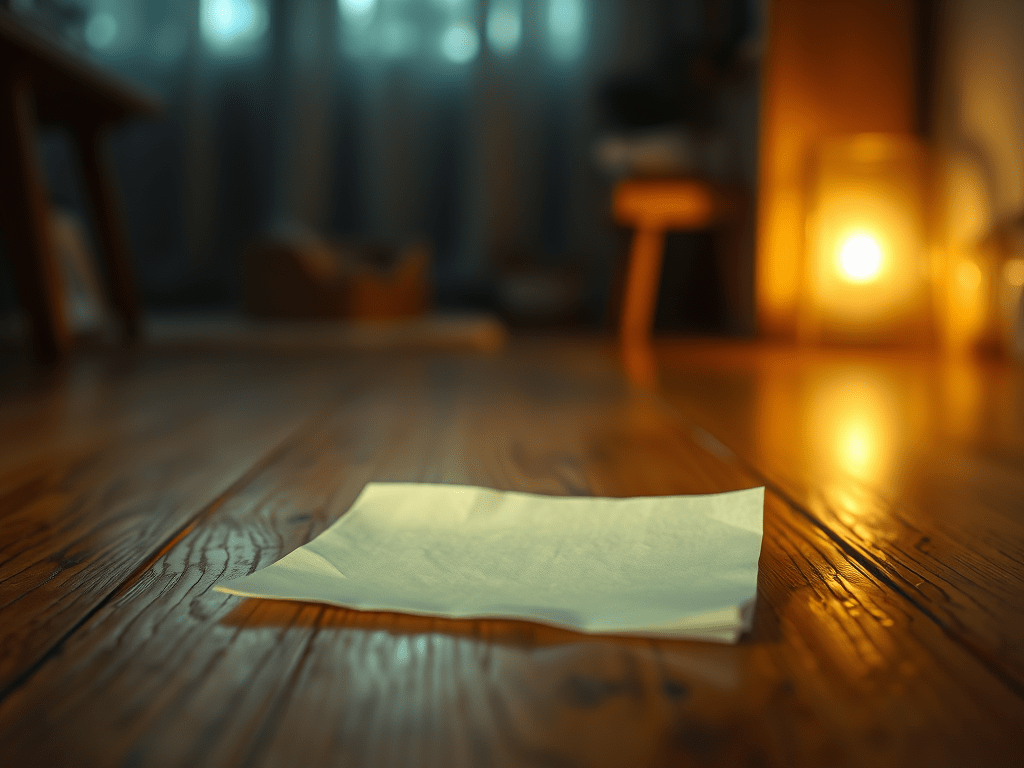
I found a prayer crumpled on the floor.
Like it belonged there. Handwrit in haste.
Post-it for keeps. Not a marker from a would-be
Psalm reader. Not a wish from
a hopeful heart, mourning goodbyes.
Truth in yellow. I smoothed it.
Folded it a pair of wings,
so it could lift again, soar to my maker.
Instead, I found a prayer on the floor,
grounded.
Where honesty remains.

Patrick G. Roland is a writer and educator living with cystic fibrosis. He explores life’s experiences through poetry and storytelling, seeking to inspire others in the classroom and through writing. His work appears or is forthcoming in Not One of Us Magazine, Maudlin House, Willawaw, Trampoline, Neologism Poetry Journal and others. He lives near Pittsburgh with his wife, who is his thoughtful critic, and their two children, who are his muse.

Adularescence – a poem by Shelly Norris

Adularescence

What can mend the ravenous beetles’
work in satisfying its violent hunger?
Iridescent ovals, coppery green shimmers
munch vacancies, render violet
-veined petals to eyelet, so that
sunlight drips through each teardrop bite.

Spring fires streak opalescent pink-gold,
shroud peaks in charcoal gray smoke.
Sandwiched between infrared and ultraviolet
rays, we lose the visible blue green labradorite
play scattering schillers from deep clefts.
We imagine they travel south robed in clouds.

On such a day, let us submit to soft pearlescent
selenite said to be self-cleansing. Dedicate
this day to repairing the rent. Begin to notice
our second-hand hearts in a whole new way.
Attend to the blood’s rhythm, dispel myths
of damage as a life sentence.

Stop rubbing saline drops that sting our eyes.
Clean stones are rare. Beauty sings out
from internal fractures dispersing
refracted light into rainbows from absences,
scars carved by deprivation.

Born and raised on a farm in Powell, Wyoming, Shelly Norris earned a BA in English from University of Wyoming and an MFA in Creative Writing from University of Alaska Fairbanks. She currently resides in Montana where she teaches liberal arts, communication, and writing at Aaniiih Nakoda College. Her poems have appeared in Gyroscope Review, Poetica, Piker Press Review, Impspired, Rye Whiskey Review, Verse-Virtual, Uppagus, Spillwords, vox poetica, The Cabinet of Heed, and several themed anthologies by Sweety Cat Press. Her first full-length collection titled Hyperbola debuted February 2024. She will release collections titled Dry Lake and Migrations in 2025.

Le Flâneur – a poem by Zav Levinson

Le Flâneur 

Red leaves
on the trees downtown.
It’s September again, in this little corner
of the world. Transitions
happen now.

Once September was all beginnings. Now,
twice that young man’s age,
time is doled out like rare fruit.

It’s Monday, the museum doors
are closed. No art today. But the city
is never closed.

People wear colours
their feet tap
as they go by.
The sky threatens rain. Humidity builds.
I wait.

Does God watch?
I have no pronouns for God. Only names.
The one who watches.
The one who listens. I
I am not empty. I yearn. I reach.
I lean.

The café half a flight down
is warm.
Granite walls hung with art.
Rumble of voices, soft choral music.
It feels safe. The mind is allowed
to take time off its chores,
explore. Everyone has a book (or a laptop).
We’re all studying.

Zav Levinson studied English literature at McGill University and Université de Montréal. A trained cabinetmaker, he ran the studio arts workshop for the Faculty of Fine Arts at Concordia University for 33 years. He is poetry co-editor of JONAHmagazine (https://jonahmagazine.com/). His second chapbook, reverb, from Sky of Ink Press, was published in the fall of 2022. His poems have appeared most recently in Montreal Writes, Amethyst Review, Canadian Literature, as well as in the QWF fundraising chapbook My Island, My City.