Pond Life – a poem by Sheila Wellehan

Pond Life


The lily pads are rimmed with brown
this grim November day.
By month’s end, they’ll disappear

beneath dead oak leaves and tired
straw-colored pine needles.
The leaf-needle stew will sink,

and lily pads will be revealed
once more before winter,
ragged but floating.

Then ice. Snow. Ice. Snow.
Thaw—
Solid ice will turn translucent

then transparent, and we’ll see
the bottom of the pond again.
We’ll see lily pad roots.

A few weeks later, we’ll watch
lily pads pulling themselves up
along umbilical cords

growing from the pond’s bottom.
One morning, lily pads will pop
to the surface.

Frogs will croak so loudly,
we’ll forget that we feared
we wouldn’t make it through winter.

Sheila Wellehan’s poetry is featured in On the Seawall, Psaltery & Lyre, Rust & Moth, Thimble Literary Magazine, Whale Road Review, and many other publications. She’s served as an assistant poetry editor for The Night Heron Barks and as an associate editor for Ran Off With the Star Bassoon. Sheila lives in Cape Elizabeth, Maine.

Jubilee – a poem by Emily Bender-Nelson

Jubilee

Speaking upward, ignoring the throttled roar of time
I let the moon blossom across my tongue, bitter effervescence.
Plainness as virtue, silence as self.
This faith, a recent acquaintance.

The seeds of rage grow stalky and thick as prison bars—
now sedated and hollow, a bamboo forest.
A double portion of shame
transformed. The prophet’s vision,

like the illogical promise of afternoon light.
We rattled by the bright keening of new foliage
against skies leaden with thunder.
You were standing on the roof. The cattle
turned their heads.

I cannot match your purity
But I am adept in the practice of convergence.
The crunch of gravel, the flocked shadows of starlings
Bursting from the budding unleafed trees—

Gravity, flight.

Emily Bender-Nelson is an emerging poet and visual artist from the American South, living in The Hague. Her work explores motherhood, neurodivergence, and belonging, and she is particularly interested in the Mennonite psyche. Her day job is in international migration and human rights. Find her daydreaming on instagram @emilynowhere

Madonna and Child – a poem by Jeff Skinner

Madonna and Child

Travellers come and go
light candles wonder why

white slips of paper
that might otherwise fly away

are posted by the chapel gate
people asking for help

offering thanks
Two thousand years of welcome

pilgrims drifters
lovers long ago in Rome

those who want to be quiet
or to talk

welcome –
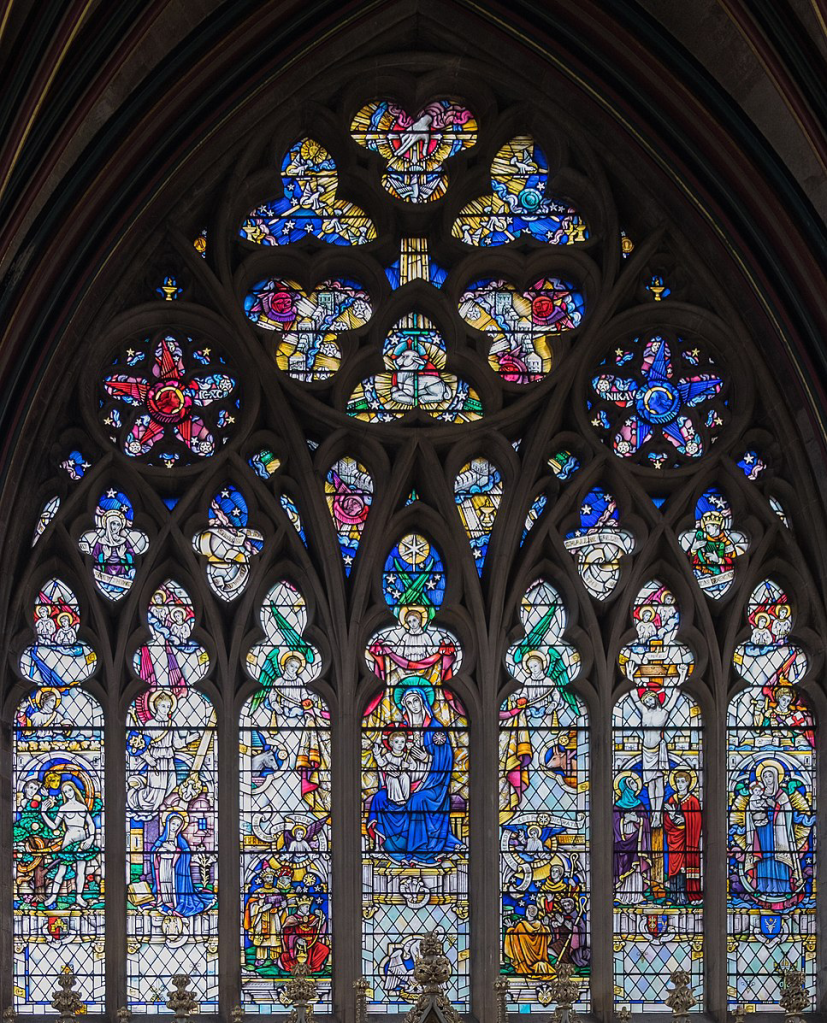
resting here gazing towards

the east window
figuring how we are lit

blue on blue
from within and without

Lady Chapel, Exeter Cathedral

Jeff Skinner’s poems have been published in anthologies and in many journals, recently or forthcoming in Allegro, Ink, Sweat and Tears, Paperboats. He was commended in the last Sonnet or Not competition. He volunteers at his local food bank and in an Oxfam bookshop, listens to music, watches football, reads, writes.

A Walking Prayer – a poem by Aberdeen Livingstone

A Walking Prayer

I’m taking desperate walks like I’m an addict
like I’m a shark - if I stop moving
I’ll sink to the bottom of these unforgiving
seas, currents that resist being charted,
tides hurled by a volatile moon, and always
the scent of blood in the waters

I’ve lost the trail of the metaphor just like
I’ve lost any sense of destination as I walk
just let the breeze blow over me, let my legs
work, let me move let me breathe let me be
dear God don’t let me dissolve - can I trust
that if I stand still I will not settle
like sediment to the drunken deeps

keep me afloat - be the salt in the sea
the rising tide and the magnetic core
maybe I’m walking to find you and maybe
you are everywhere around me already

Aberdeen Livingstone is pursuing a master’s in theology from Regent College in Vancouver. She has poetry in Ekstasis, Solum Literary Press, and Fare Forward, among others, and recently published her debut poetry collection, Velocity: Zero. She writes regularly for her substack, Awaken Oh Sleeper.

A Wave of Light – a poem by Cynthia Pitman

A Wave of Light

I lie back upon
the moss-soft grass,
close enough to feel
the steady pulse
of the warm earth beneath.
I stare deep and deep
into the lazuli sky.
From the east,
a wave of light buckles
across the dome of blue,
leaving behind it
radiating streaks of pink.
Following the wave
fly clouds of creamy white,
the soothing shade
of mother’s milk.
The clouds begin to roil,
bubbling over to fill the sky.
Their creamy color
brightens to a blinding white,
then undulates between
the two colors.
As the wave of light
ebbs to the west, it casts a shine
on the cream and white,
sprinkling them with sparkling hues
of pink and blue.
The sky forms an opalescent cabochon,
a heavenly jewel of hope
placed by God as a promise ring
on this earthen finger
of the Milky Way.

Cynthia Pitman, author of poetry collections The White Room, Blood Orange, Breathe, and Broken, has been published in Amethyst Review, Spirit Fire Review, The Ekphrastic Review, Third Wednesday (One Sentence Poem Contest finalist), Saw Palm: Florida Literature and Art (Pushcart Prize nominee), and other journals, and in Vita Brevis Press anthologies Pain and Renewal, Brought to Sight & Swept Away, Nothing Divine Dies, and What is All This Sweet Work?

At Ch’ing Ch’ung Daoist Temple – a poem by Daniel Skach-Mills

At Ch'ing Ch'ung Daoist Temple 
San Francisco, California

we stack oranges on offering plates
without regard for seismic code.

What's tumbled and fallen
for millennia in China, still falls here:
quiet quake of chrysanthemum petals,
sudden scatter of sandalwood ash,
aftershocked tears of the living
lighting joss sticks for ancestors
whose photos line the walls.

Easy to see here
how quickly everything we love
goes up in smoke—
our major fault being
(not the San Andreas)
but our shakiness at remembering
the fragility of it all,
how each tectonic tick of time
clocking out from under us
is groundbreaking news.

Perhaps this is why
the white-haired grandmother
prays daily to deities who protect the home,
offers tea to many-armed Guan Yin
who holds five-thousand years
of history in place.

Home, temple, shrine,
what she bows to now is change,
the oldest tradition—
its myriad ups and downs
not at all unlike this city
undulating like a dragon,
good fortune that refuses
to hold still.

Daniel Skach-Mills’s poems have appeared in Sojourners, Soul Forte, The Christian Science Monitor, Sufi (Featured Poet), Braided Way, Open Spaces, and Kosmos Journal. His book, The Hut Beneath the Pine: Tea Poems was a 2012 Oregon Book Award finalist. In 2018, The Beyond Within: The Downtown Dao of Lan Su Chinese Garden was a finalist in The Body, Mind, Spirit Book Awards, and The National Indie Excellence Awards. A former Trappist monk, Daniel lives with his husband in Portland, Oregon, where he served fifteen years as a docent for Lan Su Chinese Garden.

Stone Saints – a poem by Barbara Daniels

Stone Saints

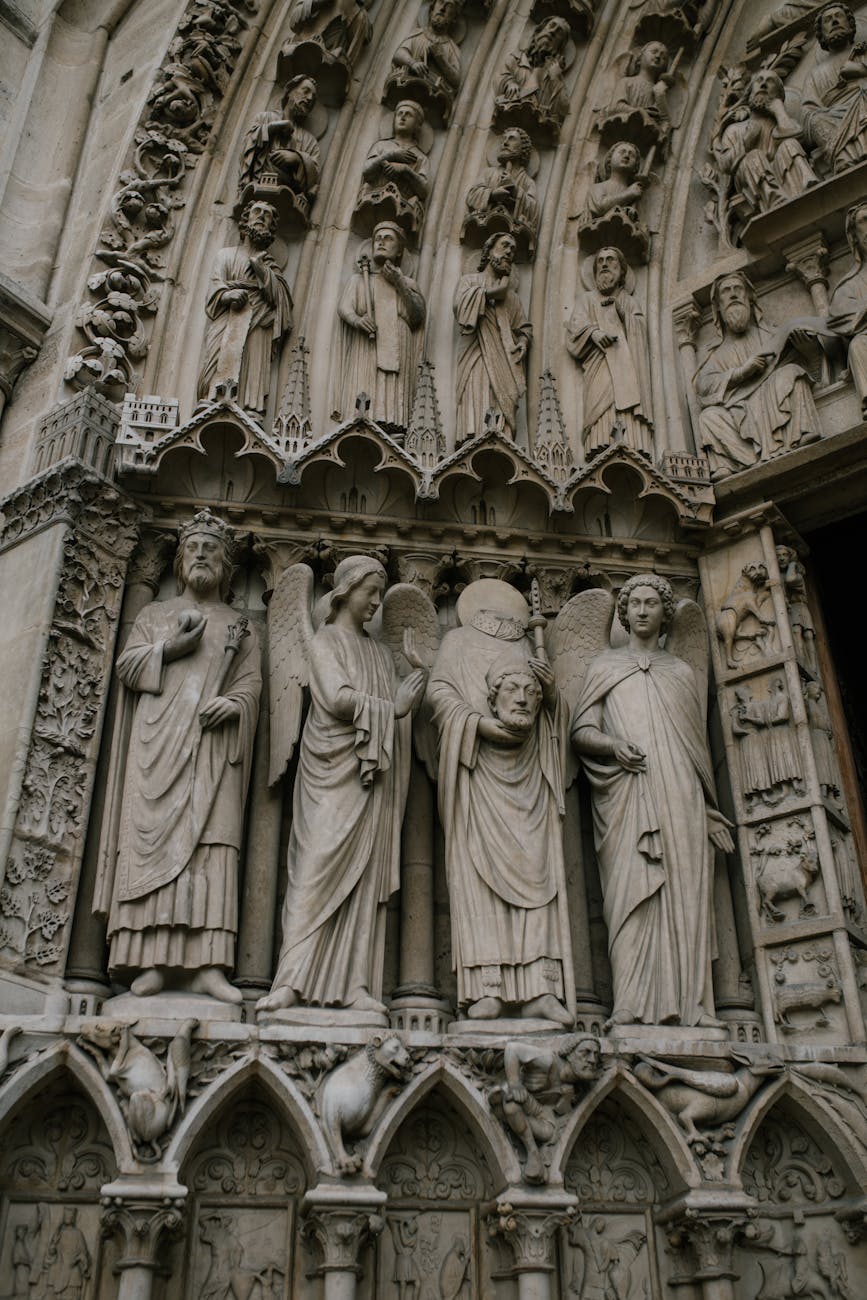
No wonder the Virgin Mary looks somber.
It’s not just her solemn baby, but sad saints

in shadows deep in the galleries—George
martyred by what looks like a baseball bat,

Tecla struggling at the stake. They’re like us,
aren’t they? Given what they can bear,

then given more. Gentle, tender, Mary
averts her gaze. Fissures in marble break

her body as if she’s made of sirloin, rib roast,
top round chine. Caryatids hoist cornices,

prop up architraves. Stone bodies wait, heads
lopped, hands serene on their shining knees.

Barbara DanielsTalk to the Lioness was published by Casa de Cinco Hermanas. Her other books and chapbooks include Rose Fever, Moon Kitchen, Black Sails, and Quinn & Marie. Her poetry has appeared in Main Street Rag, Free State Review, Ghost City, Permafrost, Philadelphia Stories, and elsewhere. She received four fellowships from the New Jersey State Council on the Arts.

The Buddha in the Snow – a poem by Janet Krauss

The Buddha in the Snow


His eyes and lips shut
as if in soundless sleep
silent as the snow
that embroiders the old oak leaves
covering the ground
and spreads a cloth across his lap
as he cradles a nest of frost
as if fledglings lie underneath
protected from the cold
protected by the unheard hum of Om
and the strength of his presence
beyond the permanence of stone.

Janet Krauss, who has two books of poetry published, Borrowed Scenery, Yuganta Press, and Through the Trees of Autumn, Spartina Press, has recently retired from teaching English at Fairfield University. Her mission is to help and guide Bridgeport’s  young children through her teaching creative writing, leading book clubs and reading to and engaging a kindergarten class. As a poet, she co-directs the poetry program of the Black Rock Art Guild.

How to Communicate with the Deceased – an essay by Diana Raab

How to Communicate with the Deceased

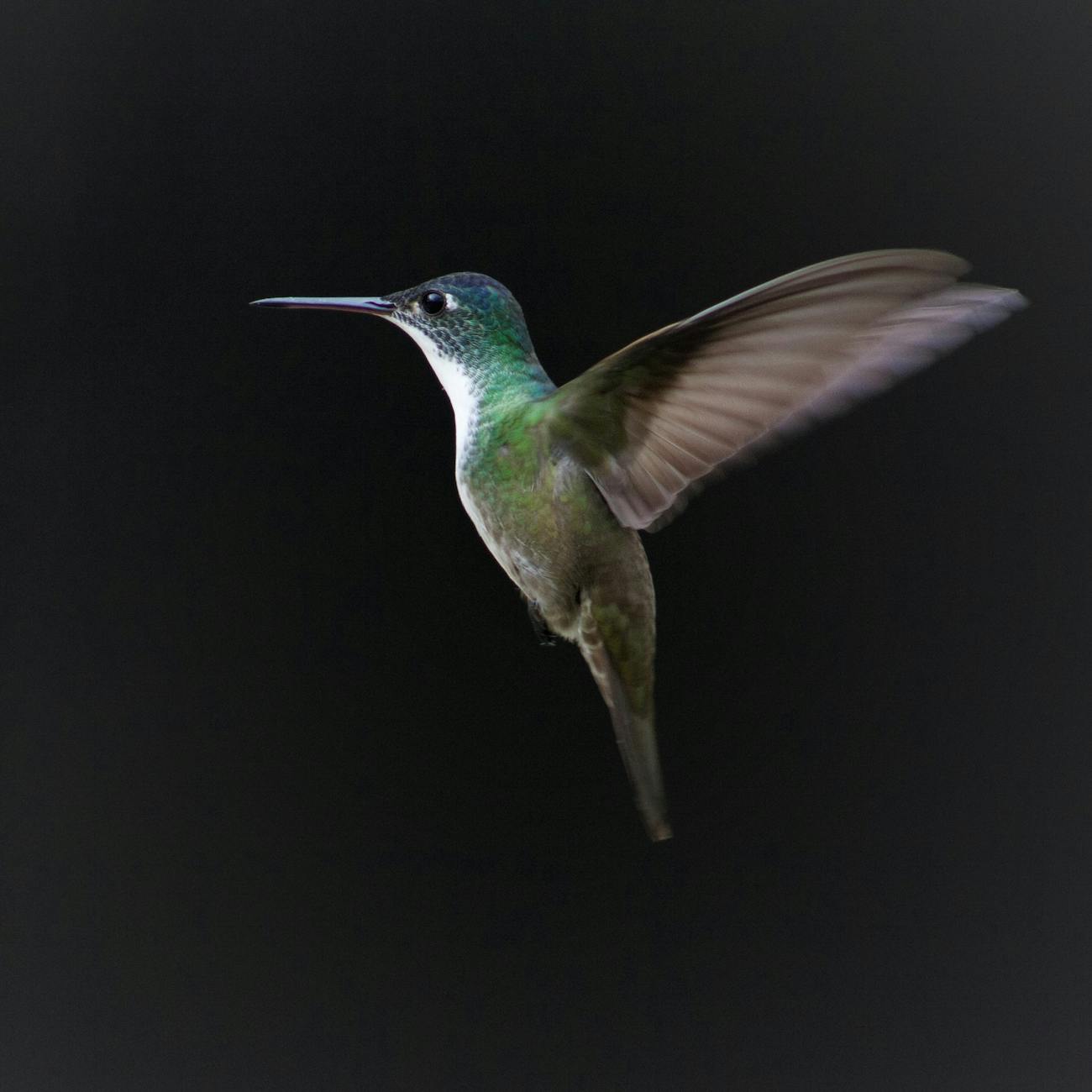
In my book, Hummingbird: Messages from My Ancestors, a  memoir with writing and reflection prompts last year, I discuss how if we pay attention we can get messages from those who have passed. My book was written during the pandemic’s lockdown when every day a hummingbird visited me outside my writing studio. I came to understand that it was my grandmother visiting who died when I was ten. She was my caretaker when my immigrant parents went to work during the day. She was also my inspiration to be a writer.

 Many of us over fifty seem to have more interest in connecting with those on the other side to garner wisdom, especially during such turbulent times.

It’s been said that those who were close to you before they died commonly send messages in the form of spirit guides. Hummingbirds, in particular, resonate at a high vibration, which makes them more connected to the great beyond…they can be referred to as messengers from the heavens because they often show up when people grieve the loss of a loved one.

Some Native Americans believe that the presence of hummingbirds brings unconditional love and harmony. The Aztecs viewed hummingbirds as brave courageous fighters. They also believed them to be immortal, connecting us with our ancestors. The fact is that, whenever one appears, it’s sometimes viewed as a visitation from an ancestor or a manifestation of a dead person’s spirit.

I believe that when a loved one passes, a part of us dies along with them. My father died when I was thirty-seven, which was more than thirty years ago. I still think of him every day, and wish he could share in my joy as a grandmother of six. Silverman, et al, (1992), says that in interviewing children between the ages of 6-17 who had lost a parent, she found that their experience was that their parent still existed inside of them or in the world. 

While this may cause some cognitive dissonance, it might account for why sometimes children have a hard time explaining what they’re feeling at this very difficult time. After losing a parent, some children felt their parent was communicating with them in a benevolent way that reflected the parent’s status as spirits. 

Like my hummingbird visit, one child saw flashing colored lights in his bedroom at night and said that he liked to think it was his mother trying to get in touch with him. For many children, this helped to temper the pain, while still communicating with them did the same thing. Silverman suggests that therapists should encourage the connection rather than discourage it.

When we die, we transcend the human experience of consciousness. In fact, Dr. Peter Fenwick (2009) believes that consciousness persists after death and if this is indeed the case, then it would seem to follow that we can communicate with the departed. 

Dr. Cedrin Johnson (2024) whose mother-in-law passed believes he saw her soul leave her body. He also believes that people die and afterwards, the spirits communicate across the veil. The point is that the departed are not really in the faraway place that we might think they’re in. He concludes that while death might be the end of a person’s life, but not necessarily the end of the relationship. He continues to receive downloads from others who have passed, as have I have I over the years.

Some ways to connect with the departed:

  • Create a home altar with artifacts from the deceased.
  • Do a 15-minute meditation.
  • Do a grounding exercise.
  • Focus on being mindful and grateful.
  • Pay attention to messages (in the form of flashing lights, symbols and impressions)
  • Channel through automatic writing by connecting with someone who has departed.

In conclusion, connecting with our ancestors may take regular practice. It also involves being alert and present to any signals that arrive. If we pay attention, then magic will happen. Basically, signs and messages transform us and take us from one state of being to another. They can also bring us from the darkness to the light.

Remember to always thank your ancestor for showing up. This is the way we honor and show love to those on the other side.

References

Fedwick (2009). “Wider human conconsciousness as shown by death and dying.” Royal College of Psychiatrists.  https://www.rcpsych.ac.uk/docs/default-source/members/sigs/spirituality-spsig/spirituality-special-interest-group-publications-fenwick-wider-human-consciousness-as-shown-by-death-and-dying.pdf?sfvrsn=f0022c3b_2

Johnson, C., PhD.  (2024). “I saw her soul leave her body.”  Medium.  May 5.

Silverman, P. Nickman, S and W. Worden. (1992). ”Detachment revisited: a child’s reconstruction of a dead parent.” Journal of Orthopsychiatry. Vol 62. Issue 4. Pp. 494-503.

Diana Raab, MFA, PhD, is a memoirist, poet, workshop leader, thought-leader and award-winning author of fourteen books. Her work has been widely published and anthologized. She frequently speaks and writes on writing for healing and transformation. Her latest book is Hummingbird: Messages from My Ancestors, A memoir with reflection and writing prompts (Modern History Press, 2024). Raab writes for Psychology Today, The Wisdom Daily, The Good Men Project, Thrive Global, and is a guest writer for many others. Visit her at: https:/www.dianaraab.com. Raab lives in Southern California.

More than the Present Moment – a poem by Andrea Potos

More than the Present Moment

When I read the poet’s words:
One must mourn things daily
I knew one must praise
what one mourns daily,
our task to continue
to love what has loved us,
not to fold and stash
in an attic corner where one
seldom goes,
not to forget, nor replace as if
assuming this moment
is all there is – Now being
only one portion
of the vastness that holds us.

Andrea Potos is the author of several poetry collections, most recently HER Joy Becomes (Fernwood Press), and Two Emilys (Kelsay Books). A new collections The Presence of One Word is forthcoming from Fernwood in fall of 2025. andreapotos.com