
Balanced Hearts
Progress reports are due soon. My colleagues and I are putting the finishing touches to our narratives with the goal of writing balanced, positive assessments that take into account areas of strength and struggle. At this time of year, I make my semi-annual suggestion that teachers should play a game which involves reviewing narratives and reading between the lines, discerning what the educator is trying to say without coming out and saying it. “X. is an energetic, curious student” really means, “X is a hyperactive kid who never stops asking questions all day long.” When we write, “Z. sometimes finds it challenging to consider other perspectives,” what we are not saying is, “Z. only thinks about himself and has zero empathy.” The fine art of subtext — how to get across point with a light touch — feather rather than sledgehammer, as it were.
Not that long ago, my husband and I went to an exhibition, “Ancient Nubia Now.” Standing before a case full of exquisitely carved figurines known as shawabties, I caught the predictably lilting tone of a teacher addressing elementary school-age children. “Did any of you ever have stuffed animals when you were younger?” (Note: the students in question were all of eight or nine years old, at most.) “Did you know they weren’t real?” As the students rather reluctantly nodded, she continued in a joking voice, as if letting them in on a secret, “Did you pretend they were anyway?” At that point, I wanted to throw a copy of The Velveteen Rabbit at her head.
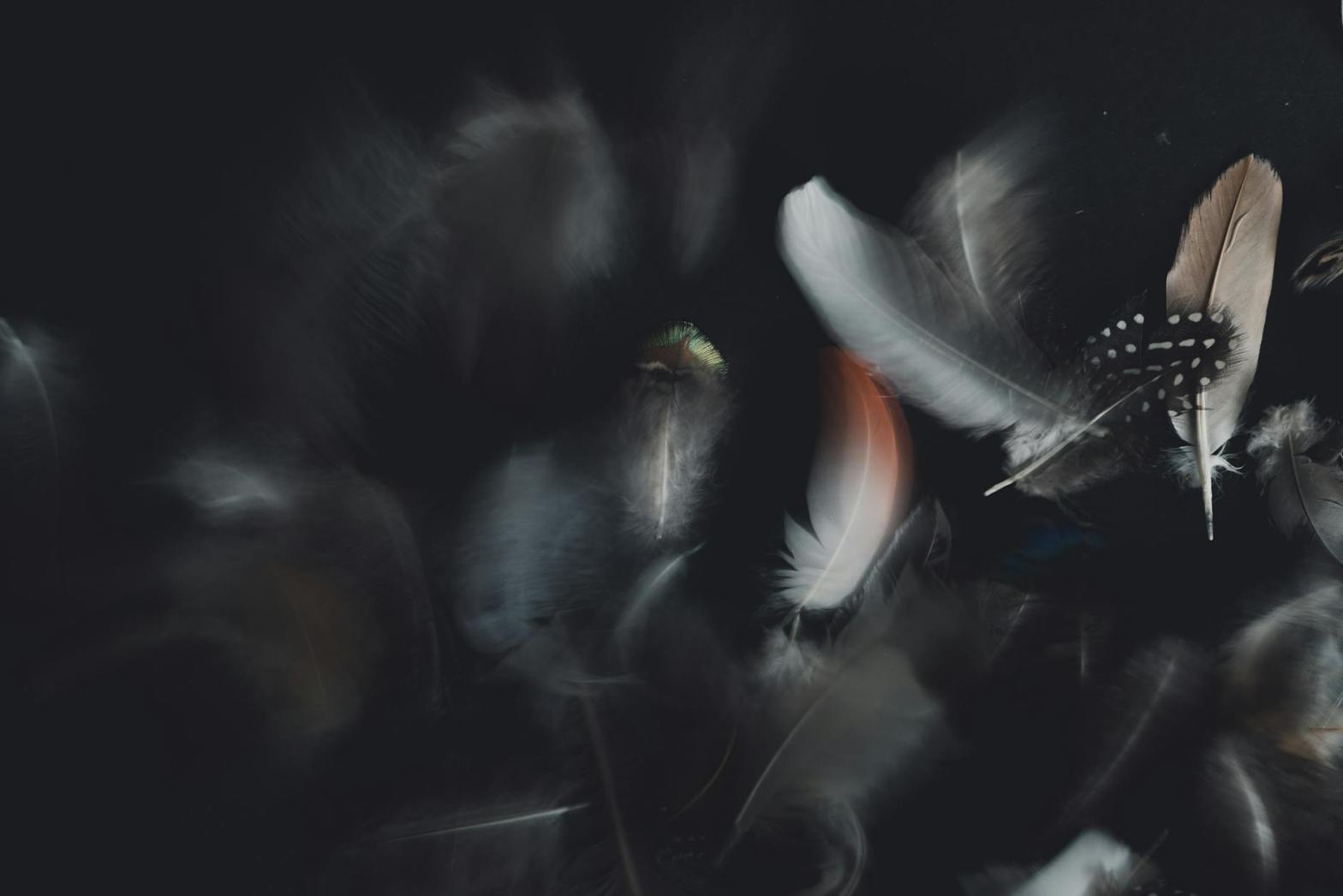
To her (questionable) credit, she was trying to explain the significance of the shawabties in a way that would make sense to modern-day children. Ranging in height from about four to fifteen inches, the statuettes were placed in tombs on behalf of the dead, should they be called upon in the afterlife to perform agricultural duties. Shawabty, I learned, comes from an Egyptian word meaning “one who answers.” The afterlife featured prominently in ancient Nubia, much as it did in adjoining ancient Egypt. According to tradition, at the time of death, the heart of the deceased (carefully removed and preserved in an alabaster pot designed for that specific organ) would be weighed in judgment and “only if the heart was lighter than a feather could they be included in the blessed afterlife.” Heart scarabs were inscribed with spells from the Book of the Dead, requesting that the heart “testify favorably.”
How will my heart testify at the end of my days? And to whom will it need to answer? More to the point, how will others testify as to my heart’s favorability? The way I see myself — both literally and figuratively — is not the way others see me. The other day I entered the teachers’ room and made a kind of amused grimace to indicate, “I’m dealing with some real craziness here.” One of the aides said, “I’ve never seen that expression on your face before! You always look so calm and collected.” I didn’t realize I was such an accomplished actress. The imposter syndrome is alive and well and living in me, taking a veritable curtain call at the end of each performance (a/k/a doing my daily job). I wonder how many of the students I work with each day – to say nothing of the adults in the building – feel they are being judged, their merits weighed in the balance, most of the time.
Sometimes my heart feels weighted down by my perceptions of the woes of the world. Is there a way to live with a lighter heart? We don’t always know when we are going to die, although some of us are given that gift. My grandmother was told how much time she had left before she died. She decided to knit a scarf for as many members of the family as she could, and knitted eight hours a day for months, marking on a piece of paper the number of rows she’d finished so as to keep track of her destination. She was at peace with her fate, contented with her lot, she enjoyed the company of the staff at the nursing home and the regular visits of family and friends. It seemed to me that she was freeing her heart of regret, grudges, and longings. When she died, it was a tranquil death, and she left us with a lightened heart.
Of course, my grandmother was a ballet dancer. She knew all about feather-light balance. After all, she could do it on the tips of her toes.
This past week, my new students noticed the old CD player I had in my room. I’d borrowed it from a colleague as part of the annual language testing we are required to perform. I hadn’t even thought to use it for music. It’s been years since I’ve played music on a CD player in my classroom. But the moment my new students spied it, they immediately said, “Teacher! Speaker!” and asked if we could dance.
In ancient Nubia, the heart had to be lighter than a feather at the time of passing. Maybe that’s the way to get there: walk lightly through our lives. Dance whenever and wherever we can.
Carole Greenfield grew up in Colombia and resides in New England, where she teaches multilingual learners at a public elementary school. Her work has appeared in The Manifest Station, Salvation South, Inscape Magazine and other places.
 Amethyst Review
I enjoyed this essay, Carole.
LikeLiked by 1 person
Thank you very much!
Carole
LikeLike