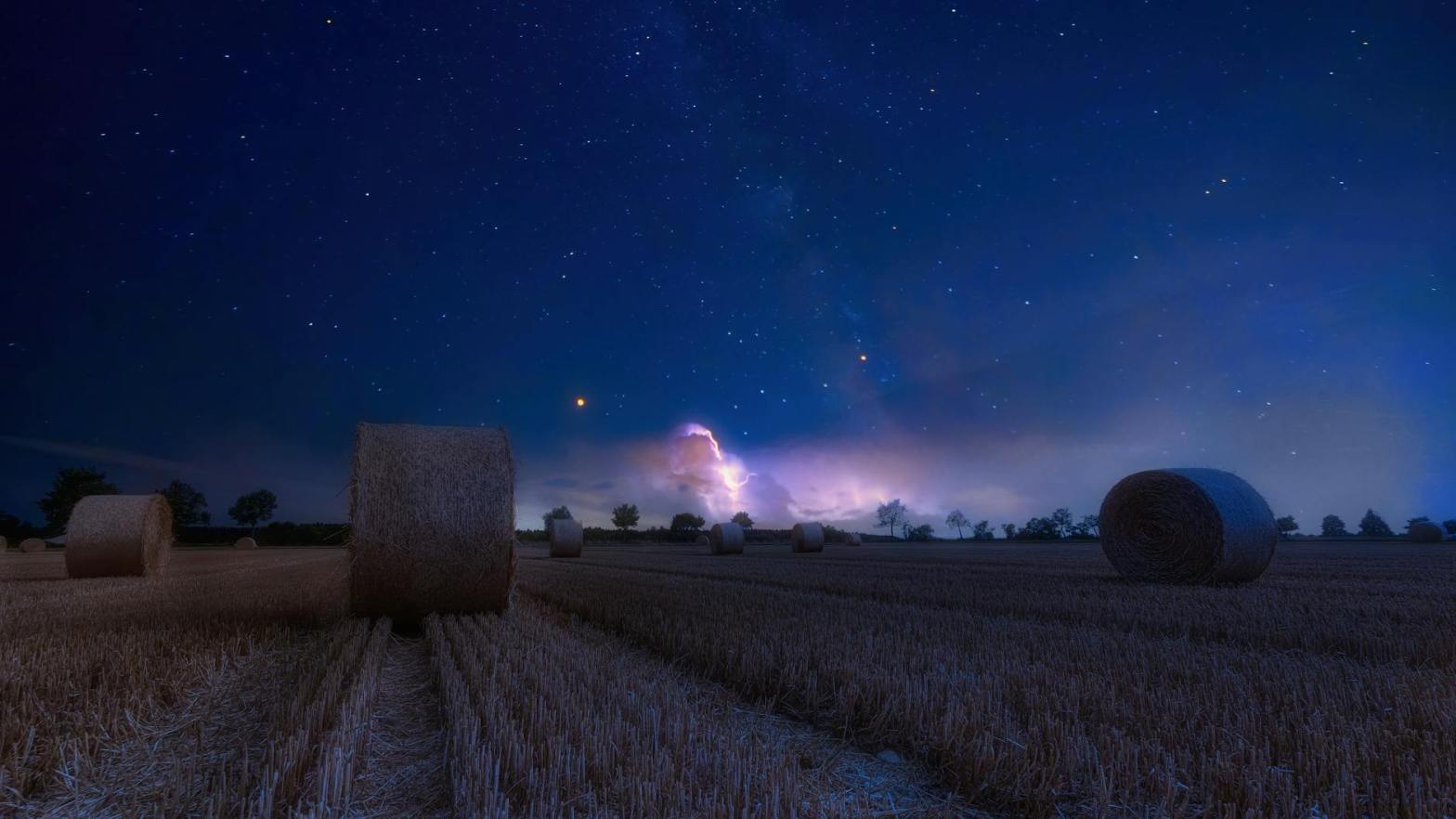

There Are No Words – a poem by James Lilliefors

There Are No Words

To really know happy, you must
also know hurt. To know love, loss.
But this – to know this moment,
you need only to stand still, perfectly
still, and feel the soft sunlit movement
of air over your shoulders, the slow
suction of sea-pebbles underfoot, tidewater
sluicing back to where it came from,
eons ago. You need only to look out
at the wind-scalloped waves
to see what’s there and what isn’t.
In this moment, you are just flesh again,
remembering the first flowering
of sea and land, the third day.
A fish breaks the surface, leaping
through air, then falls back to what it knows,
the churn of life, known trying to explain
unknown. Fisher of moments, you need
only to hold this one now, like a breath,
or a pose, for a moment – that’s all we get.
A moment in which the world appears
to say hello, but a moment that explains
everything else – as seed explains flower;
flower, seed; as sea explains land. Hold it,
take it with you, as you fall back to the familiar
churn, and remember, don’t forget
to let the world astonish you,
wordlessly, every now and then.

James Lilliefors is a poet and novelist, whose writing has appeared in Door Is A Jar, Ploughshares, The Washington Post, The Belfast Review, The Miami Herald, and elsewhere. His first poetry collection, Sudden Shadows, was published in October.

Tired as a Cold Gray Winter Day – a poem by Marso

Tired as a Cold Gray Winter Day

So tired,
nearly blank—

thoughts freeze
in mid-thaw.

Icicles—
blunted pens of invisible ink
write into snow,
punctuation marks without words.

Snow—colorless from a distance,
yet each flake,
a cut-crystal prism
turns white light
into sparks of rainbow—
that alight and disappear
like feelings that flicker
and escape my tired mind,
heavy with a day's blizzard,
settling into a drift of thoughts:
If “I think therefore I am” is true,
then what am I now?

I sense my “am”
in a sense of touch,
my fingers on the window,
its cool glass,
in the still silence
that I can almost see,
and in my smile
as I notice snow cushions
on my summer chairs.

Marso writes poetry shaped by years of living in different cultures and by a practice of paying attention to ordinary life.

Incomplete Salvation In The Tall Gray Afternoon – a story by Victor D Sandiego

Incomplete Salvation In The Tall Gray Afternoon

A bus of wounded dreams comes to a stop by the liquor store to discharge its waste and open its doors for more. A tall entangled man boards, his long gray hair dirty but blessed by his mother, a fact known because he raises his voice to announce it.

Kathryn of no repute above the rear wheel well lowers her head and whispers into her hands. Within the glare of her afternoon doubt, she wonders if she will ever find a home worth coming home to. The failed playwright across the aisle pales.

Unemployed Johnson sits near the back with his face unshaven and pressed against the bus glass when long gray hair man boards. He looks up. Something about the man reminds him of episodes he suffered at the hands of a neighbor when he was a boy learning to feign an enjoyment of molestation to avoid punishment.

Gray hair man drops some coins in the charge box and walks the aisle as if to pass judgment on sinners. He resembles a giraffe in his walk, and in his eyes, a jackal.

An ex-cop looks up from his undercover bottle he clasps with both hands. Its dark glass holds an aborted second coming. Ex-cop is no longer named and only wanders the bus routes in search of the courage to shut the door on his life. He accidental shot a kid in the pursuit of justice, and though cleared of legal charges, fell from the earth into his demons.

Gray man returns to the front, slops himself down on one of the sideways seats, rubs his hands through his hair and then down his shirt and the front of his pants, leaving a streak. Kathryn of no repute above the rear wheel well swallows a lump of apprehension. Her breath rasps.

The afternoon grows jagged as the bus driver groans the bus forward toward all the places riders don’t want to go but must, like a dealer’s dump that smells of coverup bleach or the porno place on Kingston Ave that drives girls with nowhere to go from their youth.

Don’t say it, says gray man. The bus lurches.

And nobody does. Nobody rears their thoughts into a voice until the next stop across from a rundown church when a woman of indeterminate authenticity climbs up with a large bag of bottles that sing a muted clanked harmony from their paper prison. She carries herself like a queen fallen to hard times and announces to the bus in a flawed regal tone that she has no one person but herself to blame for her lack of position and descent from grace, and that they, all the lost riders, could learn a thing or two from her honesty.

A kid of fifteen broken summers or so sits in the far back. He wears a barista apron he found on a sidewalk. He carries two memories in the form of old photos in its pockets. His mother disappeared little by little into dark smoke and injections, captured, she might say if able, by the lure of an addicted existence that carries no hope of recovery in that a ruined hope is worse than none at all.

From her standing place, fallen queen calls out to the kid in the back to come forward and take her hand so she can show him up close the face of a prophet. When the kid rises and starts forward through the bus, more curious than afraid, the bus hits a large potholed asphalt canker and throws him into the arms of the ex-cop without a future.

That’s okay, kid, says the ex-cop as he helps the kid up. Go to her.

The bus pulls over in front of a bricked building. Someone pulled the stop cord, but nobody rises from their seat to let the afternoon play on without them. A certain hypnotic trance grips Kathryn of no repute who might otherwise take the opportunity to flee from her fear, and unemployed Johnson sits still with an uncertain look on his face that speaks of jagged crevices in his being that might one day, God willing, be filled.

Gray man stands and grasps the metal rail. He breaks a smile into three pieces that each carry a hint of malice or love or indifference to pain. He is the maestro, he announces, and will decide which passengers shall be forgiven.

Nothing enters the bus from the outside air. Each doubt or worry or courage comes from within. Each knows this in their transport, or if not, fall into a stupor in which many find comfort when their life has no meaning.

It’s dark outside, whispers the failed playwright although the sun still beats the boulevard down. He was once a bard.

Fallen queen says they called her Anastasia and the kid of fifteen summers or so takes the hand she offers as the bus descends further into its route. What’s this about? asks the kid, but Anastasia only points to the gray haired man and says: Look.

The kid looks. Gray man is dressed in blue denim faded from years of walking in the light of the Lord he would say if asked, and the kid sees a sort of displacement or skewing of things he thought he understood when he puts his eyes upon what might be a font of enormous judgment.

What do you see? asks Anastasia, and the kid breaks into the house of himself to find an acceptable answer. He doesn’t want to expel aloud what without effort floats into his throat as he regards the long hair man and fingers the photos in his pocket.

The despised prophet disguised, says Anastasia.

Somehow she heard his thoughts, realizes the kid. Maybe she is the real savior and the gray man a trick to lure kids with failed mothers away from the light, but Anastasia knows his thoughts again and says: No, he is real.

From her plastic seat, a woman not introduced asks in a voice that beats tribal drums who the hell is driving the bus. It enters a canyon between buildings on a street that shouldn’t slope downward but does. The afternoon dims and the gray hair man, his incomprehensible existence manifested as one who knows the real difference between right and wrong, speaks.

We go down, he says. Where we all birthed. All of us. Now here to rise again, transcend. You, failed playwright. Write again. You who shot an innocent. Shit happens.

What about me? asks the kid of fifteen broken summers.

You’ll be my replacement one day, says gray hair. It’s why we’re all gathered.

I don’t know how.

None do.

And none did. It had been told on the sidewalks by the newsstands and down in the subway tunnels where men without the means to touch God wandered that all the gutshot certainties of life were illusions invented to keep one from the higher truth of a higher peace within themselves. Then night fell and such knowledge was refused.

Gray man staggers when the bus stops, regains his balance, disembarks. Anastasia raises her bag of muted harmony in a goodbye gesture. Ex-cop drinks from his bottle, his last. Kathryn cries a joy for something inside of her lifted, and unemployed Johnson forgives himself for what he could not as a child have known.

When the bus moves, the engine growls and the light lifts. The kid of fifteen summers runs to a window and sees the gray man disappear into an alley next to a day and night bar. The shadow of an angel may follow, but it could be the reluctant ghost of his mother seeking salvation. The kid is a little older now, somewhat wiser, but still cannot tell which is which.

Victor D Sandiego, once from the big city west coast of the United States, now writes his odd time compositions from his home on the edge of ex-pat society in small town. He is the founder and editor of Dog Throat Journal. His work appears in various journals and anthologies, and is upcoming in Bull and others.

The Reader Engages with the Text – a poem by Dana Holley Maloney

The Reader Engages with the Text

What luck when the pilot
reports finding a shortcut
so that a flight across the continent
will take us under five hours.

Have we found a fold
in time and space? Perhaps.
The universe so playful
in all it offers, the gifts
it gives. Signs
and symbols in the clouds

when we burst through--
baroque and blooming,
all white light and in
designs we find
when we try to read
the world we see.

Worth wondering
what language will serve
it best--whether words
or shapes, notes
or numbers. And what

beliefs to stamp them with--
even of author. Whether
to call it God. And what each
faith brings to attribution.

Outside the window, beauty
distracts us from final answers--
rose coloring all with its
eternal light. Sacred moments

before darkness seeps in
like peace, wrapping us
in time even as we stand
outside its watch.

We’re uncertain of the space
we’re in, of loops or overlaps,
synchronicity or the divine,
and free to contemplate

questions that blossom
like the clouds our craft
will navigate--of moment
and meaning, of states of grace.

Might we find, as in the Hindu
mind, that these human shapes
we take, archetypes of mind
and matter, might be
the language of the soul?

In motion across these dimensions,
might we speak
so we become what we will be?

Dana Holley Maloney teaches English at Montclair State University. For a long time, she worked with high school students, as a teacher of English and Creative Writing. Her poems have appeared in Lips, North Dakota Quarterly, English Journal, and Journal of New Jersey Poets and are forthcoming in Paterson Literary Review and Pine Hills Review. At Duke University, she received the Anne Flexner Award for Poetry. When not in New Jersey, she lives in Freeport, Maine. When not writing, she is likely gardening.

Saint Columba’s Iona – a poem by Martin Potter

Saint Columba’s Iona

Island off an island off an island
In the midst of a land-posted sea
In mists of winking clarity

Water the road for craft
Paths of the mind and rocks
Patent and lurking hazards

He landed in the thick of a throng
Waves mountain-peaks beaches
And otters seals in hourly

Metamorphosing visibility
Gleam of sand and the blueing
Cragged distances by ray-storm

A perfect spot for a monastery
Seed of entwinement for Picts
Bed of unfurling for Gaels

Martin Potter (https://martinpotterpoet.home.blog) is a British-Colombian poet and academic, based in Edinburgh, and his poems have appeared in Acumen, The French Literary Review, StepAway Magazine, Ink Sweat & Tears, The Poetry Village, and other journals as well as in anthologies by Black Bough, Green Ink Poetry and Gothic Keats Press. His pamphlet In the Particular was published in 2017.

Wandering – a poem by Patrick T. Reardon

Wandering
(Brother Elbow and Little Sister poem #19)

Brother Elbow wants to
morning meet by the
restored fountain in the
gentried park I don’t want
to go, bad memories.

Little Sister smiles, nods,
and we set off along the
boulevard, the brown-wool
nun and tall me, a curious
couple amid sweat runners
and leashed dogs walking.

Brother Elbow is locking his
bike as we arrive, and the
water of the fountain tells a
string of stories. It rosaries a
wheel of prayers for the
repose of every soul, quick
and dead, including the
three-piece homeless guy
who could be my son.

Remember my wandering.

Little Sister embraces Brother
Elbow, full of grace, although
Avila said in the rules to keep
distant. Little Sister dances with
Elbow a silent waltz, and even
he laughs.

Brother Elbow won’t let the
homeless guy use his phone
to make a call but gives him $2,
grumbling about lost lives
and empty hours.

Little Sister baptizes me with a
fountain splash, and I want to
keep silent, but she looks and I
say, “I fear.”

Hear me.

Brother Elbow spits in the
Starbucks-thick garbage can
and looks and I say, “Brother
Flash and Sister Spark are
weak as flowers to the cold.
They are poor-built huts.
They are sure travelers
disdainful of maps. Who
can save them? I am a
worm and no man.”

Little Sister feeds me and
Brother Elbow slices from her
orange, gives the rest to the
homeless guy, a small boon on
this morning of sun and water
and worry.

I lift up my heart.

Patrick T. Reardon, a Chicago Tribune reporter from 1976 to 2009, is the author of seven poetry collections. His latest is Every Marred Thing: A Time in America, the winner of the 2024 Faulkner-Wisdom Prize from the Pirate’s Alley Faulkner Society of New Orleans (Lavender Ink). He is a five-time nominee in poetry for a Pushcart Prize. His poetry has appeared in America, RHINO, Commonweal, After Hours, Autumn Sky, Burningword Literary Journal and other journals.

Holding Up No Matter What – a poem by Charlene Langfur

Holding Up No Matter What

I look for a way out as I write, in the midst
of the poem itself, or as I am working hour
after hour online, listening for the fluency
of each speaker and their content, 21st century
high-tech work requiring a Buddhist’s patience,
and the pure grit of a person not giving up,
breathing deep to stay in the moment, knowing
this is the only way to live in a desert as hot as
this one, the Sonoran, one of the hottest in the
world, full of oasis palm trees, an old oasis
surrounded by mountains, covered with big sky.
Those who live here know how to hunker down,
take to shade always, learn to navigate safety
in a place of thorns and reptiles, the tiniest lizards.
I learn to live with such danger to stay safe in a world
getting warmer, a world in which we need to live
in the moment with ideas about new connections.
I know I cannot give up no matter how many years
pass me by and how many poems are needed to help me map
out new solutions and find my way to another morning,
poems that I write on my fat white pads, another
month of them, a woman living alone with a little dog
saving zinnia seeds in a plastic jar and drying them
in the window sill, powerful little things, these seeds.
I’m here with my computer loaded with new works,
sentences spoken out loud with answer sheet grids,
scoring per minute, digital keen and true and later, a small
patch of time for love again, an old friend, and
a walk with my blonde dog under a new moon,
soon a sky full of auroras of light. I am open
to the possible as if each moment is a lifetime in itself.
This is the only way I know now. Coaxing myself along,
using less, collecting seeds, planting whatever blooms.

Charlene Langfur is an LGBTQ and green writer, an organic gardener, a Syracuse University Graduate Writing Fellow and her writing has appeared in Poetry East, Room, Weber and most recently in The Healing Muse, Still Points Arts Quarterly and the North Dakota Quarterly.

Tender – a poem by Rita Moe

Tender


I have been all day tending beauty.
I have been all day pulling weeds.

Over and over
Sorrel and clover.

Sour sorrel,
yellow, sprightly.

Dark sweet clover,
Tangled, reaching.

Over and over, sorrel and clover,
And crimson flags of amurs.

Inch-high forests of amur maples,
Stems, roots, wicked straight.

I have been all day tending beauty.
I have been all day pulling weeds.

Over and over
Sorrel and clover,

Henbit and plantain,
Bittercress, bindweed,

Nutsedge and purslane,
Toad flax, chickweed.

Tender, Tender, this is your duty,
to be all day tending beauty.


Rita Moe’s poetry has appeared in Water~Stone, Poet Lore, Amethyst Review, Mad Swirl, and other literary journals. Besides poetry, she enjoys cartooning, knitting, gardening. Now retired from an investment firm, she has two grown sons and lives with her husband in Roseville, MN

Hymn to the Swamp Willows – a poem by Christopher McCammon

Hymn to the Swamp Willows

Show me, Swamp Willow
the way of winged migration,
the turning and returning
of the Yellow Crown.

Teach me the way of your welcome,
wise to trust the heron’s eye
will see the way of what they need,
yielding twig to claw, branch to beak,
abundant life that fears no loss.
The heron harvests only what will grow
and hold the growing.

Teach me the way of their egress,
quiet and communion now,
of root to ground and ground to root,
giving self the grace seasons soon
will offer up in new excess.
This is not to wait—a stillness here
will hold the growing.

Show me, Swamp Willow,
the way of winged migration,
the turning and returning
of the Yellow Crown.

Christopher McCammon is a writer and teacher living in coastal Virginia. His philosophical work has appeared in The American Philosophical Quarterly, Ethics, and The Stanford Encyclopedia of Philosophy. His poetry has recently been published in Blue Collar Review. With friends inside and outside local prisons and jails, he co-organizes the Tidewater Solidarity Bail Fund.

Starlight Sonata – a poem by Lana Hechtman Ayers

Starlight Sonata

Tonight starlight washes my bare shoulders the way
my grandmother once did as I sat in the bath long ago,
water from the wrung cloth always cooler, tickled

as she sang to me and splashed me and dubbed me
her shayna madela, her beautiful little girl, and I knew
that the unruly, prickly, threatening world held
a safe place I could call home—my grandmother’s heart.

I haven’t been in a tub tended by a beloved in years
but here under the great basin of the glittering cosmos,
all possible love showers over me like praise.

Lana Hechtman Ayers makes her home in an Oregon coastal town famous for its barking sea lions. As managing editor at three small presses, she has shepherded over a hundred thirty poetry collections into print. Her work appears in print and online journals such as Comstock Review, The London Reader, and Peregrine. Her most recent book, The Autobiography of Rain, is available from Fernwood Press. Visit her online at LanaAyers.com.