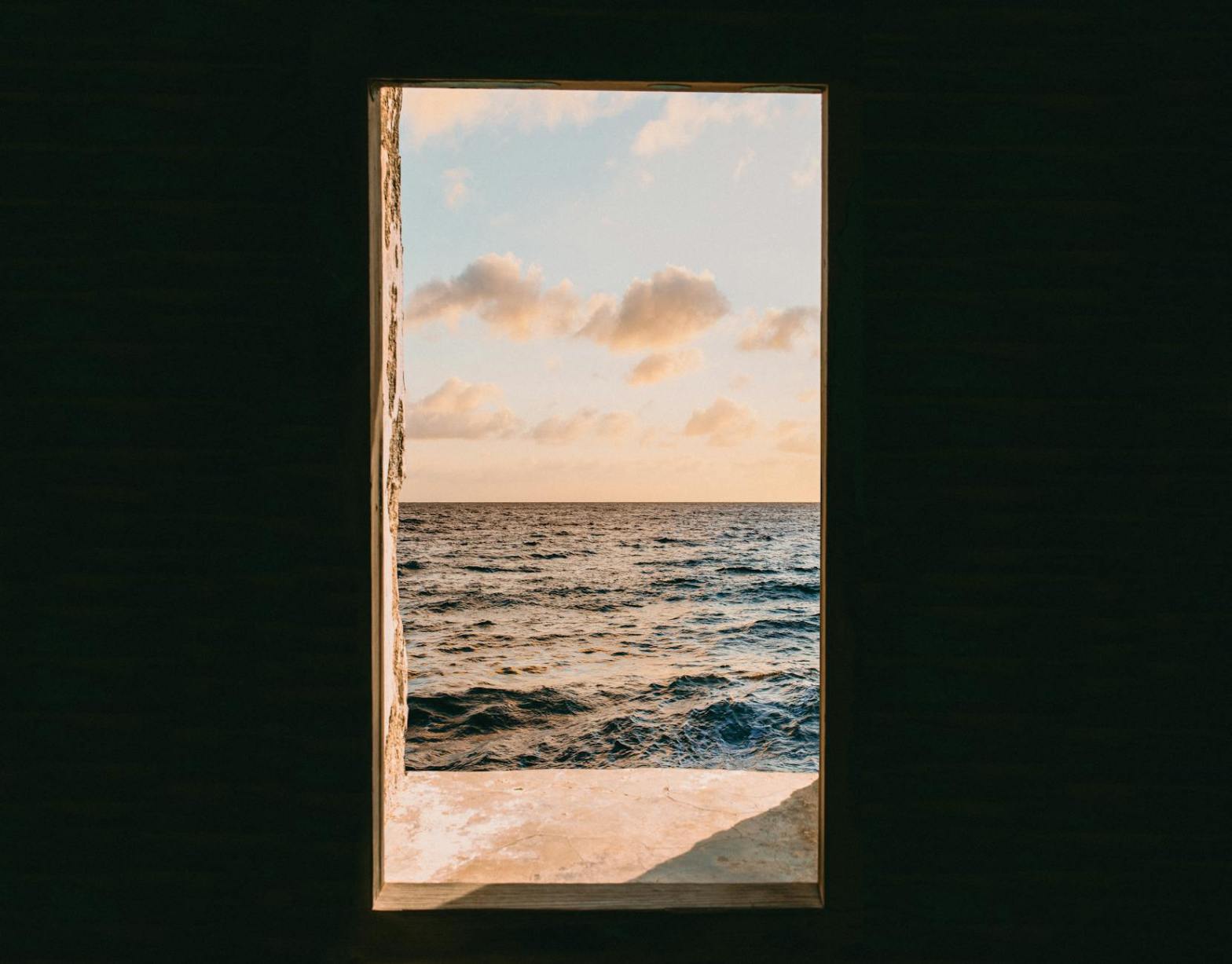
Trappists in Missouri – a poem by Al Ortolani

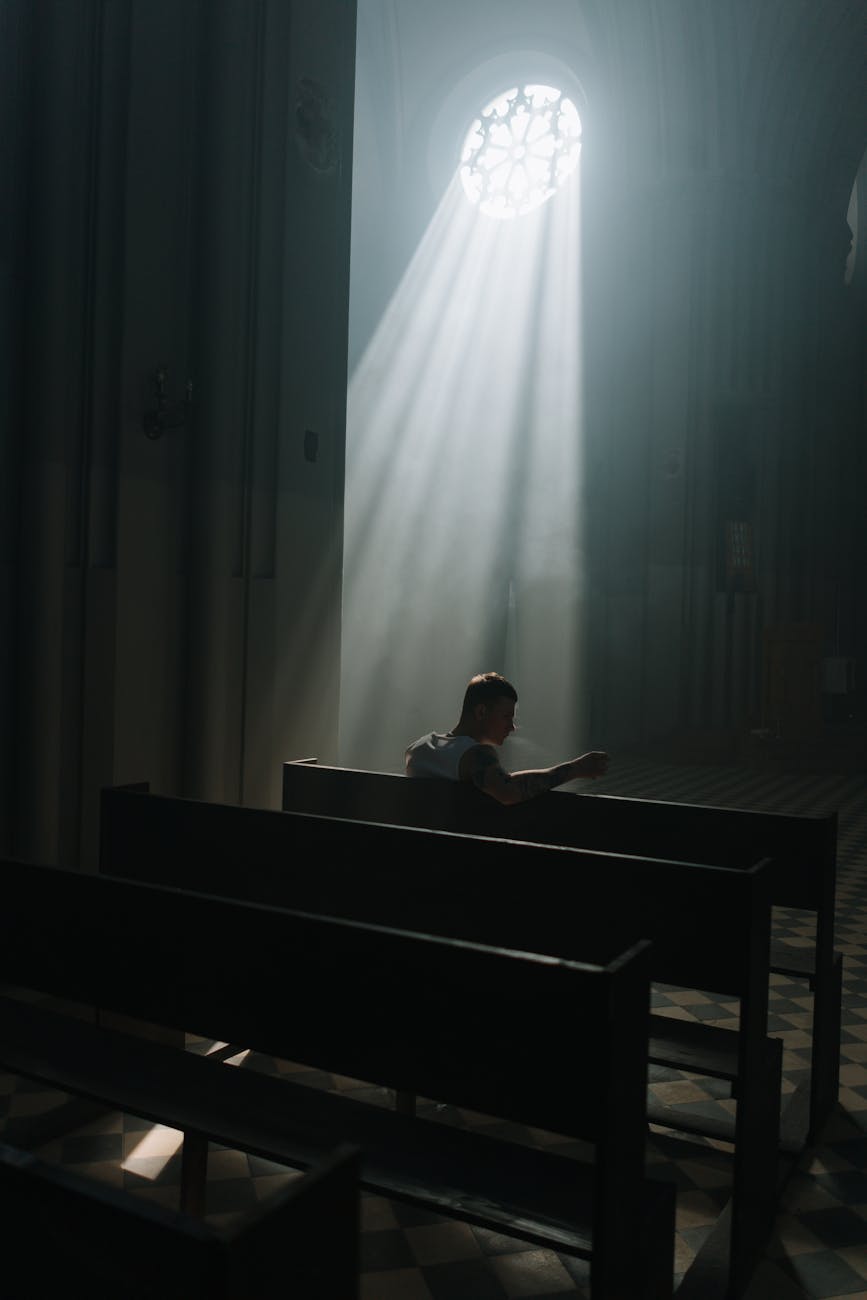
Trappists in Missouri

Peace is more complicated than a retreat
to a monastery, even though

the silence is gray and soothing
like, let’s say, a cool rain. Here
below the oaks with the acorns
popping under my feet, I am still
listening for the noise I thought
dissipated in the rearview mirror.

At home, I ached for the silence
between the trees, the footpath
down the hill to the river.
In the forest time moves slowly,
the bells in the abbey, the call
to vespers, the cushion, the candle
at the altar, belly and lungs and heart.
A car churns up the gravel road.

Have I missed something in the city,
an email from a friend, an invitation
to a gathering of poets? How eagerly
I left home only to remember it again
like a stone I can’t let go.

Al Ortolani’s newest collection of poems, The Taco Boat, was recently released by NYQ Books. He is a winner of the Rattle Chapbook Prize and has been featured in the Writer’s Almanac and the American Life in Poetry. His most recent publication is a novel, Bull in the Ring, published by Meadow Lark Books. Ortolani is a husband, father, and grandfather, currently entertaining the idea of becoming a hermit. However, his wife prefers the company of the neighborhood feminists, and his dog Stanley refuses to live without Milk-Bone.

Metamorphosis – a poem by John C. Mannone

Metamorphosis

A Collage Poem

I. Abstract Bejeweled Butterfly


After a watercolor, a retro background of abstract elements by Love
Tano appearing in a Rumi calendar (August 2025)


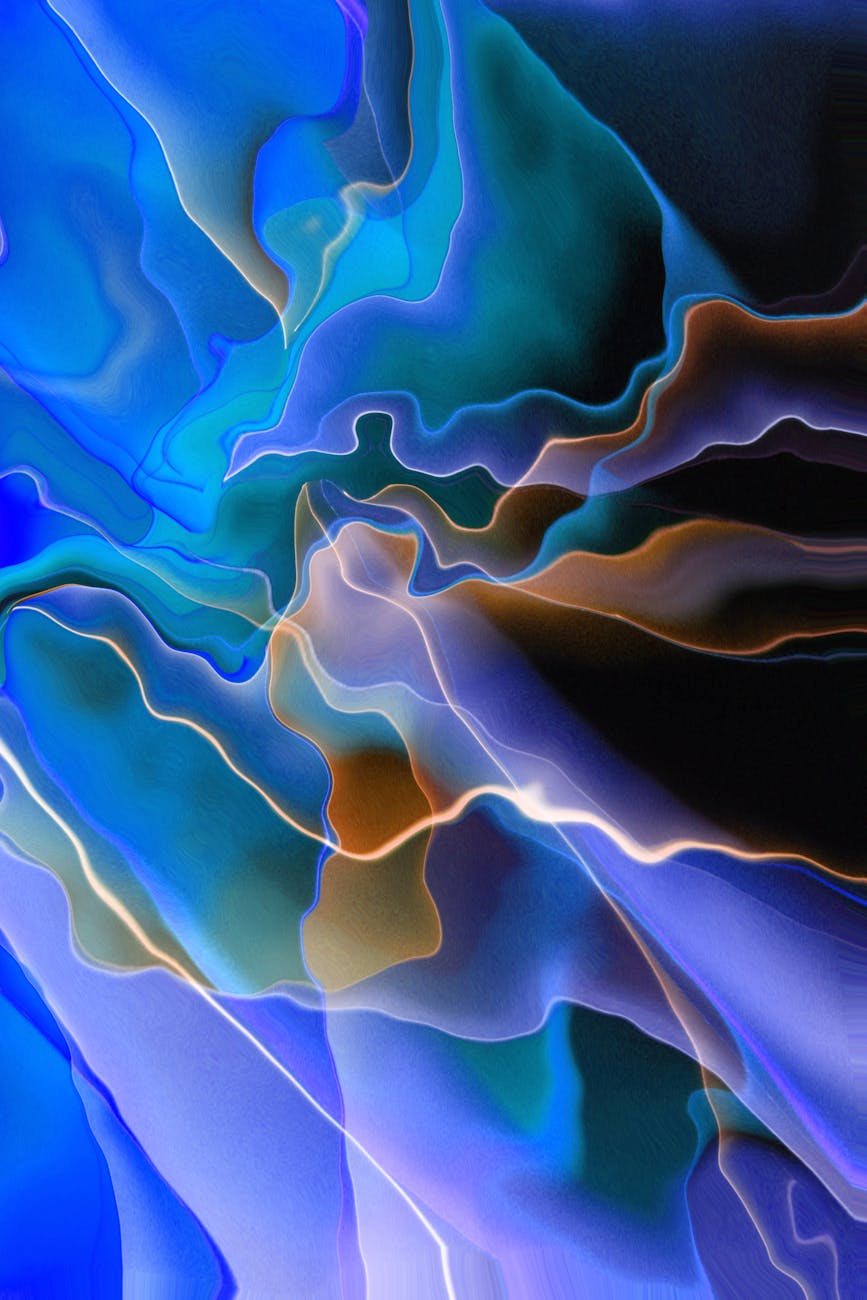
After rotating my view 180 degrees, a cocoon of paper gives birth to a swallowtail, whose tail has been swallowed by the edges of an easel. Its reticulation and maze of chitinous membranes and veins are replaced with an architecture of steel with layers of rouge, peach, melon and light coral pinks, a repertoire of blue and green shades, trimmed in black, accented with white. This butterfly is flying over a maroon sea, carrying the souls of my brothers, my sisters.


II. Flight of Butterflies Trapped in the Heart

A Golden Shovel

I’ve been short on courage, but I have a heart
of sunlight, straight from the king’s hand.
~ Rumi


I stare into the abstract space of a universe where I’ve been
struggling to make sense of a swallowtail poised on a short
limb of a pawpaw tree hosting its caterpillar, and on courage,
which tomorrow might bring. It has genetic faith, but I have
questions that are not satisfied with rhetoric; I have a heart
of a fool not knowing my destiny in this late season of sunlight,
not like a butterfly powering its wings by the Sun straight from
the creator of all. Yet it is me, not the butterfly, that has the king’s
favor. The butterfly is lifted by the wind, but I am by his hand.


III. A Psalm of Stars that Fly Like Prayers


After listening to the music of Sufi Roni, “In Search for God”


Like the deer that pants for water, my soul desires thee.
I feel the music, the whisper of you, that small still voice
that haunts this woodwind, this duduk, that moans
for me and in harmony with the ney—an end blown
flute fashioned from a cane—also cries for me. Do you
hear? For I do not have the words that do not grate
the soul. Let strums of the oud, and saz, and setar chase
after the light of stars. Do you hear the beats of my heart?
It is a daf—a frame drum rattling with the soft chime
of attached timbrels, like prayers grasping at beyond
the stars. Change my heart. Let me fly to you, O Lord.

___________________________________________________________________
The epigraph is from a larger poem called “Your laughter turns the world to paradise”

John C. Mannone’s Christian-infused work appears in Windhover, Heart of Flesh Literary Journal, North Dakota Quarterly, Poetry South, Artemis, Windward Review, and others. Awarded a Jean Ritchie Fellowship (2017) in Appalachian literature, his five full-length collections include the Weatherford Award-nominated Song of the Mountains (Middle Creek Publishing, 2023) and the Tennessee Book Award 2025 finalist, Sacred Flute (Iris Press, 2024). He’s a retired professor of physics living in East Tennessee.

http://jcmannone.wordpress.com

https://www.facebook.com/jcmannone

I Sit Like Mary Oliver – a poem by Alina Zollfrank

I Sit Like Mary Oliver

This book of poetry nestled into my chest.
Hold there, I tell my thoughts. If Mary did

then I can. Hold that glossy stone in your
palm. Let it speak with lilting tongues. Hold

that barred owl high. Mimic her hoots.
Hold on, I tell my feet.

This orb grounds me. Frees me to write
the smallest glimpsed thing if I just keep

my eyelids propped or -
if I let them droop like this

afternoon light enters and mirrors star ray magic
bouncing off willow leaves

and off starlings whistling arias
I didn’t know my heart craved.

Does startling beauty not leave you
breathless? Do your toes not dig into

warm soil like an earthworm worming its way
into rich dirt to do its important work?

See it wind its way between patient sunflower
seeds and sightless creatures of the night.

Our bewildered witnessing –
isn’t it wondrous?

My book of poetry on this lap, not complete.
But close. A line added here, a faint

nod there, a sketch of incredulity that I sit
while grass does its fierce growing

trout its gutsy leaping. The planet hurtles
through wild, wild space at break-neck speed.
Yes, we hold on.

Alina Zollfrank dreams trilingually in the Pacific Northwest. Her work has been nominated for Best of the Net and The Pushcart Prize and recently appeared or is forthcoming in SAND, Sierra Nevada Review, Door Is A Jar, Tint, Writers Resist, and Another Chicago Magazine, The MacGuffin, Salt Hill, and Thimble. Alina is a grateful recipient of the 2024 Washington Artist Trust Grant and committed disability advocate.

Smoke & Mirrors – a poem by Danielle Page

Smoke & Mirrors 

In the yard of 404 Sheridan Avenue
Rests shards of glass; they surround the house
Like the guardians of my past—marking the
Semblance of a distant childhood
That comes rushing back to me as
I observe billowing, black smoke
Pour out of my home and the scent
Of burning chemicals and plastic and
Wooden frames of a life built around
Belonging hits my temporal lobe so far
Back that I am seven and small.
I am not a mother and pregnant,
I am not a wife watching her husband
Take a feeble garden hose to the
Back of the house.

I am a child repeating,
The Lord gives and the Lord takes.
And as I observe the mosaic of
My mobility, the corners of the map
My mind has occupied, I find a
Miraculous light pouring through
Each shattered glass, glittering
A promise of a fixed and certain home.

Danielle Page is a truth-teller, educator, and writer currently hailing from rural Maryland. She strives to live wholeheartedly in her endeavors alongside her husband and daughters. When she’s not scribbling in her Moleskine journal, she’s tackling her To Be Read list, baking banana bread, or serving in camp ministry. She is an editor for the Clayjar Review and has been published in Ekstasis, Heart of Flesh, Vessels of Light, Traces, Solid Food Press, and elsewhere.

The Revelation of Colors – a poem by Steven Peterson

The Revelation of Colors

Time was, when everything we learned was new,
Like kindergarten, when our teacher took
Primary colors—yellow, red, and blue—
From pots of paint and beckoned us to look:

Add red to blue—it’s purple, can you see?
Yellow and red make orange—a dawning sun.
Yellow and blue make green—a summer tree.

It seemed creation could be anyone’s.

Like smock-clad little gods we tried it too,
Paintbrushes dripping, waved like wild batons
At paper stuck to walls with Elmer’s Glue.
It was, for five-year-olds, our Renaissance.

Yet some of us would later learn how art
Starts with the one Creator, as we see
What’s given life when colored by three parts,
Lighted by love, shared for eternity.


Steven Peterson is the author of the debut collection Walking Trees and Other Poems (Finishing Line Press, 2025). His poems and reviews appear in The Christian Century, Dappled Things, First Things, Light, New Verse Review, The North American Anglican, The Windhover, and other publications. He and his wife live in Chicago.

Epiphany – a poem by Joe Carosella

Epiphany					

It's here. The final night - the twelfth - has come.
In olden days a feast, a revelry
to mark the end of holy Christmas tide.
Who even notes it now, despite the carol?
Tomorrow is epiphany, with gifts,
perhaps, for children where tradtition holds.
The children of my house are grown and gone
away, and where I live only a few
will know which day the Magi are in town.
Therefore, no presents anymore for us.
How sad, you say, for gifts are good - moreso
when gold, incense and myrrh change hands.
Epiphany, from Greek, means to reveal.
Those camel-riding, good old kings came
in to find the love of God revealed.
What is in store for us who stay at home,
without a star, or caravan, or angel
voices in the night? We have our lights,
our baking, decorations, wine and songs,
and maybe church. But are we ready to
receive a revelation on a special
day - or even any day? Suppose
the Big Reveal is not for us from God.
Suppose epiphany reveals to God
how well we see - or if we don't - this vision
that is meant for us to see. When we
haul out the box to stow away the lights
and ornaments and such, will we give thought
to what the season has revealed of us?

Joe Carosella believes that Every Day Is a Beautiful Day. He hikes avidly, and loves nature, reading, ice cream, travel, and language(s). He writes, and spends time with family. His first book is Making Friends with God: A Year of Dialogues (Amazon KDP, 2024). Rabbit Tracks: The Poetry of Nature (Shanti Arts, 2025) is his second book. Joe’s poems have appeared in The Soliloquist, Amethyst Review, Adirondac, and Adirondack Almanack. He lives in Scotia, NY with his wife, Diury Alvarado.

A New Song – a poem by Janet Krauss

A New Song
"Let the sea roar; and the
fullness thereof,
Let the field exult and all
that is therein...."
from Psalm 96


The cantor's chant surges.
A rush of elan fills
the hollow of my chest.
I begin to dance.
I am the depth and expanse
of the sea, the breadth of
the field as the wind rouses
the grass and becomes its songs.
And the song of the psalm
filters through my veins
strengthening the blessing
of my heritage.

Janet Krauss, who has two books of poetry published, Borrowed Scenery, Yuganta Press, and Through the Trees of Autumn, Spartina Press, has recently retired from teaching English at Fairfield University. Her mission is to help and guide Bridgeport’s  young children through her teaching creative writing, leading book clubs and reading to and engaging a kindergarten class. As a poet, she co-directs the poetry program of the Black Rock Art Guild.

All Good Becoming – a poem by S.D. Carpenter

All Good Becoming

“…in a vision I beheld the fullness of God’s presence encompassing the whole of creation….And my soul in an excess of wonder cried out: ‘This world is pregnant with God!’” — Angela of Foligno

This could get weird
And kind of icky.
To think The Big One With The Beard
Is curled inside the rounded belly
Of a woman sitting on a park bench. Is He She They
Yahweh
A mover, a roller, active and kicky,
Or slothful in the wholesome jelly?

It is a mite less strange to conceive
The infinite thickens the spider
Lurking in the petals
Of the dahlia, that fuchsia one.
Or lodges in the buried acorn, future mother of leaves.
To the perspiring workers on the roof installing solar panels,
The Omnipotent Provider
Bursts forth as sunlight, the offspring of nuclear fusion.

God,
Here I am
Making light of the divine
(And for the damn
Purpose of a slant rhyme).
Should I attempt to manifest the cryptic
Meaning of the mystic,
Or will my labors—profane at best, mundane at worst—prove flawed?

The astonishing vision
That visited Angela—
Our small world overflowing with something like
Boundless dominion—
Was totally indescribable, an experience not unlike
Profound vertigo of the soul,
Whose insight exceeded her ability to parcel a
Neat explanation and render whole.

If not what then how?
Hers was the narrow:
To bow
Lower than worms and stones,
To admit
Her savior, whose holy fire disjointed her bones
And enflamed his passion in their marrow,
And to suffer it

Gladly, the indeterminate sludge of doubt and grief,
Our worldly desolation. Hell,
Her radical devotion prompts our disbelief.
Take her reverent care of lepers
And that time she drinks one’s putrid
Wash-water and avers
Its taste wondrous, as pleasing as communion wine. Was all well
With her mind? Or was she beyond lucid,

Embodying a wild,
Ecstatic faith in the eternal
Coherence of love,
Whose depths, neither below nor above,
Flower in the flesh,
Desiring to deliver each and every thing from conditional
Being to becoming: inviolate, fresh,
And reconciled?

S. D. Carpenter was born and raised on the Llano Estacado in Texas. She received a Bachelor’s degree in Psychology from Texas Tech University and an MFA in Poetry from the University of Michigan’s Helen Zell Writers’ Program. She currently works as an assistant director at a research data archive for the University of Michigan’s Institute for Social Research. Her writing has appeared in Pleiades.

Bilbo Mound, Savannah – a poem by Steven Croft

Bilbo Mound, Savannah

"They thought it ludicrous that any mound or pottery
in Georgia would be many centuries older than those
in Ohio and Illinois. The Bilbo Mound was over 3,000
years older than the oldest mound in Ohio!"
--"The Bilbo Mound and Village Site (3,540 B.C.),"
Richard L. Thornton, Apalache Research


East of the city, south of the river, west
of the sacred ocean, your patch of swampland
remains — your cypress and tupelo bottomland,
an ancient, somehow remaining piece in the
concrete/commercial and neighborhood-wattle
fabric-map of the urban city.

What prayers, what dances, with the words of
what language did your medicine healers call out,
waving turtle shell rattles, to bless and preserve
you for millennia, your damp bog soil still not
overrun by the tight-wound modern city?

Before Woodland, before Swift Creek, before
sand and grit-tempered pottery, in the planted
vegetable time of maygrass, knotweed, sunflower,
before grand earth-mound temples at Etowah,
Ocmulgee, Kolomoki, your people walked to you,
quiet foot falls to night rituals under the moon.

People of ebbtide, floodtide, crow moon, loon
moon, ebbtide, floodtide, people of deer, rabbit,
alligator, and fish, oyster, clam, and mussels,
who feasted under your trees at night, under
the foraging bats, left spearheads and bones here.

Still you remain in this small forest, bordered
by this new country's oldest golf course, plotted
out and played on by bored Scots in the 1700s.
Old concrete pipes pumped the city's run-off
to you in the 1800s, and today, your hand-dug
canoe canal going north to the river is very changed.

Place of seasonal ritual, place of ancestor spirits,
the new city has blessedly left you alone, but lined
your canal with concrete to drain the whole city
into a river of passing steel container ships, decks
high with metal boxes. No one knows, really, what
'Bilbo Regional Storm Drainage Canal' is named for.

May we keep it that way forever, forever leave you
alone in your miraculous small woods with only
songbirds in trees, morning sunshine in the dewy
circles of spiders' webs in branches, cottonmouths,
fish in brackish cross channels, and your ancient ghosts.

Steven Croft lives on a barrier island off the coast of Georgia where his yard is lush with vegetation. His latest chapbook is At Home with the Dreamlike Earth (The Poetry Box, 2023). His work has appeared in Willawaw Journal, San Pedro River Review, So It Goes, Soul-Lit, Poets Reading the News, As It Ought To Be, and other places, and has been nominated for the Pushcart Prize and Best of the Net.