You Come Singing – a poem by Liz Nakazawa


You Come Singing

between terrified birds
and oak trees and phone calls
between eastern breezes and wind from the towers
you come singing


under the knowledge
that music both haunts and saves
close to roots that love its bushes
you come singing


using words that both reveal and conceal
drawing out arpeggio and cantata
forming the notes in your throat
you come singing


through beginner’s luck and hocus-pocus
and melodies of blossoming and remains of language
within meters and pentameters
you come singing


deep in cool sand offering its driftwood
that horses ride over
beasts of clear sounds and promises
you come singing


closer to the heart’s understanding
the mind and its tentacles
the soul and its caverns
you come gladly singing

Liz Nakazawa is the editor of Deer Drink the Moon:Poems of Oregon. This is an anthology of 33 Oregon poets writing nature poems. Her own poetry has appeared in Willawa, Timberline Review, Amethyst Review, ahundredgourds and other publications.
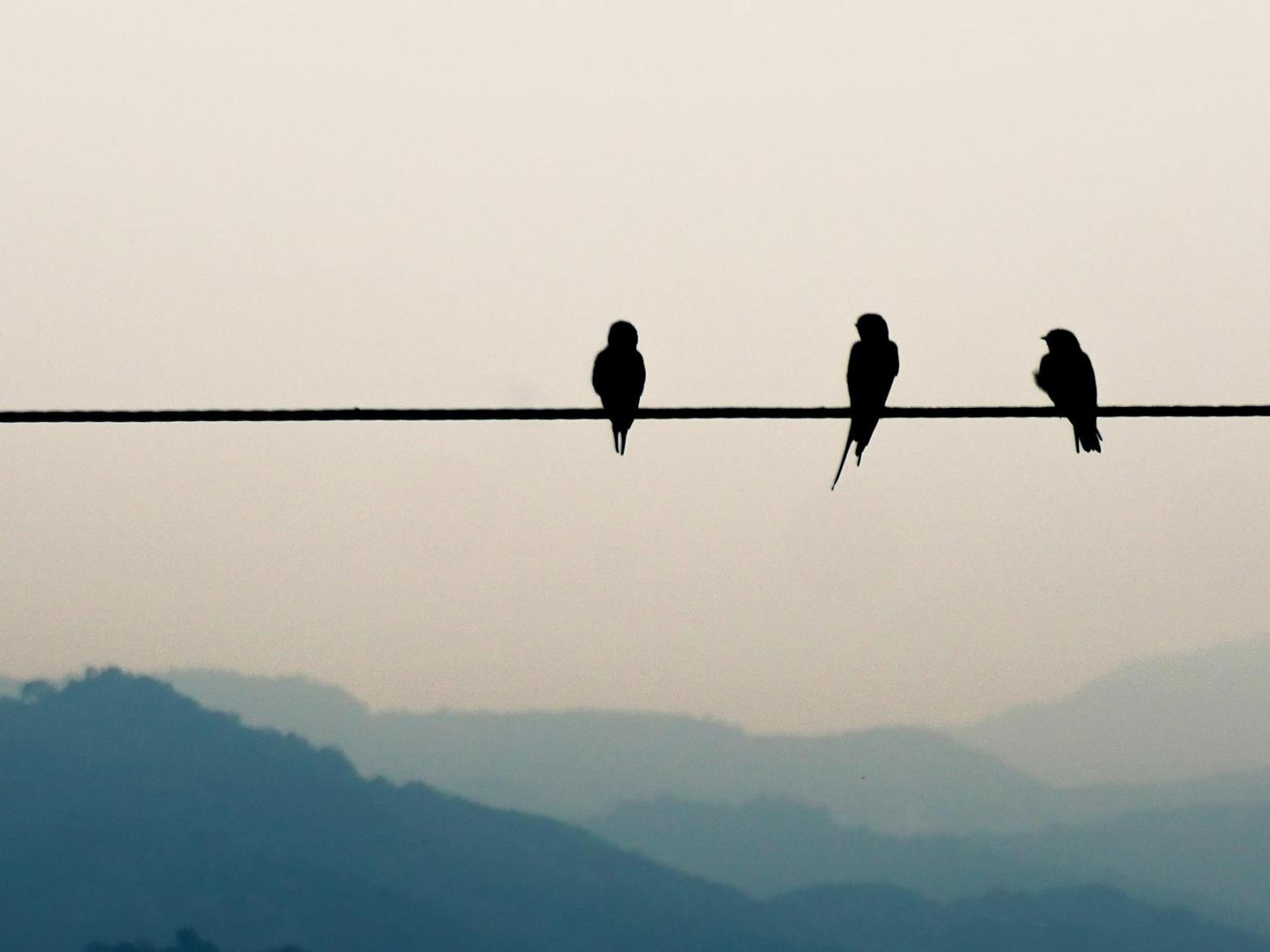
trash birds – a poem by Mary Lanham

trash birds


like the jay on the raveled power line
scrawing through cracked and chipping beak

like the motley robin bowing in the mud
singing silk-bellied grub from the earth

like the rock doves nestled in dingy down
cooing over the white-splattered ground

or like the dust-crowned sparrows
shouting in common chorus from the bush:

let the root of my tongue be supple
with the wonder of the ordinary

let me see this bright shard of world
and speak in my own voice what is good


Mary Lanham is a queer writer, editor, and collage artist based in Minnesota, USA. She is originally from the South; her accent is still around if you know where to look. Mary also hosts The Inspirited Word, a podcast exploring writing as a way out of the doom spiral and back onto the labyrinth path of creative and spiritual connection. Her online home is inspiritedword.com.

Rising – a poem by Michael Scottoline

Rising


A mood as much as a time of morning,
the amniotic hour before first light
is more languid than tranquil, like the dark
blue sea all that ever breathed was born from.

Cowboy coffee simmers in the saucepan.
The frost-tinged window mirrors back my face
beside a moth that might be dead, and the stars
that might have died already, so I'm told.

The wind-stirred birches whir with l'heure bleu bird song.
Never refusing the music they're given,
they shed their skin until their lives are choirs
of praise for light that voids the void it leaps from.

The hour of my death is any hour
I dare to be reborn, to be suborned
and let the sleeper drown, the dreamer wake,
and walk above the waters of what I sense—

to scry the life that's mirrored in the sky
as it appears, a fading lone frontier
for minor glories like the morning star,
that bright moth awaiting a greater flame.


Michael Scottoline lives in Bucharest, Romania.

Come to the Water – a poem by Kaylene Johnson-Sullivan

Come to the Water

On a rainy morning in July,
clouds hung low over the forest
of spruce and birch trees.
I sat on a log watching and listening
as a clear-water tributary tumbled
over boulders into the main
channel of the Nenana River.

I thought how nice it would be to see
a moose or bear amble to shore,
perhaps a lynx. It was early enough
in the day and we were in wild enough country.
But that was not what came.

I can’t be sure if it arrived on the light
patter of raindrops or on the whisper of a breeze,
but like a mirage, a deep sense of
Soul not so much appeared, as materialized,
a creature so elusive, I can count the
number of times I’ve encountered it.

“This is you.”

I grew still as the marrow
of a tree, life surging up from the roots.
No longer a separate observer of
river, rain, or forest, I was those things.
Quiet elation, I held my breath in
wonder of wild beings willing
to show themselves, trusting
if only for a moment, the
largeness of Love.

Kaylene Johnson-Sullivan is an author who lives in Alaska. She has published six books of non-fiction, completed a historical novel, and writes poetry when the soul calls for such. Two of her poems were recently accepted for the anthology Alaska Literary Field Guide. Her essay “Crossing the Wild River” appears in Deep Wild Journal: Writing from the Backcountry 2024.

This Abstract Painting – prose poetry by Kathleen A. Wakefield

This Abstract Painting


You put down one stroke of a color you love, say alizarin crimson, then pthalo green beside it. They whisper. Hum. Silently nod or sharply turn away from each other. Every stroke’s a gesture in an open-ended conversation you’re a little afraid of. A love affair you end up painting over. Or you scrape down the layers in the manner of a gritty, soulful excavation.

Once you painted while listening to Heinrich Biber’s Rosary Sonatas for violin, composed around 1676, rarified and difficult to play in part because of their odd tunings, beautiful in a tortured way, especially the ones about the crucifixion and everything leading up to it.

Mostly you let the twisting, knotted notes sear your brain. Suffering disguised as beauty. Mostly your sins are ones of omission. Old failures of nerve.

Always you run the risk of scraping down too far, down to the board, back to where you began, then where would you be? With scissors, nails, old credit cards, you scrape with the intensity of a woman on the verge of an archeological discovery. Suddenly an old color erupts by happenstance and makes you happy. And then you get out the paint again. It all comes down to this, doesn’t it, the swirl of paint on and under your brush, your fingers feeling the resistance of another form to work with, another life.


Kathleen A Wakefield‘s first book of poetry, Notations on the Visible World (2000), won the 1999 Anhinga Prize for Poetry. Her second book Grip, Give and Sway was published by Silver Birch Press (2016). Her poems have appeared in such journals as the Alaska Quarterly Review, Blue Line, The Georgia Review, Hubbub, HumanaObscura, Image, One, Poetry, Rattle, River Styx, Sewanee Review, Shenandoah, and Visions International. She has taught creative writing at the Eastman School of Music, the University of Rochester, as a poet-in-the-schools, and share poetry through public libraries.

Hospice – a poem by Sharon V. Brown

Hospice

I am eating an orange
when the text comes in,
Please say a prayer,
the angels are near.

Oh, I think, dear Nancy.
I imagine her watching
as angels drift and gather
above her bed,
bright light pours in
through the open window,
and the hum of the monitor
becomes a hymn.

I say a prayer
and wait for the call.

The orange is sweet,
weeping sticky juice
into my palm.

Sharon V. Brown is a retired English professor and poet living in the beautiful Pacific Northwest. She recently joined the Greenwood Poets Group in Seattle, Washington and has begun honing her craft with the enriched perspective of an older woman. Previous poetry publications include Windfall: A Journal of Poetry of Place; Lamar University Literary Press, Senior Class: Poems on Aging; Cirque Literary Journal; and Still Points Quarterly.

Living Now – a poem by Pernille Bruhn

Living Now

Something entered
and struck a match
against my chest wall
and a fire was lit.

And what had struck
stayed
to tend the fire
that became
an unfading flame.

I am living now
with this constant
burning
and its widening
light.

I am unable now
to not see
from inside my heart.

Pernille Bruhn, PhD, is a poet, dancer and heart whisperer calling the Earth her home. A former academic and psychologist, she was impelled to embrace a radically different way of living, being and writing when a brain injury changed her abilities and life trajectory. Today, you will often find her lying on the ground; resting, writing poems by hand, and dreaming of an Earth witnessing a global blossoming of the human heart. Her poetry has appeared, or is forthcoming, in The Dawntreader, London Writer’s Salon’s Anthology Vol. 4, and Tvergastein Journal.

Keeper – a poem by Alison Hurwitz

Keeper

And if, despite everything, you
decide to stay in conversation
with this gut-clench of a world, with
all that grates and grovels, all
the shrapnel pocking glass,

if you buttress your own vertebrae
in whalebone, masticate through hard-talk
just to grit your jaw at bombast; if you wedge
whatever weathered voice you have through
existential crevices until it echoes oilskin courage

back to you; if you open up your mollusk
softness, let listening ungrist a bit of sand,
then, friend, know that you will find inside
yourself a lighthouse, a glow across the dark
of new moon water,

a compass, pointing towards the edge
of what’s unseen. Turn your human quaver
toward horizon. Know that now you will be
arrow, be illumination, be a keeper,
pointing someone home.

Alison Hurwitz is a former cellist and dancer who now finds music in language. Nominated for a Pushcart Prize in 2024, and for Best of the Net in 2023 and 2024, Alison is the host of the monthly online reading, Well-Versed Words. Her work is published or forthcoming in South Dakota Review, SWIMM, Sky Island Journal, ONE ART and The Westchester Review. When not writing, Alison officiates weddings and memorial services, walks in the woods, and dances in her kitchen with her family. Find her at alisonhurwitz.com

Discernment – a poem by Deb Baker

Discernment

Think back:
what has remained?
Who said something
that rang out,
a bell in your heart,
chiming its sweet
tone, sustaining
your joy, lifting
you above the grind
and grime of today
into a passable way
forward?

Even if it only moved
in you, and not
in the world, no one,
nothing, can take away
that tone, that toll,
ringing true at your
center.

No matter how many
shifts pass with no
discernible change,
your days do make
a life, and you too
might be the bell
that calls someone
else to joy, that echoes
the true timbre of their
soul, that rings in new
possibility in each
moment even when
they all seem
the same.

Deb Baker lives in New Hampshire and works for a climate justice organization and in a hospital. Since childhood, she has felt connected to her kin in creation, who appear along with her human relatives in many of her poems. Her writing has appeared or is forthcoming in journals including Bellevue Literary Review, Third Wednesday, Naugatuck River Review, Hawk & Whippoorwill, Radix, humana obscura, New Feathers Anthology and The Penwood Review.

From Stardust to Stardust – a poem by Bethany Riddle

From Stardust to Stardust

An economy of farms and wineries.
Quiet neighbors on either side.
My husband would pull out the telescope, where we’d find different planets and stars in the solar system.
At night, we were lucky.

But time requires change:
where we are now, the stars are a little harder to find.

Someday I hope we return,
where our backyard is once again an astronomer’s playground,
free from the light pollution a bigger city brings.

Perhaps I have stumbled on some astronomical truths,
and the ashes on our forehead from the parish priest,

“Ashes to ashes”
“Dust to dust”

remind us one day we’ll return
to where we came, though the details are fuzzy.

“Stardust to stardust”
“Star to star”

like an unfocused lens, searching for Jupiter.


Bethany Riddle is a writer and educator living in Washington State where the Evergreens are hard to find, but the wineries are plenty. She lives with her husband, two kids, and two dogs. You can find her on Instagram @bethanyjriddle.