Horses in Paradise
There are horses in paradise
dappled, bay, and bronze.
Their muscled ascent frees
an avalanche of dust.
They drink the air, eat nothing
stop only for memory – their foothills –
then drop them like a root, snort, and gallop again.
These wildings are not for riding any more than a shadow,
only thoughts tame them
in the smell of hay and salt, baked clay and clover.
Their hooves keep time, become the sound
of the clocks, the ones ahead and ones behind
until there is only the hum.
Each faces the tail ahead, the distance between
room enough to take flight, tails and manes as wings.
Rebecca Surmont lives in Minnesota which invites exploration of the seasons and cycles of life that is often expressed in her work. She has a love of trains, corn fields, and tiny things. Her written work has been featured in publications such as Nature of Our Times (Poets for Science), MacQueen’s Quinterly, Stone Poetry Quarterly, Eunoia Review, Common Ground Review, Crowstep Poetry Journal, Ekphrastic Review, Tiny Seed Literary Journal, and Trouvaille Review. She is working on her first chapbook.
Author Archives: Sarah
Into the Marrow of the Earth – a poem by Sam Aureli
Into the Marrow of the Earth
Nature speaks in patterns,
the slow arithmetic of seasons,
sequences unfolding, measured and endless,
a truth carried on the wind,
bound to the ancient rhythm of earth and sky.
We are borne from this rhythm,
drawn from the womb of dust and fire.
We breathe as the sycamores breathe,
rooted in the same soil,
moving in the shadow of the eternal.
And what of our passing?
Winter claims the body,
its breath sharp, cold, final.
Yet we do not vanish.
We scatter—
into the marrow of the earth,
the blood of rivers,
the pulse of green rising again in spring.
Sam Aureli thrives on working with his hands, a passion rooted in his early blue-collar roles. Balancing work and family, he earned a degree in architecture through evening classes and now leads a career in real estate development. Sam turned to poetry later in his journey as a refuge from the chaos of daily life and as a way to deepen his connection to nature. His work has recently been accepted in The Atlanta Review.
The Alchemy of Prayer – a poem by Frank Desiderio
The Alchemy of Prayer
Take your raw animal anger
of a shovel struck snake
coiled and ready to strike
and redirect it
an aikido of the spirit,
that is the alchemy of prayer.
Take any version of eros
or any fear, or any dull grief
let it rise from below your belly.
Let it rise up and out.
Soften your knees, breathe.
Each steady breath fuels the alchemy.
Now, hold in your heart someone you love
a magnetic pole to ground you
to the Holy Love that surrounds you,
to merge in your heart and intensify
to ignite tips of flame that glow beyond you.
In the sweatshop of time this is our work
to take the heat, pass it through prayer,
refine it into the heart’s compassion.
Frank Desiderio, a poet, pastor, and TV producer has served as a campus minister, retreat director and author (Can You Let Go of a Grudge, Paulist Press, 2014). He produced the film Judas for ABC TV (2004) and several documentaries for cable television. His poems have appeared in the Spring Hill Review, Windhover, Ars Medica, Moving Image: Poetry Inspired by Film among other journals. He and his sister, Mimi Moriarty, authored the chapbook Sibling Revery (Finishing Line Press, 2012). Currently he lives in Manhattan.
In Waiting – a poem by Joshua S. Fullman
In Waiting
I breathe in then, feel the winter noon sun
glaze the waxing glass of the hospital’s
anteroom, trailing chills in its low run
through the city. Glaring long at white walls
bare of light and art and icons who might
have soothed my rage with their numinous calls
to the skies, I turn to watch nurses, whose night
and morning blur sleepless, see cut and break
as mercuries of pain. I sit, stand, right
my left, drown in coffee as my hands shake,
grasping air. I dare speak but never hoist
our clawing fear, share souvenirs that make
our eyes and lips flicker though not rejoice—
and maybe won’t again. Then, I breathe out,
confess that contemplation is a choice,
refuse its consolation for your sake,
or so I claim. Messengers return, voice
nothing, no word nor prophecy to slake
this madness: here, the sincere text seems trite,
the kind call like ice, sympathy an ache
half-dressed. I am become an anchorite
insulated from warmth as my life stalls
out, treading shattered glass. New shadows fright
the room, new spirits search me through the halls
to pierce this sacrilege. You grip my thigh, stun
my paralysis as the stale air falls
and some strange scent hints something’s been undone.
Joshua S. Fullman is Professor of English and Director of the Writing Center at California Baptist University where he teaches composition and creative writing. His recent book, Voices of Iona (Wipf and Stock, 2022), is a poetry collection of an American expatriate living in the British Isles.
Tektōn – a poem by Kimberly Beck
Tektōn
The air turns in a wheel of dust and gold
as it falls through an open window.
His hands leave furrows in the dirt, and
as water forms the clay,
remnants spin around Him, a lingering shimmer
of pensive pirouettes.
The chipped bark of His skin
is scraped, and rugged, and steady
as He moves from shaped earth
to felled tree.
A tangle of driftwood hums
its psalm of war-washed splinters,
of rivers running deep, and desperately
dark.
He listens
with the very tips of His weathered fingers,
listens
with the dust and the dawn-sun, which
still falls, still spins
from the golden pool of His open window.
He listens, and
His listening Makes.
Kimberly Beck is a poet from Washington State. She can often be found at a local therapy ranch, caring for a very special herd of Norwegian Fjord Horses. Her work has appeared or is forthcoming in Solid Food Press, Ekstasis Magazine, and Clayjar Review.
Nighttime Thoughts on the Mountain – a poem by Richard Collins
Nighttime Thoughts on the Mountain
After Du Fu
A soft wind combs the tall grass;
A white oak pierces the Tennessee sky;
Constellations drip silver rain on the meadow;
The moon rises over the domain’s plateau.
Every song I’ve written remains unsung:
Aging poets like me should shut up and listen.
Yet I keep squawking, a mockingbird
Stranded between shoveled earth and bright sky.
Richard Collins is abbot of the New Orleans Zen Temple and lives in Sewanee, Tennessee, where he leads Stone Nest Zen Dojo. His recent poetry, which has been nominated for Best Spiritual Literature and a Pushcart Prize, appears in The Dead Mule School of Southern Literature, MockingHeart Review, Pensive, Sho Poetry Journal, Think, Urthona: Buddhism and the Arts, and Willows Wept Review. His books include No Fear Zen (Hohm Press). a translation of Taisen Deshimaru’s Autobiography of a Zen Monk (Hohm Press), and In Search of the Hermaphrodite (Tough Poets Press, 2024).
A Thousand Hallelujahs – an essay by Tracie Adams
A Thousand Hallelujahs
I saw a man in the grocery store who had a black smudge in the center of his forehead. A woman passing him in the canned goods aisle stopped to tell him about the dirt on his face. As she gestured to his forehead with a swiping motion, he erupted in an angry outburst that sent us both rocking backwards on our heels.
“It’s Ash Wednesday, heathen! Get some religion!” Everyone froze and watched him stomp away, his back rounded like a cat, his bent neck wagging back and forth like a parent scolding a disobedient child.
Thirty years later as I stand in the church’s opulent sanctuary, I remember the look of scorned shame on that woman’s face. I didn’t console her. I offered no retort, no comfort, no relief. I wanted to, but I had no way to process what had just happened. I wasn’t even sure I knew what the word “heathen” meant. But I was fairly sure I was one of them. Her shame was my shame.
Now, as I hold the bell in my right hand and use the left hand to hold the hymnal, I think about the candlelight ceremony forty days ago when the Lent season began on Ash Wednesday. The pastor had instructed us to write on a piece of paper something we wanted to give to God, some sin that haunted us that we would crumple in our fists and burn in the large crucible at the altar. One by one, we walked forward, opening our fists and dropping our sins into the flames, watching the smoke rise as they burned. We solemnly waited for the elders to dip their thumbs into the ash, making the sign of the cross on our foreheads. I wasn’t sure if it was the smell of lighter fluid or the sign of repentance on my forehead that made me lightheaded as I returned to my seat empty handed. Had I really let go of bitterness that easily? Was my struggle with pride and selfishness so abruptly reduced to ashes?
For the next forty days, I fasted from movies and sugar as I was instructed to remember Jesus’ fasting in the desert, his resisting Satan’s temptation. But truthfully, it wasn’t hard for me to live with such discipline because for decades, Anorexia had taught me to restrict everything good in life. No one was more disciplined than me about the rule of not saying “Alleluia” during Lent. I made a Lent-approved playlist that included only Alleluia-free songs. Fasting the use of the word was supposed to intensify its meaning and remind us that an incredible joy awaits us in heaven.
The man in the grocery store would certainly be impressed with my determination, my steadfast commitment to the rules.
On Easter morning, the choir sang the Hallelujah chorus. A thousand bells rang each time the blessed word was sung. In every hand, young and old, students and lawyers and construction workers and moms, a bell became a powerful weapon against despair, and we wielded their power like only the forgiven can.
Nothing prepared me for the feelings that washed over me like a baptismal wave, the unrestrained joy ofanticipating the collective ringing of bells and the sound of a thousand hallelujahs pouring out of grateful hearts, swelling and rising to the rafters.
I was not prepared to feel the depth of emotion that tackles me, leaving me speechless with mascara stinging my eyes and staining my cheeks. I have never experienced anything like it before. But then, I’ve never been a Presbyterian during the penitential season of Lent either.
Part of me always understood it was never about the ashes, the playlists, or the bells. But it sure felt good to approach God from such lofty heights. I mean, the alternative was humbling myself to see the weakness of my humanity in the presence of holiness. I was not quite ready for that. Until I heard the bells.
I think about the woman in the grocery store often. I hope she knows how deep and how wide God’s unfailing love for her is, and how sorry I am that I didn’t know to tell her. I think about that man in the grocery store often. I hope he knows how deep and how wide God’s unfailing love for him is, and how sorry I am that I didn’t know to tell him.
Tracie Adams is a writer and teacher in rural Virginia. Pushcart nominee 2025. Her work has appeared or is forthcoming in BULL, Does It Have Pockets, Cleaver Magazine, Bright Flash Literary Review, Cool Beans Lit, and others. Read her work at http://www.tracieadamswrites.com and follow her on Twitter @1funnyfarmAdams.
Our Lady of the Ridge – prose poetry by Susan Mary Freiss
Our Lady of the Ridge
I First meeting
In a forest of undoing, a maple grew and grew for 80 years or more, gracefully pregnant above a west-facing slope; she is only an upright trunk now, still in elegant skirts with her sweet swayback and tender protruding belly swollen from years of growing up within gravity’s pull on this steep and holy ridge. Three parts of her, each thick as a mature tree, once met and extended from her neck. Now they lie behind, below, beside, where they collapsed on a terribly windy night with only stumps for arms that rest fingerless of extending leaf or bud. Redwing blackbirds flock to discuss their spring dissemination; saplings crowd her remains while animal prints approach her body from below. She is empty, hollow, losing her skin. All this personification, all this chronicling of undoing! The blackbirds quiet and begin again, cranes saw sound into the ground from above, robins interject a melody. I take care and walk on with my stick.
II Return
Drawn back, I rest on one of her three children—no, these trunk-like limbs were part of her, but aren’t they? Our children? Mine, themselves graying and sustaining me; hers, sprouting mushrooms, growing moss. From this angle, our maple matriarch appears to be looking down the ridge, a large gnarl at her trunk top, a protuberance—her head hanging, an old woman with one remaining limb extending blessing, calling out for what it is worth, for all she is worth. Am I projecting? Rain condenses drops of cool humidity, a distant red squirrel clucks the seconds in the maple grove, the maple graveyard. Always before, I sought the oldest living tree, but this substantive specter with graceful rooted skirts, pregnant swayback belly, craggy open back, crone’s head, and outstretched arm is speaking to me about how lives move on and on and on with nowhere to go and always somewhere to be.
III Your aspirant
Mosquitos hum their high-pitched hymn. I am back sitting below, this time on your south side upon your two-pronged daughter with her fungi frill. I see perforations in your bark, fresh pileated woodpecker holes bleeding sawdust on your skirts, and a high-placed umbilicus, the scarred site of a lost limb—no, an eye, a portal into fathomless black darkness. I allow myself to be seen and drawn in. Another hole, two-thirds moon, larger than any other and open to the sky. I’m certain this is your heart, the organic curve, a bark circle halved, concave, radiant unstained glassless green light beyond. I aspire to such a transparent heart. I have become your aspirant. I sit that you may see me and my tangled 70 years with your elephantine eye. I sit with you in our patience, yours holding mine. Is this a pastoral poem? Objectifying, fantasizing? No, this is alchemy. You engulf me in your black-eyed, tender gaze. In time, I will head down the ridge inside cicadas’ waves of rattle and through the web of humid haze to the cabin, car, highway, and town, but I’ll remain in your velvety black line of sight with the breath of air and a shaft of green light in the cave of my heart.
Susan Mary Freiss writes poetry because she hears many things in listening to everyday and pervasive silence. When she records what she hears and listens for more, she learns. She is a mother, grandmother, gardener, teacher, and activist in Madison, Wisconsin. Her poem “Below and Beyond War” is posted on the Madison Vets for Peace website.
When a Child Asks His Grandmother a Simple Question – a poem by Claudia M. Stanek
When a Child Asks His Grandmother a Simple Question
The boy asks me what my favorite color is
and his mother tells him I like black
because it represents death,
which he cannot comprehend.
But no—I love much more
than the absence of color,
The absence of light
showcases pinprick shimmers
only visible when the sun flees
or we flee from it. This is why
I thrill in the gift of black, for all
that would be obscured without it,
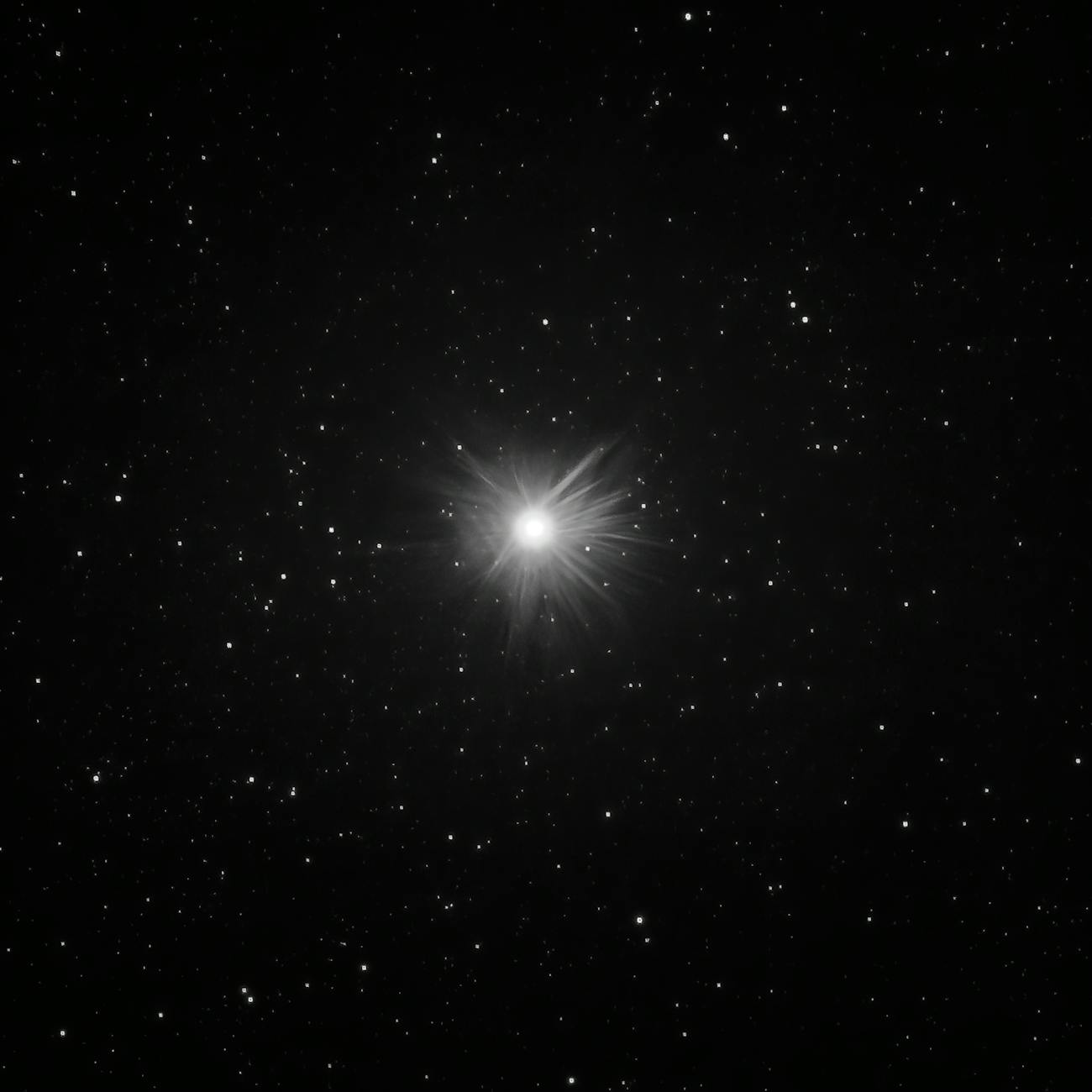
like the face of God in the star Regulus,
divinity held in a telescope
a boy’s hand is too small to hold.
Claudia M. Stanek’s work has been turned into a libretto, been part of an art exhibition, and been translated into Polish. She is the author of the chapbooks Language You Refuse to Learn (BHP, 2014) and Beneath Occluded Shine (FLP, 2025). Her poems appear in Susurrus, The Windhover, Cutleaf, Ekstasis, Solum, and Book of Matches. Claudia spent a Writer’s Residency in Bialystok, Poland. She holds an MFA from Bennington College. After a lifetime in the frozen tundra of Western New York, Claudia now lives in East Tennessee with her elderly dogs, where she also rescues the occasional overheated hummingbird.
In the Shadow of Eternity – a poem by Maryanne Hannan
In the Shadow of Eternity
Their twigs shall be broken off untimely…
Wisdom 4:5
Time, she said, is more accordion
Than tree. Its bellows expand,
Compress, according to whimsical
Tripping, tapping squeezebox
Rhythms. Riffs, played well
Or poorly. Who’s to say?
Then closing up. Resuming
A black box aura of mystery.
Unlike your average tree, with
Its seasonal moods, its frequent
Periods of death-like pause. How,
When you cut it down, there
On its trunk, easy to see,
It was marking time all the while,
The way we like, linear,
In a roundabout kind of way.
Maryanne Hannan has published poetry in both All Shall Be Well: A poetry anthology for Julian of Norwich and Thin Places & Sacred Spaces. A resident of upstate New York, USA, she is the author of Rocking Like it’s all Intermezzo: 21st Century Responsorials.