A Window Shalt Thou Make to the Ark – a poem by Kelli Logan Rush

A Window Shalt Thou Make to the Ark
(From Genesis 6:16)

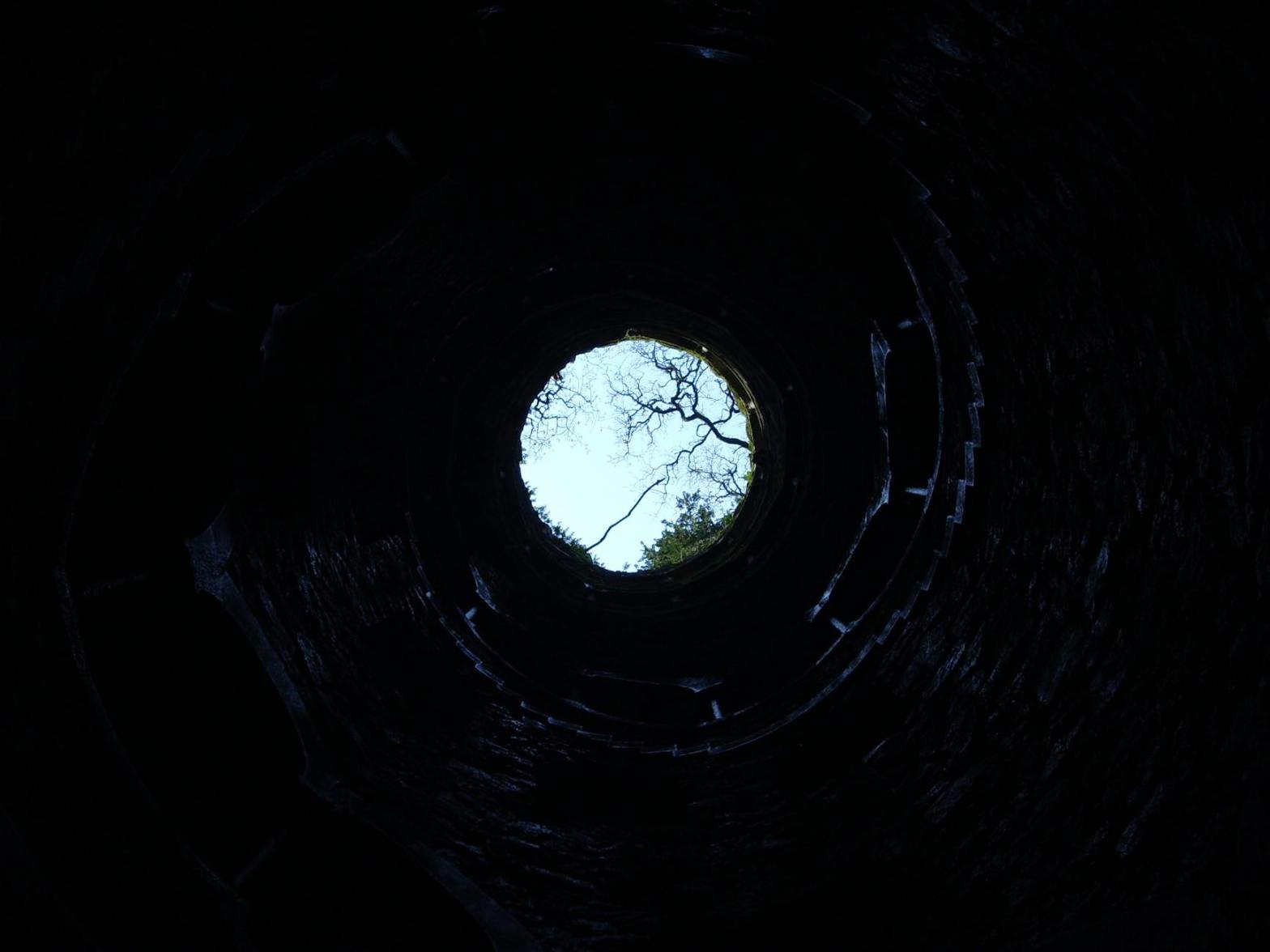
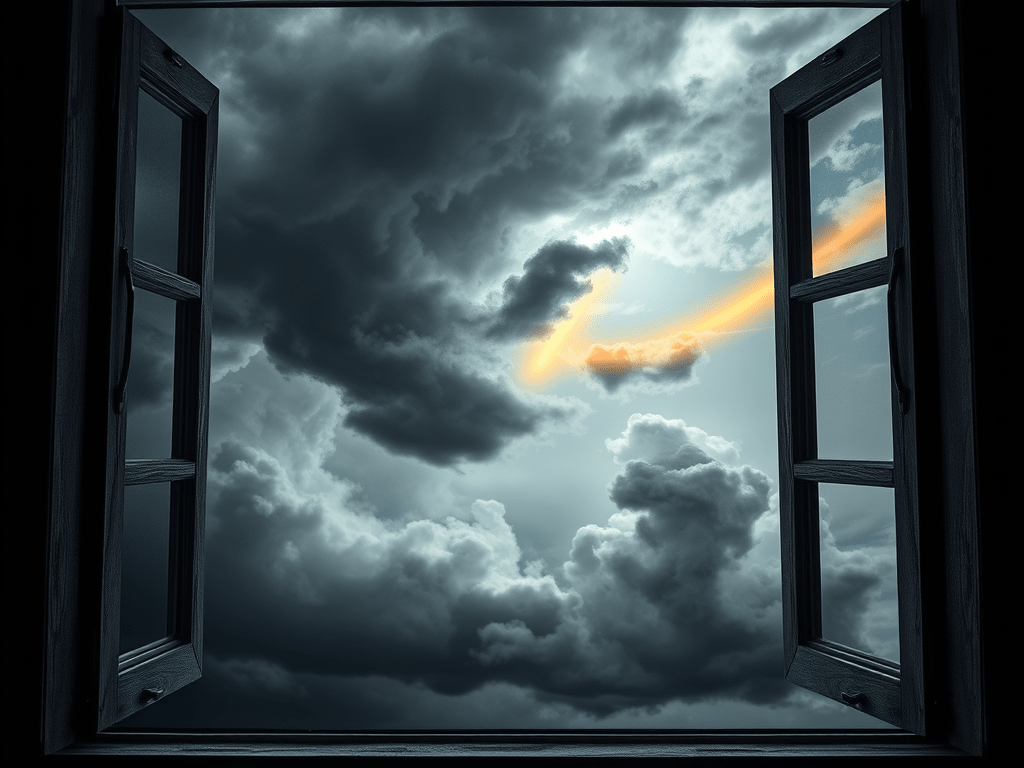
First days, and out our one window, water whipped,
the twisting brawn of sycamore scrawls its gray-white grief
across the red alluvium of sky; the sky turns gully,
gravid green, pounding into blear spires of black:
pines stripped bare, tired verticals we have to trust
but know not if they’ll snap and smash us. Or,
if we’ll smash them, or — for this one hour, at least —
we’ll be hurled unharmed beyond. Housed hollow,
how we pitch and roll, crash and groan. And lumber on.
No — we bob. We’re meager, mini; the horned ones,
snorting ones — even they go flying tiny with us
through a sea that’s all around, within, on top of, one with
this brilliant covenantal square of writhing sky.

Kelli Logan Rush lives in her native city of Winston-Salem, N.C., where she worked in the corporate world as a writer and web manager for the tobacco industry. Her poems have appeared in the Southern Poetry Review, Plainsongs, The Orchards Poetry Journal, The Delta Review and Third Street Writers, among others. Her interests include local music, home and garden, atomic-era style and U.S. East Coast travel. She has an MA in European history.
Humming a Blessing – a poem by Amy Nemecek

Humming a Blessing

This blur of a blessing darts
left, right, up, down,
an iridescent gyroscope
hungry for nectar.
It hovers, adjusts pitch and yaw,
then divebombs you in a rufous
dervish of feathers reflecting
turquoise motes of sunlight.

For a frenetic breath it perches,
dips its slender straw once,
twice, three times, gulping
syrupy tincture before
accelerating into aspen tops.

When it returns, it comes not
single spies but in battalions,
dozens of topaz, sapphire, ruby,
emerald blessings that encircle
you with trills of wonder,
a glissando of glory that
fills you even as they
drain you dry.


Amy Nemecek is the author of The Language of the Birds (Paraclete Press, 2022), which was awarded the Paraclete Poetry Prize. Her work has also appeared in Presence, Whale Road Review, Windhover, and Last Leaves. She enjoys taking long walks in nature, preferably near a creek or river.

The pink years – a poem by Emalisa Rose

The pink years

For decades I’d watch you
with window eyes, through
branches of blue birds and
hailstorms at high noon, when
I feared you'd root up just like
Dorothy's house, from the same
earth that held you. This, as
I starred in my own melodrama...
the pink years, the lapsed years and
years marking deep in the marrow
believing that you felt me too
in the curve of your cradling bough.

When not writing poetry, Emalisa Rose enjoys crafting with macrame. She volunteers in animal rescue tending to cat colonies in the neighborhood. She walks with a birding group on weekends. Living by a beach town, is inspiration for her art and poetry. Some of her poems have appeared in Writing in a Woman’s Voice, Amethyst Review, The Rye Whiskey Review. Her latest collection is Ten random wrens, published by Maverick Duck Press.

Sunday Afternoon – a poem by Charisse Stephens

Sunday Afternoon 


I walk into the thrift store
looking for immortality.

As always, I find it
in pieces— the books:

nooked and crammed, alien or Proustian
or ringing tiny bells to mark memories

of distant doors—something I’ve heard of,
something I should know—something

worth knowing. Speaking in titles
as the fluorescent light moves

me, wandering across every color of spine.
Shelved skeletons in their paper shrouds,

offering my new
original hunger— to know:

which is always to want more.
That’s why I’m here, where I can collect

myself—past and future memories,
a few dollars each at most—I know I can’t afford

my whole self at anything like
full price; these I can gather cheap and leave

precious— postmortem:
Pompeii-perfect.

I’m here, Sunday after Sunday, because I know
I will not live forever. Not in the way

I was promised as a child.
Instead, by this ritual, I find my mind

made manifest— re-incarnate:
caro verbum.

The soft parts and skins transmute
into papers full of psalms, the meated bones

into offerings. All this knowing
to burn through, to breathe in, to breathe

into. Devouring and jealous, I end
only knowing it’s never enough

and always
too much— but broken:

pieces small enough to hold
in my hand, small enough to hand

to my children— here, my loves:
these are pieces of me.

These are pieces of the world
worth loving: Take, eat.

Charisse Stephens is a poet and teacher with an MA in English from the University of California – Berkeley. She has a deep fascination for science, religion, history, and the places they intersect. Her work has been published in literary journals including SLANT, Neologism, and Irreantum. She currently lives in Salt Lake City, Utah with her partner, two kids, and dog Polly.

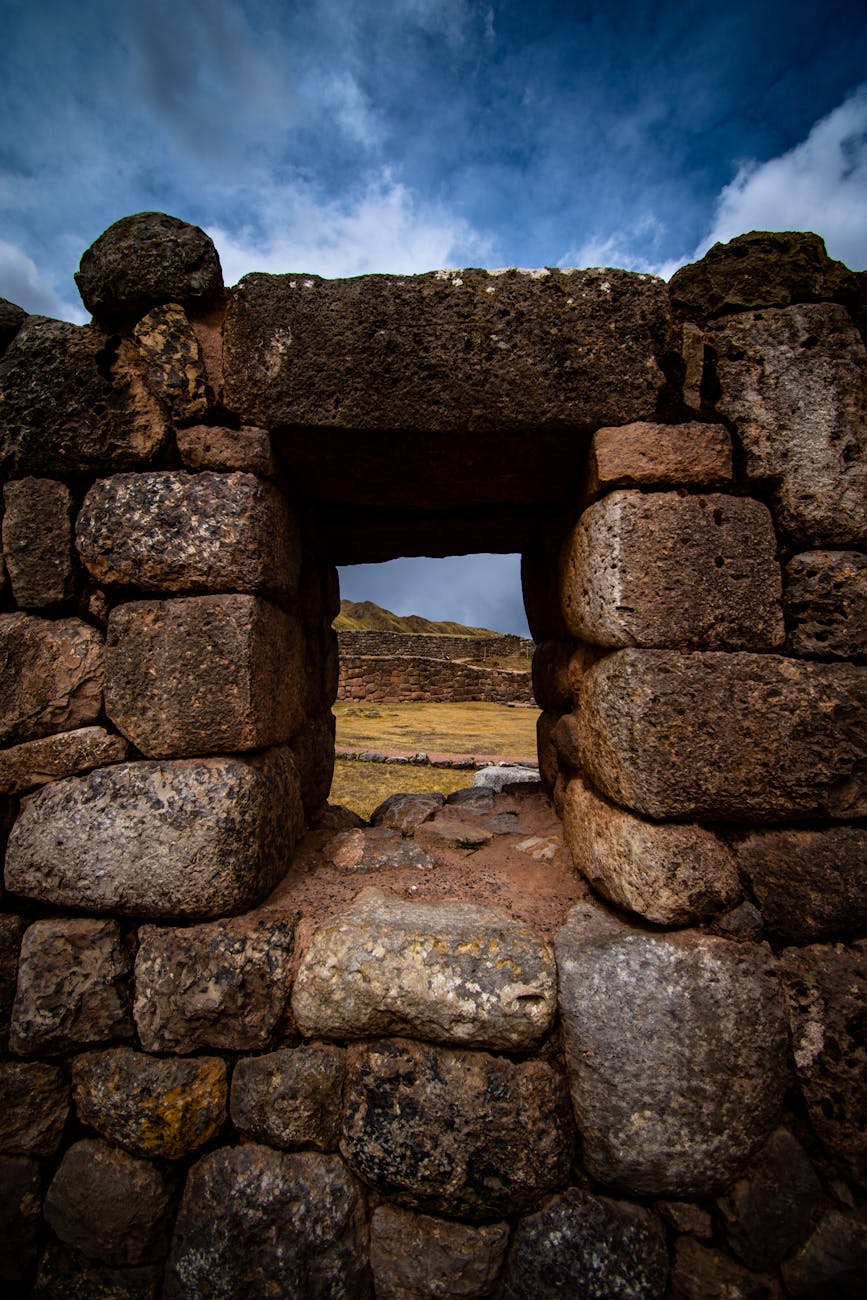
Ancient Ground – a poem by Franny Bryant-Scott

Ancient Ground 

I step through and stumble
on the tumbled rocks, the lichen
that lines the narrow footpath
between ancient boundary walls.

I caress the old stones, the shapes.
This one was a millstone,
that a threshold, there a food trough.
And then they were a wall.

And then rubble in a field
and again a wall. Today shaded
by oaks, they shift under my feet.
Wall, rubble, millstone; thresholds all.

Spy the ruin behind the iron fence -
that is to say, behind the iron
that was a bed frame then
a grape trellis then a gate.

Who can say what is a ruin
in a land that knows
how to use everything forever?
Tiny orchids bloom between the rocks.

Iron and stone were my ancestors too.
Strong enough to weather, to change,
to move aside when oaks
and orchids need a place to root.

I am the offspring of bed frames,
of millstones and rubble and walls.
Shall I become next a gate?
Or a trellis, threshold or path?

Franny Bryant-Scott is a Canadian poet, artist, art therapist, and interfaith spiritual companion living on the ancient land of Crete, Greece. Her writing is an attempt to meet, grapple with, and embrace her experiences as a human being living in a more-than-human world. Ever since she created objects and rituals of remembrance for wild birds and family pets as a small child, the transformative power of the arts to hold both the beauty and suffering in our lives has been at the core of all of her work.

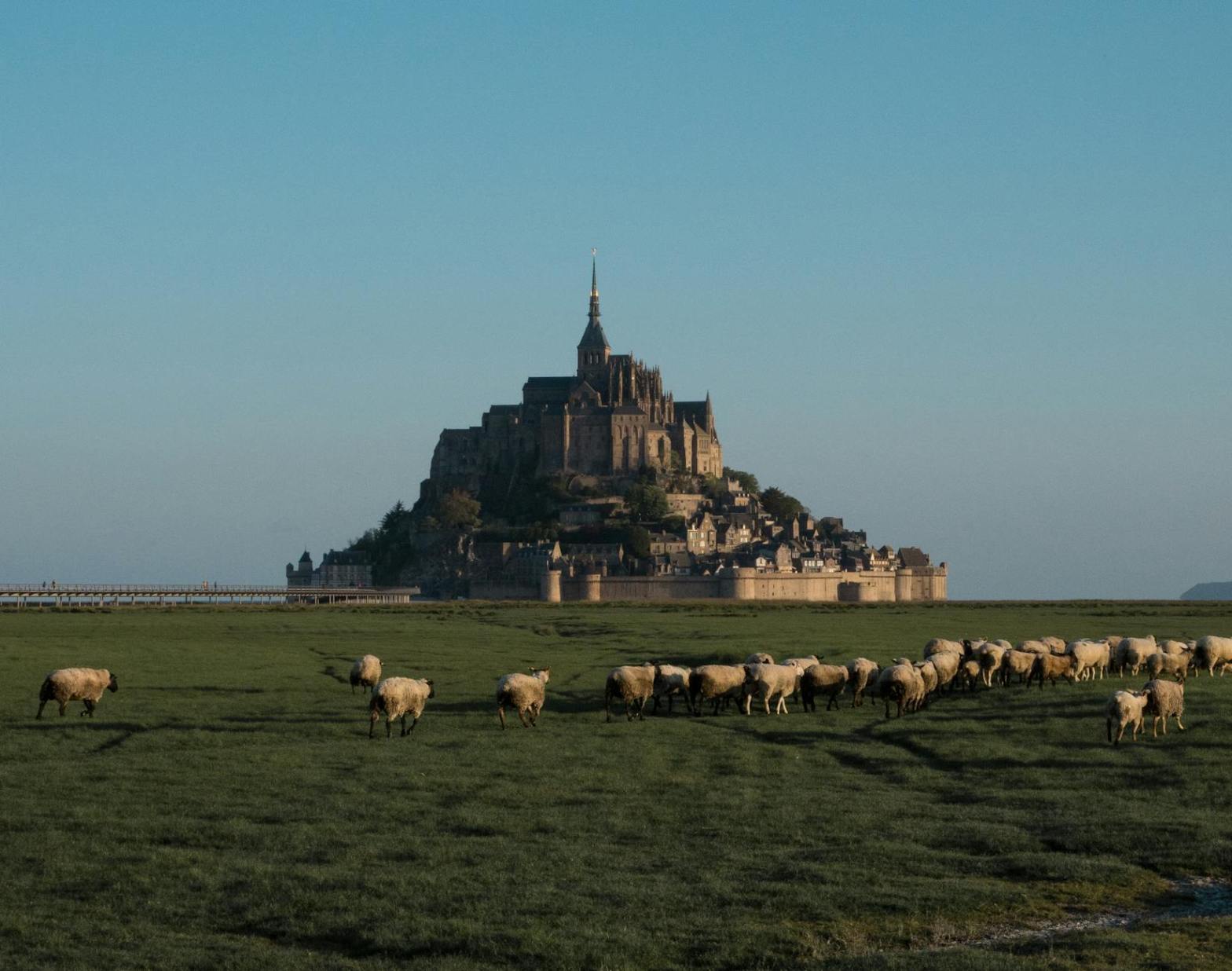
Caedmon, a shepherd at the abbey, writes a poem – a poem by William Ross

Caedmon, a shepherd at the abbey, writes a poem

He fell asleep hard by. He was simple
and lived among the animals,
was not given to speech except
to call his herd and settle them
before laying in the hay.

Fell asleep hard by,
because it was the time when
drinking started and songs were
improvised, and in terror
he would excuse himself
to find solace with the animals
who asked nothing.
Then, peaceful sleep would come.

Fell asleep hard by,
after answering the dream
that set him on fire,
his tongue forming sounds
never before shaped by him,
music to the locals,
holy prayer to the ears of the
abbess, and even the sheep
followed after, hearing
for the first time
sacred poetry.

William Ross is a Canadian writer and visual artist living in Toronto. His poems have appeared in Rattle, The New Quarterly, Humana Obscura, Bicoastal Review, The Hooghly Review, Underscore Magazine, Amethyst Review, Bindweed Magazine Anthology, Topical Poetry, Heavy Feather Review, Passionfruit Review, and others.

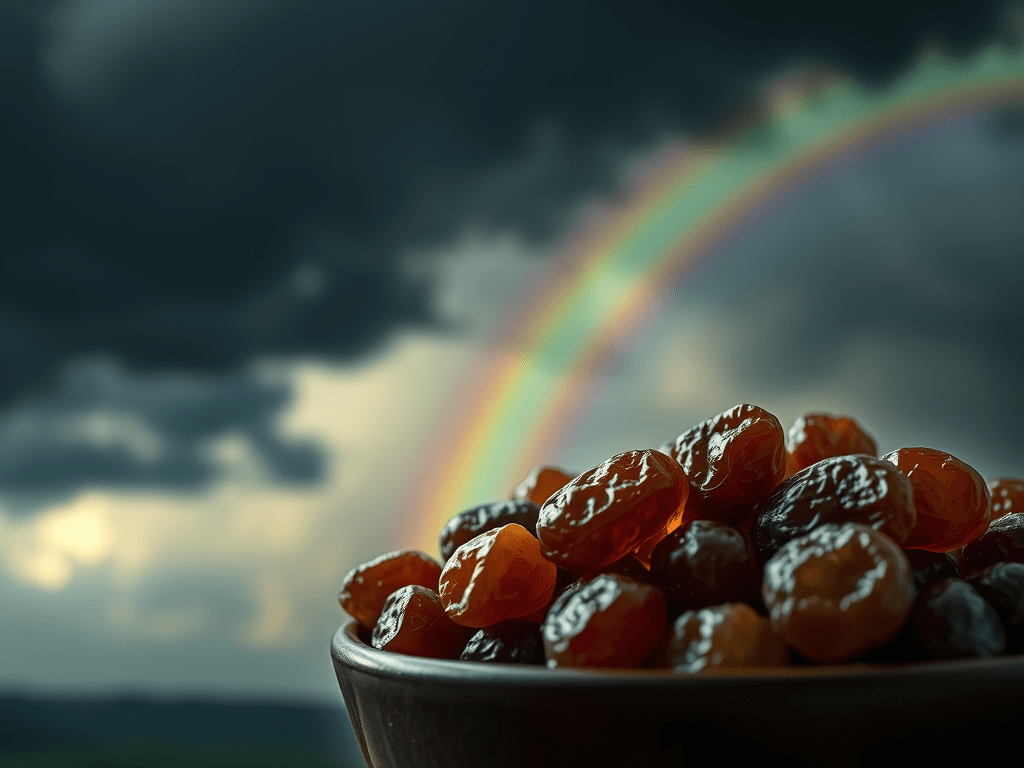
What Can I Say About Eating Raisins During the Storm? – a poem by Laura E. Garrard

What Can I Say About Eating Raisins During the Storm?

I’m not confident
the storm’s end has come.
It hasn’t flattened my home
nor tattered my hope.
All will ride the rainbow
to the other side,
We don’t know when.
The present wind,
no matter
direction
is now my friend.
None of us controls weather
and fear is a lying dictator.
Let my master be the one
who’s always been there with me
even in the dismantling.
Living on the edge, I look directly into the sun.

Author Laura E. Garrard is also an artist and CranioSacral Therapist on the U.S. Northwest Peninsula, where she enjoys time with nature. Her poem, “Filled to the Brim,” appeared in Amethyst Press’s Thin Places & Sacred Spaces anthology. She is a member of Olympic Peninsula Authors and has received four scholarships from Centrum Writers Conference. Her poetry and prose have been published in journals like Bellevue Literary Review, The Madrona Project, Silver Birch, and TulipTree Review, which recently awarded her a Merit Prize. She writes a cancer poetry series, Poetry That Fits, on Penn Medicine’s OncoLink.org.

The Answer Lives Inside – a poem by Susan Jackman

The Answer Lives Inside


I could tell you about this city, the rows of windows
up and down the bodies of buildings, illuminated
at night from within. All those rectangles of glass
like the lines along the fuselage of airplanes
that make me wonder who’s behind them.
Who’s living the secret lives inside?

Morning sun glints off the panes like a Marian apparition.
The feast day of Our Lady of Guadalupe is 12/12,
which, if you believe in the life of numbers, is double
what’s needed for completion: months of a year,
a dozen eggs, the twelve signs of the Zodiac
with their individual architectures of behavior.

Our Lady gave Juan Diego a cloak of roses, emblazoned
her image on the cloth so people would believe him.

How many of us need that?

My friend told me how a child asked Agnes Martin,
“Agnes, what are your paintings about anyway?”
The artist took a rose from the vase on the table and asked,
“Is this flower beautiful?”
Yes…

Agnes hid the rose behind her back.“Is the flower still
beautiful?” Yes spoke the child.
“Well, that’s what I paint.” The power of beauty
to be present even in its absence…

Making the invisible visible — pulling threads
from the air and arranging them on canvas
or paper. The lines and rhythm of breath
suddenly seeable.

Susan Jackson‘s two poetry collections, Through a Gate of Trees and In the River of Songs, were published by CavanKerry Press. All the Light in Between is a Finishing Line Press chapbook. She is currently completing a new book, Geography of the Possible. Jackson believes in the power of literature and the arts to build community as well as forge greater understanding across world borders. In addition to her writing, Jackson has a healing practice using a number of hands-on healing modalities.

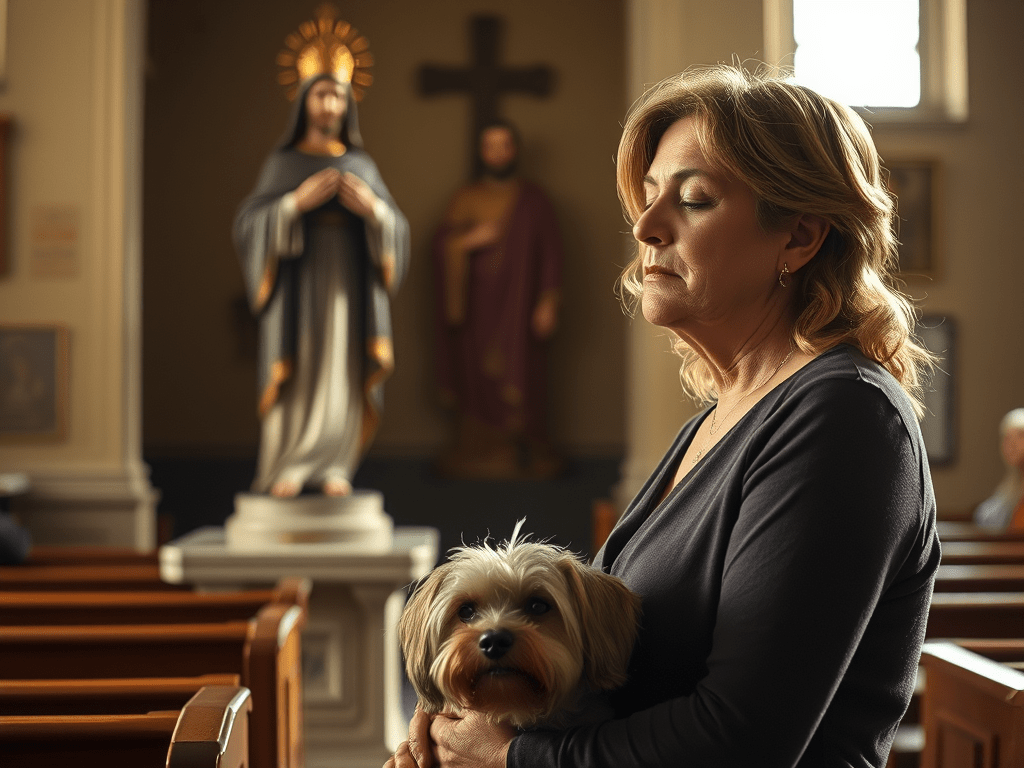
The St. Jude Dog Lady – a poem by Jeffrey Essmann

The St. Jude Dog Lady

It’s always just ‘bout halfway through the Mass:
She and her ratty little dog walk past
The rite itself, the priest, the weekday crowd
Of faithful folk upon their knees and praying.
It must be said at least she isn’t loud:
She stands before the statue of St. Jude,
Eyes tightly closed and hands upheld, displaying
A proper reverential attitude.
I wonder what her hopeless cause might be
That brings her daily to the effigy.
What situation can she not surpass
That drives her on and feeds her monologue
So fervently? Some personal morass
Or is she simply praying for the dog?

Jeffrey Essmann is an essayist and poet living in New York. His poetry has appeared in numerous magazines and literary journals, among them Dappled Things, Amethyst Review, the St. Austin Review, Pensive Journal, America Magazine, The Society of Classical Poets, and various venues of the Benedictine monastery with which he is an oblate. He is editor of The Catholic Poetry Room.

Well – a poem by Sheila Murray-Nellis

Well

A small circle of light swirls
through layers of clay and sand like an eye
from the depths of the earth.

You are so delighted!
You worked with such persistence
despite the odd looks of those that passed you;
with an auger and your brute strength,
you bore through the gravel

and the layers of sand and clay
and finally found what you were looking for,
what you knew was there:
the well that will allow you to stay

even when the winds whip up and the temperature drops
and the snows cover the earth with shivering silver.
You found the spring of living water welling up,

from within the heart, the heart reflecting
that small circle of light.

Sheila Murray-Nellis is a poet and children’s author living in British Columbia, Canada. She and her husband, an Orthodox priest, are building a stone chapel on a property surrounded by the Purcell Wilderness Conservancy which they call St. John in the Wilderness Orthodox Sanctuary. Sheila has had poems published in St. Katherine Review, Windhover, Catholic Integrated Life, Mslexia, and elsewhere. For the past four years she has been Poetry Editor of St. Katherine Review, a position that gives her great joy. Her published work includes her book You Are Meant to Be Like Fire and several children’s chapter books.