The Passing of Sacred Geometry – a poem by Dia Calhoun

The Passing of Sacred Geometry          		

My Sunday School teacher drags
a straight black line across the whiteboard.
Whips out four more, up, down, across—

A star! I gasp with the other kids.

Five points and five lines, she says,
make the perfect star. Try.

With my fat, gold crayon I scrawl
a curly line. Lavish
another over it and another—
five lines,
eight lines,
nine
too many to count
my hand flourishes
a wild
sea-anemone star.

Wrong, the teacher says. Your star
is uncontained. How will you color it in?
She jabs her diagram. Pay attention
to the star God tells you to follow.

Tonight, I lie on August grass
in Gregorian cricket-chant, surround-sound.
Dad called this star-bathing
in the long-ago-here-and-now.
Too many to count
tremor on a black sky drum.
Radiance
from light-years
away pulses
my eyes, throat, belly, lips—
incandesces
then rushes out
to far-off eyes
in other worlds
through the tips of my curly, white hair.

Dia Calhoun is the author of seven young adult novels, including two verse novels, After the River the Sun and Eva of the Farm(Atheneum, 2013, 2012). She has won the Mythopoeic Fantasy Award; published poems and essays in The Writer’s Chronicle;EcoTheo ReviewThe Nashville Review; MORIA Literary Magazine; Grist Journal; And Blue Will Rise Over Yellow: An International Poetry Anthology for Ukraine, and others. She co-founded readergirlz, recipient of The National Book Foundation Innovations in Reading Prize, and taught Creative Writing at Seattle University and Stony Brook University. More at diacalhoun.com.

Fife Pilgrim Way – a poem by Maggie Mackay

Fife Pilgrim Way

Wynds, ochre Palace,
pilgrims, St Serf, Kentigern,
flowing tides, prayers, God.

Dunfermline Abbey,
processional walk, feast days,
journey to heaven.

Well-earned rest, overnight,
wary of robbers and worse,
bonds with fellow men.

Boggy, uneven ground,
pastures rich, wildflowers, shrubs,
through gates to worship.

Passage of lost time,
broken fragments of footsteps,
memento mori.

Waterless Way, ghosts,
Coal Road, Ancient Stobb Cross,
markers of deep faith.

Mottled canopy,
blue above, murmur of flow,
blackbird song, hunger.

St Andrews, blessings,
wonder of ancient cathedral,
grace, shrine, miracles.

Walkers, chatter, rest,
Margaret, her holy well,
Queensferry her name.


Maggie Mackay’s poem ‘How to Distil a Guid Scotch Malt’ is in the Poetry Archive’s WordView permanent collection. Her second collection The Babel of Human Travel (Impspired.com  ) was published in 2022. She reviews poetry collections at The Friday Poem (https://thefridaypoem.com).  Her best downtime moments  are spent with her greyhound and a malt whisky. Twitter handle is @Bonniedreamer.

Present – a poem by Julie Leoni

Present

If you sit still and quiet in the same place,
time and time again, you will get to know its
folks.

Robin, chaffinch, blackbird, collared dove,
cleavers, nettle, red campion, blue aconite,
ant, bee, woodlouse, worm, orange-tipped
butterfly, tadpole, toad, rock, moss,
sycamore, blackthorn, willow, ash.

If you are still and quiet often enough, they
will get on with being a bird or a plant or an
insect, right up close to you. Right up close
so you can see their eyes, their feathers, their
petals --

their tiny, ordinary, intricate beauty.

Julie Leoni lives on the Welsh Borders where she teaches yoga, swims in the river at the bottom of her garden and raises raspberries, rhubarb and her children. In 2024 she was announced the winner of the Bournemouth Poetry Prize, shortlisted for the Cinnamon New Voices Award, and again for their pamphlet award, the Mslexia Poetry award, and the Fish memoir prize. Her first collection of poems Farmotherlands will be published by Hedgehog Press in Spring 2025. Meanwhile she blogs and runs family retreats in community settings. Her PhD means that she gets to teach interesting courses at a number of universities and schools. She is also the author of three non-fiction books which can be found at www.julieleoni.com.

Before – a poem by Jane Keenan

Before

the sun slid around the house
light on window frame
the dresser
the side of the cross

she looked down
for the umpteenth time
but could not see
for tears

he picked up his pen
but the words slurred
on the paper
as if in a dream

she fed him a spoonful
movements mechanical
from some place better
than her heart

he could not speak
warmed her with
his smiling eyes
sun slipping by

finding no words
she looked through the window
at moonlit trees
indistinct but beautiful

Jane Keenan has been writing poems since the age of six, and has already contributed to Amethyst Review and All Shall Be Well: Poems for Julian of Norwich. She met Susan Brice and Viv Longley on the Open University’s MA course in creative writing. In 2022 the three friends published Daughters of Thyme.  (www.dotipress.com) and are now compiling a sister volume, Home Thyme. Jane lives in the Scottish Borders with her beautiful dog, Wellington. 

The Missing – a poem by Skip Renker

The Missing

Missing for more than half a century,
missing from the California desert
where you were born and lived three months,
from the bassinette I lifted my chin over
when you cried or seemed to laugh,
missing because of the hole in your heart,
missing from the drinking fountain
in the corridor of the hospital, where
mother poured water on your forehead
to baptize you moments before your death.

Baptism saved you from limbo, she told us
later, where babies are happy but never
see God—you were saved for heaven.
Now she’s missing too, she who enacted
the Church’s Baptism of Desire, reserved
for emergencies, no priest in sight.
Emanuel Swedenborg, seer of the afterlife,
wrote that he often visited heaven,
that babies like you grow up radiant there,
reunite with siblings and parents.

Desire only God, Swedenborg and other
mystics say, because his desire is to
unite with us, even during those times
when we think we’ve missed
the final boat, missed our life, but
just outside our door are white
blossoms on the tips of saguaros,
bougainvillea in full bloom,
the bright clarity of desert sunlight.

F.W. “Skip” Renker’s poems have appeared in Awakenings ReviewLeaping Clear, Presence, and many other publications, as well as the Atlanta Review and Passages Northanthologies.  His books are Sifting the Visible (Mayapple Press), Bearing the Cast  (Saint Julian Press), and A Patient Hunger (Atmosphere Press).  Skip’s a graduate of Notre Dame and Duke, and has an MFA from Seattle Pacific University. 

Munificence: A Prayer Poem – a poem by Kathleen Brewin Lewis

Munificence: A Prayer Poem

The earth breaks open—
steaming like biscuits—
and the sunrise bestows
a rich mystic kiss.
The great ribbon unfurls
and we are enfolded,
joined surely together,
a vivid embrace.
Oh, God of our mothers,
our siblings,
our sons-in-law,
Guardian of the shepherd,
the hillock, the lamb.
Lord of our longings,
our artistry, honesty.
Set the day’s table
with just what we need.
We are grateful
for your vigilance.
We are thankful
for the very air.

Kathleen Brewin Lewis grew up among the moss-draped oaks of Savannah, Georgia, eighteen miles from the Atlantic Ocean, in a land crossed with creeks and rivers. She writes primarily about the natural world and family life. Her collection of poetry, Magicicada & Other Marvels, was published by Shanti Arts in 2022. 

Pantoum of Pilgrims Who Walk Beyond Their Destination – a poem by Bel Wallace

Pantoum of Pilgrims Who Walk Beyond Their Destination  

We, the defectives, the dregs
Who didn’t know how to stop
Discovered hearts in our legs
Seek always the next hilltop

We didn’t know how to stop
Or where, didn’t find answers
Seek a further mountaintop
Skip on like spellbound dancers

We didn’t find our answers
Or were our questions wrong?
Trip on, enchanted dancers
We’ve searched our whole lives long

We got our questions wrong
Have further now to travel
We’ve searched our whole lives long
And shall we then unravel?

A longer road to travel
We go west, towards the sea
And there we may unravel
Pause now by the Judas tree

We go west, towards the sea
The track has possessed our feet
Rest under the Judas tree
We puzzle those we meet

The track has possessed our feet
We hold each other’s spirit
We frighten some we meet
The dark, we do not fear it

We hold each other’s spirit
We’ve found our hearts in our legs
The end, we do not fear it
We, the defectives, the dregs.

Bel Wallace is a carer who practises yoga and enjoys long walks. In a previous life she was a teacher. She started writing in earnest after walking 560 miles of a pilgrim route to Santiago de Compostela. Her writing has been short-listed in various competitions, including the 2022 Bridport Poetry Prize and published in Ink, Sweat and Tears, Raceme, Allegro, Lighthouse, Magma, Gutter, The Interpreter’s House, Under the Radar and Carmen et Error. She is trying to finish her first novel, but keeps getting distracted by poetry. Instagram @belwallace_writer

Glitz – a poem by Daniel P. Stokes 

Glitz

Sol, the sire of life,
makes butter run.
We’re on the terrace.
Shaded. Breakfast.
Fruit and pastries. Coffee
creamed with Baileys.
Decadent. The street
beneath, still sleepy,
muses why last night
we stopped mid-road to gawp
a moonless heavens
splotched down its middle
with a billion melded suns.

A primal call to confront infinity?
Elements intuiting whence they came?
Or inculcation that the distant,
vast and barely comprehended
demands our awe?

It could, of course, be glitz -
the straining flame before us on the table,
oil oozing iridescence after rain,
a dusty shaft of sunlight through a crevice –
that lures the eye and later
we take home and,
granting our perceptions import,
flesh with meaning.

Daniel  P. Stokes has published poetry widely in literary magazines in Ireland, Britain, the U.S.A. and Canada, and has won several poetry prizes.  He has written three stage plays which have been professionally  produced in Dublin, London and at the Edinburgh Festival. 

Great Blue – a poem by Katherine Edgren

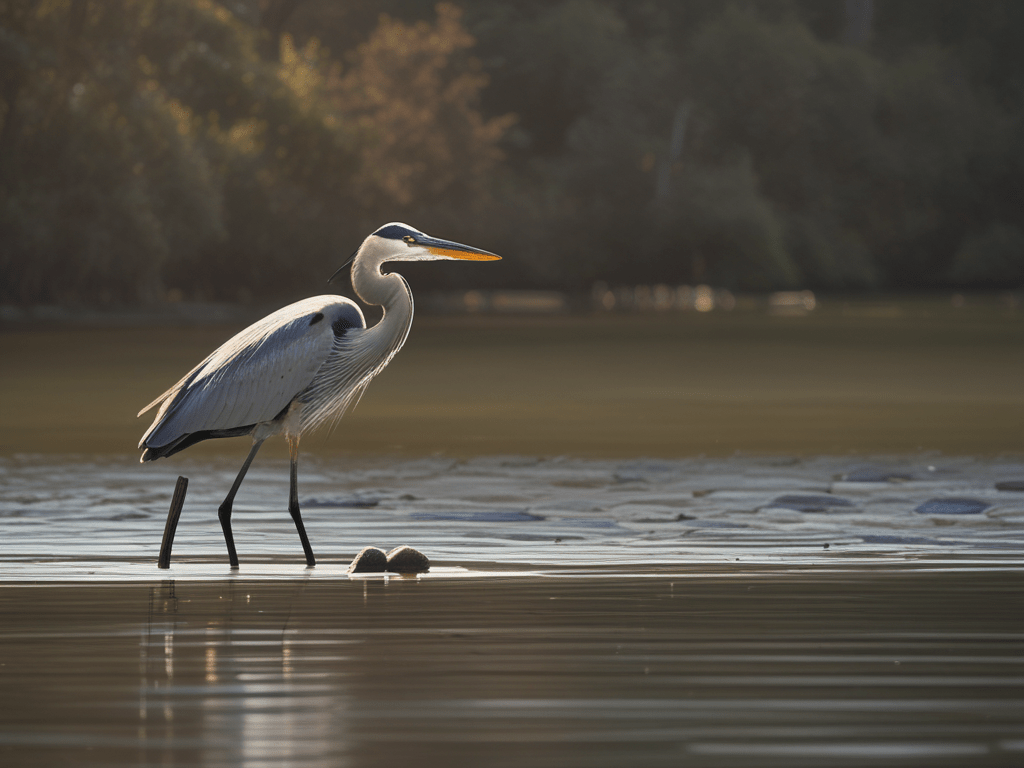
Great Blue

I reach for my camera in the bow of the kayak
as living driftwood of exquisite thinness
senses me from shore with that great, watchful eye
keen for spying fish and frog, lifts,
stays low skimming the silver gloss,
neck tucked, legs dangling,
curved wings silently rowing.

I’ve heard it said
that the bird in any poem, in fact, represents the poet.
Oh, were I that heron!
How I covet the instinct, the grace, the speed,
the effortless transcendence—
one with sky and lake.

Katherine Edgren has two books of poetry: Keeping Out the Noise, by Kelsay Books and The Grain Beneath the Gloss, by Finishing Line Press, plus two chapbooks: Long Division and Transports. Her work has appeared in journals including: Coe Review, Birmingham Poetry Review, Light, Orchards Poetry Journal, and Third Wednesday. Katherine is a former Ann Arbor City Council member. Her past work includes heading up the Health Promotion and Community Relations Department at University Health Service and serving as a Project Manager for Community Action Against Asthma a community-based, participatory and intervention research project through the School of Public Health, University of Michigan.  She has a Masters Degree in Social Work from the University of Michigan.

Meditating While Recovering from COVID-19 – a poem by Sara Letourneau

Meditating While Recovering from COVID-19


Deep breathing is a challenge right now.
The virus has yet to seize me by the lungs,
but when I do breathe, the smooth swoop of air
scratches my throat, and the coughing
clutches me again. I do my best, though,
tilting my head back against the recliner,
letting fatigue flood my eyes shut
as the guided meditation begins.

Half of me wants to ask the narrator,
“Why me? And why now?
How long will I have to live with
the craving to sleep all day?
And could my boyfriend please be spared
so he never receives what I never wanted to give him?”
But the other half of me knows
these worries are futile.
So I listen as the narrator’s voice vibrates
through the soles of my feet,
as he reminds me to relax,
as he reminds me not to think,
as he asks me to do what is effortless (close your eyes)
and what is not (breathe deeply).
Then he asks me to imagine my root chakra
as a sphere of red light at the base of my spine—

and suddenly I see it,
a tiny planet like Mars,
spinning on its axis as it centers me,
and that’s when I find the solar system I hold inside—
all seven energy centers, tiny globes
rotating on fixed points along my back, neck, and head,
each one shimmering in a color from the rainbow—

and only then do I notice
how I breathe with a river’s ease,
how I remain in my recliner yet have floated into a galaxy
where illness, questions, and fear don’t exist,
where the expanse that grows within blurs with the boundaries of skin
until the space I contain is limitless,
until all traces of disease seem to fall away,
until this lying back and listening is all I do for hours
because it allows me to feel well again.