Pleshey – a poem by Jonathan Evens

Pleshey

I
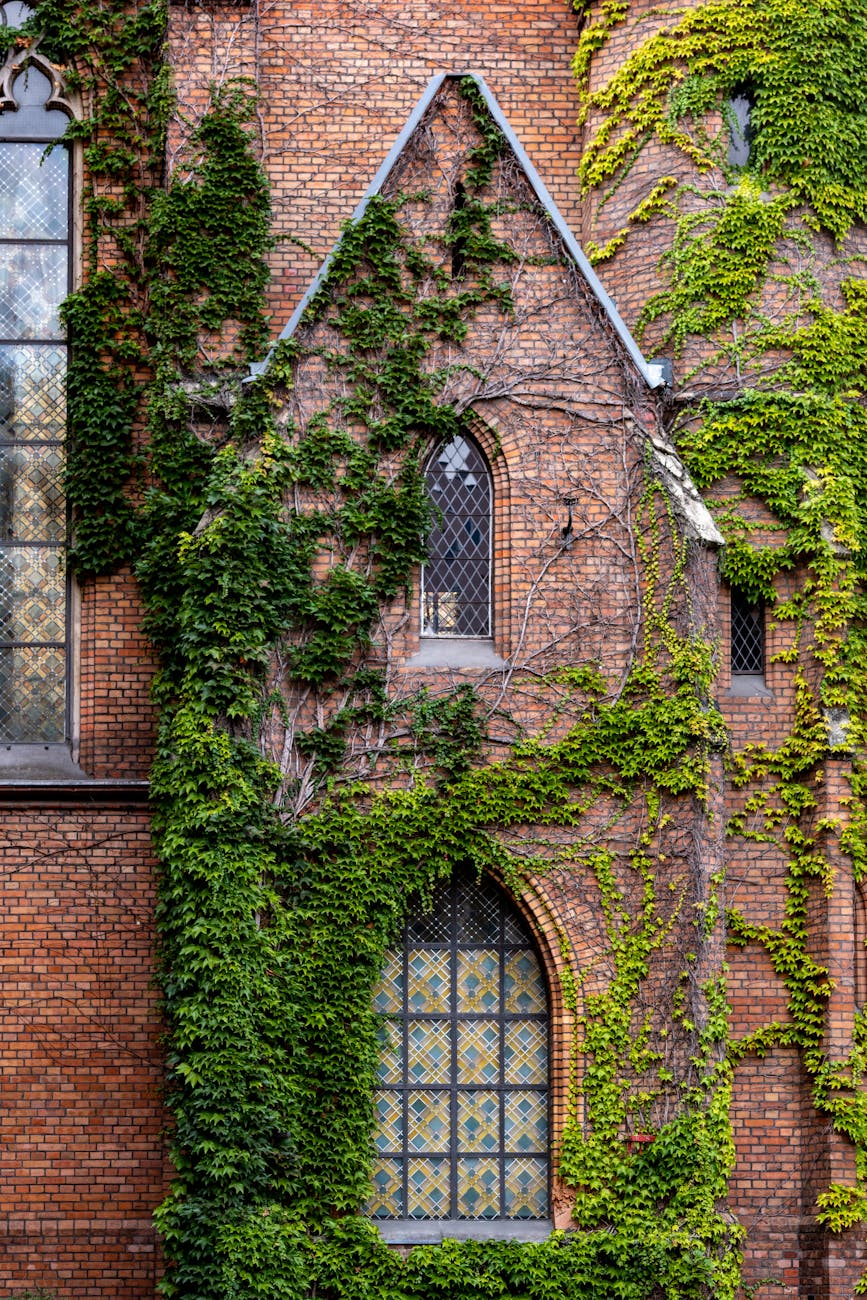
A large red-brick former convent -
once belonging to the Servants of Christ -
sits behind a modest plastered farmhouse,
which is Georgian in style.
It is the large house, itself Edwardian
Arts and Crafts in style, - although the two
buildings are connected, linked –
to which we come.
Fringed with foliage and wild flowers
standing spectacularly
tall and colourful, varied in hue.
Lawns – one with a labyrinth in bricks
laid into the ground, another with
a large wooden inscribed cross
in front of which numerous
groups of ordinands have stood,
together with bishops and retreat leaders,
prior to their ordination; I, being one such.
A house steeped in memories.

A house soaked in love and prayer.
A house of retreat. Retreat not being
defeat, but renewal, refreshment
and revival. We come to drink deeply
that we might live abundantly.
This place of memories containing
evidence of retreats past - sample, cross,
notebooks – speaks of doors pulled shut
for prayer; real communion
with God, such communion
as to make one more powerful
in intercession, such self-loss in him
as heals wounds by new contact
with life and love. Blessed be God
that he is God only
and is divinely like himself.

II

Let our lives run to Your embrace
and breathe the breath of Eternity.
O God Supreme! Teach us to be
more alert, humble, expectant
than we have been in the past:
ever ready to encounter You in quiet,
homely ways. So fill our imaginations
with pictures of Your love and
make us ready for adventure
knowing that beyond us
are the hills of God,
the snowfields of the Spirit,
the Other Kingdom.
May the threefold rhythm of adoration,
intercession and communion
in which the spiritual life consists
bring us into Your abiding presence
and peace, as we are closely united
with a world in torment.
As those who live very close to nature
become tuned to her rhythm,
and discern in solitary moments
all the movements of her secret life, or
as musicians distinguish each separate note
in a great symphony and
yet receive the music as a whole;
so may we be sensitised to every note
and cadence in the rich and intricate music
of common life. May we, through
our intercessions, stretch out
over an ever-wider area the filaments
of love, and receive and endure
in our own persons the anguish
of its sorrow, its helplessness,
its confusions, and its sin;
suffering again and again
the darkness of Gethsemane and the Cross
as the price of redemptive power.
Fulfil our sacred privilege to carry
that world and its sorrow with us,
and submit it in our prayer
to your redeeming action.
So, we cry, “Within Your wounds,
hide me!” for all who suffer and mourn
at this time. In every appeal
to our compassion, every act
of unselfish love which shows up
and humbles our imperfect love,
may we recognize you still
walking through the world.
‘Soothe our restlessness:
say to our hearts “Peace be still.”
Brood over us, within us,
Spirit of perfect peace, enfolded
in Your loving care. Blessed be God
that she is God only
and is divinely like herself.


III

The Archdeacon bows before the altar,
the ending of a Eucharist
that concludes our short retreat
as Area Deans at Pleshey.
A blaze of colour and fire of movement
on the altar frontal animates this
simple, calm and holy space that
resonates and reverberates with
memories of training retreats,
preparations for ordinations
and cell group support in ministry.
I am here to the glory of God
says the plaque in memory of
Friend of Pleshey, Evelyn Underhill.
You are the salt of the earth,
the light of the world, says Jesus
in our Gospel reading.
We are to bring out the different
flavours in our communities
and illuminate the good
that is hidden and under-appreciated.
As Evelyn Underhill once said
God is always coming to you.
So, gather yourself up and give
your complete loving attention
to something outside of yourself.
Meet and greet and receive them
with gratitude. Blessed be God
that they are God only
and are divinely like themself.

Jonathan Evens is Team Rector for Wickford and Runwell. He is co-author of The Secret Chord and a contributor to Liturgy on the Edge and Finding Abundance in Scarcity. His creative writing has been published by Amethyst ReviewInternational Times and Stride Magazine. He writes regularly on The Arts for national arts and church media including ArtlystArtwayChurch TimesInternational TimesSeen and Unseen, and Stride Magazine. He blogs at joninbetween.blogspot.com.
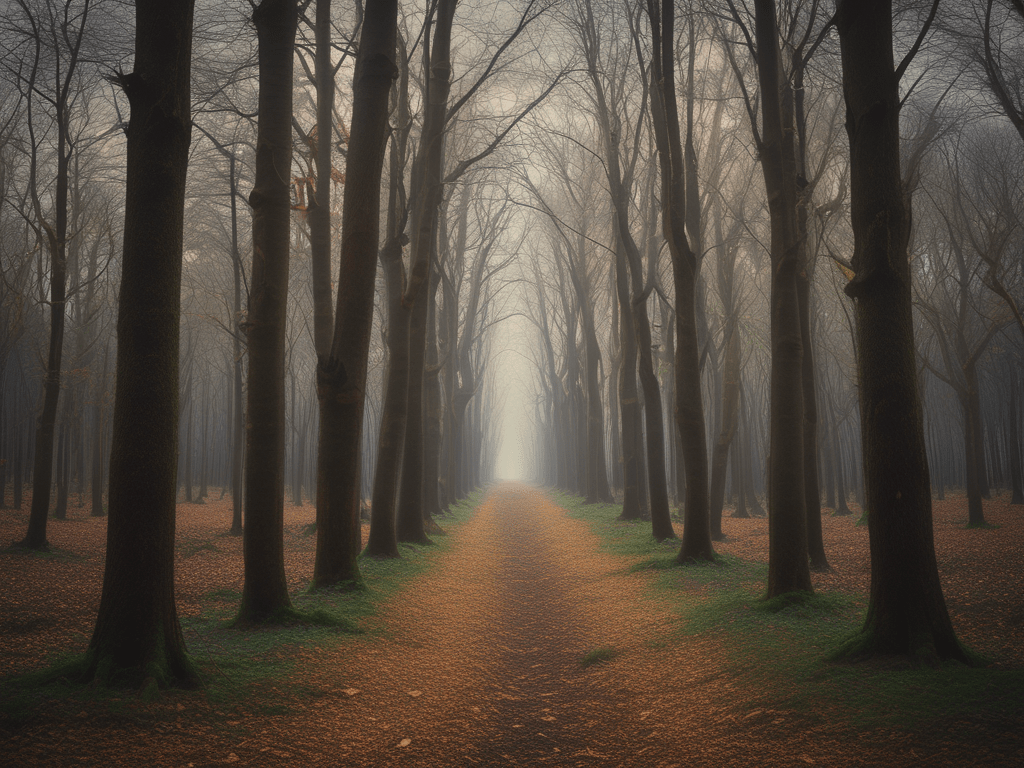
Trees Walking – a poem by Jeffrey Essmann

Trees Walking
(Mark 8: 22-26)

He took me off somewhere where we were all
Alone, and in my blindness I could hear
Him spit and felt the wet of him like tears
Upon my eyes. And then I heard him call
To me and ask what I could see. “A scrawl
Of shapes,” I said, “that look like walking trees.”
At second touch I felt my soul unfreeze
And all the darkness blindly from me fall. 
He bid me then to go my newborn way;
To head for home but not by paths I knew
For now the known could easily lead astray.
Yet as I headed off and could construe
My fellow men, I wished they might someway
Be trees again a moment there or two. 

Jeffrey Essmann is an essayist and poet living in New York. His poetry has appeared in numerous magazines and literary journals, among them Dappled ThingsAmethyst Review, the St. Austin Review, The Society of Classical PoetsThe Road Not TakenEdge of Faith, Pensive, and various venues of the Benedictine monastery with which he is an oblate. He is editor of the Catholic Poetry Room page on the Integrated Catholic Life website.

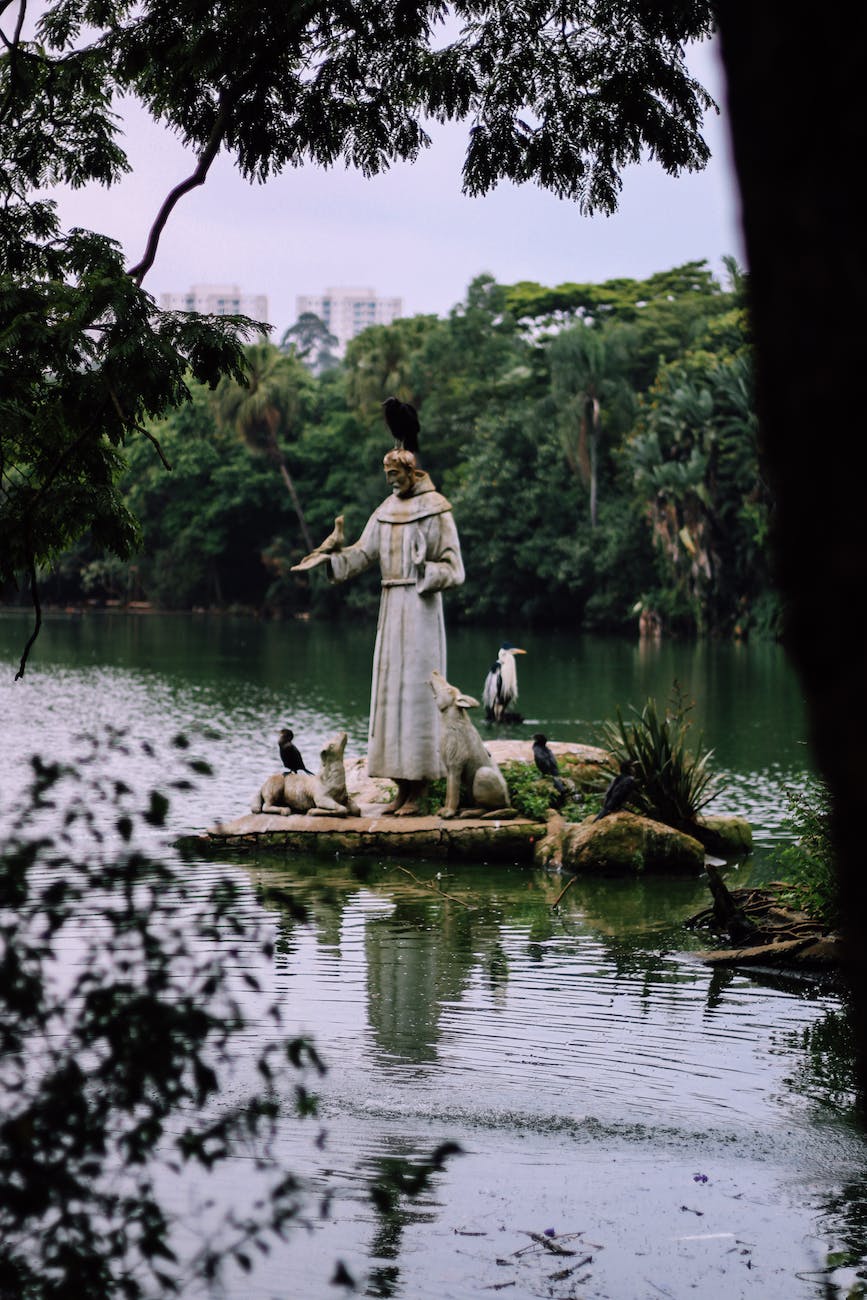
Saint Francis at San Damiano – a poem by Martin Potter

Saint Francis at San Damiano


land of hilltowns
where looking up you gaze
at humpback mountains down
the valley floor’s smoke green
if you wandered

below Assisi’s
elevated hive of stone
the free-breathing low lanes
and stray tendrils of vine
over the wall-tops

olive-grey leaf clouds
discomfiting sunbursts burn
breezes bear chant of birds
it’s inspiring toil as when
Francis was roaming

unruly country
encountered in drear array
a chapel long unrepaired
prayed its crucifix and heard
the voice addressing

inviting conversion
bade to rebuild the church
timbers masonry to rights
the companions would set about
retraining matters

would form to friars
and vines would still bud
spreading shoots pale trees
produce their olive fruits
sun-fire roasting

intermittently
while the order would stretch
its wings take flight and land
in cities’ thickets re-greened
with grey habits

Martin Potter (https://martinpotterpoet.home.blog) is a British-Colombian poet and academic, based in Edinburgh, and his poems have appeared in AcumenThe French Literary ReviewEborakonInk Sweat & TearsThe Poetry Village, and other journals as well as in Black Bough anthologies. His pamphlet In the Particular was published in 2017.

Rosh Hashanah – a poem by Rinat Harel

Rosh Hashanah (Cambridge Massachusetts)

I wake up to birds warbling
outside my window;
slight traffic swooshes by.
I know the schools are closed today,
and the synagogue down
the street brims
with men wrapped in cloth.
Stripes and tussles.
In the balcony above — away
from rabbis and Torahs and all
that is holy — skirted women hold
prayer books and hush their tots.

I think of the dos and the don’ts,
the pleas and the angst.
And the God I failed
to find among the reddish stone
three millennia old, in a desert
five thousand miles away.

When I walk by the synagogue,
the intoned recitation,
Baruch Atah Adonai, Elohainu Melech Ha’olam,
wraps me with sounds of home.
I halt at the gate, one hand on the latch.

A midday sun, a ripe orange floating in a field of blue,
seductive as a dream,
pulls me away.

Toward the river I step:
trees in green September leaves;
ducks bobbing in the shimmering stream;
the whispers of grass blades;
the smell of fresh water.
And the intonation murmuring upon the wavelets:
Baruch Atah Adonai, Elohainu Melech Ha’olam,
echoed by the afternoon sun. Veiled by a drift
of clouds, then round and glowing once more,
pouring rays of life — a benevolent goddess.

And the year starts anew.

Rinat Harel holds a Ph.D. in Creative Writing from the University of Exeter, England. Her writing has been published in various literary magazines and received several awards. She currently works on a poetry collection titled Poems from the Boidem.

Saint Thérèse of Lisieux – a poem by Ulrica Hume

Saint Thérèse of Lisieux


What bitterness in those eyes,
what gracious pain.

The flowers fall,
and I gather them in.


Ulrica Hume is the author of An Uncertain Age, a spiritual mystery novel, and House of Miracles, a collection of stories, one of which was selected by PEN and broadcast on NPR. Her work appears online (EcoTheoRIC JournalShort Édition, etc.), in literary journals (Firmament), and in anthologies. She is a labyrinth guide.

Shih – a poem by Wally Swist

Shih

I am waiting
for you to be brought
to the phone at the care center.

Looking out
at the yard from the rear window
in the living room,

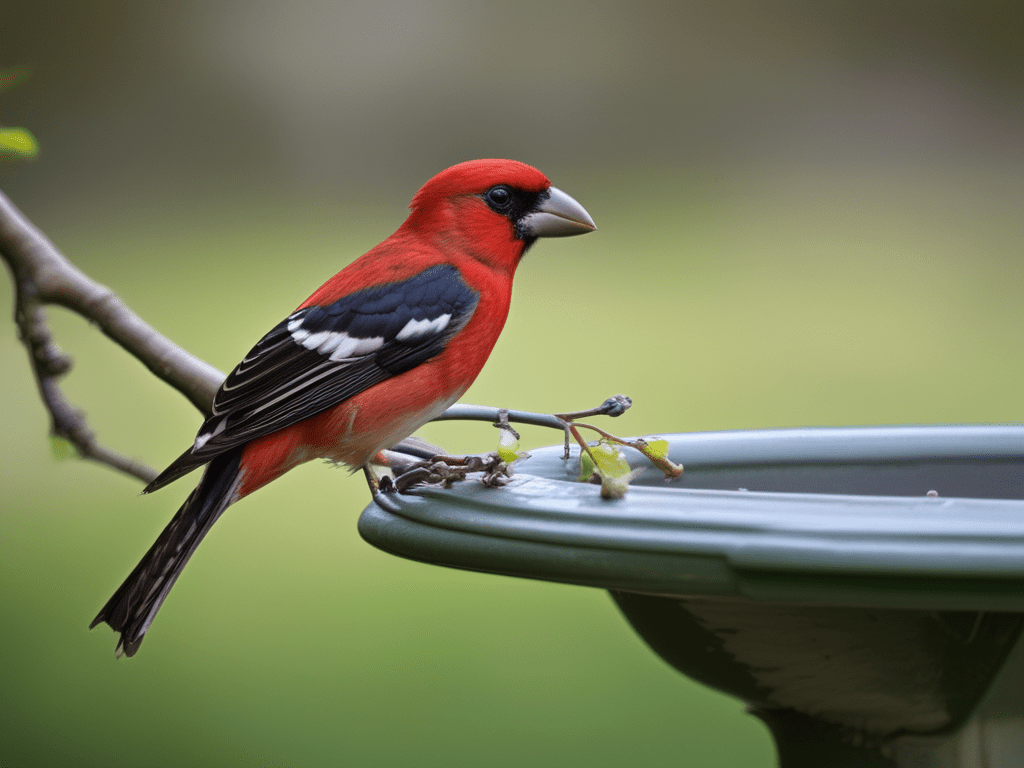
I watch the red-headed grosbeak
hang from the tip of a branch
then dip down to the birdbath.

My eyes graze
over the midnight blue
of the Chinese plate

we purchased at the antique store
in Woodstock, Vermont, written with
the character, “Revelation,”

in its center, within
a black circle, as
the plate itself is rimmed

in black.
I am told that you are
still having your breakfast,

to phone back later,
as I will, as I consider
the character, Shih,

my revelation today—
that all our lives
are limned in sorrow,

so many levels of it,
through which we experience
the ache of love.

Wally Swist’s books include Huang Po and the Dimensions of Love (Southern Illinois University Press, 2012), selected by Yusef Komunyakaa for the 2011 Crab Orchard Open Poetry Competition, and A Bird Who Seems to Know Me: Poems Regarding Birds and Nature, winner of the 2018 Ex Ophidia Poetry Prize. Recent essays, poems, and translations have appeared in Asymptote (Taiwan), Chicago Quarterly Review, Commonweal, The Comstock Review, Healing Muse: Center for Bioethics & Humanities La Piccioletta Barca (U.K.), Pensive: A Journal of Global Spirituality & the Arts, Tipton Poetry Review, Poetry London, and Your Impossible Voice. Shanti Arts published his translation of L’Allegria, Giuseppe Ungaretti’s first iconic book, in August 2023. He will be featured writer in the Spring 2025 issue of Ezra: An Online Journal of Translation that will highlight several of his translations from the Spanish of Roberto Juarroz.

Finishing Line Press will be publishing his book, If You’re the Dreamer, I’m the Dream: Selected Translations from The Book of Hours, in 2025.

Hail Storm – a poem by Sharon RC Lee

Hail Storm

A storm just shuddered over us
scattering icy pearls over everything
the trees and their mossy coats
make bowls and cups to collect
the tiny delicate pellets of wildness.
How tender they are.
How brave.
The sun prepares to take them back.
They will be gone soon, not dead,
but breath for ravens and frogs
singing in the aftermath.
Now the forest is steaming and stretching
out in front of me. Proud of herself.
I could die right here and become
breath and fire,
just like the ice.

Sharon RC Lee has been writing poetry and prose since she was young. For the last twenty years she has been focused on raising her kids and on her career as a psychologist and therapist trainer in Portland, Oregon. Now on sabbatical, she is working on a memoir as well as essays and poetry. She has an essay that was published in Hip Mama, and she has written two chapters for a book edited by Ken Hardy that will be published next year.

Wonder – a poem by Jody Reis Johnson

Wonder      

I sit on black lava rock
as shadows gather in the sharp folds of the cliff
already moving on
endless rows of waves
rise and dissolve before me
albatross
wheel and skim
in effortless, ancient circles
and I weep for how I was back then
before I knew you
how brittle
unyielding to wonder
to this

Jody Reis Johnson is an emerging poet from St. Paul, Minnesota, whose writing grows out of a practice of silence. Her essays on spirituality and contemporary social issues appear in a variety of periodicals including Bearings and Middlebury Magazine. Jody is a retired mental health professional who now teaches contemplative spirituality and practice, facilitates retreats, and provides spiritual guidance to individuals. She enjoys travel, cooking, and surfing with her grandchildren during winters in Hawaii.

The Door – a poem by Alfred Fournier

The Door

I’ve spent too many days
curled away from God,
squeezing my pillow tight.

Why are we most afraid
of the one road that can save us?
Carry us beyond hope of returning.

I guess that’s a question
that answers itself. One day
I will be filed away as ashes.

We cannot live beyond our time.
When that deep horn wails for us from afar,
there’s no refusing its call.

Why not lay my questions,
self-doubt and grudges to rest?
Why not wake to the soft miracle
of the everyday?

Soon I will realize that love
has caught me in a corner.
There is a bright white door.
I see myself
reaching for the handle.

Alfred Fournier is a writer and community volunteer in Phoenix, Arizona. His first poetry collection, A Summons on the Wind (2023, Kelsay Books), was nominated for the Eric Hoffer Book Award. His poems have appeared in Amethyst Review, Orchards Poetry Journal, Gyroscope Review, The Sunlight Press and elsewhere. Twitter (X): @AlfredFournier4, alfredfournier.com.