Notes from the Cistern – a poem by Ann Power

Notes from the Cistern

February 588 BC
Jerusalem, Quarters of the Guard
The Cistern of Malachiah; nearby, an almond tree.
The prophet, Jeremiah, is besieged by those who would silence him.


I know the hemisphere of my thoughts…
but not of Yours.

Words, sentences are scumbled.
Mired. Captive.

I am target: labelled, persecuted, mocked;
only the watching-tree saw my struggle,
my resistance, my unwilling descent
into the cistern, finding only soft, pitiless mud
at the bottom.

The stillness overwhelms intention,
and I, messenger, have no voice for words,
even those engraved with an iron stylus.

In this loathsome borderland between earth
and hell,
I am bound in the blind length of dread.

Light from the bottle-shaped mouth above,
lights only slightly.
Dolomitic limestone and chert walls,
covered with broken plaster of lime paste,
surround me,
and I have been entrapped by the
broken cisterns I deride.

The stone cover replaced overhead is shroud;
all is ashen.
I am devoured by the darkness, abandoned.
A cricket begins to prophecy.

And am I to think God humorous
when He teases me with my own analogy?
Present reality forbids.

He makes a crucible out of my description,
my enslavement to truth.
Yet He has heard. Approved.

More often mine is the voice disapproved.
Jerusalem will fall as chastisement by
sword and famine, its cedars cut and
cast into the fire; its treasures will be in ruins,
dispersed;
its inhabitants will consume the flesh of
one another.

Ebedmelech, the Ethiopian, is here with
servants to lift me up into the sun-washed day.
He advises the worn and faded rags thrown down
be placed to prevent the ropes from burning.

And I am raised slowly as a pail of water,
once again to serve the thirst.
And still I am prisoner and Prisoner.

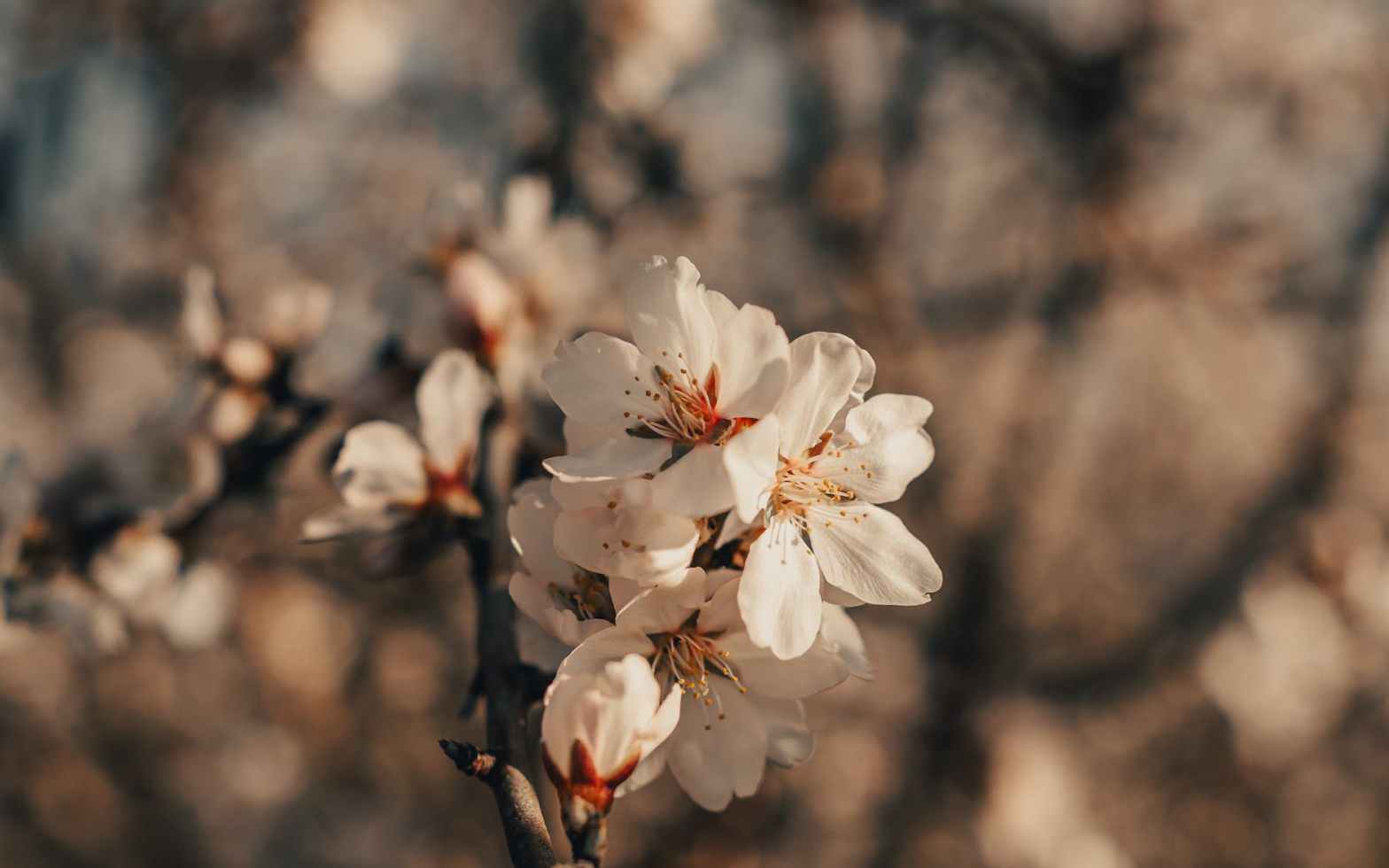
Ah yes. The almond blossoms.


Ann Power is a retired faculty member from The University of Alabama.  She enjoys writing historical sketches as well as poems based in the kingdoms of magical realism. Her work has appeared in: Spillway, Gargoyle Magazine, The Birmingham Poetry Review, Dappled Things, The Copperfield Review, The Ekphrastic Review, The Loch Raven Review, Halfway Down the Stairs, Amethyst Review, and other publications.  She was nominated for Best of the Net in Poetry for her poem, “Ice Palace.” 
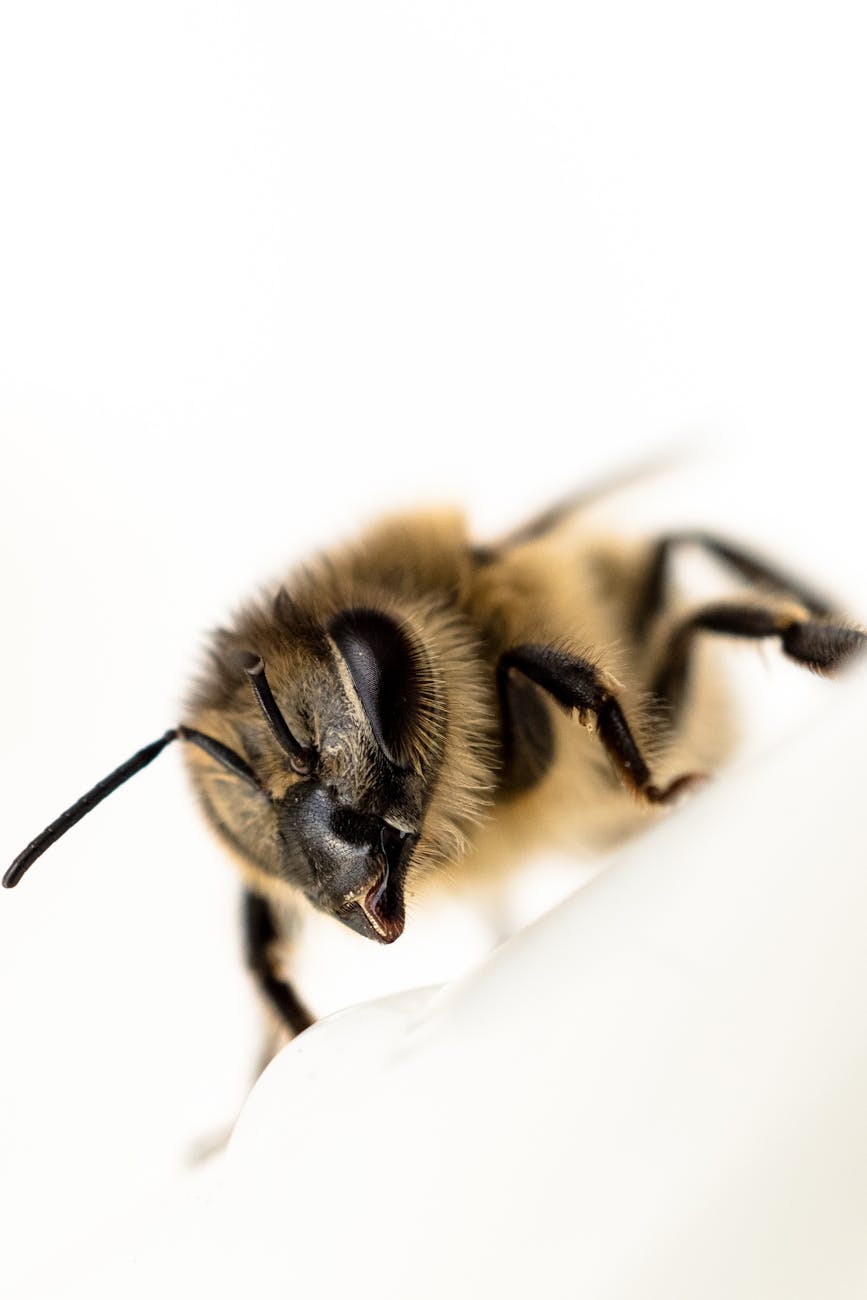
Be Bumped – a poem by Rachel Dacus

Be Bumped

A bee hit my thumb as I walked
and bumped me off my stride.
No sting but a side step, taken aback,
forgetful for a moment
that a beloved was busy dying.

A bee and today’s complicated sky
pushed me alive and disappearing
under a mound of clouds that shoved me
into a hopscotch of years.
With memories, I catch my longest breath.

My phone rings and swift as a bee
my hearing falls to the ground
where it stays while I ponder the length
of a life. How long it took the bee
to bump my thumb and what it did after.
It did not die.

Will tomorrow knock me
onto another new path,
or is death forever rolling in, sweeping wide,
and taking someone far out, only to draw
another in. To bump us into listening
for the drone that threads it all together.

Humbled, I browse
as the bee buzzes the petals
of my uncle’s life, a furry pellet
diving into each headfirst
to carry the gold we all carry home.

Rachel Dacus is the author of five novelsHer poetry collections are ArabesqueGods of Water and Air, Femme au Chapeau, and Earth Lessons. Rachel’s work has appeared widely in print and online, in BoulevardGargoyle, Prairie Schooner, and others, as well as the anthology Fire and Rain: Ecopoetry of California. She lives in the San Francisco area. Connect with her at www.racheldacus.net.

To Martin Buber – a poem by Carter Davis Johnson

To Martin Buber

In the beginning is the relation,
and I and thou are one;
then I calls out to I,
and suddenly becomes
a consciousness of experience,
that feels and orders world;
but ich-und-es is of the past,
where nothing can unfurl.
Though when the evening’s amethyst
fixes me in place,
and her quickening opal eyes
look me in the face,
the ich-und-es is taciturn;
the I emerges free;
then I can greet the present You,
and we can truly be.

Carter Davis Johnson is a Ph.D. candidate in English at the University of Kentucky. In addition to his scholarly work, he writes creatively and has been published in Ekstasis, Road Not Taken, Flyover Country, and Front Porch Republic. He also writes a weekly Substack publication, Dwelling: Embracing the non-identical in life and art.

An Expanding Swirl of Light – a poem by Wally Swist

An Expanding Swirl of Light

—after Jean Sibelius’ Violin Concerto in D Minor, Opus 47


You tell me
that you have gone deep
with the music,
eyes closed,
tears streaming down your cheeks,
after the standing ovation.

Sibelius, the failed violinist,
who wrote a virtuoso violin concerto, in 1902,
for someone other than himself to perform,
in the guise of Baiba Skride,
a Neaman Stradivarius
alternately weeping and singing in her hands,

more than a century later,
her bow moving over the strings
as if she were spinning a silken
music in the air,
as if she found the seam
into which you could slip into

the transcendent, with ease, rinsing you
and rinsing you again
with the heavy fragrance
of honey locust flowers
scenting each gust
of the cooling morning breeze

blowing through the Koussevitsky
Music Shed, the violinist pausing only for
the orchestral accompaniment,
head held high, poised,
ready to finish the weaving
of some of Sibelius’s finest

pages of semiquavers, filling
the space within you
with an expansive swirl of light,
one that reconnects you to the miraculous,
that may not be able to
restore your memory, but

creates a tacit new one that shines
beyond any shadow of forgetting,
that remains vibrant with
the sweetened tones of your remembering,
the music transforming
itself as the emergence of your healing angel

just hovering there
over you beside me like an answered prayer.

Wally Swist’s books include Huang Po and the Dimensions of Love (Southern Illinois University Press, 2012), selected by Yusef Komunyakaa for the 2011 Crab Orchard Open Poetry Competition, and A Bird Who Seems to Know Me: Poems Regarding Birds and Nature, winner of the 2018 Ex Ophidia Poetry Prize. Recent essays, poems, and translations have appeared in Asymptote (Taiwan), Chicago Quarterly Review, Commonweal, The Comstock Review, New World Writing, Pensive: A Journal of Global Spirituality & the Arts, Today’s American Catholic, and Poetry London. Shanti Arts published his translation of L’Allegria, Giuseppe Ungaretti’s first iconic book, in August 2023.

Ice Cream and Talmud – a poem by John Claiborne Isbell

Ice Cream and Talmud


If only I could get you to eat this ice cream!
Sometimes simple tasks are hardest, and I’ve lived through that.

And the heart does have its reasons. The Talmud
says we are each a planet: “Save one life,
save the whole world.” Now to my mind, this is accurate
based on everything I’ve come to know of people,
which is all anyone can go on in the end.

To get back to the ice cream. I’ve been trying to reconcile
you and this ice cream, and it hasn’t happened.
I’ve laid out for you
the ways this world would be a better place,
if only you would follow my advice
and eat. Because I grieve to see you
not happy. And just now it dawns on me –

perhaps a little late – that my desire
to see you happy may not be what you
most want. Perhaps you want something quite different.
Perhaps you don’t know what you want. Your heart
says no to ice cream, and you just trust that.

John Claiborne Isbell was born in Seattle, USA and later lived in Europe and the United Kingdom, where he went to school. He has been teaching languages for some time, teaching French and German at universities in the United Kingdom and the United States. He has published various books, including a volume of poetry, Allegro, with a picture of a cello on the cover. Two more books came out this year, both about women authors.

Doubts creep in like a vine – a poem by Bruce Black

Doubts creep in like a vine

Doubts creep in like a vine
crawling up a wall, and I wonder:

Are You there, God? Up there—in heaven?
Above the clouds? Beyond the blue sky?
Where I can’t see?

Or are You hiding somewhere else—
behind that tree or inside that flower
where a butterfly is whispering
its secret prayer to You?

Maybe You are the voice I hear
when I write these words.
Maybe You are the air I breathe,
the golden light of dawn, the songs
that birds sing?

Maybe these doubts are just an illusion
You create to see if we are seeking You
sincerely, to see if we will persist in our
search or just give up.

Or maybe the doubts are Your way of
asking a question, a way of drawing us
closer to You?

Bruce Black is editorial director of The Jewish Writing Project. His poetry and personal essays have appeared in numerous publications, including Write-Haus, Soul-Lit, The BeZine, Bearings, Super Poetry Highway, Poetica, Lehrhaus, Atherton Review, Elephant Journal, Tiferet, Hevria, Jewthink, The Jewish Literary Journal, The Reform Jewish Quarterly, Mindbodygreen,  and Chicken Soup for the Soul. He lives in Highland Park, IL. 

Sway – a poem by E. J. Evans

Sway


And then there was the time I'd had a couple of drinks at home
and went out wandering in the woods near my house
in a light snowfall and found an illegal deer stand high up in a tree
and being seized with a sudden sense of outrage
I ran home and got a sledgehammer from my shed
and went back and climbed up the tree despite my fear of heights
and standing in the crotch of the tree
and trying not to look down I pounded away at the wooden planks,
at first ineffectually but with escalating frustration and stupid fury
until they finally succumbed and one by one broke loose and fell
away from the tree. At one point in my frenzied onslaught
I had to stop and rest for some moments,
looking out breathing hard sweating and swaying
over the forest floor and its carpet of leave
and I felt the whole world stop for a moment
as I waited to find my balance again
and I thought I could die doing this
and what a stupid way to die that would be

but I didn't really care and I resumed whacking away
with the sledge until all the parts of the deer stand
had been knocked down and then I climbed down shakily
and dragged all the wooden planks home and sometime later I burned
them in my wood stove and they gave off sparks
as they burned. And there was nothing more of it
except that afterward I would sometimes wonder why
I had done it and whether others I met had ever stood,
leaning out into space, in the thrall of some strange passion,
and swaying.

E. J. Evans is the author of Ghost Houses (Clare Songbirds), Conversations with the Horizon (Box Turtle Press), and the chapbook First Snow Coming (Kattywompus Press). He has poetry forthcoming in Innisfree Poetry Journal, I-70 Review, and Worcester Review. He has lived in California and in Florida and currently lives in central New York. 

Voice of Calm – a poem by Felicity Teague

Voice of Calm
August 2023

Bedridden once again – shin splints, this time –
I found distractions through the aching days.
I had my friends, my work, the joy of rhyme
to ward off all the worries. But the blaze
of these activities was quiet at night
and catastrophic thoughts would overwhelm,
a tide directed by a moon too bright
to cast aside. Yet in this anxious realm,
I’d use a crutch to part the curtains wide
and watch a pigeon, sitting on the wall
or in a birch. Some anguish would subside
come dawn, when she began her soothing call.

Felicity Teague is a poet from Pittville, a suburb of Cheltenham, UK. She has had inflammatory arthritis since she was 12 yet is able to work from home as a copywriter and copyeditor, with her foremost interests including health and social care. Her poetry features regularly in the Spotlight of The HyperTexts; she has also been published by The MightySnakeskinThe Ekphrastic ReviewThe Dirigible BalloonPulsebeatLighten Up Online and a local Morris dancing group. In December 2022, she published a small collection of poems, From Pittville to Paradise. Other interests include art, film, and photography.

Call to Prayer in Luxor – a poem by Kathleen Calby

Call to Prayer in Luxor			

The muezzin cracks the dream open
like an egg, the yolk and white spilling
into the deep dark. Allahu Akbar

streams into my hotel room in Luxor.
Caught in the nets of sleep, I want oblivion.
The voice pulls me to surface. A long flight

the day before, my arms and legs
stiff. The room unfamiliar,
the recitation not. Now, another joins,

then a third. What time of day is it,
although I see it on my clock. Pre-dawn,
of course. Stop this, or lull into the soft

reverent voices I knew. A word of blessing
or two still slips through the pillow I’ve pressed
over my head, and I drift on that sail-breathing

breeze. The Salat al-fajr begins the day
for many here but returns no faith to me
to kneel, face east. How I wish it would.


Kathleen Calby lives in the Blue Ridge Mountains and hosts writer events for the North Carolina Writers Network. Her work appears in San Pedro River ReviewNew Plains Review and The Orchards Poetry Journal. Named a 2022 Rash Award Poetry Finalist, Kathleen published Flirting with Owls (Kelsay Books) in 2023. Her Sufi background and other mystical associations contributed to a recent full-length manuscript she is completing about ancient and contemporary Egypt and the Pharaonic Era landmarks she was privileged to experience. Back home, Kathleen enjoys fried chicken and biscuits a bit too much and long, strenuous walks not enough.

Prayer – a poem by Samuel Louis Spencer

Prayer 


When I was younger, I asked God
to give me a Nintendo Wii® for Christmas.
I did not ask my parents, I did not tell
my siblings, I only bowed my head
for the whole of December and prayed
to the ultimate creator of the universe
for, yes, a video game console. Come the morning
of Christ’s birth, there it was under
my stocking like a baby in a manger.

I have forgotten about that answered-
prayer until now and, I am sure, I have since
forgotten many others. Now, I ask God to make me
a wise man. But, recently, I am reminded
that harvesting prayer demands more than
a few words cast about the air like grains of wheat
above a field awaiting planting.
How are the wise to follow the star they ought
to if caught in the permanence of prayer,
the lips enacting the dance of supplication?

Samuel Louis Spencer is an American journalist and poet based out of Tampa, Florida. An avid traveler and former missionary child, Spencer loves pushing his limits of prosody and writing on the human psyche. His faith resides in every aspect of his identity as a person. When he is not writing, Spencer enjoys snowboarding and spending time with his family.