The Parables of Perspective, Enlightenment, and Longevity – by Robert Donohue

The Parable of Perspective

A man once had a friend, and this friend was behind on child support, had defaulted on a loan co-singed by his brother, and cheated on his fiancé, but he liked to drink beer and talk about science fiction, so the man thought he was a good friend. One day the friend asked the man for six hundred dollars. The friend said the man was his only salvation, because he couldn’t go to his untrustworthy brother, or devious fiancé. The man gave his friend the money without hesitation, and that was the last he ever saw of him. While drinking alone, with no one to talk to, the man often wondered why his friend had changed.

The Parable of Enlightenment

A scholar had awoken from a dream and wrote down what he had been shown about the lamp of the moon, and the lamp of the sun. In his excitement he overturned his oil lamp, which broke, but he didn’t care, because it only cost a penny.

The Parable of Longevity

The administrator at the department of Social Security who signed the checks for the oldest man in the country was so impressed by this man’s longevity that he made a pilgrimage to his home to learn his secrets. When the administrator made it to the oldest man in the country’s house, high in the mountains, his son said he wasn’t home. The administrator said he would wait, but the son said the man had been away for years. “Why did you continue to cash his checks?” The administrator demanded. The son answered: “He’ll want the money when he comes back.”

Robert Donohue‘s poetry has appeared in Better Than Starbucks, Freezeay Poetry, Grand Little Things and Oddball Magazine, among others. He lives on Long Island, NY.

From Mother, From the Soil – a poem by Carla Schwartz

From Mother, From the Soil

Your lawn, dear daughter, your lawn—
if you don’t water, will become wasteland.
Don’t forget those sprinklers I bought for you—
use them.

a drought here
global warming
the soil cracked, dried

I couldn’t help but listen along with you
to that book—The Invisible Bridge—
while you hauled wood chips
around your yard.

I cried too when I heard Gleiwitz, 1938.
I’ll never forget the flames, the broken glass.
I was just so young then,
but look here—my tears still.

Looks like you chipped that spout
on that teapot I made for you. Too bad
your repair didn’t take. Just pitch it
into your garden—feed it clay.

I want to squeeze clay between my fingers
again—wet the clay
and rub on slip as it dries.
I want to make you a new pot.

This time I would get it right—
knead out all the air,
bake it not too hot,
not too long.

But I’m trapped—
I can’t move through this packed dust—
I’m rooted like the invasives
you battle with.

I know how hard you try
(and don’t) to maintain all this—
I love you Dear Daughter
even though you fail at lawn.

Carla Schwartz’s poems have appeared in The Practicing Poet and her collections Signs of Marriage, Mother, One More Thing, and Intimacy with the Wind. Learn more at https://carlapoet.com, or on all social media @cb99videos. Recent/upcoming curations: Contemporary Haibun Online, Inquisitive Eater, Modern Haiku, Paterson Literary Review, New-Verse News, Spank the Carp, Drifting Sands, and The MacGuffin. Carla Schwartz received the New England Poetry Club E.E. Cummings Prize.

Stanzas for Edith Stein – a poem by Matthew Pullar

Stanzas for Edith Stein

Essentially, it is always a small, simple truth I have to tell how to go about living at the hand of the Lord.
(St Edith Stein)


Like so many of your century, you began
with complexity, with the way
the cosmos of self unspooled
at the terrors of the human heart on display.

The great certainties of the past crumbled
like lofty ruins, like those temple pillars
at Samson's last suicidal burst of force.
What remained? What lingered in the rubble?

Not knowing even yourself, you asked:
How could one self ever know another?
And from problem to problem you roamed, until
you found the smallest knowing nook to curl up in his hand.

How you remained, coiled in grace, in love,
when all about you tangled in hate,
was your life's simplest, hardest work,
the living work of your death, and ours.

Matthew Pullar is a Melbourne-based poet. In 2013 he was winner of SparkLit’s Young Australian Christian Writer of the Year for his unpublished manuscript, “Imperceptible Arms: A Memoir in Poems”. He has had poems published in Ekstasis, Poems for Ephesians and Reformed Journal.

A Good Day for God – a poem by John Claiborne Isbell

A Good Day for God


Today has been a good day for God.
He has created colors and the antelope,
cafés and railway sidings and overpasses.

A billion billion leaves are singing His praises,
dancing in the wind that He unleashed.
He’s listening to Miles Davis.

And God has decided to sing.
What He sings is this:
“I am the alley and the cat,

the baseball and the baseball bat.”
With that, He is silent again.
And the planets spin,

and the galaxies spin,
and every electron in this universe
spins on its axis.


John Claiborne Isbell is a writer and now-retired professor currently living in Paris with his wife Margarita. Their son Aibek lives in California with his wife Stephanie. John’s first book of poetry was Allegro (2018); he also publishes literary criticism, for instance An Outline of Romanticism in the West (2022) and Destins de femmes: Thirty French Writers, 1750-1850 (2023), both available free online. John spent thirty-five years playing Ultimate Frisbee and finds it difficult not to dive for catches any more.

Whiteout – a poem by Laurie Didesch

Whiteout

The gray sky stretches endlessly like a convoy, and yet, the birdsong
is boisterous this morning, as if the crocuses were in bloom. Instead,
bands of snow close ranks. They form a wall—I walk through it like
a ghost. So too the spirit travels unfettered in this world. The large
flakes coat my lashes. They form epaulettes on my shoulders. The
lively warbler continues her refrain. The sun peeks above the clouds

to marvel at the sound before returning to beaches where the bathers
sigh in relief. They rub on oil. Here, the performer insists on a spring
that is yet months away. The New Year countdown was only yesterday.
Suddenly, the bird vanishes into the whiteness. A glow like a lantern
bobs up ahead: Is it a porch light or a street light or the bird in flight?
Who can tell on such a day? My own heart rustles like a pair of wings.


The poetry of Laurie Didesch appears or is forthcoming in Ibbetson Street, The Comstock Review, The MacGuffin, California Quarterly, Rambunctious Review, Third Wednesday, Young Ravens Literary Review, The Ravens Perch, Stone Poetry Quarterly, Adanna Journal, The Rockford Review, Westward Quarterly, Bronze Bird Review, The Awakenings Review, and more. Her work also appears in anthologies on Memory and Writing, among others. Her awards include being chosen to attend a juried workshop given by Marge Piercy. Laurie lives with her husband Alan and their three cats in Illinois. She is currently working on her first book.

Prophet – a poem by Deborah Bailey

Prophet

he pinned the Word
to the table
slicing deep into its pulp
he removed the core
and swallowed
the sacred seeds

now when he speaks
his words hang heavy
like over-ripe fruit

too richly sweet
to be desired


Deborah Bailey has been writing poetry since she was a teenager. She recently retired after 40 years in social services and 30 years as a master’s level social worker. She has finally mustered courage to begin submitting recent work for publication, hoping others will enjoy her imagery.

What the Buddha Taught Me While I Was Painting-By-Numbers – a poem by Carolyn Martin

What the Buddha Taught Me
While I Was Painting-By-Numbers

Ardently do today what must be done.
Feed the cat, take out the trash,
work the brushes before paint dries out.

A good case for confusion is
this story we tell ourselves.

Find a new story between the lines.

Drop by drop is the water pot filled.
Color by color, the canvas
reveals what it’s designed to reveal.

It is natural and wise to doubt.
Patience means consistency.

Each color discovers its own mystery.

Forgiveness is letting go of hope
for a better past
. Today’s canvas
will be more flawless than the last.

Compose yourself, be happy.
Who knows? Tomorrow, death comes

or the paint runs out.

Joy follows a pure thought like a shadow
that never leaves
or like a signature
on a canvas—accomplished and complete.

The last brush stroke will vibrate
the temple bell and attest
to colors closest to enlightenment.

Carolyn Martin is a recovering work addict who’s adopted the Spanish proverb, “It is beautiful to do nothing and rest afterwards” as her daily mantra. She is blissfully retired––and resting––in Clackamas, Oregon where she delights in gardening, feral cats, and backyard birds. Her poems have appeared in more than 200 publications throughout the U.S., the UK, and Australia. For more: http://www.carolynmartinpoet.com.

The Wings of the Dawn – creative nonfiction by Sarah Das Gupta

The Wings of the Dawn

Balloons filled the first-year classroom: yellow, purple, green, blue- every colour from the palest pink to the brightest pillar-box red. Young children ran screaming across the room, in hot pursuit of their favourite colour. Inevitably, a chorus of bangs and pops marked the change from air-filled, coloured bubbles to scraps of wrinkled plastic!

Outside the classroom windows, the rocky canyon of the Rift Valley, with its technicoloured glory of impossibly pink flocks of flamingos, bathed in the translucent sunlight of a late December afternoon.

Four-year-old Leoni held a piece of pale pink plastic in her chubby fingers. The beautiful balloon had floated across the classroom and exploded with a sudden bang as it was spiked on a rusty nail which supported a faded photo of some past education minister.

Sadly, Leoni made her way home with the other children from Selong, a village over five miles away, on the far side of the valley. As they walked along the well-trodden path through groves of acacia trees, and along the edge of fields already ploughed and sown with winter maize, the children chattered.  The winter sun set in all its glory and the stars were faintly visible in the western sky. Only one or two balloons, which had survived the classroom scuffle, floated tamely behind their lucky owners, like bright coloured puppies on leads of string. Most of the children, like Leoni, clutched wrinkled slivers of plastic, hoping against hope, for a miraculous re-inflation.

By the time they reached the village, the sky had darkened and a thousand pinpricks of stars pierced the velvet blackness. Lanterns hung from the trees and fires glowed among the cluster of huts.

As the family sat round the fire in the centre of the round hut, finishing their evening meal of ‘ugali’, meat stew and beans. The wrinkled corpse of the pink balloon was passed from hand to hand.

‘Why is it broken?’

‘We could stick it with gum!’

‘Did it make a big bang?’

A chorus of questions followed in excited Swahili.

In all the excitement of the balloon saga, Leoni had forgotten it was Christmas Eve.  Only when her father reminded her later that evening, did she remember. The small Catholic Church which served the local villages was two miles away along a footpath over the fields.

Just after eleven o’clock, a bunch of villagers set off. It was a moonlit night. The trees   on either side were washed in a silver light. The sky was clear and alive with thousands of stars. Leoni and many of the children had walked over ten miles in total to and from school. Yet, they thought nothing of another long walk to midnight mass! In the distance, the howling of jackals broke into the excited discussion of the next day’s celebrations.

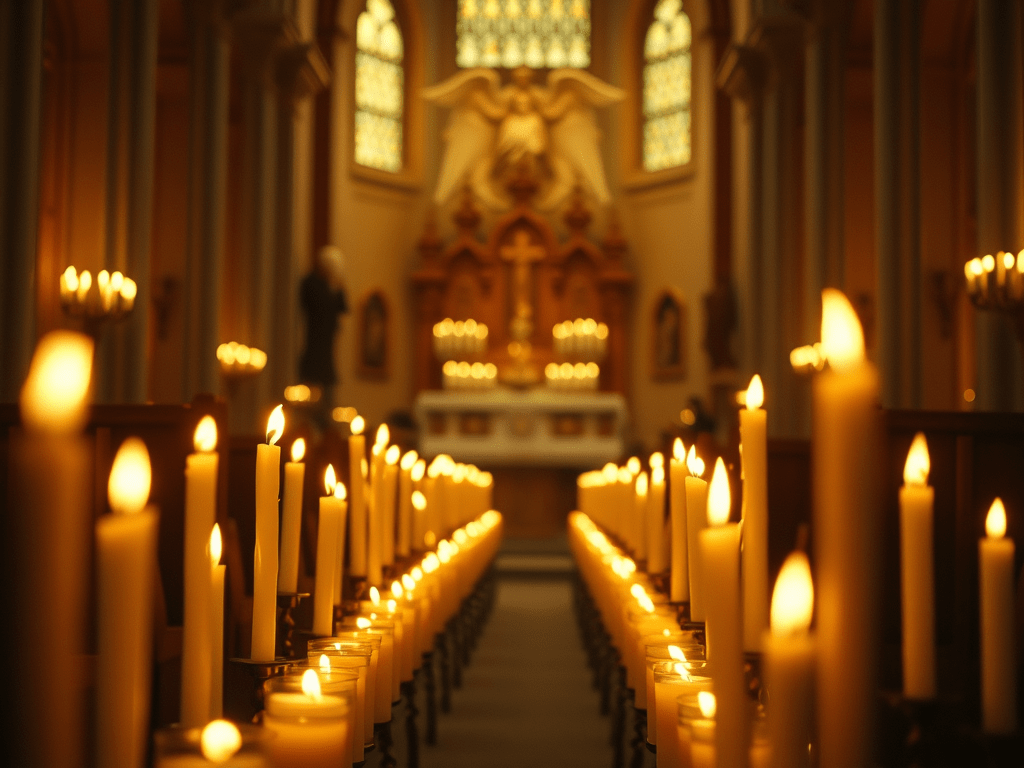
At last, the church loomed out of the darkness. The stained-glass windows glowed, lit by candles burning on the sills and the altar at the east end of the building. The priest stood at the door, greeting the congregation. His white vestments were reflected in the shadows cast by the flickering candles. 

The familiar words of the mass and the Christmas story continued in the background as Leoni drifted in and out of sleep. The pink balloon in all its pristine beauty filled her dreams. It floated over the congregation and alighted on the priest’s head as he began his sermon.

She suddenly awoke at a nudge from her father who handed Leoni a few coins for the collection. As the congregation knelt in prayer, she could hear her father praying for a good harvest, for good health for the humped-back cattle and above all for rain. Leoni felt the sliver of plastic in the pocket of her dress. She begged Jesus to restore the balloon to its original glory. Surely the Christ Child would understand her longing for a pink balloon bobbing on a string, obedient to her every command?

The next morning, as first light broke, Leoni felt inside the pocket of her school, gingham dress. Her fingers extracted the same sad sliver of torn pink plastic. She looked forlornly at the morning sky. The sun already appeared above the horizon, a red eyelid, just opening in the east. As she looked, two birds seemed to fly out from the centre of the rising sun. As they flew westwards, the first pink rays of light struck their wings. They burst into flames, rising from the ashes of yesterday to fly freely into a new day. Leoni heard her mother’s voice behind her. ‘Better than any plastic balloon, the beauty of the wings of the dawn.’

Sarah Das Gupta is an 82 year old, retired English teacher from Cambridge who has taught in UK, India and Tanzania. She lived in Kolkata for some years. Her interests include , the countryside, Medieval History, parish churches and early music. She has had work published in journals and magazines online and in print, in 20 countries, from New Zealand to Kazakhstan. She has recently been nominated for Best of the Net and a Dwarf Star Award.

Spiritual Warfare – a poem by Amy Lee Heinlen

Spiritual Warfare

Between a Christian
flag and an American one
hanging lukewarm from their poles,
stands a wooden altar steadfast
as a donkey. On its blonde back rests
a spiral of ram’s horn, polished
dark and glossy. This shofar
was brought here by Pastor Shakelford
from The Promised Land.
After his fiery sermon, collective
glossolalia hum dilla hum,
praise Him, Pastor Bob’s laying on
of hands to cast out Satan,
folks filter out of their pews
into the modular addition
for coffee, punch, generic
yellow sandwich cookies.
The sanctuary settles, muffled and snug.
Us kids, the only five
in this redeemed congregation,
try to sound it, see who can call God
to our side. Nine years old, I believe
I am called to loose angels, to bind
demons, dilla hum, praise Jesus!
With the hollow horn, hot
and moist with spittle against my lips,
I sound the call. One long flat note
sends ripples through Heaven and Hell.

Amy Lee Heinlen, poet and publisher based in Western Pennsylvania, is the author of All Else Falls to Shadow (Dancing Girl Press). Her poems appear in Literary Mama, Stirring, Rogue Agent, and elsewhere. Heinlen is co-editor of Lefty Blondie Press, an independent publisher promoting poetry by women and non-binary poets.

Why Otters Are Like Flashman – a poem by Liz Kendall

Why Otters Are Like Flashman

Whiskered bravado, swift about-turn;
slink and dive into safe flowing water,
rolling with buxom tides and swells.
The slick fur clinging and covering
the unimaginable skin beneath.
Otter, all play and flash and splash.
Otter, ready and willing to fight and vanish.
Teeth and claws and rudder tail.
Flesh and fish and bones to crunch.
Blood on the grass where the kill was feasted.
Blood on the muzzle made innocent by swimming.
At ease and at leisure, stealing not earning,
never the martyr, always the magdalene,
pouring the oil until emptiness drips;
pouring the oil as a poet pours wine:
abundant, abandoned, flooding the shrine.

Warming the feet of St Cuthbert whose penance
was not the most gentle,
their canniness cherished for one thousand years
as though they had waited to do a good turn,
not to seal their reputation forever.
Watching from grasses in dunes by the shore
(the right place and time always judged to perfection)
they put themselves forwards, onwards and upwards,
(and hide when it suits; dive and go under);
and always a smile and the most wondrous whiskers
of all the wild rogues on the fair English river.


Liz Kendall works as a Shiatsu and massage practitioner and Tai Chi Qigong teacher. Her poetry has been published by Candlestick Press, The Hedgehog Poetry Press, and Mslexia. Liz’s book 'Meet Us and Eat Us: Food plants from around the world’ is co-authored with an artist and ethnobotanist. It explores biodiversity through poetry, prose, and fine art photography. Her website is https://theedgeofthewoods.uk and she is on Twitter/X and Facebook @rowansarered, and on Instagram @meetusandeatus.