The Light in Me
Content Warning: contains brief description of CSA.
Sangha
I feel the heat as I step through the inner door. Even before I roll out my mat, I’m perspiring. I lie down on my mat, following the lead of other participants who are already there. I wonder how on earth I’m going to actually get through a physically challenging practice in this heat.
The class begins. Soft music floats through the air from a small Bluetooth speaker the instructor has set in a corner. I do my best to follow the instructions offered by the soothing voice of the young, dark haired, female, leading the class: arms by my side, palms facing up, legs extended out to each corner of the mat. I try to relax my body. I close my eyes inviting ease to come to my toes, my ankles, up through each leg. I work to relax my pelvis, my abdomen, my back, and my chest. I encourage my shoulders to come down away from my ears, relaxing my throat, my tongue, and my jaw. I notice and release the muscles in my cheeks, behind each eye, through my forehead, and in my scalp. Around me, through soft eyes, I notice the filtered pink glow of the Himalayan salt rock walls. Closing my eyes, I feel the peace of that soft light fill my mind, my body and my soul.
The class continues with some gentle stretching and poses that are familiar from my video sessions; Child’s Pose, Happy Baby, Downward Dog, Low Lunge. We come up to standing. I sweep my arms up over my head, take a deep breath in, looking up towards the sky, and exhale as I fold forward, into myself, looking deep into my core, the essence of my true being. We move into Sun Salutations and the pace picks up. Then the Warrior Poses, I, II, and III, Extended Side Angle, Revolved Side Angle. Finally – the peak pose: Half Moon.
This is a challenging class. Sweat pours from my forehead, pools between my breasts, streams down my belly, and my back, but I make it through. Finally, the instructor slows us down, guiding the class through some gentle stretching: Butterfly pose, Lord of the Half Fish twist, a supine twist, which led to a glorious and well-earned Savasana.
We lie on our backs, feet and legs falling open, arms by our side, palms facing up, eyes closed. “Allow your practice to integrate,” says the young instructor, “let go of thoughts, let go of ‘to do’ lists. That will all be there for you after the class is over. For now, just be with your breath.”
I feel the other students around me. I hear their breath; long quiet inhales – breathing in peace; long extended exhales. Breath that fills the room with a softness, a gentle trust that melds this room of individuals together, seeming to provide a oneness that maintains identity, yet offers unity. The breath of these people I barely know, yet in this moment, I feel a profound connection to, fills the room with a silence so deep, I am wrapped and swaddled in comfort.
Lying there I am physically drained, yet I want more. I want to do it again. This is a comfort that I have not felt, ever before, but know I want to feel again, and again. This comfort brings a clarity of mind, a softness of heart, and a wholeness of soul. I would like to stay here forever, but all too quickly back come the relentless thoughts; “I am not enough, I will never amount to anything, I don’t know what I’m doing, I’m a pretender, a faker, a lost cause.”
Yet another voice, quieter, deeper inside that I have to listen for intently, says, “Keep trying, don’t give up. Follow your heart, there’s more for you in this life, and you deserve to have it. Keep practicing, keep learning. This can help. Yoga can help.” I haven’t heard this voice before. The serenity that the practice has awakened in me seems to have given me the ability to quiet the negative natter and give rise to something more positive.
“Begin to wiggle your fingers and wiggle your toes. Make circles with your ankles and your wrists,” the instructor pauses, giving us time to make those tiny movements. After a few moments she continues on, “Pull your knees into to your chest, and rock from side to side. When you are ready, come up to sitting.”
Slowly, people begin to sit up. Some rolling to their right side, assuming a fetal position before pressing themselves upright. Others rock and roll forward, up and into Sukhasana. I take my time, rolling over to one side, finally sitting up, crossed legged.
Sitting on her own mat at the front of the class, the instructor faces us. She stretches her arms out to each side and says, “Inhale as you reach your arms up over your head.” We follow her direction. “Exhale as you bring your hands down to heart centre.” She brings her hands down in front of her heart in a prayer gesture and the class follows her lead. Bowing her head, she says, “The light in me sees and honours the light in you. Namaste.”
The Rosswyne
I grew up in a family of four. My father was a high school teacher. He taught English and History. Before I was born he was hired as principal of a small high school in Orono, Ontario. That’s where I was born, in July of 1956. My mother graduated from the University of Toronto with a degree in social work. She worked in that role for a few years, but with various moves for my father’s teaching career, I think she quickly fell into the role of housewife. I also think that is probably the way my father wanted things to be: he was the breadwinner, king of his castle, the male peacock strutting his bold feathered plumage. My brother was born when I turned seven.
We had a cruiser when I was little. It slept the three of us, my mother, my father, and me. It probably would have allowed for at least one more person, if not two, but we rarely had visitors. Looking back, I see that friends and even other family members were kept at arm’s length. We didn’t have overnight visitors and the atmosphere when we had visitors for a few hours was very prim and proper – everything in its place. My brother and I, once he was born and grew older, were expected to be on our best behaviour. We were the children of a high school principal, after all. No hanky-panky for us.
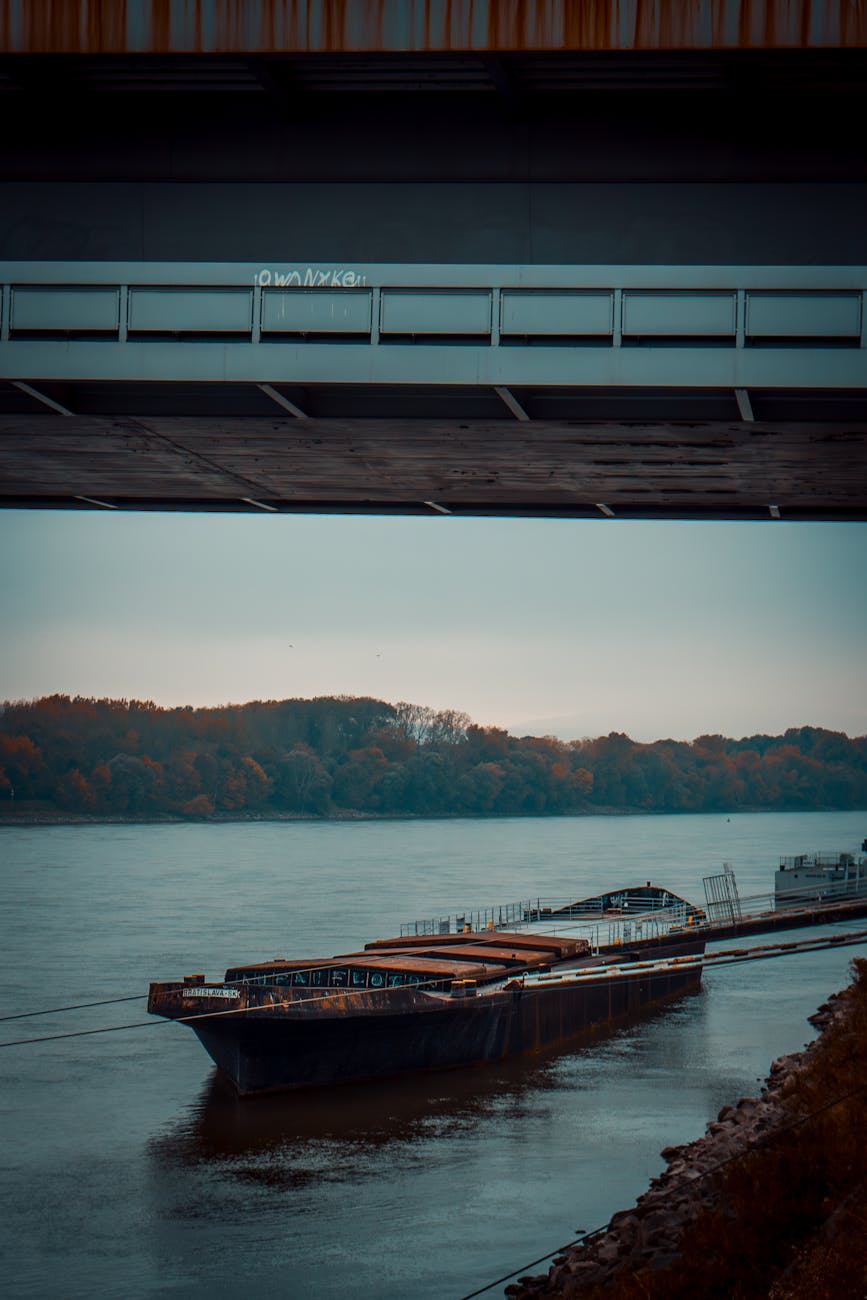
We docked the cruiser at Gore’s Landing, Harris’ Marina. Our boat, the Rosswyne, was our summer vacation home on water. We travelled the Trent Water system in her, staying overnight in places like Peterborough, Bobcaygeon and Fenelon Falls.
I don’t recall when my parents first purchased that boat. Did they get it after I was born, or was it already a part of their lives when I entered the scene? I don’t know.
My First Memory of Abuse
There’s a window in front of the Captain’s seat in our big boat. Under the window is a shelf I am sitting on. I like to sit up on the shelf. I can see out the big window. Today it’s a lot of fun to sit up here because Mommy is washing the drapes. There are hooks that slide on the track. I’m pushing them back and forth on the track and I like how they slide from one side to the other.
It’s warm today and Daddy has stopped the boat out in the middle of the big lake. I don’t have a diaper on because Mommy wants me to pee in the potty. Mommy is down inside the boat making me and Daddy sandwiches for lunch. Daddy is sitting in his Captain’s chair. I’m pushing the hooks back and forth, laughing, but something makes me stop. I feel rubbing between my legs, where I go pee-pee.. It’s a funny feeling. I guess I kind of like the feeling, but I don’t know why. I turn and look back at Daddy. He has his hand between my legs. He smiles at me and puts his finger up to his mouth, “Shh.”
I turn back and keep sliding the hooks. I don’t like this feeling anymore.
Learning Self-Love – Ahimsa
As I look back over my life, I see the path I have taken to get to where I am today. That path continues to evolve as it unfurls ahead of me. I can see that there is still plenty of path ahead. And in it lie twists and turns, rocks and boulders, valleys and mountains to climb, but I realize now that I must take this journey one step at a time, feeling each foot as it sinks into the earth, heel to toe, heel to toe.
As I immersed myself in the practice of yoga and began to teach it, I wanted to know more about the centuries old tradition of spiritual health. Slowly, I started to gather and digest information; reading books, articles, searching the internet. I had only touched on the eight limbs of yoga in my yoga instructor certification, and had not realized the importance of bringing the practices and philosophy into my life. There is so much more to yoga than first meets the eye.
The very foundation of yoga philosophy is the first yama, ‘ahimsa’, translated as nonviolence. Even more precisely, it means, do no harm. Do no harm towards others, no harm towards nature, and first and foremost – do no harm towards yourself. You cannot be kind and caring, loving and nurturing towards others, until you can be all of those things towards yourself. I was anything but kind, caring, nurturing, and non-violent towards myself.
It was during the pandemic that I slowly began to realize the self-harm I was doing. This slow process began when I first started to talk about my drinking habit with the therapist I was seeing at that time. She had suggestions such as, “Just throw out all the booze in your home.”
I couldn’t do that, but I knew she had a point. I did it my way. The process was slow. That process wound its way through three years, and even today, it continues. Sometimes along the journey, the process would stop to take a break. My drinking would increase again, and then the process would heave a huge sigh, and say, “okay, get on your way again”, and I would cut back further. Currently, I rarely have a glass of wine, and when I do, it is one glass, and a small glass at that. Otherwise, I start to feel the numbing effect of the alcohol begin to wash through my blood. It is a warmth, a tingling, and a buzz that starts to creep in to my muscles, invading my soul, clouding my brain, and stealing my ability to see life with clarity.
The self-compassion I am learning to give myself began on my yoga mat. It began as instructors encouraged loving kindness during the class, “Every day is different. One day a pose may be easy, another day, impossible to do. Some days balance may be excellent, other days, you may not have balance to save your soul. There may be times when you feel strong enough to do one-hundred chaturangas. At other times you find your strength only in Savasana. Know that change is the only constant in this world. There is no ‘perfect’, there is only practice.”
So here I am, still practicing today. Finding new ways to be kind, loving, and generous, towards myself, which allows me to show compassion towards others, bringing non-violence into my life, and theirs. Finding the light in me, where I could never find it before.
Roxanna Gumiela is a grandmother, mother, wife, and in retirement, a trauma informed yoga instructor, and writer. Before retiring Roxanna worked in the field of early childhood education and family social services. She is a survivor of childhood sexual abuse, and writes about her journey to wellness which incorporates the practice of yoga and mental health therapy.

 Amethyst Review