Poem to Be Read If It’s Night Where and When You Are Right Now – a poem by Matt Zambito

Poem to Be Read If It’s Night Where and When You Are Right Now


My advice? Stay up later: it’s not late enough
unless the moment feels—with a tiny twinge
of fight-or-flight-or-freeze—too dangerous
for wakefulness, unless you get a sudden shiver

energizing along your nerves, a shocking
bolt of electro-jolt realizing what concocted
hour, minute, second you find yourself in since
units measuring moments are human made,

are totally tied to our far-out Sun-revolving rock,
are relative to each earthling, so no one tells
the same time as another. When it’s then, go
outside and stare up at the Moon (or the place

in the sky where it should be) beside intergalactic
spangles, and count your lucky stars, and hold
your breath, and take a blink of comfort, aware
you’ll need to give our Cosmos comfort in return.


Matt Zambito is the author of The Fantastic Congress of Oddities (Cherry Grove Collections), and two chapbooks, Guy Talk and Checks & Balances (Finishing Line Press). Other poems have appeared in Poetry International, North American Review, Writers Without Borders, and elsewhere. Originally from Niagara Falls, he has lived in Ohio, Idaho, and Washington. He now writes from Wilson, New York.

Pinhole Chapel – a poem by David A. Lee

Pinhole Chapel

I make a chapel of the pupil:
a round nave where light kneels
through a pinhole, contrite and clear.
The slit lamp hums its psalm,
fluorescein flares like incense
on the corneal altar.

A child’s eye opens, a stained glass rose:
green shard, gold flicker,
a moving parable of sight.
The retina waits, patient and merciful,
to turn radiance into record,
illumination into proof.

There is confession in the flash:
the cataract’s slow surrender,
a scar’s pale Amen.
Outside, the hospital hums like choir practice;
inside, a single pulse translates light to vision,
vision to memory, memory to grace.

When I step back, gloves powdered with light,
the child blinks, astonished by color:
a face, a wall, a blue coat,
the world restored by filament and faith.
I close the instrument, whisper thanks
to the small, unwavering cathedral
that lives inside us all.

David A. Lee is physician and an emerging poet based in Houston, Texas, whose work explores memory, human connection, and the liminal spaces between perception and reality. He holds a background in medical science and philosophy, bringing a reflective and inquisitive lens to his writing. His poetry draws inspiration from both contemporary and classical literature, emphasizing vivid imagery and emotional depth. His poems are forthcoming in Mobius, Eunoia Review, and Unbroken Journal. David is currently developing a collection of original poems examining time, identity, and place.

Palmetto Bluff – a poem by Keith Melton

Palmetto Bluff

Dragonflies above the path, the alligator, and gar
loitering beneath the bridge
their bellies longing for prey.
Side by side, piece by piece; this harvest of land

that begs to be seen, the mighty oak
and cypress, tupelo, and pine
a cathedral of silver shadows, shimmering
in dewy sunlight. The reach of men to factor

in the wealth of nature’s story; the glories of God
where falcons climb, and eagles soar
and naturalists speak of sightings--
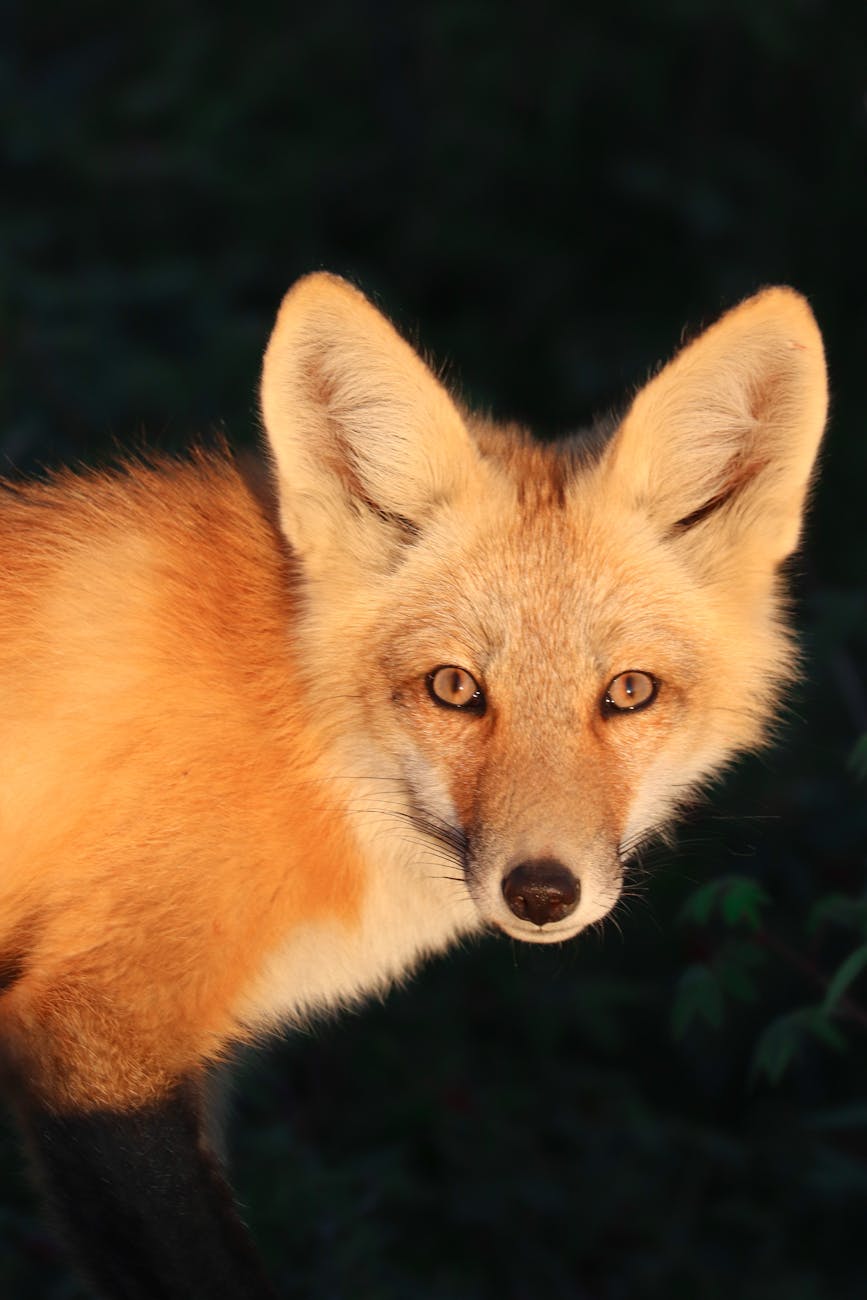
the timber rattler and beaver; the red fox

the chalk board lectures a kind of fantasy.
And lurking in the distance, in the far waters
of Daufuskie and Buck islands
the evergreen dreams of youth survive in the shadows.

No cars allowed. Eons of sediment, the ruins of settlers
in tabby, and stone; oyster shells in the muck
the countless insects, a mob of
no see-ums, and hummingbirds quick as light.

Swallow, and gull, pelicans, and eagles
dolphins in the tides, deer mingling at dusk;
the marsh trembling with shrimp, and bass.
The lost and forgotten towns, in the quarry of time;

the pillars of ancients, long quieted
yet, somehow speaking from the ground.
The Cree and Cherokee and their African brothers
the whisper of sudden spirits, in the trees, still alive.


Keith Melton holds a Master’s in City Planning from Georgia Tech and a BA in Economics and International Studies from the American University. His work has appeared in Amethyst Review, Agape Review, Big City Lit, Compass Rose, Confrontation, Cosmic Daffodil, The Galway Review, The Lyric, Kansas Quarterly, The Miscellany, Monterey Poetry Review and others.

Basho’s Temple Bells – a poem by John Whitney Steele

Basho’s Temple Bells

Temple bells die out.
Fragrant blossoms remain.
A perfect evening.
—Basho

Long ago in some forgotten temple
where time is measured by the tide, the bells
keep chiming, chiming: die before you die,
before the tide, the final tide, goes out.

The orchards on the temple grounds so fragrant,
year in year out, until one spring no blossoms.
Memories, memories, only they remain.
What was that fragrance? It started with an a—

Memories fade—but now, this now is perfect.
Acacia blossoms! Déjà vu—this evening.

John Whitney Steele is a psychologist, yoga teacher, assistant editor of Think: A Journal of Poetry, Fiction and Essays, and graduate of the MFA Poetry Program at Western Colorado University. A Pushcart Prize nominee, his poems have been published widely. His two collections, The Stones Keep Watch, and Shiva’s Dance, were published by Kelsay Books. John lives in Colorado and enjoys hiking in the mountains.

Keepsakes – a poem by Jennifer Susan Smith

Keepsakes

in Fibonacci sequence

Kept
shells
gathered
in Gulf Shores
rise from my nightstand
mist squallish dreams in saltwater.
As hailstones pelt my window pane, I taste ocean spray,
ebb to decades ago sea coast;
the loon we rescued
is airborne
in flight,
soars
free.

Jennifer Susan Smith, a retired speech-language pathologist, resides in Rock Spring, Georgia. Her work appears in The Mildred Haun Review, Appalachia Bare, Troublesome Rising Digital Anthology 2025 Collection, and Sunflowers Rising: Poems for Peace Anthology, among others. She holds membership in Chattanooga Writers’ Guild, Poetry Society of Tennessee, and Georgia Poetry Society, and serves as chairman of Alpha Delta Kappa Pages and Pearls Book Club. Jennifer earned a Master of Science Degree in Communicative Disorders from University of Alabama, an Educational Specialist Degree in Curriculum and Instruction from Lincoln Memorial University, and a Creative Writing Certificate from Kennesaw State University.

How to Endure These Dark Times – a poem by Diana Woodcock

How to Endure These Dark Times


Because the birth of this Earth
is nothing more nor less than miraculous,
I’ve placed a pot of red impatiens
on the deck next to the red feeder
full of sugar water—both for the Ruby-

throated hummers who spend summers
here with me. For the Downy wood-
peckers and wrens, I’ve inserted
a suet cake into the wire basket.
And for the finches, I’ve hung up

a thistle sock on one buddleia limb.
Now I wait, anticipate
their arrival, praying for everyone’s
safe passage and survival.

Beyond the realities of climate
crisis, genocide, ongoing
colonialism, political
division, I make the decision
to celebrate my sense of kinship

with all that exists.
This is how to endure
these dark times:
Focus on one Yellow-shafted
Flicker pecking about

on the lawn. Before long,
you’ll forget everything else
as you watch him/her grazing
and finding just enough
sustenance for her existence.

As for my own,
only when I glimpse
life’s sacredness revealed in
non-human creatures, do I
sense the Creator’s presence,

and ascend into the hill
of the Lord to be absorbed
by His/Her holiness as I witness
one tiny Blue worshipping
at the honeysuckle.

Diana Woodcock has authored seven poetry collections, most recently Reverent Flora ~ The Arabian Desert’s Botanical Bounty (Shanti Arts, 2025), Heaven Underfoot (2022 Codhill Press Poetry Award), Holy Sparks (2020 Paraclete Press Poetry Award finalist), and Facing Aridity (2020 Prism Prize for Climate Literature finalist). A three-time Pushcart Prize nominee, she received the 2011 Vernice Quebodeaux Poetry Prize for Women for her debut collection, Swaying on the Elephant’s Shoulders. Currently teaching at VCUarts Qatar, she holds a PhD in Creative Writing from Lancaster University, where she researched poetry’s role in the search for an environmental ethic.

Wildfire Sky – a poem by Kimberly Beck

Wildfire Sky

I probably shouldn’t be
out in this storm of
smoke and ash, probably
shouldn’t be on this paved trail as it follows
softly the curve
of that ribbon, the gray river shining beneath
a mirror of wildfires and
cinder.

But where would I be without this place?
I pause on the shore to watch
as the mallards fly past, their
collective portrait a collage
of emerald, and pine, and
falling rain.

And behind me, a raven lifts from the pale hands
of an aspen tree, his wings leaving trails of ink
across the sky in a crosshatch pattern of
parchment and fountain pen.

I probably shouldn’t
be out here, I know, but
give me just a few minutes more
to listen for You.

Kimberly Beck is a poet from Washington State. She can often be found at a local therapy ranch, caring for a very special herd of Norwegian Fjord Horses. Her work has appeared in Solid Food Press, Ekstasis Magazine, The Penwood Review, Clayjar Review, and more. She is also the author of a poetry collection called Chiaroscuro.

Egyptian Priest Watches the Desert – a poem by Patricia Nelson

Egyptian Priest Watches the Desert

I see what the gods have meted out
and feel a longing,
a thirst that opens like a leaf

to all the sunken things that ripple
in this hot, white shimmer.
The unquiet harp of the sand,

its peaks so beveled that
they blow in grains around me.
The ending of a mountain, edgewise on my skin.

In the sky the lighted objects roll,
leave on the ground their different darknesses.
The canted shapes I use to measure

the many sizes of time.
Then I don't regret the smallness
I am made of, or the unlevel gods.

Patricia Nelson writes Neo Modernist poetry from the San Francisco Bay Area, USA. Her new book, Monster Monologues, is recently out from Fernwood Press.

The Cactus – a poem by Theodore Davis

The Cactus

To continue down this road would doom me
to untraveled, barren land without end,
but as long as I’m longing, I can breathe
with the engine and the joy that’s behind
me, like exhaust. The road becomes unpaved
onward on. This journey is for the saints
in their sleep, in their rest, till they’re awake.
My poor ride glugs and chugs, a reprobate,
driving while I’m burnt by tears hardening
on the dash, for I can love an object,
like I love the cactus still sharpening
on the shoulder of the last sacrament.
By now our broken city yearns for salt
that we sprinkled on it, raw and felt.

Theodore Davis is a poet and musician from Des Moines, Iowa whose work explores how formal meter can swing. His poetry has appeared in Ink Lit Mag and The Limestone Review.

The Bridge of Believing – a poem by Dolo Diaz

The Bridge of Believing

At first belief is a thick cotton cloud
opaque with tenderness, soft throughout.

Certainty is a heavy stone,
weighing down the plow,
helping dig the soil,
dragging the blade down.

But the in between is a bridge
where you stand
gently pulling threads of cotton
from the cloud,
contemplating the ponderous stone
that gathers weight on the other side.

The in between is something
to behold and to cradle,
something even more sacred
than the thick, tender cloud.

Dolo Diaz is a scientist and poet with roots in Spain, currently residing in California. Her work has appeared or is forthcoming in SLANT, The Summerset Review, ONE ART, Third Wednesday, Rogue Agent, among others. Her debut chapbook, Defiant Devotion, was published by Bottlecap Press. You can find some of her published work at: dolodiaz.com.