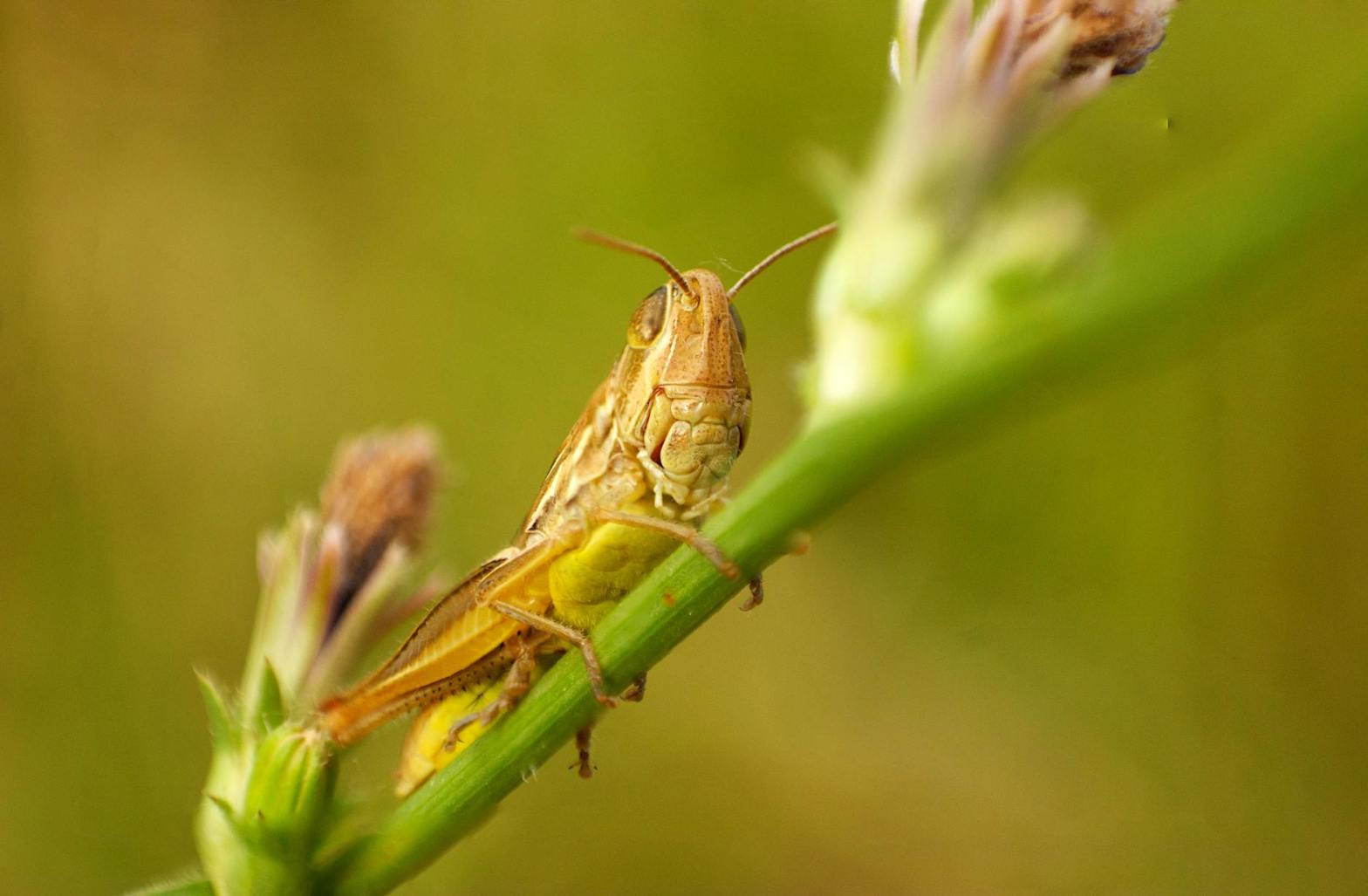
Scribbles, day’s preface engraved in air when it’s just beginning to get light
first thing, gossiping over the garden wall – talking to us in voices
we pay attention to can’t help ourselves never fully understand
Jeff Skinner’s poems have been published in anthologies and in many journals, most recently or forthcoming in Allegro, Ink, Sweat and Tears, Paperboats . He was commended in the last Sonnet or Not competition. He volunteers at his local food bank and in an Oxfam bookshop, listens to music, watches football, reads, writes.
You have been wheeled to a table and you speak a complete sentence when you see me, “Our relationship is deep.” I nod and say, “Yes.” This is a fine start to any day but I notice you’re not wearing your glasses, so after wheeling you to a place where we can hear ourselves talk I return to your room to find them but can’t. Also, I’ve noticed that no one has brushed your teeth again this morning. I walk out to administration and leave a message for the director. Every day it’s glasses or you’re dressed in someone else’s clothes or that you need to be changed and you’ve only gotten up. But I calm down and I try to get you to sip a cappuccino I brought. You dribble as you drink and I need to dab your long-sleeved red t-shirt. Breakfast is late but we make do by my telling you about the handyman that’s coming to fix the front door glass door handle later this morning. You are intrigued since you have always loved the way light plays with the facets of those cut glass handles. When the doors are opened to the dining area, I wheel you to our table by the window, point out new blossoms that opened, new leaves unfurling on branches of trees.
Wally Swist’s new books include Aperture (Kelsay Books), poems regarding caregiving his spouse through Alzheimer’s, and If You’re the Dreamer, I’m the Dream: Selected Translations from Rilke’s Book of Hours (Finishing Line Press). Poems, essays, and translations have appeared in Chicago Quarterly Review, Commonweal, Healing Muse, North American Review, Other Journal, Rattle, and Your Impossible Voice. Huang Po and the Dimensions of Love (Southern Illinois University Press, 2012) was co-winner of the 2011 Crab Orchard Open Poetry Competition. He was also the winner of the Ex Ophidia Press Poetry Prize in 2018 for ‘A Bird Who Seems to Know Me’.
I offer it up. Yes, I offer the fibrous red meat, the flakes of species older than the humankind, the milk of what’s holy and unholy, to this altar. I gouge out a part of my soul and hold it up to you. A glistening nimbus of spirit in a decanter glazed with blood. It rots. The darkness of existence overflows and drips on my bare foot. It crawls. It grows. It grows. It rises. It floods this temple like a tsunami and it washes over me. The door is sealed shut. No one gets out. Not even me.
I say my prayers with black tides up to my chest. I have not drowned, not yet. Sunlight escapes into this cold chamber through gilded foliage. It blinds me, although my eyes are closed. I recite psalms written by no one to placate the grumbles in my cleaved soul. I wade the waters for that golden apple, that staff atop the altar. Psalms become bubbles, breaths become suffocation, but my hands are firm. So close, so unreachable. Is it water, or is it a holy relic? In a stupor, I hear oratorios, storms, chewing, birds, bell tolls. I wake up in orange blossoms.
Molly (Siyu) Chen is a student at Wellesley College and an alumna of Interlochen Arts Academy and the Kenyon Young Writers Workshop. Her work has previously been published in The Wellesley Review and by TABLOID Press. She has been recognized by the Alliance for Young Artists & Writers and Write the World.
Play always as if in the presence of a master or mistress. So said Schumann. Reflecting on this, said Isserlis, we would not then drift off and dream as we played or check email and other things.
So my advice? Forget the concern that you express. Do your best to compose or paint or dance, ink your thoughts or touch the keys, start with the song within your mind or upon the score, don’t stop to spend one second more on war and famine and death in store for all of us.
Play now as if in the presence of your god or goddess, maestro or maestra, no more, but certainly, no less!
_______ *Inspired by Steven Isserlis in Robert Schumann’s Advice to Young Musicians Revisited by Steven Isserlis. Isserlis is a renowned concert cellist and author.
Ann Grogan is a late-life pianophile, newbie poet, and retired attorney. Her work promotes the unequivocal permission to pursue one’s passions at any age, including her beloved music. With humor and thoughtfulness she often reflects on her struggles to relearn to play the piano, and support for the suppressed voices and experiences of women. When not practicing her piano or writing poetry and her blog, she volunteers at Planned Parenthood or engages in community activism. She is the author of two volumes of poetry, Poetical Musings on Pianos, Music & Life, and resides in San Francisco, California.
We are the center and the surrounding. We look out at eyes looking back at us. If we find the center, casting out her radius, like a magic wand, we can trace the shape. Gods and demons dance together. Eyes look at us looking back at them. In the hub of the spinning wheel, lies one eye, blinking slowly. Demons and gods seek one pleasure. The void inside the vortex is full of space. In the hub of the spinning wheel, lies one eye, closed and open. The swirling abyss draws us within. The void inside the vortex yawns with life. We are born inside a palace inside a palace. Always at rest, the abyss draws us into our origin. White and black, blue and red, yellow and green are swept together into the gray of distance. Briefly we dwell within a palace within a palace. We chant mantras while we are carried to the river. Purity and death, healing and desire, humility and harmony are swept together into the gray of silence. As we enter the center, casting out her radius, like an invisible wand, we follow the path of the eternal way. We chant mantras as we are poured into the water. We are the surrounding and the center.
Jacob Friesenhahn teaches Religious Studies and Philosophy at Our Lady of the Lake University in San Antonio. His first book of poems is The Prayer of the Mantis from Kelsay Books.
Please join me (Editor Sarah) for a free writing hour via Zoom on Thursdays (6-7pm UK time). Work on your own project in companionable quiet, with optional chat at the end. Starts this coming Thursday October 16th. More details and book a place at Amethyst Review’s Eventbrite Page. Sign up and drop in week by week.
Editor Sarah has thought about offering these for a while, mainly because she so enjoyed the online gatherings for the launches of the All Shall Be Well and Thin Places & Sacred Spaces anthologies! They will be weekly on Thursdays until December 18th, resuming in 2026, and always free.
(For those interested, I am also offering a weekly online Amethyst Review Workshop with literary extracts, discussions and writing prompts at a small charge – these will be on Tuesdays, starting October 21st. More details to come, and for a forthcoming online retreat with the Friends of Julian of Norwich!)
After a painting by Mateo Pérez de Alesio, 1590 Oil on wood panel 33 x 44 cm Fundación Pedro y Angélica de Osma Lima, Perú
1. The woman’s hooded eyes slope downward from within a dark context—a whisper of gauze veils the clarity of her vision.
She coils her attention around the infant form. He, unperturbed, meets our gaze and reaches confidently for the breast.
2. I drift in warm pools of parallax. The baby, there, beside me peaceful and solid like an oak panel. My mind wraps itself in black silk, the voices, receded— as if to seek their sustenance elsewhere.
3. The woman in the picture exposes her left breast, its flesh still micaceous and smooth, and strings the nipple like an arrow in its bow.
The child lays his hands on her as upon a bowl of raw clay shaping its supple essence to the curving form of his palms.
4. When I used the pump to try to increase my supply, I often suffered. I needed the warm water from the shower and urgent massages to loosen the frequent clogs. I worked and squeezed through the burning pain until I could see the bulging duct—the culprit, like an enemy erupting from deep within my chest. I thought I needed strawshard to pierce the disturbance. But then I would summon the latch and burst flesh between my fingers into a thin stream of relief, draining two days’ worth of trapped milk, a wing blooming in the wrong direction.
5. The painter prepares the surface first, planing, sanding, burnishing. And then layers the thin skins of gesso—the sticky essence of the earth— marble dust, water, and hide glue. After it dries, he conjures form: a young mother and her infant son.
They bloom in rosy gradients of azuritas, cal viva, bermellones, oropimente, albayalde, and cochinilla.
Then he clothes the pigments with the textures of time.
6. These are the intimacies of art, that they may pollinate your good health.
7. Once the conditions were met, the iconography secured, the earth mined open, I held your raw church like a jaw and her myth boiled through me becoming meadow, a blue basin of stone, a ripe cloud approaching to quench the depths of your system.
Sonya Wohletz is a writer whose work brings together image, history, and landscapes. Her work has appeared in Latin American Literary Review, Revolute, Roanoke Review, and others. Her first collection of poetry, One Row After/Bir Sira Sonra, was published by First Matter Press in 2022. She is a Pushcart Prize nominee.
At the west end, the limestone bluff is worn with worship, a millennium of feet drawn together towards towers ever collapsing and rebuilt from fire and flood and lightning strike.
Desire paths trace the snow mechanical erosion of our feet, reminders that they did not build this place for the likes of us.
Inside, the Deans’ Eye bathes us pallid blue and grey. The glass is old, Medieval so they say
It reminds me Of Wanuskewin, close to Saskatoon, Not the Visitors Centre, that can wait, The Buffalo Stone—
Look towards the east, And you won’t touch the earth again until You get to Russia.
—Worn down with pleasure of ten thousand itches scratched, now silent on the Bald Ass Prairie. Fuzzymandias.
When it reaches a certain age the glass Begins to sink. Clamped in a cage to stall Its slow descent.
“Don’t get too comfortable All of your stuff must fit a banker’s box”
Past the bones of St Hugh (what’s left of him) You’d be hard-pressed to miss the Imp. Standing petrified on the north side of the choir.
The snow crusts hard here, so that one alone Can never make much of an impression. But each time April (with his showers sweet) Melts the ice, turning desire trails to mud The northern prarie bears a medicine wheel.
Yet still the Imp remains. Forever set in stone and frozen by his choice. Now singled out with a new a spotlight
—For the tourists.
Ben Blyth writes from Treaty 7 Territory, where he works as an Adjunct Assistant Professor of English. He earned his Ph.D. at the University of Calgary in 2024. His poetry explores the sublime/mundane, pastoral/urban, tenderness/ brutality, and present/past; with a keen sense of form and an eye for striking imagery. Blyth’s work plays with nationality. liminality, and uncertainty in a fresh and poignant way.
The sun peeks through a gray wool sky like a shutter opening in a camera.
There’s a sense of something bright behind the cloud cover, something worth standing in place until my breath returns.
Swallowed beneath, all I want is the chance to keep staring at the light pouring through a single hole in a darkening sky.
Jacqueline Jules is the author of Manna in the Morning (Kelsay Books, 2021), Itzhak Perlman’s Broken String, winner of the 2016 Helen Kay Chapbook Prize from Evening Street Press, and Smoke at the Pentagon: Poems to Remember (Bushel & Peck, 2023). Her poetry has appeared in over 100 publications. Visit her online at http://www.jacquelinejules.com.
The Catholic-born Buddhist Recounts Visiting Angkor Wat
Exhausted from the long flight, we rise early. We sigh when we finally see the abbey. Time has stopped, leaving us frozen in a pocket.
The monks go about their business. They don’t pay attention to the tourists–even the faithful.
We each struggle in this finely-made net. This morning, an egg-white omelet. No begging bowl for me. The paper cut from my last day before leaving New York City throbs in time with my pulse.
I traded the God of my youth for Buddha, and yet believe I should cross myself in this sacred space.
Lynne Kemen’s full-length book of poetry, Shoes for Lucy, was published by SCE Press in 2023. Woodland Arts Editions published her chapbook, More Than a Handful, in 2020. Her work is anthologized in The Memory Palace: an ekphrastic anthology (Ekphrastic Editions, 2024), Seeing Things and Seeing Things 2 (Woodland Arts, 2020 and 2024). Lynne is President of the Board of Bright Hill Press and has served on many other not-for-profit boards. She is an Editor and Interviewer for Blue Mountain Review. She is a nominee for a Pushcart Prize (2024).