
Rapture – a poem by Connor Patrick Wood

Rapture

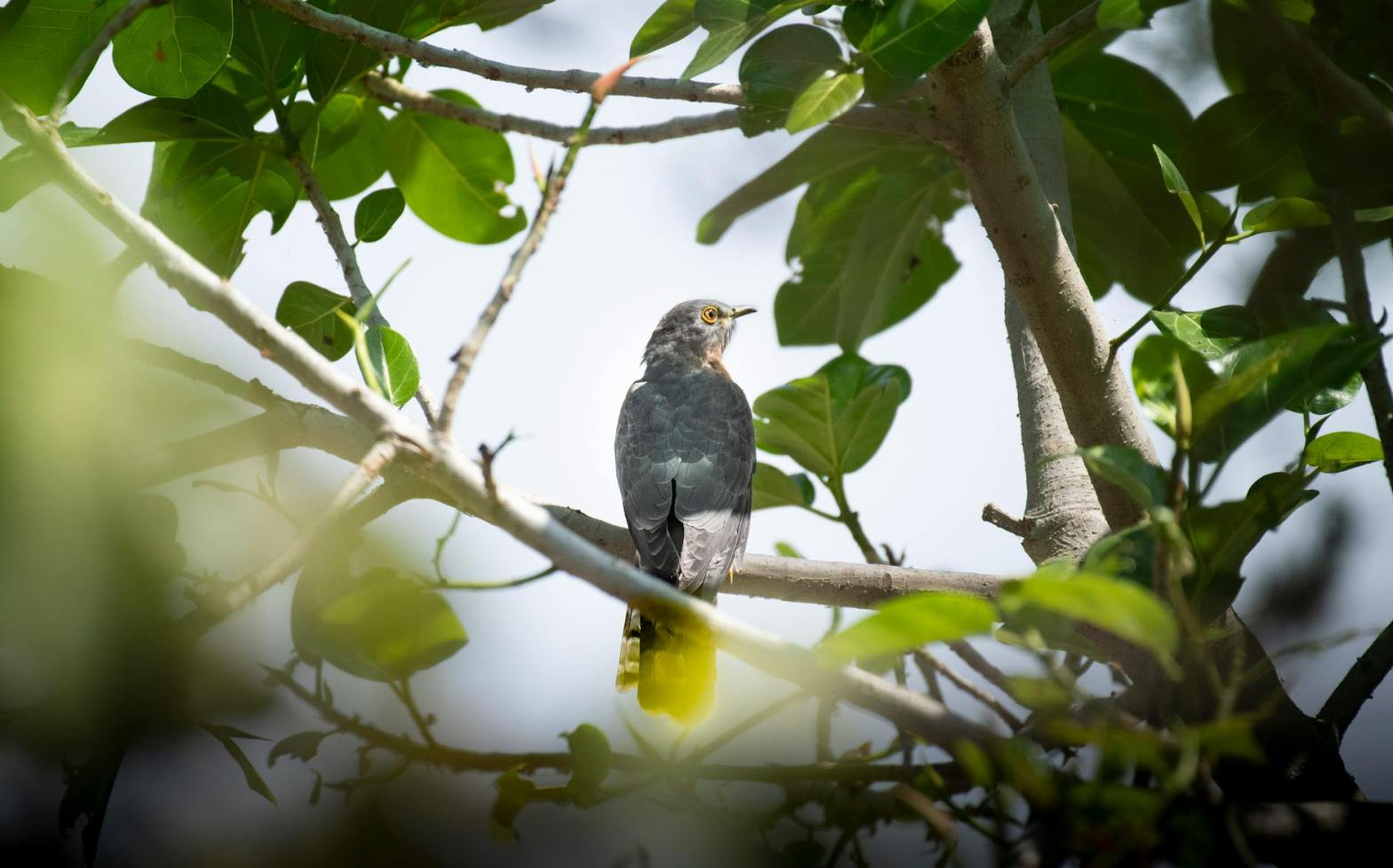
In feather and in fury | fly the vicious
Eagle, entrance | end the warp,
Forth sunder | in small sun
Like beaded beauty | better than grasp
Talon-tightly | torque and tear;
Ah, small thing | thence you blossom
Stark and crimson | creature like a bloom.
Greatly grasses | gripe them short,
Flurry sudden | such small
Violence, not vengeance. | Vitality in burn,
No time, no time at all | terribly you learn
What learnéd lesson | leases not escape
But dances, dances | down so dim
Ages, and accounts | awfully seeded
Thy ledger lieth not, | look: empty
Stand its lines. | Lack my beastie
Nothing now, | never treasure
Green grass | that groweth more.
Aloft ascend, | alight in transform —
Now sightless citizen | of stranger shore.

Connor Patrick Wood is a poet and Substacker (https://cultureuncurled.substack.com) in Arlington, Massachusetts. He holds a BA in creative writing from the University of Wisconsin-Madison and a PhD in religion and science from Boston University. Before he left academia, Connor’s research on the cognitive science of ritual was funded by the John Templeton Foundation. He has published poetry at the Rabbit Room Substack, Ekstasis, and elsewhere.

celebrate – a poem by Amrita Skye Blaine

celebrate

this cloud billows
once, in all of time
the corkscrew willow
bending—the curve
a grace, a prayer

how the leopard
bears whisker spots
these rosettes
their fingerprint
and the baby’s
cowlick at his nape

all of us, called—
how precise we are
each one unique
every one required

Amrita Skye Blaine develops themes of aging, disability, and spiritual awakening. She received an MFA in Creative Writing from Antioch University in 2003. She has published a memoir and a three-novel trilogy. Blaine has been writing poetry steadily since she turned seventy. Her poems have been accepted by Braided Way Magazine, The Penwood Review, Delta Poetry Review, the New English Review, Soul Forte, and Chiron Review. Her first book of poetry, every riven thing, has been accepted for publication by Finishing Line Press and will come out mid-2025.

lessons from a peach – a poem by Shelina Gorain

lessons from a peach

let the woody kernel bleed its pigment
into your flesh

ripening can be savoured
but not rushed

when it’s time, let your body fall away
with an ease that calls forth
celestial juice

delight in this fleeting season
then crawl into dark grooves
like an ant searching sweetness

hold the seed
in the palm of your soil
nourish it

Shelina Gorain is a former software professional, a balcony gardener and a knitter. She writes from Toronto.

Come Sit with Me – a poem by Michael J. LaFrancis

Come Sit with Me

When my small blue flame
was barely flickering,
still in the wind of adversity,
you came to visit me.
Without any words of advice,
you kept vigil, still believing
as doubt and fear were busy
building their nest, chirping away.
There is something to be said
for just sitting quietly, our hearts
breathing to the same rhythm,
it can be the best prayer offering
You may be wondering how
something that seems so small
can mean the world to me.


Michael J. LaFrancis is a trusted advisor, advocate, author and connector supporting individuals, groups and organizations aligning purpose and capabilities in service of their highest ideals. Writing poetry is a contemplative practice providing him with insight and inspiration for living a creative life. His poems are also appearing in Amethyst Review, Avalon Review, City Key, Mocking Owl, One Art and Last Leaves, Seraphic Review now or in the coming months.


By Our Hands And Days – a poem by Fred Briggs

By Our Hands And Days

There is so much to do
in a garden -
unlike back when
it was done for us. Pruning, clearing
all the thorns
and thistles - getting it ready for
this year’s new plants. And the birds complain
when I
work near the feeder. I give them
names - Daniel, Judith, Ruth.
Pausing - I need
to straighten my back - I look to
the other
side of the yard - three more chores pop out.
Work to be done - for another day.
Back to planting.
The sun shines where it wants -
the best spots
must be
divined.
Plant one here one here
one there otherwise we won’t
be able to
see them. Dig a hole -
painful toil - amend the soil,
put
in a plant, backfill. Not enough
dirt - need some more from somewhere else.
I swear the Earth will slowly
disappear from gardening. A
butterfly - small angelic - appreciates
the
newly planted
flower
in front of me.
Working the way back.
It’s bad for my spine but the sweat of
my brow is good for my soul.

Fred Briggs is a graduate of Stony Brook University where he majored in English Literature with an emphasis on 17th Century poetry. An award-winning poet, his work has been published in several journals and online.

See more of his poetry on Facebook: The Poet’s Cloak – The Poetry of Fred Briggs

In Her Sunroom – a poem by Ralph F. Matthews

In Her Sunroom

The recliner all but swallows her up now.
Approaching from behind, I must
look from a certain angle to see if she is there.

Her lap cradles no Sunday paper,
no junk mail. Even her decrepit Bible
sojourns on a nearby chair. She must be asleep.

Then I see her blue eyes
gazing blankly ahead of her
through the window to the woods.

She sits as still as a column of cumulus clouds
in late summer. Her face has been practicing
its look for the grave all day long.

I imagine the den has a whiff
of ether about it. I don’t dare breathe
it in or light a candle against the coming dark.

I can almost hear the scratch
of match against box, and then
an explosion of light

that might take me, too.
But now all I see are the pilot lights
of her eyes as they burn

through the woods behind the house,
across the black water beyond the woods,
to a place I cannot see from where I stand.


Ralph F. Matthews is a high school English teacher and poet living in Columbia, South Carolina, with his wife and three children. He has published poems in Visual Verse and Time of Singing.

Seed – a poem by Patrick T. Reardon

Seed

The roaring, the cry in daytime,
in the season of night. Seed time.

The bulls circle me, the bulls
of Deuteronomy, gaping
mouths, ravening.

My bones are numbered
and allotted. I am poured
like molten metal. My heart
melts like dirty snow along
the city curb. I am dry as
broken clay, as corpse teeth,
as dog dust.

At McDonald’s, an assembly
of the wicked, a court of
miracles, a communion of
saints. My feet, my hands.
The song of Moses.

My bones converse. My
garments keep time. My
work shirts are the color
of vestments, white for
death, red for wonders,
green for the sun on the
field at dawn.

The mouth of the lion, the
horn of the bison, the
sparrow beak. In the
midst of the congregation,
the seed.

My beard, my vows.
The meek and the kindreds.
The fatted calves.

Soul seed.

Patrick T. Reardon, who was a Chicago Tribune reporter for 32 years, has published six poetry collections, including Darkness on the Face of the Deep, Salt of the Earth and Puddin’: The Autobiography of a Baby, A Memoir in Prose Poems. His poetry has appeared in Commonweal, America, Spiritus, Heart of Flesh, Amethyst Review, Rhino, Burningword Literary Journal, Poetry East and other journals. His new poetry collection Every Marred Thing: A Time in America, the winner of the 2024 Faulkner-Wisdom Prize from the Pirate’s Alley Faulkner Society of New Orleans, is forthcoming from Lavender Ink. Reardon has been nominated three times for a Pushcart Prize for poetry.

Capsule – a poem by Sanjeev Sethi

Capsule

Expecting the sommelier to swing
in glee when one is on the water wagon
is placing him in an unusual position.
Unfurnished fittings
seek furnishings:
I understand once-overs.
Bereft of bliss,
some find it in birdsong
or shadow and its spryness.
Concision in the corporeal slot
prods me to consecrated halation.
Unsure of His insignia
in day-to-day settings:
I push myself to others for picayunes.

Sanjeev Sethi has authored eight books of poetry. Legato Without a Lisp is his latest (CLASSIX, Delhi, September 2024). His poetry has been published in over thirty-five countries and has appeared in more than 500 journals, anthologies, and online literary venues. He edited Dreich Planet # 1 India, an anthology for Hybriddreich, Scotland, in 2022. He is the joint winner of Full Fat Collection Competition-Deux, organized by Hedgehog Poetry Press, UK. In 2023, he won the First Prize in a Poetry Competition by the National Defence Academy, Pune. He lives in Mumbai, India.

X @sanjeevpoems3 || Instagram sanjeevsethipoems ||

A poem from the Shatakatraya (“The Three Hundreds”) of Bhartrihari – translated by Louis Hunt

A poem from the Shatakatraya

What’s the point of the Vedas, received traditions,
the reading of ancient tales and learned treatises?
Why these religious rites whose only fruit
is a heaven as narrow as a village hut?

Compared with that alone which gives admission
to the soul’s blissful innermost dwelling,
which burns in its fire the burden of suffering,
all the rest is merely a merchant’s haggling.

The Shatakatraya is a collection of roughly three hundred poems divided into three sections on worldly wisdom, erotic love, and ascetic renunciation respectively. They are single-stanza poems written in a variety of meters, ranging in length from 32 to 84 syllables. Sanskrit meters are quantitative, like Greek and Latin meters, and impossible to imitate in English. I have chosen to use a basically iambic meter with lines of varied length. These translations are obviously not literal, but they hew as closely as possible to the rhetorical and metaphoric structure of the originals.

Louis Hunt taught political theory at James Madison College, Michigan State University. He has published original poems as well as translations from Sanskrit in a variety of print and online journals including The Rotary Dial, Snakeskin, Lighten up Online, Metamorphoses, The Brazen Head, Interpret and The High Window. He is currently working on a volume of translations from the Sanskrit of Kalidasa, Bhartrihari and Nilakantha Dikshita.

Dusk – a poem by Philip C. Kolin

Dusk

Dusk, that bridge between the light
and the world of voles, ferrets, bats and hawks.
No one can hear the miracle
of the great sun dissolving into mists
or slipping over those distant
honey-colored hills. For most of us
dusk comes down to drawing
the curtains as wonder itself flares out
as the trees tether the sun’s last rays.

But isn’t dusk a prayer? The time
when priests across the Levant
beg for the return of light in the fullness
of time? When Jews praise God for dusk
and thank him for the night’s peace?
When Muslims hearken to the muezzin's Maghrib,
that last call at the eastern end of the day.

Also the time when boys in old Chicago
neighborhoods played a game, the winner
shouting, “First to see the streetlights on.”
Dusk’s sad knell.


Philip C. Kolin is the Distinguished Professor of English (Emeritus) and Editor Emeritus of the Southern Quarterly at the University of Southern Mississippi. He has published over 40 books, including twelve collections of poetry and chapbooks. Among his most recent titles are Emmett Till in Different States (Third World Press, 2015), Reaching Forever (Poiema Series, Cascade Books, 2019), Delta Tears (Main Street Rag, 2020), Wholly God’s: Poems (Wind and Water Press, 2021), and Americorona: Poems about the Pandemic (Wipf and Stock, 2021).