At the Tibetan Cultural Center – a poem by John Claiborne Isbell

At the Tibetan Cultural Center


This being Indiana, there’s a hoop
at the Tibetan Center, and we play,
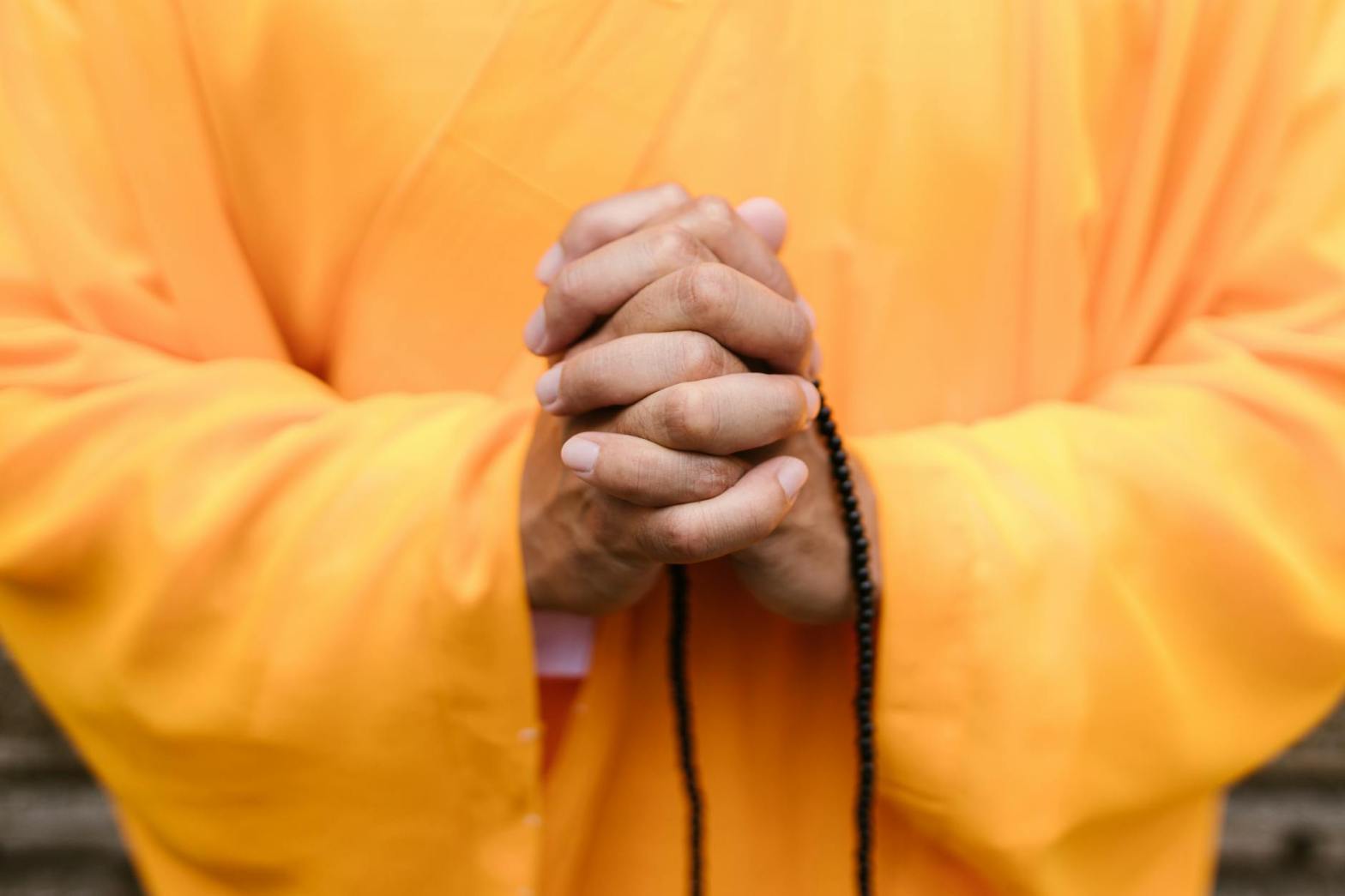
the monks and I, in saffron and in jeans.
We do not score a lot, but we set picks
and pass the ball and rebound our missed shots.

That’s how it goes – for we are not The Knicks,
we’re five foot something. On a sunny day,
we head outside. I too am in the loop,
I water daisies and forget-me-nots
like Milarepa. I know what it means

to meditate. Is there another way
to free each sentient being? Just for kicks,
we play at ball; the flowers do not droop.
Life goes its round, and in our in-betweens,
we laugh and joke. These are our little plots.

John Claiborne Isbell is a writer and now-retired professor currently living in Paris with his wife Margarita. Their son Aibek lives in California with his wife Stephanie. John’s first book of poetry was Allegro (2018); he also publishes literary criticism, for instance An Outline of Romanticism in the West (2022) and Destins de femmes: Thirty French Writers, 1750-1850 (2023), both available free online. John spent thirty-five years playing Ultimate Frisbee and finds it difficult not to dive for catches any more.

Eclipsed – a poem by Rachel Landrum Crumble

Eclipsed

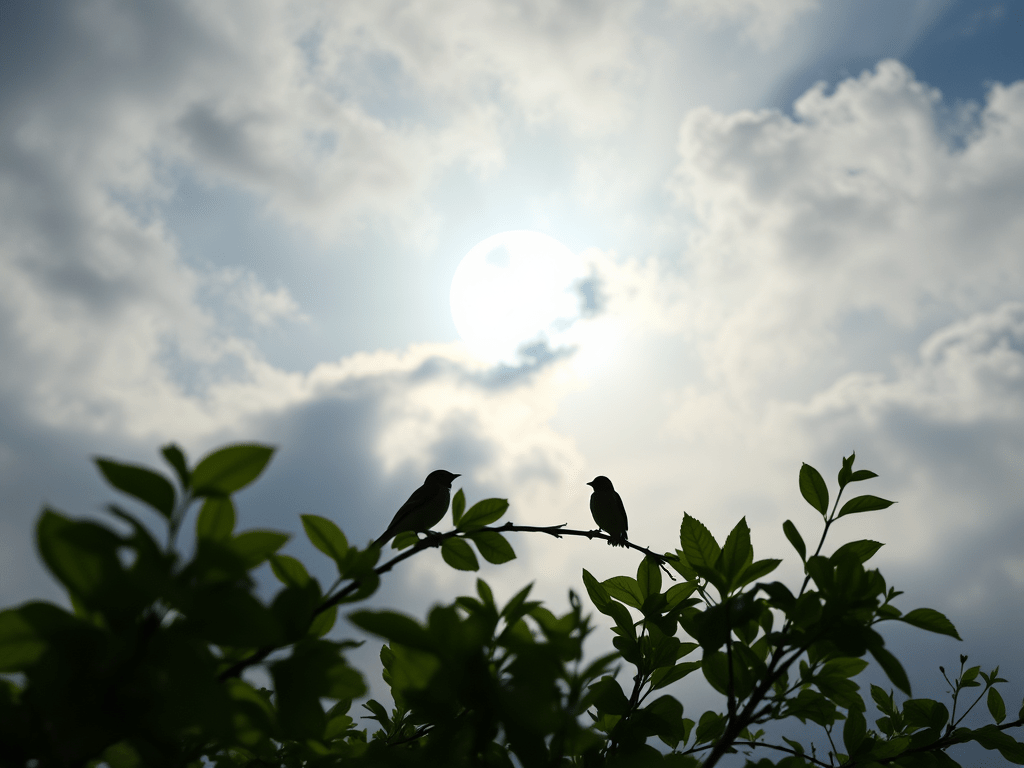
Confession: I steal a glance through cloud cover.
I see the shadow of God’s shoulder
crescent the sun.

New spring leaves reflect their unison
light, turn the air green for days.
Sparse and pensive birdsong unbraids
and flaps its solos in the breeze.

One might think a storm is coming
as white cloud cover with gray underbelly
slides across the sky. Pinholes of blue,
like my shadow box, reveal little.
Though the ophthalmologist says they’re fine,
four days later, my eyes are still aching.

Rachel Landrum Crumble is a life-long poet, fledgling fiction writer, and retired teacher, having taught kindergarten through college. She has published in The Porter House Review, Spoon River Poetry Review, Common Ground Review, Poetry Breakfast, Humans of the World, among others. Sister Sorrow (Finishing Line Press) is her first book. She lives with her husband of 43 years, a jazz drummer, and near two of her adult children and three grandchildren. Find her staring out the window, singing or on Substack or at poetteachermom.com.

The Alto Takes Her Solo – a poem by Catherine Gonick

The Alto Takes Her Solo

At church this cold morning, the choir
sings selections from Handel’s Messiah.

With a voice deep as Earth, the bass
sounds like the reason men were created.

The strong, far-reaching sopranos sound
closest to God.

From my seat near the front I can see
that when it’s the alto’s turn

there’s a pause, as she and the conductor
lock eyes in a warm gaze they hold

until he makes a move that releases them
and she begins.

Recently returned from the country
of the ill, the alto has tinted her hair

a subtle but triumphant purple.
Her body, a temple assaulted

but not destroyed, still stands
and her singing is not loud but true

like the sound of someone praying.


Catherine Gonick has published poetry in a wide range of journals, including Notre Dame Review, Beltway Poetry Quarterly, The Orchards Poetry Journal, and Pedestal. Her work has also appeared in anthologies including in plein air, Grabbed, Support Ukraine, and Rumors, Secrets & Lies: Poems About Pregnancy, Abortion and Choice. She has a collection from Sheila-Na-Gig Editions (spring 2025), and lives in the Hudson Valley with her husband, with whom she works in a company attempting to slow the rate of global warming.

Feeling Good – a poem by Ken Gierke

Feeling Good

The sky never alone, even on a cloudless day,
heron, swallows, and cormorants
pass around me. The pace of my paddle
is more in time with the slow rhythm of
the heron than the frantic flight of
the swallows, but as Nina Simone
reminds me, my heart is with them,
and with the few leaves that drift on by
in the early morning summer sun,
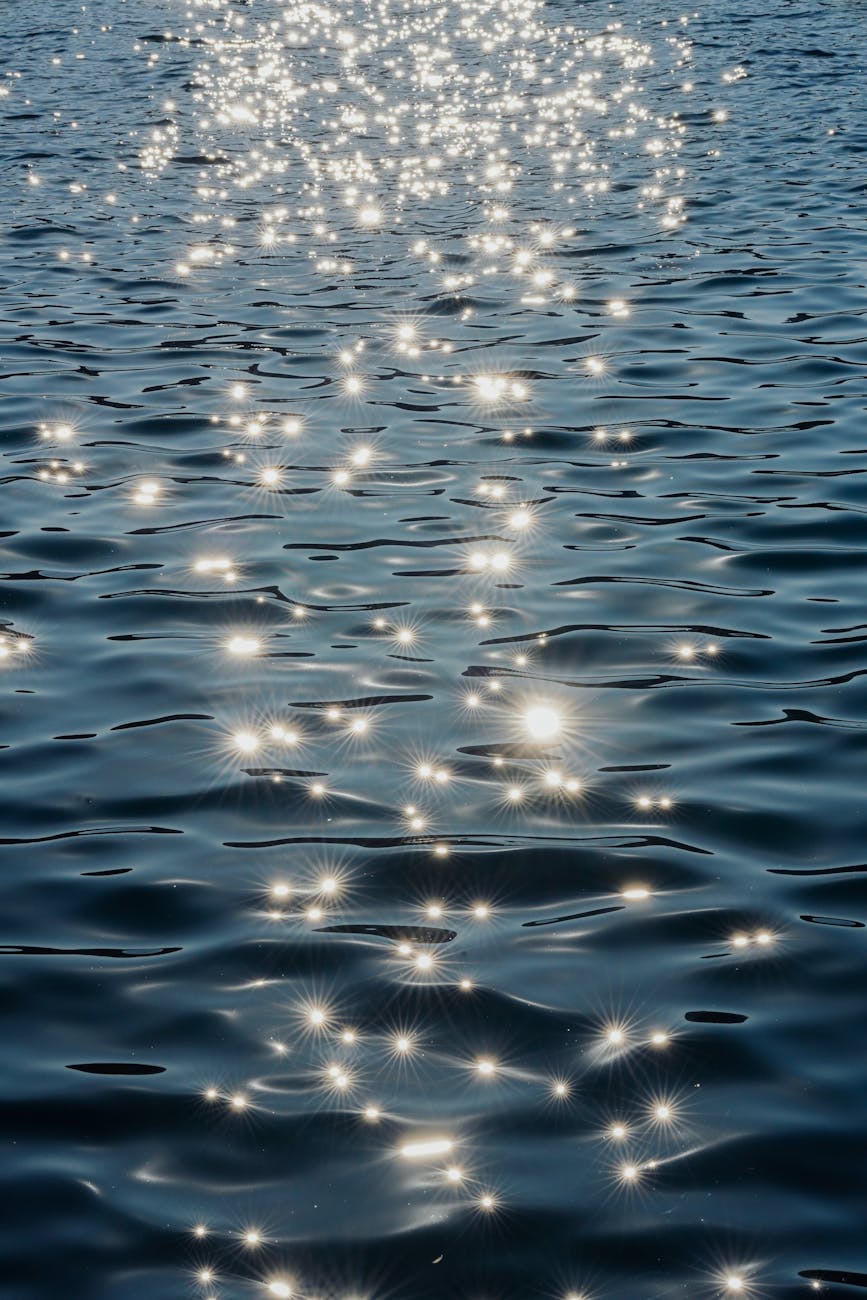
still low in the sky and glinting off
the ripples of my wake.

Each season has its rewards,
from blossoms on the trees in spring
to the dragonfly resting on the bow of
my kayak, to the colors of autumn,
to the sheen of ice clinging to
the river shore in late winter,
each season offering the peace of
a new dawn, each new day
a reason to feel good
about what life has to offer.

My strokes are slow and sure with a horn
that plays like a slow march, as if to keep
Nina grounded, her joy likely to carry her
away to the stars. Strings and piano
move in to reflect that joy, with the horn
stepping in again, underlying her words
as if to give weight to such a peaceful feeling.
As her voice trails off, I continue
to paddle along the shore, feeling good.

Ken Gierke is retired and writes primarily in free verse and haiku. His poetry has been published or is forthcoming in print and online in such places as Poetry Breakfast, Ekphrastic Review, Amethyst Review, Silver Birch Press, Trailer Park Quarterly, Rusty Truck, The Gasconade Review, and River Dog Zine. His poetry collections, Glass Awash in 2022 and Heron Spirit in 2024, were published by Spartan Press. His poem, ‘Driving Off, Minor’, has been nominated for the 2025 Pushcart Prize. His website: https://rivrvlogr.com

Apple – a poem by Fay L. Loomis

Apple

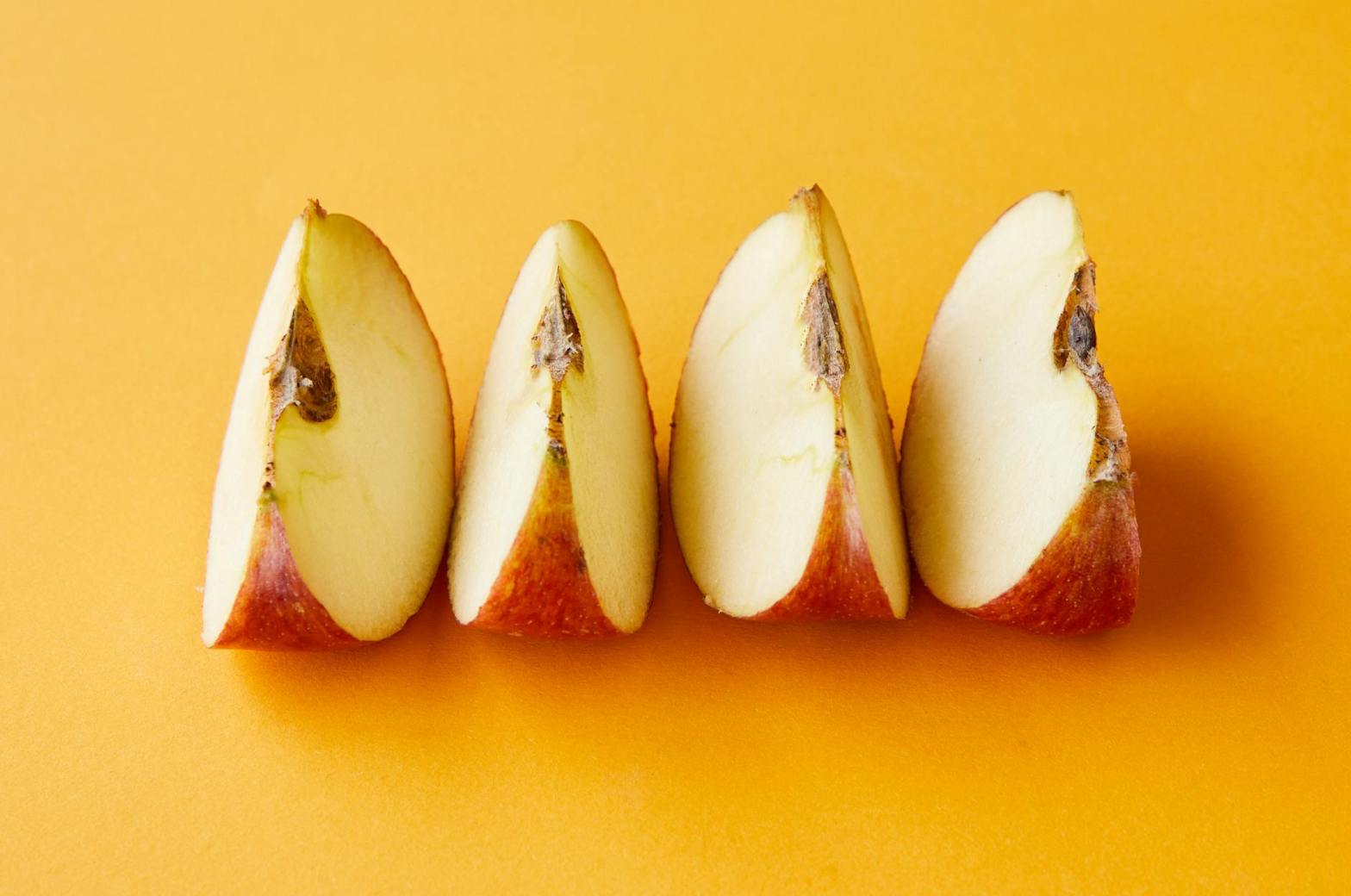
red and gold
variegated globe

slice in half
draw quarters

dip in salt
bitter and sweet


Fay L. Loomis leads a quiet life in the woods in Kerhonkson, New York. Member of the Stone Ridge Library Writers and the Rat’s Ass Review Workshop, her poetry and prose appear in numerous publications, including five poetry anthologies. Sunlit Wildness (Origami Poems Project, 2024) is her first chapbook. Fay is a nominee for the 2024 Pushcart Prize.

Ars Poetica – a poem by Michelle Holland

Ars Poetica
(with reference to Rig Veda Book 10, Hymn 129, translated by Wendy
Doniger O’Flaherty)


How clever to make of ourselves a constellation
in a milky way, between the spirals packed with nebulae,
other galaxies, dwarf stars and super novas, moving
in light years against the smooth round belly of infinity. Listen,

the fetal Doppler sounds like waves. Remember dusk on the beach,
just you and the tide, the sounds of gentle crashing, the whoosh
of foam and water at your feet? A way home, even suggested
in the Vedic creation hymn, where the poet arrives before the gods.

Taste the salty buoyancy of our place in the universe.
We did not know dark or light, we did not know the waves
that lured us, lulled us, the matching pulses of life blood
through the tiniest veins, pumping from the center

where expansion began, the space occupied with valves
and ventricles, music of the spheres, heart of the poet.


Michelle Holland, Poet-in-Residence for Santa Fe Girls School and treasurer of NM Literary Arts, has lived in Chimayo, NM for over 25 years. Her poems can be found in literary journals, in print, online, and anthologized, most recently in the 2023 New Mexico Anthology of Poetry, UNM Press, and The Common Language Project: Ascent. She has two book-length collections of poetry, Chaos Theory, Sin Fronteras Press, and The Sound a Raven Makes, Tres Chicas Press, which won the New Mexico Book Award.

Pax di Assisi – a poem by Danita Dodson

Pax di Assisi 


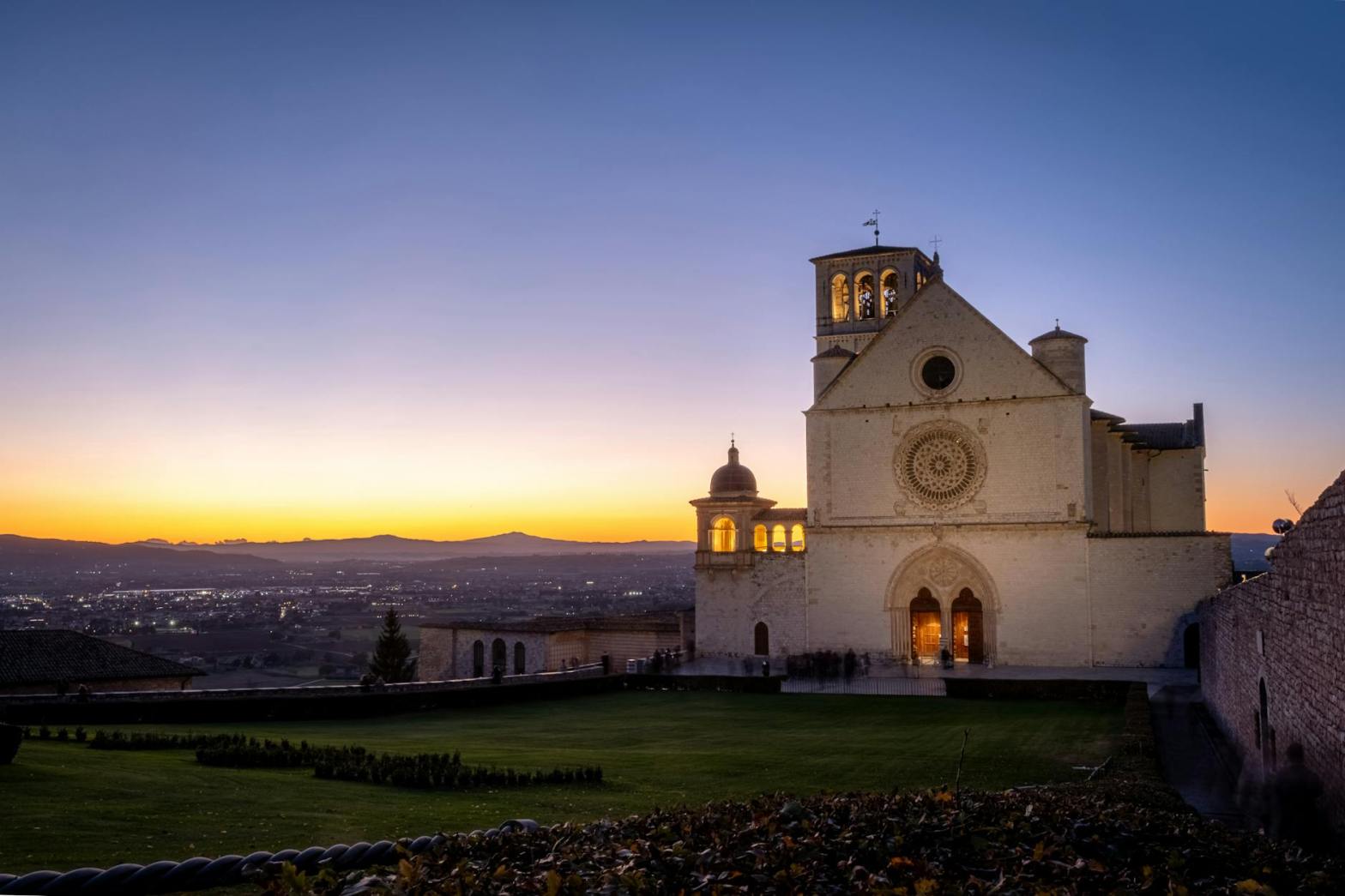
In the Basilica,
I feel Christed—
as I watch a dove
encircling above
San Francesco,
winging prayers
holy heavenward,
just like his gaze
in this thin place
where serenity
settles upon me,
natural and pure
as morning mist
on hills of home.

The hush here
respires kindness—
inhale, exhale—
the breath a bridge
‘twixt earth and sky,
and faith forges
a soundless space,
a moment to rest
beyond doctrines,
the only hymn a hum
of cleansing peace,
intoning a grace
I’ll carry outside.

Danita Dodson is an educator, literary scholar, and the author of three poetry collections, Trailing the Azimuth (2021), The Medicine Woods (2022), and Between Gone and Everlasting (2024) all published by Wipf and Stock. She is also the coeditor of Teachers Teaching Nonviolence (2020). Dodson’s poems have appeared in Salvation South, Critique, Tennessee Voices, Amethyst Review, Women Speak Anthology, Thin Places and Sacred Spaces, and elsewhere. She is a native of the Cumberland Gap region of East Tennessee, where she hikes and explores local history connected to the wilderness. For more, visit www.danitadodson.com.

Homecoming – a poem by Lindsay Younce Tsohandaridis

Homecoming

Through cirrus clouds spread thin as stretched cotton
glued to paper for woolfell on lost sheep
in Sunday school, terrain unforgotten:
the Columbia, wild, dark, and deep,
strewn like scrapped satin between strips of pine;
the old house on the hill off the highway;
the water-logged hills that fed my bloodline
where kin now rest in a womb of decay;
the dam, salmon, paper mill, evergreens
all ancient guardians, once at odds, nod
to acknowledge a homecoming of grief
through layers of atmosphere, holy sod,
and troubled time.
I step out into air
thin as paper, strands of woolfell and prayer.

Lindsay Younce Tsohantaridis was born and raised between the mountains and ocean in the Pacific Northwest but now writes from the Ohio River Valley. Her work has been published in Dappled Things and Salamander.

Birdsong – a poem by Ed Meek

Birdsong

The way their song lifts your spirits
in the spring when a convocation
of birds returns to meadows
and fields they favor, trees
they seem to know. Although
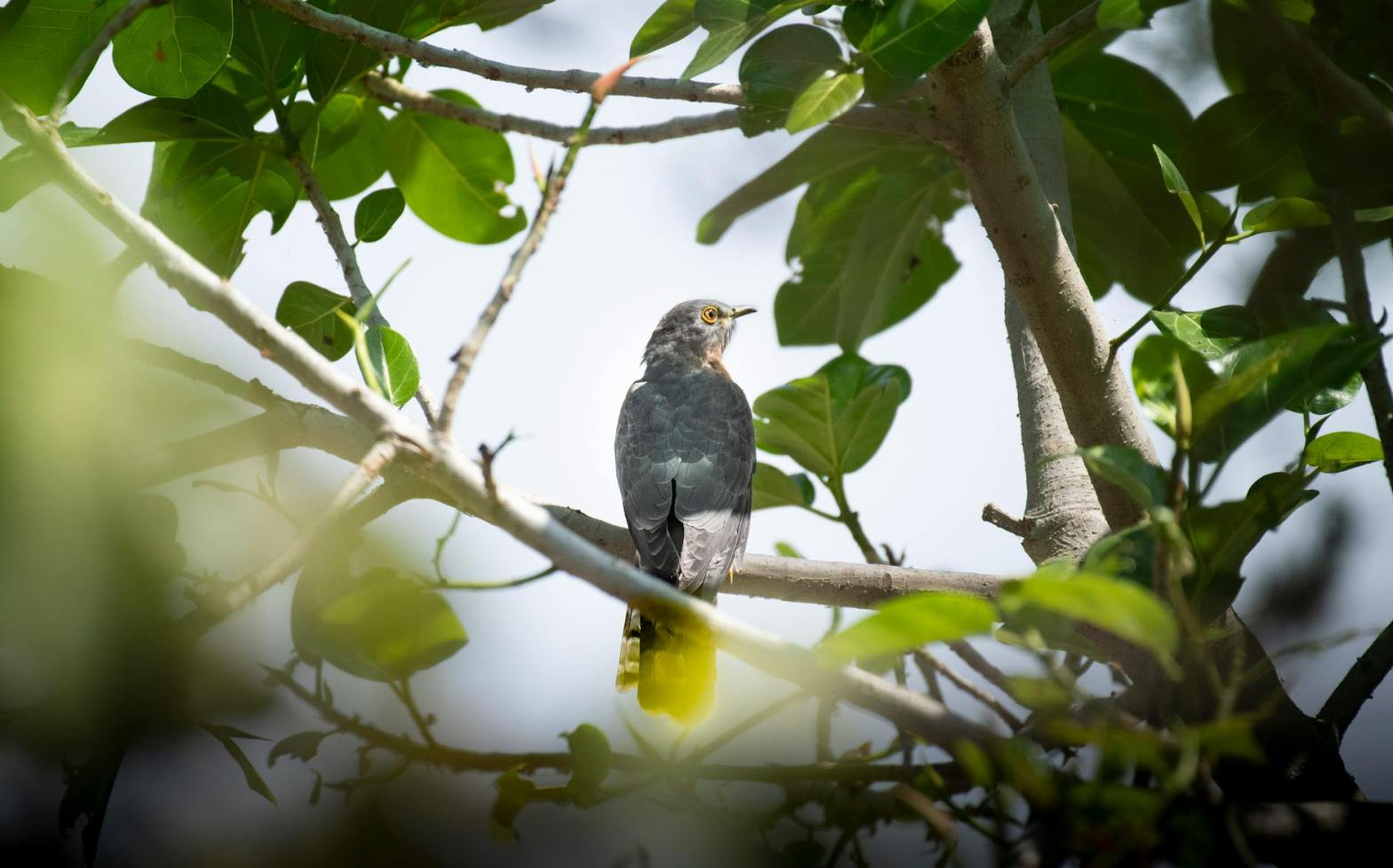
it’s hard to find them by sound alone,
surveying as you go
trying to echolocate
the cheeps and chirps, tweets
and whistles, clicks
and squawks,
the piercing cries of hawks,
guttural caw of crows.
You search for splashes of color:
cardinal red, oriole orange,
goldfinch yellow, hiding
in the camouflage of leaves.

Ed Meek is the author of four books of poetry and a collection of short stories. His most recent book is High tide. He has had poems in The Paris Review, The Sun, Plume, etc.

Backyard, Mid-May 2 – a poem by Peter Cashorali

Backyard, Mid-May 2

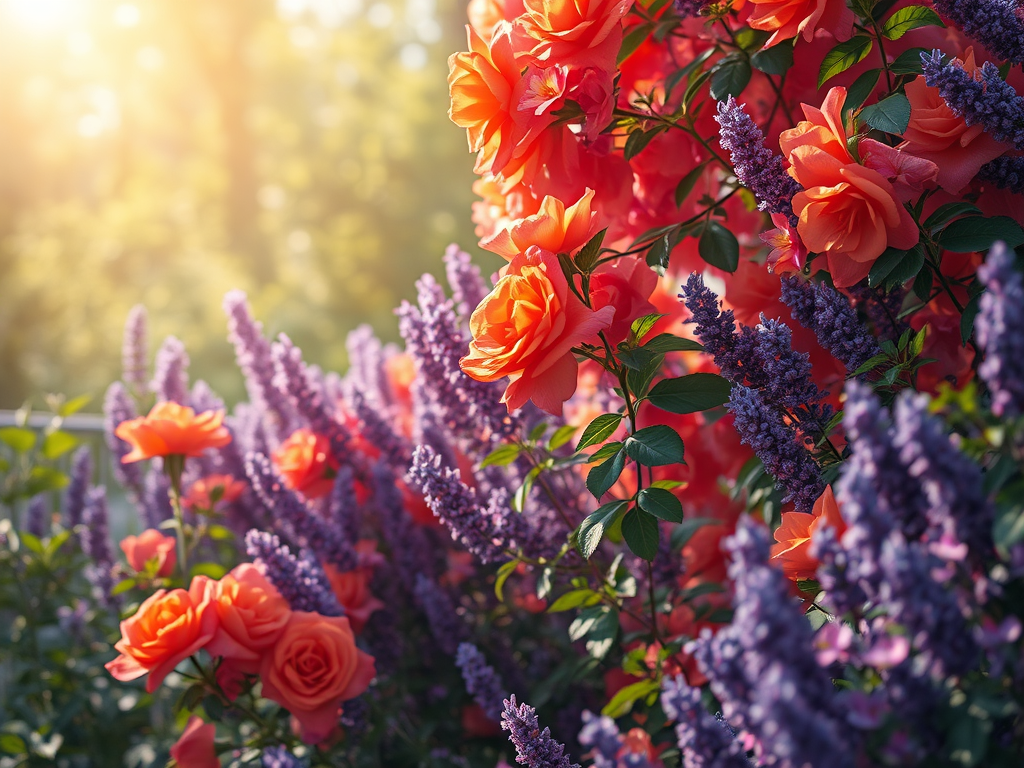
Watch. The plants are coming forward,
Bougainvillea foams with flowers,
Lavender seeps upward slowly,
Orange planets on the rose bush
Burst and seed their stuff through space.
Everything is coming forward.
You can almost see the doorway
Through which each plant makes an entrance,
Come forward from the place of nothing.
Watch as nothing becomes something.
Is this what they called the void?
Who knew it was so creative?
Who knows how it does its work?
Even though you watch it happen
Mystery looks back at you.

Peter Cashorali is a neurodiverse pansy living at the intersection of rivers, farmland and civil war. He practices a contemplative life.