
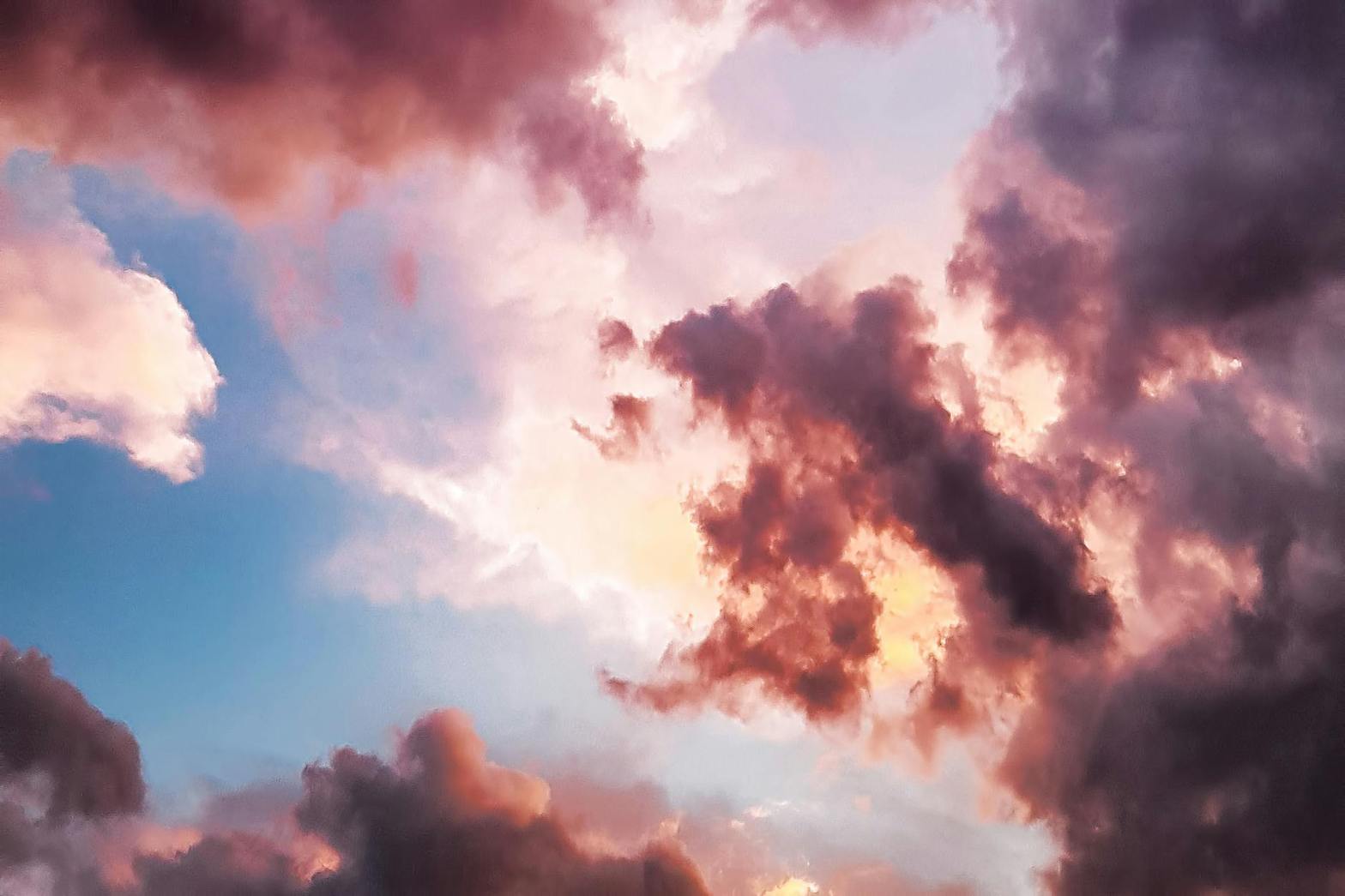
Clouds

Clouds are concentrated water vapor
held together by our dreams
shaped by wishes--
the cirrus cloud that sculpts itself
into a gull protecting its kin
feeding below as a lonely mother
looks up and holds the sight
forever in her mind
or the tops of cumulus clouds
suddenly lit by the sun
lifts a man out of his wheelchair
willing himself to walk.


Janet Krauss, after retirement from teaching 39 years of English at Fairfield University, continues to mentor students,  lead a poetry discussion at the Wilton Library, participate in a CT. Poetry Society Workshop, and one other plus two poetry groups. She co–leads the Poetry Program of the Black Rock Art Guild. She has two books of poetry : Borrowed Scenery (Yuganta Press) and Through the Trees of Autumn (Spartina Press).  Many of her poems have been published in Amethyst Review, and her haiku in Cold Moon Journal.
The Cure for Grief – a poem by Dean Abbott
The Cure for Grief


What cure for grief
presents itself
but to notice the
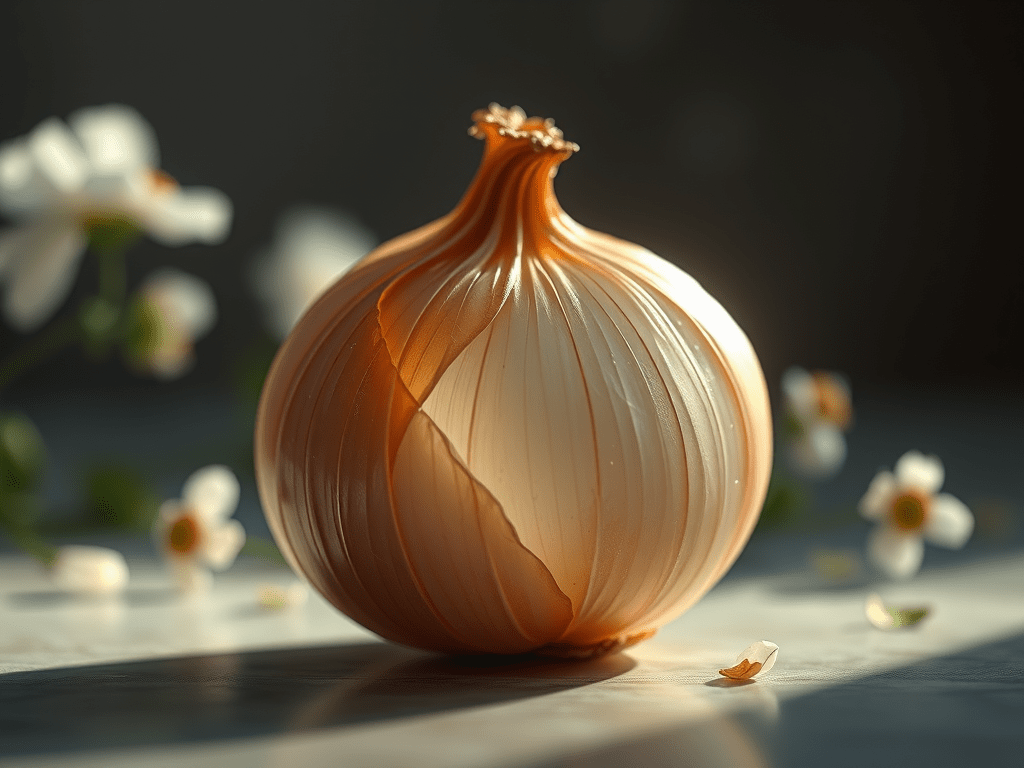
brittle rust of
onion skin
opening beneath the silent
knife, the hum the air makes,
the taste of bitter juices?

What balm can we reach for
but now, this moment, sealing
it from all other moments
with the seal of faint hope?

What cure for grief but
the breathing in
and out again?

What cure for blindness
but to see?
Dean Abbott is a writer, poet and pastoral counselor living in Kentucky. He can be contacted through http://www.deanabbott.com or on X @deanabbott.
Acolyte – a poem by Wilda Morris
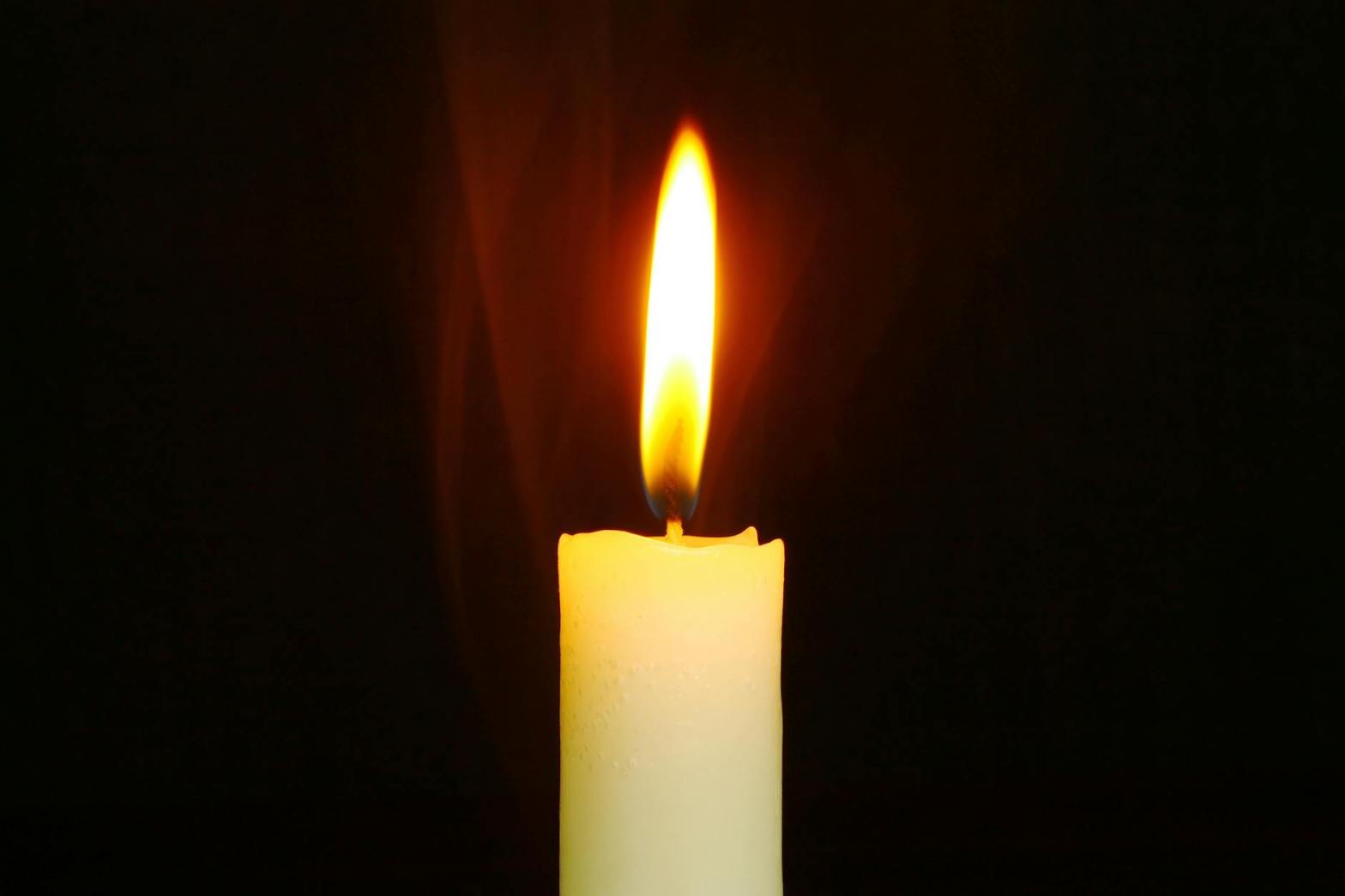
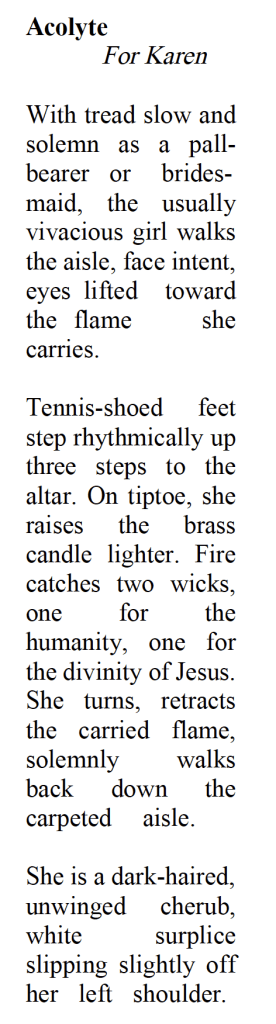
Wilda Morris who retired from a career in Christian education, is Workshop Chair of Poets and Patrons of Chicago and a past President of the Illinois State Poetry Society. She has published numerous poems in anthologies, webzines, and print publications, including Brass Bell, Haiku Canada, and Modern Haiku. She has won awards for formal and free verse and haiku. Wilda has published three books of poetry, Szechwan Shrimp and Fortune Cookies: Poems from a Chinese Restaurant, Pequod Poems: Gamming with Moby-Dick, and At Goat Hollow and Other Poems.
Imagine – a poem by Kate Hill-Charalambides
Imagine

I feel a touch of Grandpa’s ice-grey hand
as he heaves the words:

I can see them
their outstretched arms a bridge of gold.

His gasping mouth ellipses in rapture
then his torso bolts erect.

He gazes an all consuming kindness
as we watch him leave his eyes.

He had been a sailor on a warship
was seventeen

when seven of his mates had fallen in
to the sea’s exploding black gullet.

Their arms raised pleading
distraught heads bobbing

called him:
Bert, Bert.

and water slopped savage
into the silk

hollows of their lungs leaving him
with a bandoleer of guilt.

His fellow feeling still so strong
had taken on a sweet song.

Desire held out the other end of the stick,
rattled something more permanent

than what that monster
could devour.

We join hands above him
and pray that the waves are singing
Kate Hill-Charalambides is an English teacher of dual nationality who lives in Alsace. She has worked for an association against human trafficking which is recognized as being of public utility. Her poetry focuses on human rights, spirituality and feminism. Her poetry has appeared in Dreich 3 Season 9 (No.99), Snakeskin and will appear in the next edition of Cerasus Poetry.
Holy Water, Human Water – an essay by Chris Powici
Holy Water, Human Water
Pluscarden Abbey and The Black Burn
I followed a narrow path high into Heldon Wood, searching for a spring. The earth was dry underfoot; there was no breeze. Just a few thin shafts sunlight made their way through the tall, close-packed trees. Common sense told me I was unlikely to find a spring this far up the northern slopes of the glen; it would have to be closer to the abbey. But there’d been no sign of one when, earlier that morning, I walked the gardens and orchards. So, I went deeper into the wood, expectations dwindling.
I’d come to Pluscarden Abbey hoping a swifter kind of water would have a story to tell. The Black Burn rises in the Morayshire hills and flows eastwards, dark and slender, until it meets the River Lossie just outside of Elgin. On its way, it passes the woods, gardens and orchards, the chapels, chapter houses and dormitories that make up the granite splendour of Pluscarden Abbey. Three hundred years of monastic life at Pluscarden came to a faltering end at the close of the sixteenth century, but in 1948 the abbey and its lands were bequeathed to the Benedictine community who now live, work and pray there. Since I’d caught my first glimpses of the abbey some eight years ago, I’d wondered if its sense of being rooted in place had something to do with the Black Burn. Had the Abbey’s founders, in the thirteenth century, searched for exactly the ‘right’ stretch of water? After all, water also plays a starring role in the bible, from the flood sent by God to punish the wicked of the earth, to John the Baptist standing waist-deep in the river Jordan. But these bible stories were pure spectacle – the stuff of Renaissance art and Hollywood movies. What about ponds and streams – weren’t these sacred too? Surely the Black Burn had to mean as much to the monks of the abbey as the ‘local’ spirits of well and burn had meant to the people of Morayshire before the coming of Christianity.
The truth had turned out to be plainer. When I’d arrived at Pluscarden Abbey the previous afternoon, I was greeted by Brother Finbar, a cheerful, bearded man, quick on his feet despite the weight of his pale Benedictine robe. He showed me to my room in the wing of the abbey reserved for ‘retreatants’, explained about meals and the religious routines, and wished me a peaceful stay. We shook hands.
‘Do you mind if I ask you a question?’ I said, thinking he’d be used to retreatants with things on their mind.
‘Go ahead.’
‘I’ve been wondering about the Black Burn and its connection with the abbey. I guess it goes back a long way, all the way to the Middle Ages.’
‘Well,’ said Brother Finbar slowly, as if the question required careful thought, ‘I reckon it must have been where the monks did their business.’
So not a holy stream at all. Just a filthy one. I tried not to look disappointed.
‘I don’t think they bathed in the burn,’ Brother Finbar added, ‘but they didn’t drink from it either,’ and went on to explain that, until a few years ago, water for the abbey’s kitchen and washrooms came from a spring. ‘Such a lovely taste,’ he said, coming remarkably close to licking his lips and talking at the same time. ‘I don’t know what happened, but we had to start using mains water. Some problem with the pipes maybe.’
I felt relieved. The Abbey did, after all, have an intimate connection with local water. The only problem was that the actual location of the spring had passed him by. ‘You might try the gardens,’ he suggested, without much conviction, and hurried away to attend to other duties.
An hour later I saw Brother Finbar again, in the company of the abbey’s other monks, about fourteen in all, as they ‘proceeded’ into the chapel for the office of Vespers. Sunlight poured through stained glass windows and the old stone of the walls and floor took on a soft glow, as if the light had fallen onto deep, still water. After a moment’s silence their voices rose in a slow, sonorous wave:
Deus in adjutorium meum intende; Domine, ad adjuvandum me festina
Were all the monks accomplished singers, or did the very fabric of the abbey make anyone’s voice sound so rich and honeyed? Either way, the very air now seemed as ancient as the abbey walls. As an unapologetic, fence-sitting agnostic, with barely a scrap of Latin to his name, I wasn’t able to share in the meaning of the words, but I could bathe in the music of plainsong. And, I promised myself, I could go in search of the music of spring water the next day.
And so I found myself on a rainless July morning in the midst of a Morayshire wood, looking for water. With every uphill step the chances of finding a spring grew slimmer, but by then I was keen to get a clearer view of the abbey and the Black Burn, to see if they helped make sense of one another.
Eventually, the trees parted just enough to catch a glimpse of the abbey. Even from a distance, its roof and walls appeared old, but not out of place. The field, orchards and gardens that surround the abbey gave it a neighbourly sort of look. After numerous additions and renovations, it belonged in its nook of Scotland. But it was hard to make out the Black Burn itself. I had to guess at its presence in a smaller wood beyond the orchard, between the abbey and the Elgin Road.
My gaze drifted higher, towards the far slope of the glen and rested on a patch of green above the tree-line. This had to be Thistle Flat where I’d first caught sight of Pluscarden Abbey on a similarly bright summer day eight years ago. I had travelled up from Dunblane to visit my friend, the writer and joiner Angus Dunn. After a cup of tea, and admonishments about my late arrival, he suggested we go on a wee tour. I had to walk fast to keep up with his new go-anywhere electric wheelchair, but after several hundred rough, grassy yards he spun round. The long sweep of Pluscarden Glen lay below us. Angus gestured toward the abbey and whispered me the story about how, a few short months ago, he’d strapped himself into the passenger seat of a two-person microlite and, minutes later, found himself flying low through the glen. A monk was busy in the abbey garden. Reveling in the near-weightlessness of flight, Angus yelled and waved at the monk, until the brother looked up, threw aside his hoe and waved madly back – sweaty, astonished and unmistakably joy-struck by such an unlooked-for visitation.
By the time Angus told me the story, he had no choice but to speak in whispers. Motor Neuron Disease had laid low his voice along with his body. But a good story was worth the effort, especially if it involved unlikely comings-together, when mystery met the commonplace, the sacred encountered the profane; when body and soul became bedfellows. The writer’s job, like the joiner’s, was to feel the grain of things, and evoke the happenstance of connection. In ‘Kernel’, the final poem in Angus’ posthumous collection High Country, he’s so entranced by the ‘acid orange streetlights’ at dusk, that they ‘release the taste of mango’. ‘What is it, after all,/but the taste of my life?’ Angus asks. ‘Unable to swallow it all/I blame the tightness in my throat.’
His throat certainly seemed tight up at Thistle Flat when he described the microlight flight. He died before summer ended. Now, in the summer of 2023, peering through the dense foliage of Heldon Wood, I couldn’t help but wonder if it wasn’t Brother Finbar who’d been busy gardening as Angus flew past. Why not ask him? I turned on my heels and headed back down through the trees towards the sunlit Abbey.
That evening, I found myself wandering through the little wood, south of Pluscarden Abbey, towards the Black Burn. I needed to discover for myself if it was a holy or filthy stream. Or both. In the end, I hadn’t asked Brother Finbar for more information about the burn. Nor had I mentioned Angus’ story. The idea that he was some kind of hoe-wielding Benedictine kindred spirit to Angus’ angel-impersonating joiner-poet, had taken such a hold in my imagination, I didn’t want it dashed by anything so trivial as the ‘facts’.
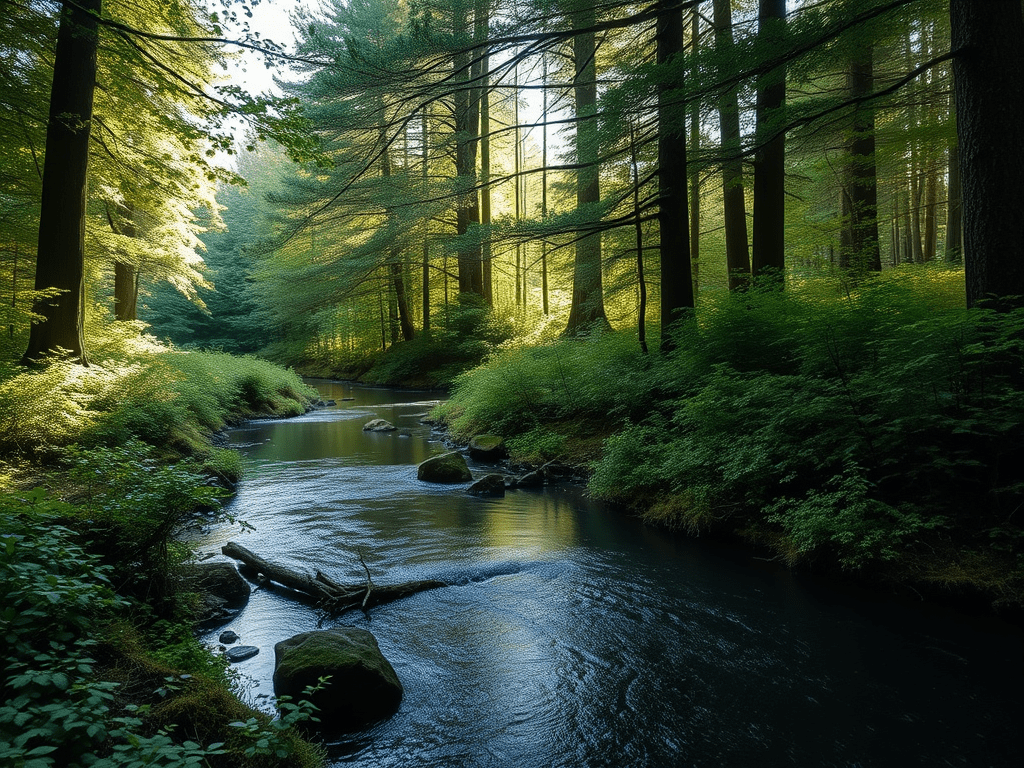
After a few minutes I arrived at the Black Burn itself. It was shallow, pleasant and entirely unspectacular. The only hint of drama came with a foamy riffling as it passed over some stones upstream. But it was serene. The sound of traffic on the Elgin Road, a few hundred yards away, was screened out by trees that overhung the banks, though I could just catch the day’s last birdsong as it merged with the breeze in the leaves and the quiet hum of the water. It all seemed one chorus, one chant, a gentler version of the plainsong of the monks I’d heard the previous evening, and the thought came that, right now, they’d be gathered in the chapel, the same sunlight falling through its windows, singing the office of Compline:
Noctem quiétam et finem perféctum concédat nobis Dóminus omnípotens
(May almighty God grant us a quiet night and a perfect end)
Maybe they didn’t need to invest too much faith in the waters of burn or spring when they had such a well of tradition to draw from. The ancient made new every day.
But the burn sang a different song. Its waters were not an attempt to arrest time, but the voice of its flow, pitch and rhythm changing with the seasons – the vagaries of wind and rain, sun and ice. It was good music to listen to and a good place to be. I decided to take a video of this ordinary, tree-shadowed burn, retrieved my phone from my trouser pocket, touched the video button, and watched the Black Burn fill the screen.
Suddenly the water wasn’t dark anymore, never mind black. It had been transformed from an earthy greenish-brown to a shimmering blur of blues and silvers, as dazzling as the scales of a leaping salmon. I tracked this impromptu dance of light up and downstream, but as soon as I pressed ‘Stop Record’ it disappeared. The burn was just a burn.
I pressed record again, and again the water seemed alive with light, but this time it wasn’t an image of salmon scales that came to mind, but the abbey’s stained-glass windows. The same radiance that gave the flagstones of the chapel the look of well-water, transformed the surface of the burn into a gallery of glittering windows. Was this some kind of miracle? Was I bearing witness to something divine?
The thought lasted all of three seconds before another explanation popped into my head. My phone was cheap; so was its camera. It simply couldn’t cope with the vibrant interplay of tree shadow, stream and sunlight. I laughed – at my own foolishness, I thought – but when the laugh kept going, I realised I was laughing at the brilliant coincidence of ancient abbey, sunlight on water, and dodgy technology. And I imagined Angus laughing at such spontaneous joinery: a microlight and a monk, a dodgy camera and a sunstruck stream – the miracle of coincidence, the purely-by-chance gifts of a universe always on the move. Everything is real, one way or another. The trick, as Angus knew, is to notice the connections and write them down. To do the joining.
I took one last look at the Black Burn and made my way through the evening wood back to the abbey, to its stone and song.
Chris Powici lives in Perthshire where he writes poems and essays, often about how the human and natural worlds overlap. He is co-editor of New Writing Scotland and one of the writers behind Paperboats (paperboats.org). His latest poetry collection is Look, Breathe (Red Squirrel Press).
A Brood of Owls – a poem by Ken Hada

A Brood of Owls


We know them
because we hear them –
their privacy betrayed
by hunger.

Once satisfied, silence
returns to trees
indecipherable
in silent darkness

so abruptly interrupted
by these princes
of the dark, cared for
by a mother.

We know only
what they give –
but we take so much.
We imagine

the drama – identify
with sound – hear
ourselves – echoes
in our souls

claiming the unknown
known – filling us,
remaking us
fit for daylight.
Ken Hada lives and writes in rural Pottawatomie County, Oklahoma. His latest book is Come Before Winter (Turning Plow Press, 2023). His Contour Feathers (Turning Plow Press, 2021) received the Oklahoma Book Award. Other awards include The Western Writers of America, “The Wrangler Award” from the National Western Heritage Museum, South Central Modern Language Association and The Oklahoma Center for the Book. Four of his poems have been featured on “The Writer’s Almanac.” Ken is a professor at East Central University where he directs the annual Scissortail Creative Writing Festival, now in its 20th year.
Evading Practice – a poem by Don L. Brandis
Evading Practice

Yeah, yeah, we know we must practice
patience, understanding, compassion,
or our lives will remain mostly suffering

we’ve listened, partly heard the wise
who say so.  We’ve even tried but failed.
Even Dogen is said to have said his life was one long mistake.

Having waked this morning no wiser
no more inclined to practice
but surprised to recall something missed

as we miss most of what happens around us,
within us, in ‘our’ experience.
Everything is practice

even failure.  Especially failure.
Discontent is an excellent driver of practice
which needs a driver only initially

as this morning’s cup of tea
desired, consumed, released.
We draw breath, exhale, move on

without thinking, deliberation, choosing.
What drives us is before choosing, naming
and other favored after-thoughts

the subtle draw of waiting, opening
seeing what we’d missed but haven’t lost
by missing, failing.  Repeated mistakes point them out.
Don L. Brandis is a retired healthcare worker living quietly near Seattle writing poems. He has a degree in philosophy and a long fascination with Zen. Some of his poems have appeared in Leaping Clear, Amethyst Review, Blue Unicorn and elsewhere. His latest book of poems is Paper Birds (Unsolicited Press 2021).
Alpine Bus Stop – a poem by Simona Carini
Alpine Bus Stop


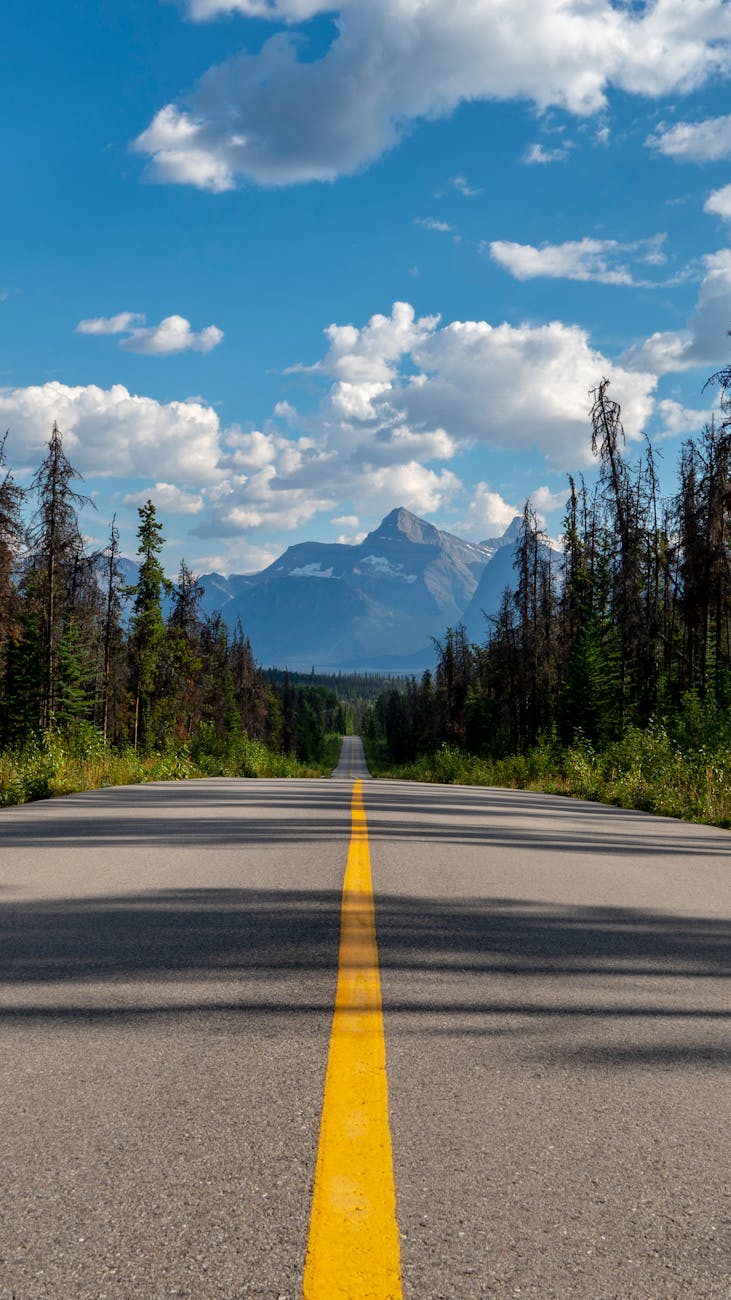
When people wait on the short stretch of sidewalk
hugged by the hillside,
in the sun, breeze or drizzle,
through a break in the line of trees
their gaze can roam over conifer-cloaked hills,
reach farther, come to rest on the Tre Cime di Lavaredo,
sharp peaks of dolomite
revered by mountain lovers around the world.

I wonder if planners placed the bus stop here
on purpose, where no barrier blocks
the view. Knowing the weather
can be unkind, the wait long,
they wished it a time of awe and wonder.

Do the bus riders notice, raise their eyes,
and in the distance meet the sheer rock walls,
gray now under showery clouds?
I imagine them pink in the early morning,
flashing golden when snow-mantled,
bluish at twilight, marking in their way
the passage of days and seasons.

Do they treasure time spent waiting for the bus,
or is it just a backdrop to their wish for a different job,
a shorter list of worries, a palm-lined beach?

I pray we never become blind to beauty —
no matter the storm swirling around,
the cold cutting, the sunlight intense —
never take forested hills or mountains for granted,
grateful for a bus stop with a view.
Simona Carini was born and grew up in Italy. She writes poetry and nonfiction and has been published in various venues, online and in print, including Amethyst Press anthology Thin Places & Sacred Spaces (2024). Her first poetry collection Survival Time was published by Sheila-Na-Gig Editions (2022). She lives in Northern California with her husband, loves to spend time outdoors, and works as an academic researcher. Her website is https://simonacarini.com
Horses in Paradise – a poem by Rebecca Surmont
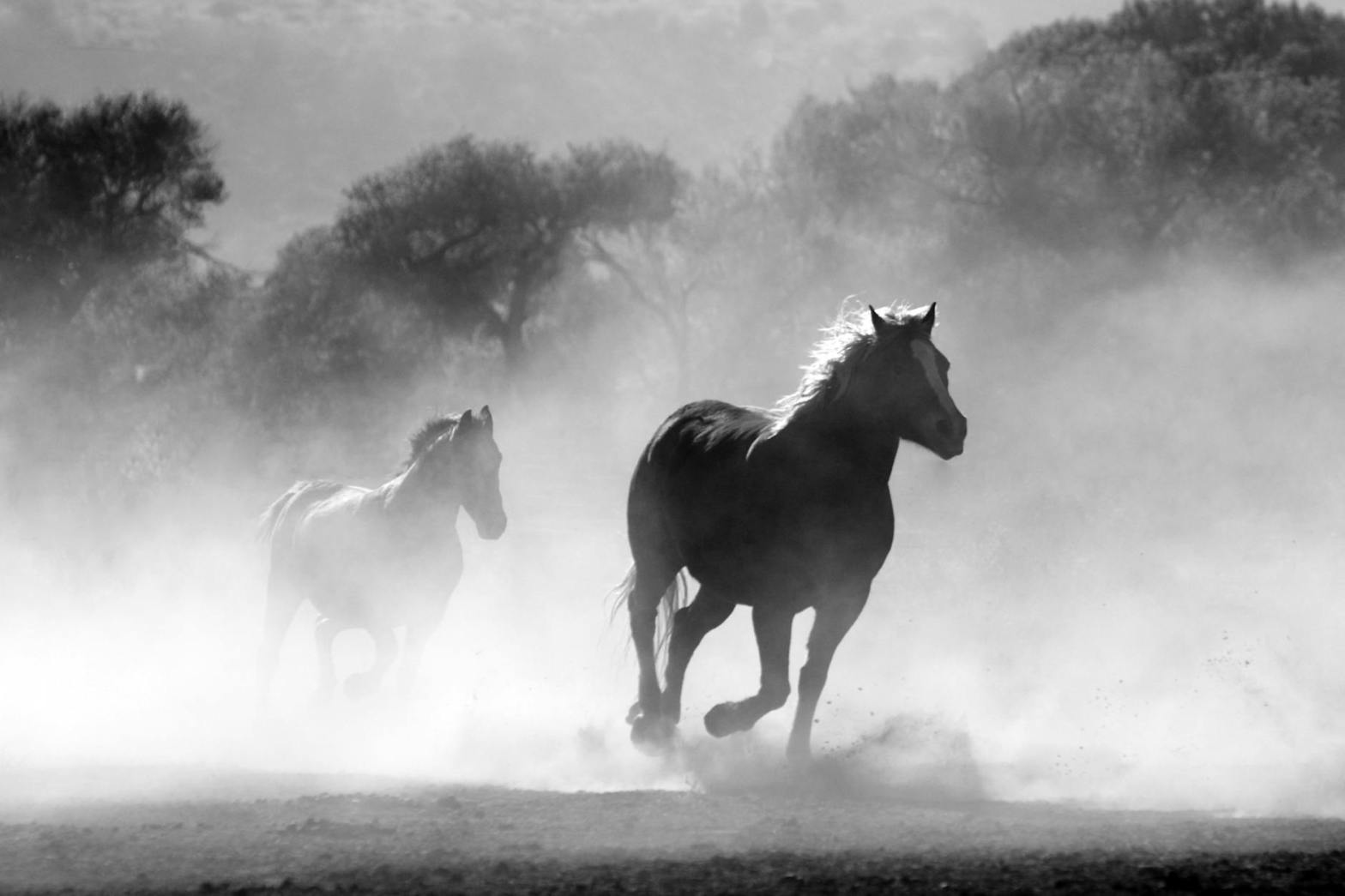
Horses in Paradise

There are horses in paradise
dappled, bay, and bronze.
Their muscled ascent frees
an avalanche of dust.

They drink the air, eat nothing
stop only for memory – their foothills –
then drop them like a root, snort, and gallop again.

These wildings are not for riding any more than a shadow,
only thoughts tame them
in the smell of hay and salt, baked clay and clover.
Their hooves keep time, become the sound
of the clocks, the ones ahead and ones behind
until there is only the hum.

Each faces the tail ahead, the distance between
room enough to take flight, tails and manes as wings.


Rebecca Surmont lives in Minnesota which invites exploration of the seasons and cycles of life that is often expressed in her work. She has a love of trains, corn fields, and tiny things. Her written work has been featured in publications such as Nature of Our Times (Poets for Science), MacQueen’s Quinterly, Stone Poetry Quarterly, Eunoia Review, Common Ground Review, Crowstep Poetry Journal, Ekphrastic Review, Tiny Seed Literary Journal, and Trouvaille Review. She is working on her first chapbook.
Into the Marrow of the Earth – a poem by Sam Aureli
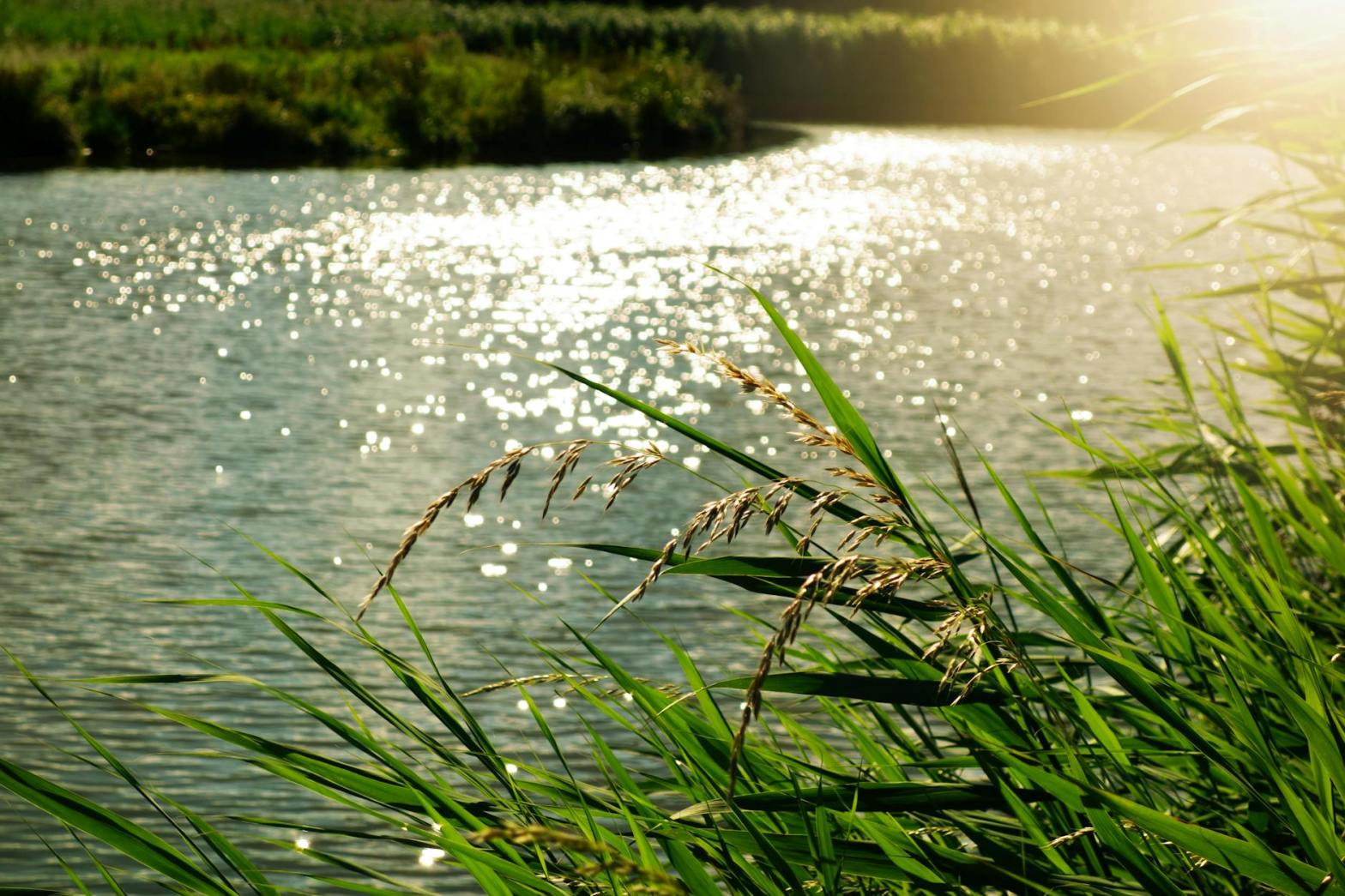
Into the Marrow of the Earth

Nature speaks in patterns,
the slow arithmetic of seasons,
sequences unfolding, measured and endless,
a truth carried on the wind,
bound to the ancient rhythm of earth and sky.

We are borne from this rhythm,
drawn from the womb of dust and fire.
We breathe as the sycamores breathe,
rooted in the same soil,
moving in the shadow of the eternal.

And what of our passing?
Winter claims the body,
its breath sharp, cold, final.
Yet we do not vanish.
We scatter—
into the marrow of the earth,
the blood of rivers,
the pulse of green rising again in spring.
Sam Aureli thrives on working with his hands, a passion rooted in his early blue-collar roles. Balancing work and family, he earned a degree in architecture through evening classes and now leads a career in real estate development. Sam turned to poetry later in his journey as a refuge from the chaos of daily life and as a way to deepen his connection to nature. His work has recently been accepted in The Atlanta Review.
 Amethyst Review