
perhaps

              	it takes all of us
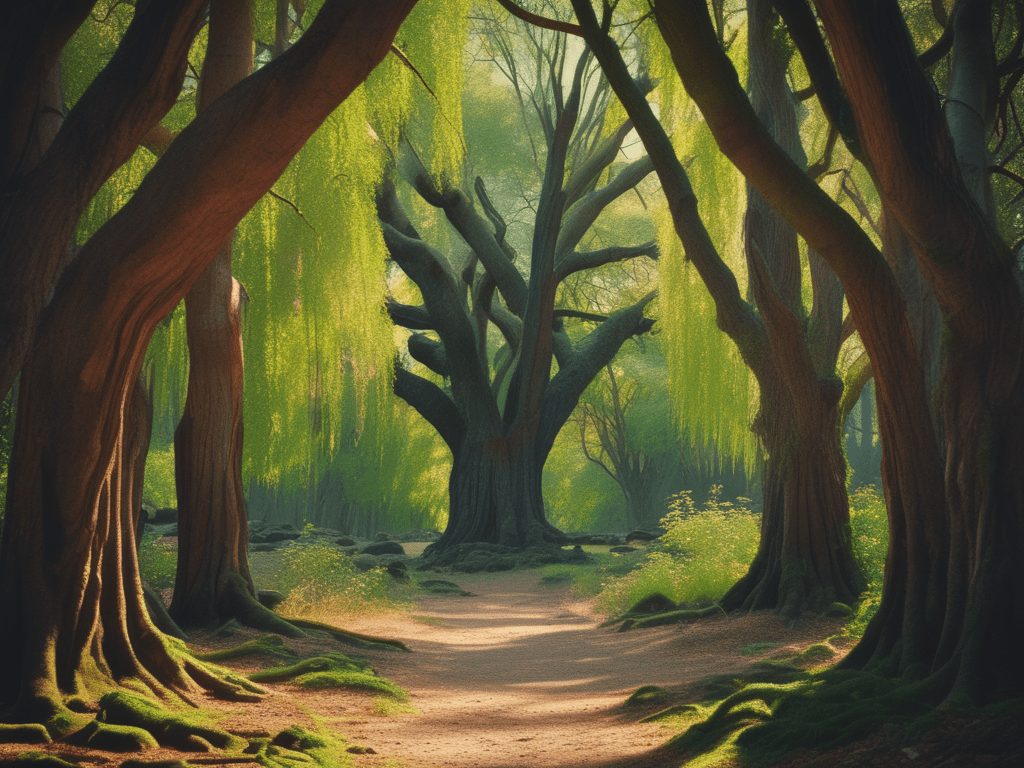
like countless trees creating a forest
to worship the Ineffable we all call Sacred
		even the atheist
		unknown even to him or herself
		along with the indifferent   mediocre   lip server
		everyone of whatever stripe and color
		belongs in this circle of reverence
as trees belong to the earth
		yet how much more this Great Mystery—
 this Ineffable bends like a mothering willow
 into our living and our worship


Sister Lou Ella Hickman, OVISS, has a master’s degree in theology from St. Mary’s University in San Antonio and is a former teacher and librarian. She is a certified spiritual director as well as a poet and writer.  Her poems have appeared in numerous magazines such as America, First Things, and Emmanuel as well as numerous anthologies. Her first book of poetry, she: robed and wordless was published in 2015 and her second book, writing the stars will be published in 0ctober, 2024. (Both by Press 53) Five poems from her first book were set to music by James Lee lll entitled "Chavah's Daughters Speak" and was performed in six major national concerts from 2021 to 2024.
Living with AFib II – a poem by Janet Krauss

Living with AFib II

The one remaining sun-splattered  leafed tree
rushes towards me waving, “Open the window,
feel the fresh, late November air lift you up,

winnow through your hair, wash your face
with the next sweep of wind, wash it with a scent
of the sea which will lift away your troubled breaths

and fling them across the boundless sky."
Janet Krauss, after retirement from teaching 39 years of English at Fairfield University, continues to mentor students, lead a poetry discussion at the Wilton Library, participate in a CT. Poetry Society Workshop, and one other plus two poetry groups. She co-leads the Poetry Program of the Black Rock Art Guild. She has two books of poetry: Borrowed Scenery (Yuganta Press) and Through the Trees of Autumn (Spartina Press). Many of her poems have been published in Amethyst Review, and her haiku in Cold Moon Journal.
Child of Light – a poem by Rupert M Loydell

Child of Light

the flesh
the blood

the bread
the mouth

the want
the why

the what
the need

the dream
the light

the silence
the song

the hope
the doubt

the guilt
the hurt

the fallout
the damaged

language
of belief
Rupert M Loydell is a writer, editor and abstract artist. His many books of poetry include Dear Mary (Shearsman, 2017) and The Return of the Man Who Has Everything (Shearsman 2015); and he has edited anthologies such as Yesterday’s Music Today (co-edited with Mike Ferguson, Knives Forks and Spoons Press 2014), and Troubles Swapped for Something Fresh: manifestos and unmanifestos (Salt, 2010)
Hallowtide – a poem by Alicia A. McCartney

Hallowtide

For Don

Fall’s first flame faded fast.
The only colors now are tired evergreens,
straw-snapped cornstalks in empty fields.

After the hallow of All Soul’s, nights grow long
and frost wakes us, warns
that winter is coming for us.

And we are never ready
for the unexpected summons when
the unsayable breaks our voices.

We once broke bread together,
and now his departure breaks us.

Each lost leaf a grief
and a relief
for the tree’s bare bones
to be reclothed
white with snow.
Alicia A. McCartney lives with her husband and daughter in southwestern Ohio, where she writes and works as a professor of English literature. Her poetry is forthcoming in Ekstasis.
November in Nazaré – a poem by Heidi Naylor
November in Nazaré

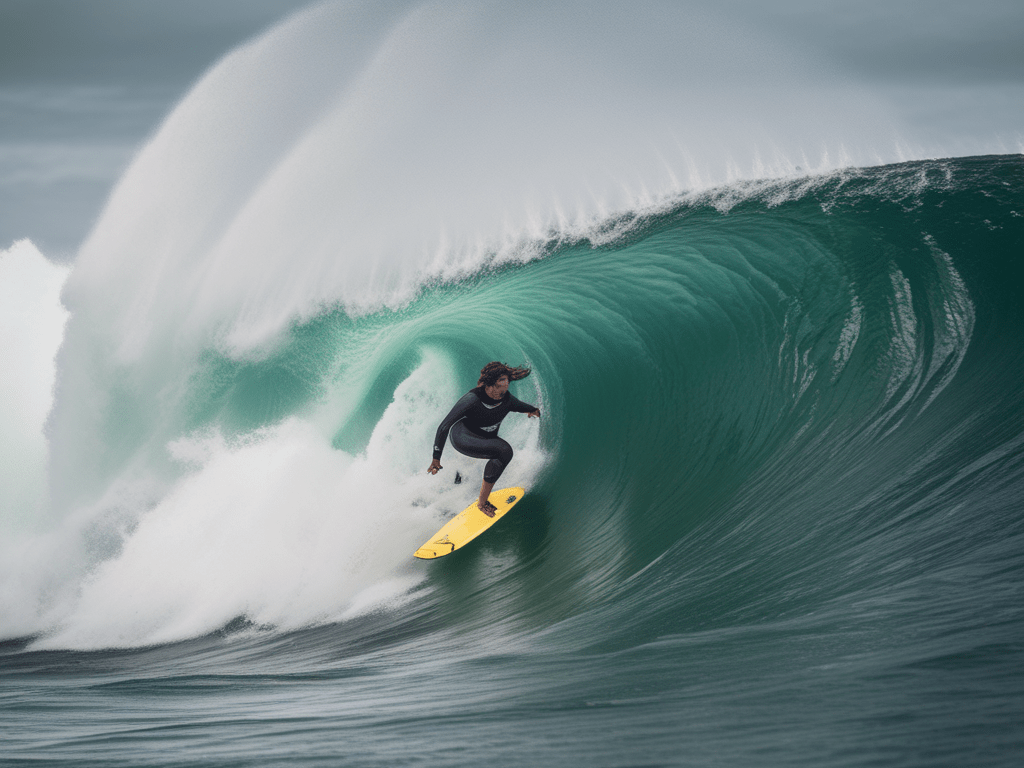
Maya Gabeira is towed to the top of a 75-foot bomb.
Go, go, go! she shouts to Carlos, her jetski driver; and she lets the rope fall.

Carlos skis the crest, watching her drop, waiting for her take hold, to sketch a creamy zigzag down a silken concrete wall.

She’s carving, shacked and slotted, fingertips brushing that wall, body and board in a curving, serpentine dance.

Oh It’s way more than pretty, Maya charging the bumps inside the greenroom, the tube, under the frothy curl as its thick crest crumbles over itself.

Pitching and riding to the outback, beneath and beyond the peel,
skating the end of the barrel.

Times she’ll wipeout, be rolled underwater, washed through pounding surf: tumbling
rocks and roiling sand. Maya’s been CPR’d back to life, she’s been hospitalized.

This is no cakewalk
but a threadthin dance through a blistering avalanche.

For today, her glossy head emerges. Up pops her board. Carlos zips round on the ski

clasps her hand and pulls her up; they watch for another pointbreak
heart-stopping wave. They climb.

Holding the tow rope, Maya slips off the back of the ski.
She lets the rope fall.

I don’t know how far a prayer will reach, or sometimes how near.

A baby, twisting—just this morning—from determined crawl

to a wobbly seat on the carpet,
sweet arms lifted in pleasure—
delicious delight on the video chat.

Five little girls playing across the street, staccato fade of their twilight voices
inventing the future.

My neighbor with a deep and private sorrow: estrangement, daughter, money—still,
she drops by my house with raisin bread.

The sidewalk icy. Air chastised with wind.
Through the window I watch as she chats up the postman.

That slick, light magnetized towrope. Attachment and tether. Safe harbor. Quiescence.

Stagnation.

Drop it.
Drop it now.
Heidi Naylor writes and teaches in Idaho. Her work has appeared in the Washington Post, the Jewish Journal, Portland(magazine of the University of Portland), Exponent II, the Idaho Review, New Letters, Dialogue, Eclectica, and other magazines. She has a recent fellowship in literature with the Idaho Commission on the Arts and served as Writer (Poet) in Residence at the Marian Pritchett School. Find her at heidnaylor.net.
All Saints – a poem by David Radavich

All Saints

A bouquet exists
in my head.

All the dead
who’ve come into
my life

still blooming,
still fragrant.

All the colors, sudden
shapes, lingering
leaf patterns,

everything under
the same sun

touched with rainwater
and still glistening.

Surely they don’t remember
having encountered me.

But here they are
like snowflakes,
apple seeds,
narrow footpaths.

That is its own kind
of heaven,

this one mind
gathering

all the souls
in a wind

that blows faintly
and refreshes.
David Radavich has published a variety of poetry, drama, and essays, including two epics, America Bound and America Abroad, as well as Middle-East Mezze and The Countries We Live In. His plays have been performed across the U.S. and in Europe. His latest book is Here’s Plenty (Cervena Barva, 2023).
love keeps the world – a poem by John McMeans

love keeps the world
Rio Chama, Monastery of Christ in the Desert

an ebb in the river

my mind wanders
in the call and response
of a yellow-rumped warbler

silence

whirls in an eddy, unmoored
from the frenetic flow
of the steady center

always
  moving
never
  resting

cupped in bloodied palms
of sandstone, alabaster peaks
weep scarlet tears

stream to river
river to ocean
ocean to sky
sky to stone
stone to stream

untamed
from the clasp
of anxious hurry

love
works gently
eddies
flows

and comes again
and keeps the world
John McMeans is a transplant to the Texas Panhandle, where he resides with his wife and sons. He received a degree in Geography and works for Refugee Language Project (refugeelanguage.org). His writing has appeared in Texas Poetry Assignment and an anthology published by the High Plains Poetry Project.
Roadrunner Meditations – a poem by David Chorlton

Roadrunner Meditations

Saturday; the no-news channel morning show
has animals in far away locations. The world is still
the world there.
                         And outside in the back yard
are quail who like to roll in the dust
where grass used to be. There is bad news
somewhere, but the white scent
of jasmine drifts across the front door
and declares a few square feet of peace.
There’s no way back
                                  into the dream that ended
with a dog’s bark at daybreak. Some
dark wisdom disappeared. The minutes slow dance
from six to eight to ten. A cheetah
watches for prey between the trees. A sloth
hangs upside down from a bough.
Suddenly a streak
                             of patchy sunlight runs
across the lawn at the speed of an idea escaping.
There’s a mean streak to his elegance.
Did the dream hold any answers
to the questions of the day?
                                           It flicked its tail and ran.
Don’t ask where to. Never question
sunlight when it flies.

*

In the ditch back
of the drug store, lizards like
the grasses dry and weeds
that don’t take long to disappear. Here are waste paper,
plastic cups, boxes
filled with nothing but the wind and whatever’s left
of newsprint blankets: someone’s
overnight address.
                              It’s a good place
for passing through, damn
the lack of scenic in the scenery, this
is where survival’s crest
stands proudly between the forehead and the sky.
This place without ambition,
where heat pools on the ground and shadows
run for their lives
                            is the promised land for him,
a dusty world that no one
else will claim.

*

Straight ahead between two moods
a desert path lifts one step
into light and
one back into darkness. Philosophy’s been here,
so has faith,
                  but both got lost
on the way down
into the arroyo. Shady now, and on the rocks
balanced above walls dissolving,
                                                    making space
for new ones as the earth pushes hard
from beneath
is the sudden insight
                                 into who and why
and where it all became this here and now.
Hurrying behind a dry mesquite as though
time itself were chasing him
he disappears.
                       The light opens for him
to pass and closes behind him when he’s gone
to where he’s looking back
at what the world would be
without him.

*

Wind and nighthawks beneath the stars
and it’s quiet as worry in the kitchen, quiet as darkness
passing through the yard. The window worries
that its frame won’t hold, the back door
worries that its hinges
will come loose to fly off down
the wash, and the left shoe
worries that the right one will walk away on its own.
Come dawn,
                    time for starting over,
and each time the Roadrunner appears
he’s a surprise, he’s
                                a lost thought trying
to find the question
it’s an answer to.

*

There’s a fine trail to take
for walking with only
the ground underfoot for company. Nobody here
talks about the soul,
                               gives instructions
on how to be alone, or to look inward.
Clear sky, blue
all the way to eternity. Stop,
and the view of distant mountains says this world
never ends.
                   The mind can fly
from here, the body has to walk. And unexpectedly
breaking through
the desert’s revery with a yip and a coo
comes the Roadrunner’s call
                                               in the key of mindfulness.
He’s concentration running
and it matters not at all
that the rocks around him
have become
                    meditations turned to stone.

*

He was here, that much
is certain but where he’s gone nobody
will say. He’s good at making mystery
of a sudden appearance on the back wall and then
turning fact to fiction
                                  with a flick
of his tail and an updraft of light
that lifts him to the roof. He might return
tomorrow or
                    not for several months; he’s no
messiah, neither does he stop
to be admired. Religions don’t explain
where he comes from, where
he goes and whether that is food
                                                     or indecision
in his beak. It’s a lifetime’s work
to wait for the improbable
when his return could never be
as beautiful as dreaming it.
David Chorlton is a European now anchored firmly in the Southwest. He grew up in Manchester, lived several years in Vienna, and later adjusted to being in Phoenix where learned to look more attentively at the wildlife where city and desert overlap. A book is forthcoming from The Bitter Oleander Press, Dreams the Stones Have.
Breaking Through The Veil – a poem by Mark James Trisko

Breaking Through The Veil

Once more waiting for sleep, lying on my back in my bed
with casket hands, palms down, crossed upon my chest
speaking quietly to my dead mother.

Mother, I had another one of those wicked migraines this morning.
You know the ones like we shared.
When I was young, you used to have me lie on the couch,
with my head in your lap,
the room darkened and in total silence,
and you would put a cold, wet washcloth on my head
and you would rub my temples until I stopped crying.
I would sometimes fall asleep like that.
It was a short-lived moment of peace.
Now, I can’t stop. I don’t have time.
I need to push through the pain until I reach the other side.

Mother, our lives are so hard.
Work has been especially frustrating lately.
No one listens to me. No one hears me.
As I get older, I feel more and more
like a thin piece of cellophane,
translucent and unrecognizable, imperceptible, unnoticed.
And my children are my worst critics;
they laugh at my fears and faults and make fun of my age.
Did you feel that way before the end?
Were you someone?

Mother, I saw you in my dreams last night.
You were just a girl, with your auburn red tresses long and curled.
You smiled up at me,
sitting on your knees on the patterned picnic blanket,
the warm sun brightening your face, your eyes aglow.
And you spoke in your young voice,
“It’s lovely here.”
And the wind grew louder, and you spoke again,
but I couldn’t hear you, your words were ghostly and indistinct.
Try harder, mother, speak louder.
And at that moment, I felt unbridled grief.
Were the words I missed important or prophetic or nothing at all?
Were they a reflection on the beauty of life or a list of sad regrets?

Mother, I miss you so much.
Please answer. Tell me what’s waiting there for me.
Mark James Trisko has been writing poetry for his entire life, but after retiring recently, he heard his muses yelling loudly in the night begging him to let their voices be heard. His work is scheduled to appear in Valiant Scribe Literary Journal. He currently lives in Minnesota, with his beautiful spouse of 47 years, four wonderful children and eight above-normal grandchildren.
Monologue to Myself – a poem by Wally Swist

Monologue to Myself


Being so close to something
so alive, so otherworldly,
it was multidimensional,
there was a buzzing
in the air, the air opening,
seared with light,
an instantaneous rupture
which closed again
after it hovered
over her head
in a flash of gold,
perhaps, the response to

the monologue to myself,
regarding the purpose
of commitment, the need
for prudence in planning
one’s final days,
not so much different
than before I came
to visit you this morning,
when you relayed to me
you saw me from a distance,
walking up from the road,
leaving the blossoms behind.
Wally Swist’s books include Huang Po and the Dimensions of Love (Southern Illinois University Press, 2012), selected by Yusef Komunyakaa for the 2011 Crab Orchard Open Poetry Competition, and A Bird Who Seems to Know Me: Poems Regarding Birds and Nature, winner of the 2018 Ex Ophidia Poetry Prize. Recent essays, poems, and translations have appeared in Asymptote (Taiwan), Chicago Quarterly Review, Commonweal, The Comstock Review, Healing Muse: Center for Bioethics & Humanities La Piccioletta Barca (U.K.), Pensive: A Journal of Global Spirituality & the Arts, Tipton Poetry Review, Poetry London, and Your Impossible Voice. Shanti Arts published his translation of L’Allegria, Giuseppe Ungaretti’s first iconic book, in August 2023. He will be featured writer in the Spring 2025 issue of Ezra: An Online Journal of Translation that will highlight several of his translations from the Spanish of Roberto Juarroz.
Finishing Line Press will be publishing his book, If You’re the Dreamer, I’m the Dream: Selected Translations from The Book of Hours, in 2025.
 Amethyst Review