Love Poem of the Long-Dead Egyptian – a poem by Liz Kendall


Love Poem of the Long-Dead Egyptian

When Lord Anubis weighs my heart
Be easy, love; you’ve done your part.
There’s years of heaviness I’ve brought
Upon myself with deed and thought,
But in the memory of your care
My heart’s no longer meat, but air.
The muscles do not squeeze, they play,
And so shall the inscription say:
Despite the harms received and dealt
In life, love’s truth may still be felt,
Continued in the underworld.
Imperfectly deserved, but pearls
Embrace the grit they grow around.
So tarnished hearts glow underground.

My travelling soul’s vitality,
Pathfinding ba, will rise wing-freed
To find the trail back to your skin.
To leave a kiss there, nestle in
Where scent and warmth and memory
Revive once more our unity
Before the grave asserts its pull.
I rest with heart both light and full.

Liz Kendall works as a Shiatsu and massage practitioner and Tai Chi Qigong teacher. Her poetry has been published by Candlestick Press, The Hedgehog Poetry Press, and Mslexia. Liz’s book Meet Us and Eat Us: Food plants from around the world is co-authored with an artist and ethnobotanist. It explores biodiversity through poetry, prose, and fine art photography. Her website is https://theedgeofthewoods.uk and she is on Twitter/X and Facebook @rowansarered, and on Instagram @meetusandeatus.
Running Through the Trees – a poem by Ahrend Torrey

Running Through the Trees

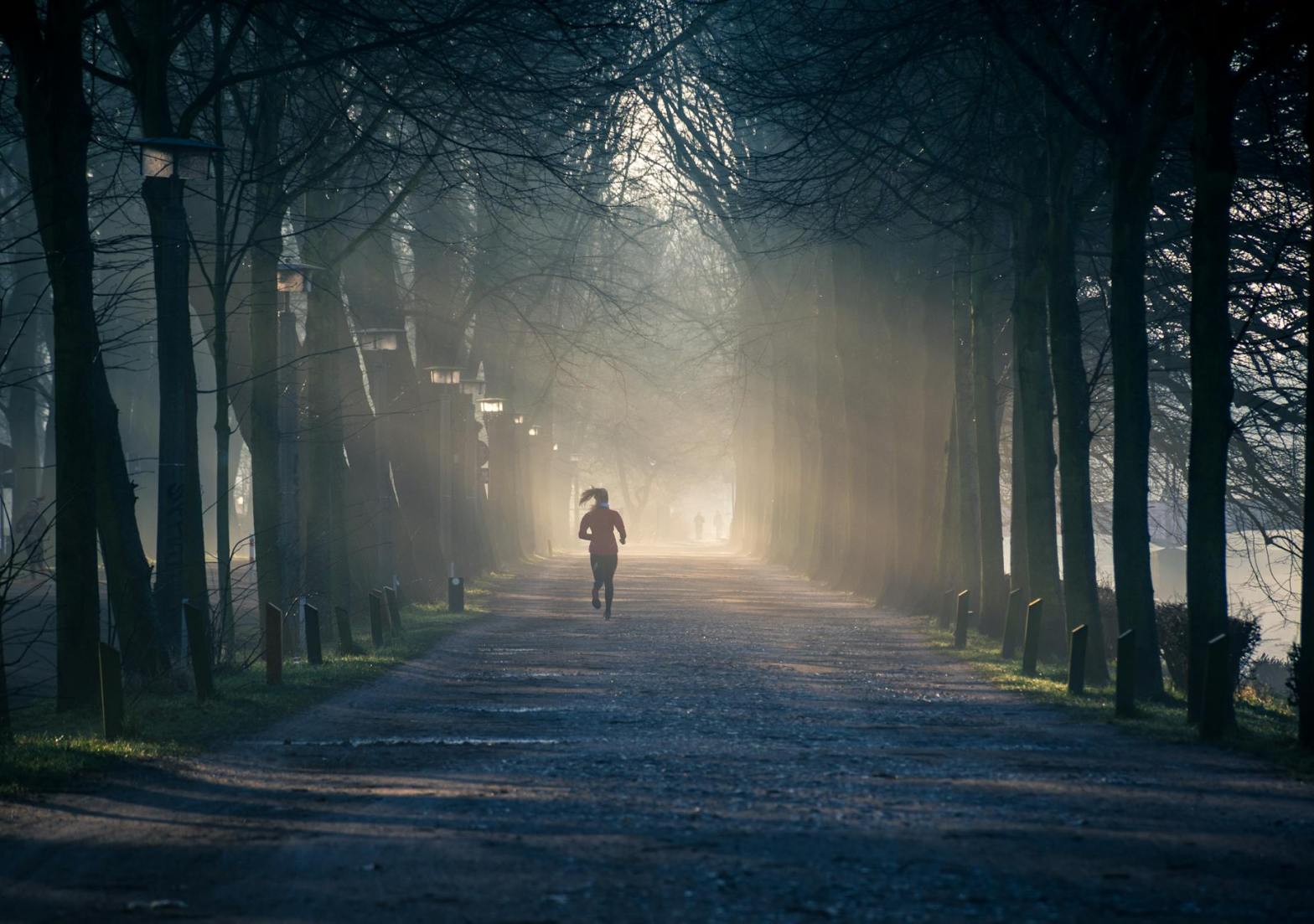
I’ve decided to run among the trees—
to leap over clover, and wild onion,
to keep running toward the horizon—
It’s so beautiful, my eyes water and burn.
The splendor is like a fiery star
come out of the night— to ignite the world!

I cannot feel my body. I do not exist.
The monarchs are here: where I’ve stopped
they alight on my forearm! and all I can do
is kneel and cry, kneel and cry...

It’s so painfully beautiful to see their wings
slowly lift, then lower in pure delight.
The way the clover lifts praise to the sky.

Every body raised high— earth, untouched.

Ahrend Torrey is the author of This Moment (Pinyon Publishing, 2024), If it’s darkness we’re having, let it be extravagant: The Jane Kenyon Erasure Poems (Pinyon Publishing, 2024), For What Are the Blossoms Reaching? (Limited Artist’s Edition, American Academy of Bookbinding, 2023), Ripples (Pinyon Publishing, 2023), Bird City, American Eye (Pinyon Publishing, 2022), and Small Blue Harbor (Poetry Box Select, 2019). His work has appeared or is forthcoming in Denver QuarterlySlippery Elm Literary JournalstorySouthThe Greensboro ReviewThe Westchester ReviewWelter, and West Trade Review, among others. He lives in Chicago with his husband, Jonathan, their two rat terriers, Dichter and Dova, and Purl, their cat.

Among the Grammars of Loss – a poem by Darlene Witte

Among the Grammars of Loss

One word
single on the leaf
reveals my helpless silence.
Among these pages
small ants, frantic
lose their way, drop back
to the bottom, scurry underneath.
Gnats on course stumble
blind, into my skin.
I brush them away.
Sunshine gleams. Calls
nearly opened green:
That call, those sounds, this honor of leaves:
Icons stirring within dusty clay
chambered walls.

Darlene L Witte is a former Professor of Education on the faculty of Northern Vermont University from 1993 to 2014. Born and educated in Alberta, Canada, she always meant to become a poet. Her thanks go to Stephen Kastner at www.greenmountainwriters.com for envisioning a vibrant community of writers. http://www.darlenewitte.com

Where would this pathway lead – a poem by Ioanna Panagiotopoulos

Where would this pathway lead


Look down.
Where would this pathway lead
a sunken seed, a fallen deed.
Follow sheaves of green
rock clusters bound
hard soil, sun bleached
faded June leaf.

Look up.
Streams of light, circling wind
around the earth igniting soundless sleep
lost in thoughtless fragments
of the empty deep.

Look in.
Blazing fire of the heart, firing thought
in the pyre of the sun, earth’s funeral
sits ablaze on the wounds of all the hallowed mouths
bereft of dying words, tasting the advent of birth.

Who solidified the earth
who trusted the empty season of greed
who touched, dying
and kissed the tired eye
was it you
unseen god
was it you
who led this pathway, below
above, within

for you and I
to gather fallen in the forest bloom
and see the sky,
and carve the pathways new.


©Ioanna Panagiotopoulos

Ioanna Panagiotopoulos is a Greek-Australian writer, actor and priest. She spent her youth writing poetry before training in speech and acting at The School of the Living Word. In 2017 she was ordained as a priest in The Christian Community. She lives and works in Canberra, Australia.

Veni, Sanctus Spiritus – a poem by Caroline Gorman

Veni, Sanctus Spiritus

My heart: hungry, not humble, hubristic with voracity.
I think I could drop through the cold floor like a sinkhole
and devour it all, a chasm under the chancel—
I fear my emptiness. Worry-water beads my lashes.

St. Michael behind me: a lance in my shoulder,
leading me onward with stiffened jaw.
St. Erasmus before me: a hand on my brow,
branding me with oil, enflaming me—
I dig my fingernails into that burning burden
and feel it give under my grip; I
gnaw it, will it to fill the sinkhole at my core.

But the sacred sparks flit here,
this restless stomach I mistook for a heart—
while I count the drops of oil slipping down my nose,
His bloody hands rap at the walls of my
ignored heart like the skin over a hollow drum,
beating a third beat in my anxious pulse.

My white-knuckle prayer to be fed tires itself,
rattling, until I hear the rhythm in my ribcage
harsh and heavy: Have I not hewn honey
from stone for you? Knit your bones?
Tended your soul-fire while you slept?

You will not consume until you are consumed.


I am the starving St. Catherine with watery eyes,
the silent St. Gemma with dripping palms,
blindly emptying myself and clutching thorns.
I am crushed like oil and laid in the ambry
to rest, heart burning from the outside in.

Caroline Gorman is writer and public library lover from Indiana. She studied English literature and religion at the University of Evansville, where she won awards for both her academic and creative writing.

When Gods Don’t Come In – a poem by Cat Dixon

When Gods Don’t Come In


God’s dog is sick, and he isn’t coming in today, and I rejoice—
play music loudly off YouTube and clean
my desk. Days like this, where I can work uninterrupted,
filing away like a madwoman or typing up a report in one sitting,
ease the gnawing claws at the back of my neck.
Days like this only come so often, and after work is done, I stroll
into the sanctuary with its 20-foot windows,
white pews, red carpet, and sit on the wooden altar steps
and pray. The sunset streams light through the glass
and rainbows appear along the organ’s balcony. I feel
God here, not the God of this church who like a dictator demands
my obedience to his every word and acceptance of his schemes,
but the God I found once when I was abandoned by man.
I want that God to return. I would rest my head
on His shoulder, whisper my devotion and become
His secretary writing up His prayers and decrees.
Then I would be free.

Cat Dixon is the author of What Happens in Nebraska (Stephen F. Austin University Press, 2022) along with six other poetry chapbooks and collections. She is a poetry editor with The Good Life Review. Recent poems published in Thimble Lit Mag, Poor Ezra’s Almanac, and Moon City Review. She works full-time as a church admin and teaches creative writing part-time at the University of Nebraska, Omaha. 

An Angel Appeared to Rilke in the Garden – a poem by Rochelle Jewel Shapiro

An Angel Appeared to Rilke in the Garden

Of course, the angel came to him in a garden,
that kingdom of buzzing and chirps and chucks,
a hotbed for the miraculous where dew
settles on hibiscus like eye-gleams and bijoux,
and acorns drop, sprouting a maple tree
amid the rhododendron.

Of course, Rilke saw the angel
where mimosa petals fall, feathery
and languorous in wind.
There is magic in the yellow rays
of dandelions, so like children’s
drawings of the sun and magic in the spell
cast by honeysuckle scent.

Of course, Rilke saw the angel come down
from plush clouds in a sky the blue
of all the rivers of Heaven,
come down to visit him in the garden
where even the lowly snail is holy.


Rochelle Jewel Shapiro has published in the New York Times (Lives). Nominated for a Pushcart Prize and Best of the Net, her short stories and poetry have been published in The MacGuffin, Euphony, the Iowa Review, and many more. Her poetry collection, Death, Please Wait was published by Turtle Box Press in 2023. She teaches writing at UCLA Extension. http://rochellejshapiro.com @rjshapiro

The Special Scarf – a poem by Joan Lerman

The Special Scarf

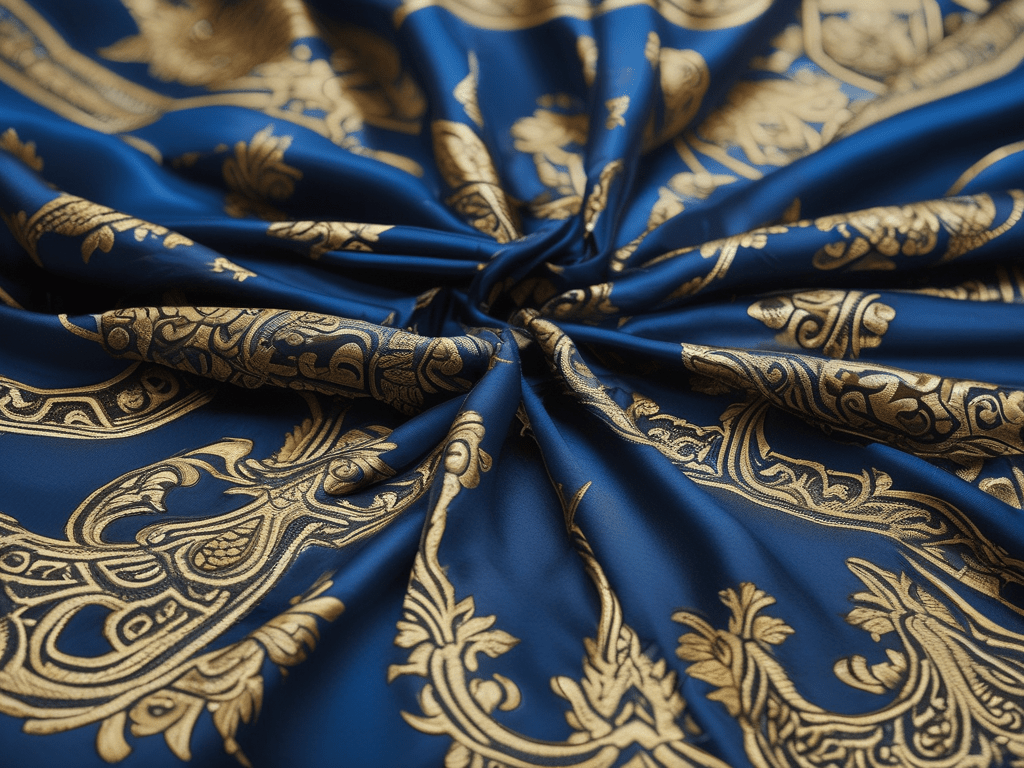
Blue and black silk
running down
in a straight line
generous horizontal wide
space, enough to hold
each side with fingertips

Some gold fleur-de-lis
mixed into the black blue silk
medley

I went to the exhibit that year
more than ten years ago now
wearing that scarf

Taking the edge
the small corner
I lightly tapped and touched
the bit of silk

To the gold-encased rounded reliquary
housing one then another then another
tiny bits of cloth,
a strand of hair perhaps,
all enclosed
in a worship space
very small circling halo sparkling
on the long tables with the pure white cloth
as a runner below the pieces
of the exhibit.

We all walked in a single file line
quietly
hopefully
silently

After touching the relics
I still wore the scarf,
the blue and black and gold
hues hanging down
each side of my black sweater

I haven’t looked at it
in a while
it is in a drawer
walnut wood drawer

Marveling silently to itself
the secrets of the saintly ones
within its gentle folds.

 Joan Lerman is a writer and musician living in Southern California.  Her poetry has appeared or is forthcoming in Emmanuel Magazine, Academy of the Heart and Mind, 300 Days of Sun, Ionosphere, Pure Slush, Orange Juice Poetry Journal, and New Croton Review.

Starlings – a poem by Rowan Middleton

Starlings

We’ve only got ten minutes says my mum
and so we stride beneath the arches, cross
the echoing hush of tiled floors and pews
to see the chapterhouse. I lag behind
and spot an A board printed with the words:
The nave is a journey towards the unknowable
mystery of God.
I hurry on
and climb the wavelike steps to the chapterhouse,
so full of light it could be made from lace.
A bearded guide recounts the Civil War,
as if he’d seen the shattered glass himself.
My brother checks his phone; we slip away.

We drive across the levels, past the tor.
An old tree sinks diagonally in a pool
and feathered reedheads blaze like sunrays
in the fading light of a winter afternoon.

At Ham Wall stewards help us tuck our cars
in line. An A board tells us Starlings declined
by sixty per cent since nineteen-ninety four.
We join the straggling groups that trudge
along the abandoned railway line, then wait
with about a hundred people in the cold.

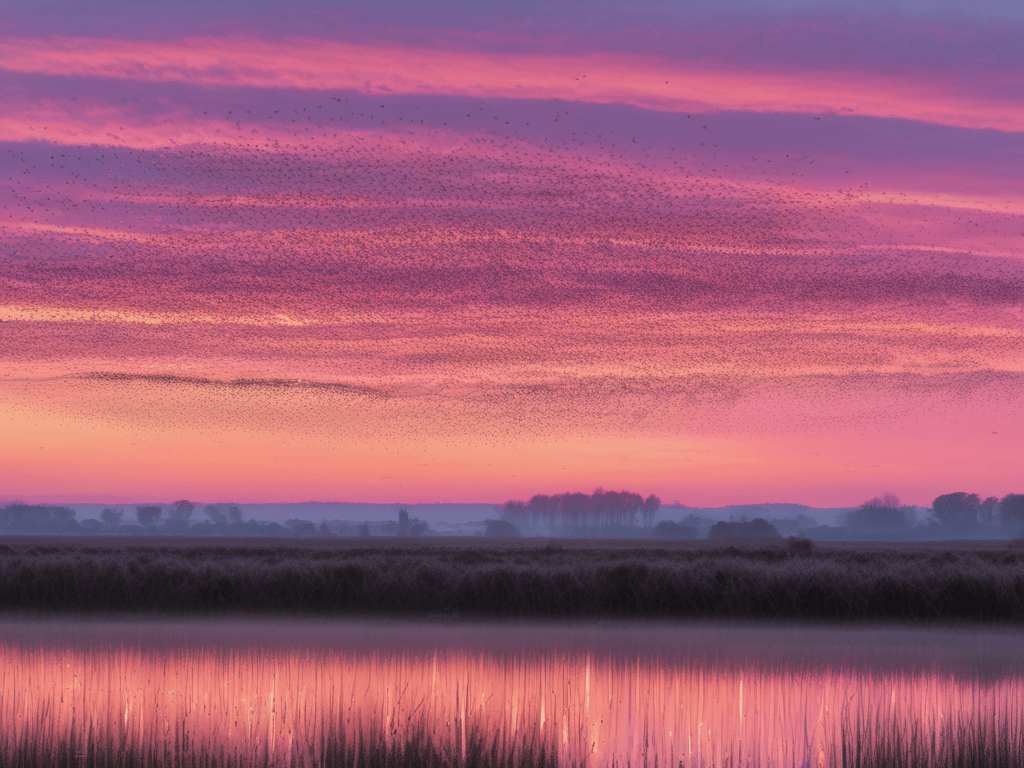
A row of clouds above the skyline gleam
with soft pink light. The marshes feel alert
with winter, like the tone of tingsha bells
receding into stillness.

The first birds
work their way above the sycamores.
and out across the marsh. A murmuration
passes above us like a giant wing
thrumming steadily. There is a pause,
before a line of black descends like rope
then whips the air, merging with other shapes
that swirl above the reeds. Someone said
it wards off predators but that seems wanting
as we stand before this rush of hearts and wings
that choreographs the air with living forms.

We walk along the dyke with other groups,
strangely fulfilled. Some people wait and stare
into the dusk for one last murmuration.
My gaze is drawn by other mysteries:
the stumpy willows, the line of still dark water,
the patterns made by nettles on the path.

Rowan Middleton teaches creative writing and English literature at the University of Gloucestershire. His pamphletThe Stolen Herd is published by Yew Tree Press. https://rowanmiddleton.mystrikingly.com/

Muddy Boots – a poem by Susan Brice

Muddy Boots


It has been a wet autumn, mud and decaying leaves cling to my boots.
I sniff the earthy damp, breathe deeply, know the Scyppend’s Work.

In the beginning, after the chaos, silence came cloaked in darkness.
Out of silence came Light and the Whispered Word the Scyppend Spoke.

Among the many things the Scyppend made were seeds for trees,
and in the seeds lay hidden embryonic leaves, to clothe the trees.

Seasons gave them birth, green life burst out to shout the joy of all that is.
With the turning of the green to red, to yellow, to rusty brown came rest and fall.

It has been a wet autumn, mud and decaying leaves cling to my boots.
I see the Scyppend’s plan was all provision for our Whispered World,

small details reveal the Mystery of the Scyppend’s Love:
mud from my boots and loamy leaves to nourish roots of trees.

** Halig Scyppend(OE): Holy Creator, Shaper of the world

Susan Brice  lives in Derbyshire with her husband, Richard and her canine companion Sunny. Walking the dog and observing the work of the Creator seem to go hand in hand, Seeing nature in all its many moods and colours has inspired her to write a collection of contemplative poems entitled Brushstrokes of the Ultimate Artist (2024), available from Amazon.

Susan’s poem ‘Canvas’ and her essay, ‘No Great Busyness’ have both appeared on Amethyst Review. Her poem ‘Pause’ was included in All Shall Be Well: New Poems for Julian of Norwich. She produced a collection of short stories in 2015, Returning Back and other short stories (Amazon). In 2022 Susan collaborated with fellow poets, Viv Longley and Jane Keenan to publish the poetry anthology Daughters of Thyme (dotipress.com). Viv, Jane & Susan met through the Open University Masters Degree in Creative Writing and are currently working on a second poetry anthology, Home Thyme, which will be available in October 2024.