Because no cuckoos call from the downs’ blue woods, my heart breaks, aches with sorrow and waiting, waiting for that cool voice in the dusk of early day.
Not now: there is no call, as if spring cannot return again.
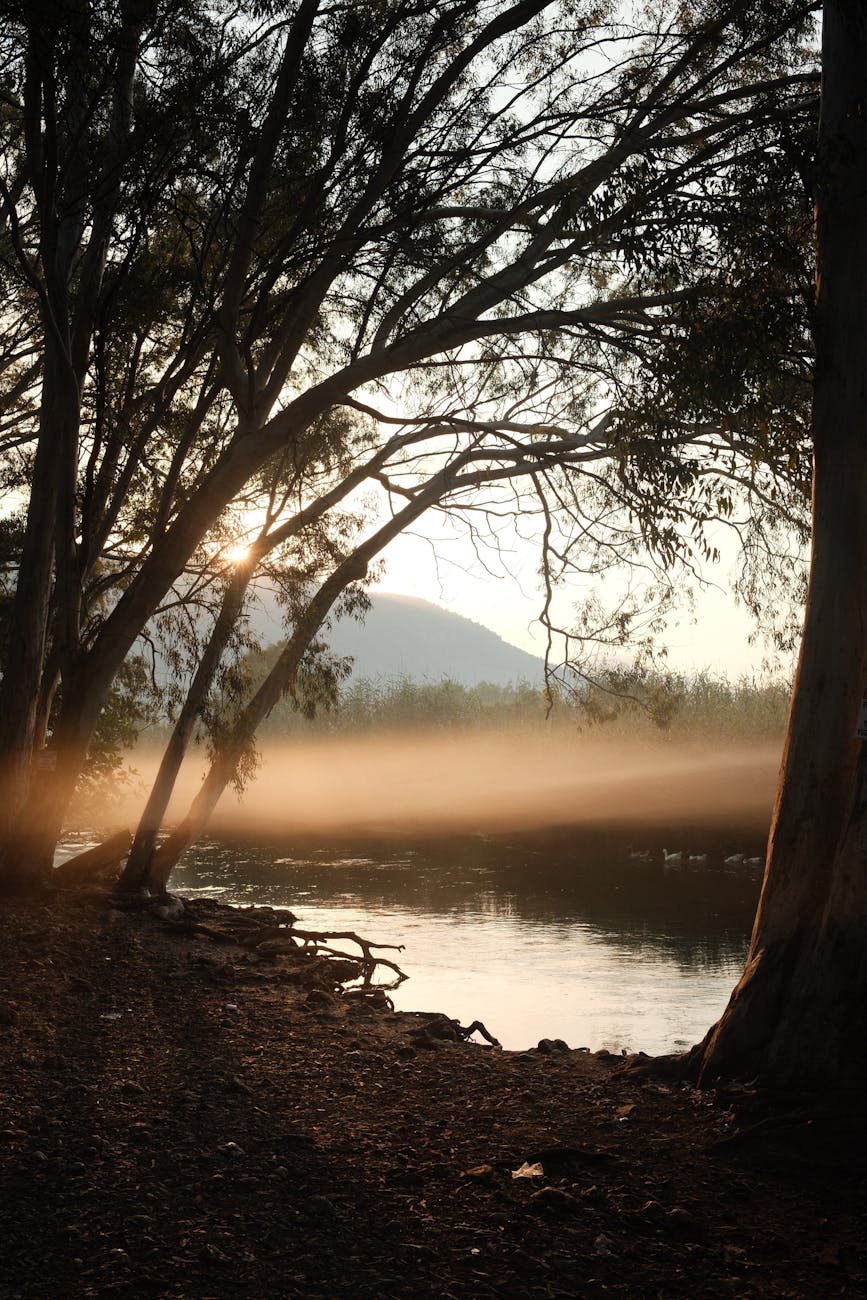
But dawn also breaks, light streaming & soaking all. Still half-shadowed, a pool glitters—glass shatters: a frog’s greedy leap, ripples as from pebbles.
Beyond these gardens, an early ploughman breaks the sod for sowing bright spring barley.
One of the winners in Ireland’s 2024 Fingal Poetry Festival Competition and in 2022’s Poetry on the Lake, Lizzie Ballagher focuses on landscapes, both psychological and natural. She was a Pushcart nominee in 2018. Having studied in England, Ireland, and the USA, she worked in education and publishing. Her poems have appeared in print and online in all corners of the English-speaking world. Find her blog at https://lizzieballagherpoetry.wordpress.com/
The trees are the divine assembly, our sentinels, our mothers, too, their leaves our life and heartbeat,
the juncos, grey and creamy white, with their perky hops and flits bring us each year the chilly North,
and the robins who remain despite the autumn frost are summertime and spring,
the ground beneath our feet, the earth, our deep connection, reminds us we stand upon one Earth,
and the rocks, rocks we thought so solid, but that can so surely crumble,
are the world, the world around us,
the world in which we live.
Katy Z Allen is a lover of the more-than-human world, poet, retired rabbi of an outdoor congregation, former healthcare chaplain, co-founder of a Jewish climate organization, and eco-chaplain. She has been writing in one context or another all her life. Her poetry has appeared in online publications and in the 2025 Art on the Trails: Number 9 poetry and art book. Her book, A Tree of Life: A Story in Word, Image, and Text was published by Strong Voices Publishing. Her work can be found online at www.katyzallen.com.
Carolyn Chilton Casas is a practicing Reiki Master and teacher who explores ways of healing in the articles she writes for energy and wellness magazines in several countries. Her poetry has appeared in journals such as Braided Way, Grateful Living, and One Earth Sangha and in anthologies including The Wonder of Small Things: Poems of Peace and Renewal, Thin Spaces & Sacred Spaces, and Women in a Golden State. More of Carolyn’s work can be found on Instagram and Facebook, at www.carolynchiltoncasas.com, and in her newest collection of poetry Under the Same Sky.
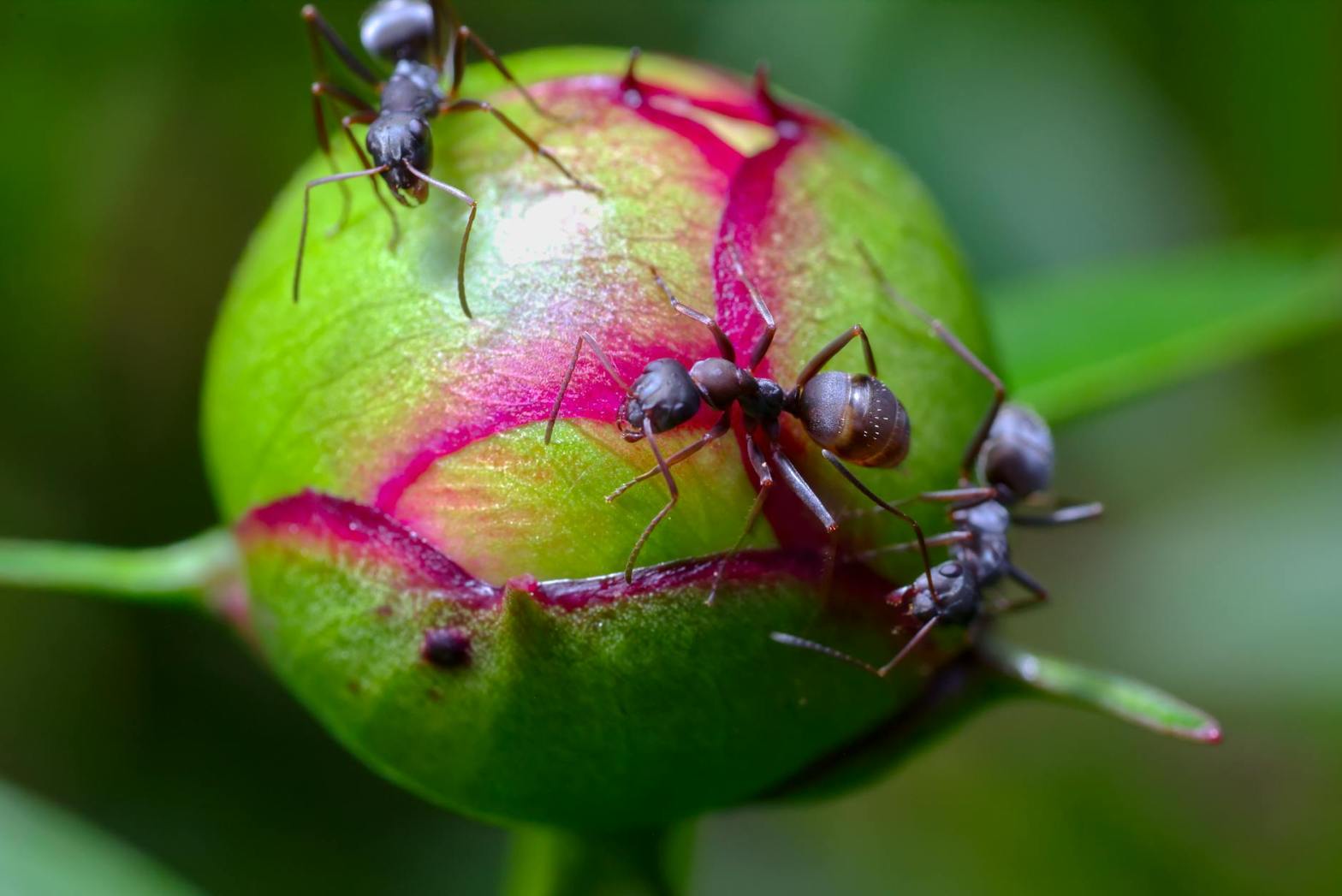
In early March, an infestation of odorous ants. They must come from somewhere in the walls. Ground too frozen for survival.
My husband brushes them off, could care less about the nuisance, while I wonder why I rage at their arrival, their black trail
thick as a noose as they march toward the Borax I baited in the corner.
*
I watch myself as I poison them and their food source. Whatever it is, this is a darker me. This stomp and squash.
*
Higher self. Angel in the ghost-light. Why do I waft and drift?
Why was flesh made so easy to tackle? Wounds in me,
why have you never healed?
*
Maybe I’ll turn into an ant. Accept the funiculus and mandible. Acidapore, tarsus, head. I’ve a lot to learn. How not to drown in a spring downpour.
How not to cave too deep. I have to learn ant-speak.
Like an undertone with antennae. A low roll, a thin glaze, a wish.
*
I follow what’s ahead of me into the kitchen. My husband is gone for the weekend. He forgot there was extra baklava near the coffee.
I desire now a turn to it like honey. I guzzle and maw. Amen, I say, as I drink and feast. Amen, to the dark and light that compete in me. Amen, ants. Let’s eat.
Originally from Pennsylvania, Alicia Hoffman now lives, writes, and teaches in Rochester, New York. Her poems have appeared in a variety of publications, including Thrush, Radar Poetry, The Penn Review, Glass: A Poetry Journal, The Night Heron Barks, SWWIM, Atticus Review, and elsewhere. Her book _Browsing as a Guest_ is forthcoming from Gnashing Teeth Publishing. Find her at: www.aliciamariehoffman.com.
Awash in uncertainty, I wander to this waterfall on the road to San Miguel, not expecting it
to strike out like an archangel, thrust its sword against my fear, brush its bright blade against my face.
And yet, I find peace in watching this army of water advance with such conviction. It does not argue
with the cliff, or worry with the weight of all that moving. It does not ask for anything but belief in the way it goes.
All day, all night, La Paz flows with a certainty I cannot find in myself. It pours out its power like a soldier of God. From the mouth
of the rocks, it prays for me until I can do no less for myself, begging for that same surge of cool resolve, that sense of going right.
Linda Culp Holmes holds a degree in English literature. She has won several poetry awards from organizations in East Tennessee and has had work published in the Red Branch Review, Pine Mountain Sand & Gravel, Monterey Poetry Review, and the Ekphrastic Review, among others. Her non-fiction book, If I Am So Lucky: A Portrait of a Man in Perilous Times, 1862-1865, was published by Heritage Books, Inc. in 2023. She lives in Oak Ridge, Tennessee.
Wakening
	—in response to a painting by Matt Carrano

Behind today’s explosion of buds
 	their shells tossed, leaves unrolling outward
 		hungry for snatches of sun
 			between rain-smudged clouds
the wintered-spring decay
is dark with knowing

Deep blue shadows beneath shadows
 	feed from forest floor
 		from vernal pools
 			from shallow ponds’ primordial mud
birthing yellows, blues, sharpened petals
slicing streaks of rust

Hidden nests blossom within canopies of green
 	twigs and vines clasping
 		clinging to branches
 			their discarded scraps swallowed
into burgeoning burrows
crawling, snaking, feathering to life
Tom Laughlin is Coordinator of the Creative Writing Program at Middlesex Community College in Massachusetts, USA, where he coordinates a visiting writers series; open readings for students; and publication of the online literary magazine Dead River Review. His poetry has appeared in Green Mountains Review, Pensive, Sand Hills, The Main Street Rag, and elsewhere. His chapbook, The Rest of the Way, was published by Finishing Line Press in 2022. His website is www.TomLaughlinPoet.com
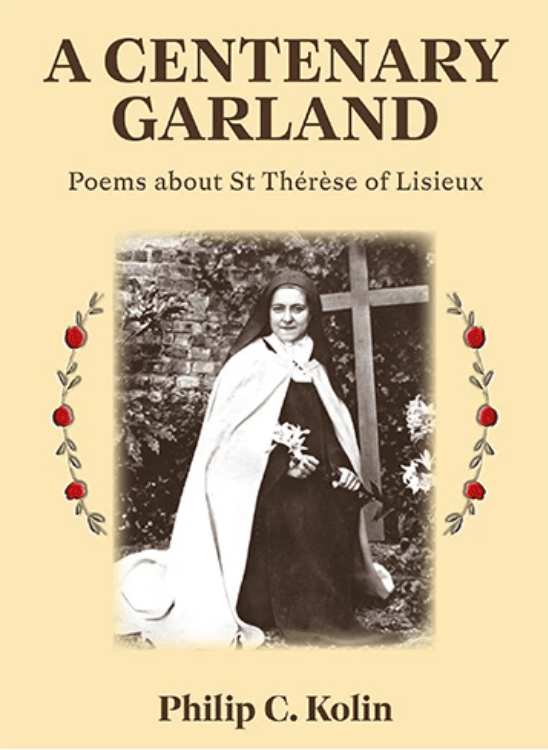
Philip C. Kolin. A Centenary Garland: Poems about St. Thérèse of Lisieux. Oxford, UK: Teresian Press., Dec. 2025
Philip Kolin is one of the most prolific and respected poets whose vocation is to write about the sacred. His latest book, the Centenary Garland, celebrates the 100th anniversary of St. Thérèse’s canonization in 1925. Though she lived a short life of just 24 years (1873-1897), nine in a Discalced Carmelite cloister, the impact of her spirituality has reached across the globe, resulting in being made a Doctor of the Church in 1997.
Thérèse was one of the most popular saints in Christianity. Her prayers and struggles resonated with so many. I, too, was her devotee. I prayed to her to intercede for me as I struggled with deciding between a priestly or lay vocation. Her words were familiar and consoling. They revealed a compassionate Jesus whom she saw as her spouse. Kolin’s iconic poem “In the Sacristy Garden” underscores this: “Christ is her Divine Spouse and she welcomes / every cross that comes to her.”
Kolin’s poems explore St. Thérèse’s life and legacy. Key poems focus on her parents, Zélie and Louis Martin, both canonized, and her three sisters who also became Carmelite nuns—Pauline, “the Pearl of Lisieux,” and Celine, “the photographer of Carmel.” Kolin includes several of Celine’s photos enriching our experience. St. Thérèse’s home nurtured her faith and her theology.
St. Thérèse’s life in the convent was short, but during that time she lived a full spiritual life. She developed and documented a rich spirituality of great intimacy with God to the desperation of the dark night of the soul. Kolin captures these in his poems that are carefully crafted and informed by St. Thérèse’s autobiography The Story of a Soul. His poems look at the different roles and activities she had in convent life—novice, sacristan, artist, caregiver, and active at “The Great Laundry Day,” an “allegory of body and soul.” The key to St. Thérèse’s theology was her “Little Way”—“This little sister asked big questions about God / from her desk in her cell behind / grille and gate . . . Her pen had eyes like Eziekiel’s angels” and in “Thérèse the Artist” Kolin echoes the saint’s emphasis on her own smallness—“I am the little brush which Jesus has chosen to paint” Kolin evokes Thérèse’s own littleness again in “L’oiseau du Jesus, God’s Lark”:
Though vowed to a cloistered life,
Thérèse often envisioned herself
Ascending into the skies

as a weak little bird,
a light lark
who gladdened others

by bringing them the good news
about Christ. Thérèse prayed
to soar toward the Divine Sun.
A major reason why devotion to St. Thérèse spread around the world was the simplicity of her message. Rather than pursue great accomplishments, she wanted to score many small gains. As Kolin’s poems show, she frequently emphasized the need to be uncluttered and unpretentious but clear and simple in focus. That simplicity won for her epithet and fame of “The Little Flower.” Kolin’s poems, tender and insightful, reveal why. She earned this title because from early childhood she attended her father’s garden, cultivating and sharing his flowers. Kolin surmises, “She loved red roses the best.” She continued gardening in the convent and earned the reputation for handing out roses to those who came to the convent for prayer or a visit.
In addition to flowers, Thérèse was an observer of much of nature’s beauty in creation. Here in “Chestnut Alley” within the monastery’s walls, we hear Kolin’s eloquent voice:
Every holy place has trees –
Palms, oaks, cedars, pomegranates.

At Carmel chestnuts line the alley
And the garden near the cemetery.

Seeing them from the recreation room or
walking their paths has enlightened the sisters.

Rooted in such a holy place, these trees
bloomed rich in symbolism.

Fruit-ladened with lush, leafy canopies,
God’s gifts to Carmel.

But at autumn pruning time, bare
trees found their leaves in bundles

on the ground teaching lessons in humility
and poverty.
Kolin’s poems repeatedly stress that Thérèse loved the face of Jesus. Her official religious name was St. Thérèse of the Child Jesus and the Holy Face. To look upon his face was to be united with Him, joined in suffering with Him and comforted by His love. Though His face is broken and buffeted with abuse, for Thérèse it is beautiful and saving. Kolin pens a prayer inspired by St. Thérèse’s veneration of the Holy Face and asks us to see in Christ’s wounds in those suffering today.
When we pray before your Sacred Face,
may we see the woes and wounds
of our brothers and sisters.
May your Holy Face comfort
and console them in their misery.
For your face has seen the Father of all mercies.
Kolin’s poems also concentrate on Thérèse’s worship of Jesus’s Holy Blood.
At fourteen, gazing at a painting
of the crucifixion with Christ’s wounds pouring
out water and blood, she called it
“divine dew,” and vowed to invoke
His blood through prayer and work
to cleanse and save sinners.
There are poems that also honor St. Thérèse as a martyr and the patron of missionaries. She wanted to be a missionary herself, but since she had chosen a cloistered life, she accepted to pray enthusiastically for the missionaries she encouraged through her letters and prayers. Kolin writes:
Though planted in Lisieux, Thérèse became
the patron of missionaries, writing to two
of them, a spiritual sister. One went to Indochina,
and she hung a map of Su-Tchuen where he lived.

In her cell, Remember, she encouraged him,
That the cross flourishes in mission fields.
“When you put on Chinese clothes,” she declared,
“think of Christ putting on human flesh.”
And in a later poem Kolin invokes St. Thérèse to help those suffering in the world today.
Though planted in Lisieux, Thérèse became
the patron of missionaries, writing to two
of them, a spiritual sister. One went to Indochina,
and she hung a map of Su-Tchuen where he lived.

In her cell, Remember, she encouraged him,
That the cross flourishes in mission fields.
“When you put on Chinese clothes,” she declared,
“think of Christ putting on human flesh.”
Kolin’s Centenary Garland is an important collection helping us to understand St. Thérèse’s “Little Way” within Carmelite spirituality of friendship with others and with God. It is a tribute to Kolin’s poetic skills that the poems have been published by the Teresian Press established by the Carmelite Fathers of England and Ireland at the Priory at Boars Hill, Oxford. One of those friars, Father Clement Obiorah, OCD, insightfully wrote in his Foreword that Thérèse was “a saint whose entire life was a poem written to God.” Recognizing this, Kolin’s poems were written to Thérèse on her special anniversary.
Charles W. Dahm, O.P.
Charles W. Dahm, O.P. is a Dominican priest in Chicago and chairperson of Domestic Violence Outreach which promotes religion’s resistance to domestic violence. www.domesticviolenceoutreach.org
Then the sun rises higher in the sky and beams meet the cool damp moss pitching steam into the rainforest, peeling back the fury of winter, dreary never-ending rain.
And the barred owl cries during the afternoon revealing its location – May spring mating begin! Reawaken our orchid selves, thaw iced hearts from threats of body and country.
Green, green, the real world that livens our steps on dirt trails not marble in legislative halls.
No, this is the building. This is renewal.
Then the meadow bursts forth in robin song, warmth rises from sunned new grass and curls around my legs, torso and head, engulfs me in ‘Finally.’
I contend, sustain – breathe. Vanquish worry and pain. The vast wilderness of creation can buoy us all. I pitch myself into Her deep waters. Surely goodness swelling within can expunge the evil that threatens.
Pushcart Prize nominee Laura E. Garrard is also a CranioSacral Therapist on the Olympic Peninsula. Her poetry has appeared in journals like Bellevue Literary Review (Finalist), Amethyst Review, The Madrona Project, Silver Birch, Tidepools, and TulipTree Review (Merit Prize). Her chapbook, Paddling the Sweet Spot Between Life and Death, is forthcoming spring 2026 with Finishing Line Press. She writes a cancer poetry series, Poetry That Fits, on Penn Medicine’s OncoLink.org and holds a master’s in journalism with literary and women’s studies focuses. She worked for Country Music Foundation Press/Vanderbilt University Press, Thomas Nelson, and Rutledge Hill. LauraEGarrard.com
Willing suspension between the then and now: a lovers’ game, ingenious then and now.
Sitar strings tuned taut. From straining steel slip melodies unseen till then, or now.
Our fingertips forecast. These gestures raise the wrinkles of routine, of then and now.
What past cannot be written as prologue? I only had nineteen years then. And now?
Unspooling into you, I press rewind. Fused, we splitscreen into then and now.
Flickering oriole calling to a mate hears threshers. A machine makes then of now.
Sal groves fragrant for the axe have known what riddling poets mean: what’s then is now.
Shalmi Barman is a literary scholar, an editor, and a Pushcart-nominated poet. Originally from Calcutta, India, she earned a PhD in English from the University of Virginia after writing a dissertation on class and labor in Victorian fiction. Her poetry has been featured in EcoTheo Review, Naugatuck River Review, New Verse Review, Boudin, Rat’s Ass Review, Blue Unicorn, and elsewhere.
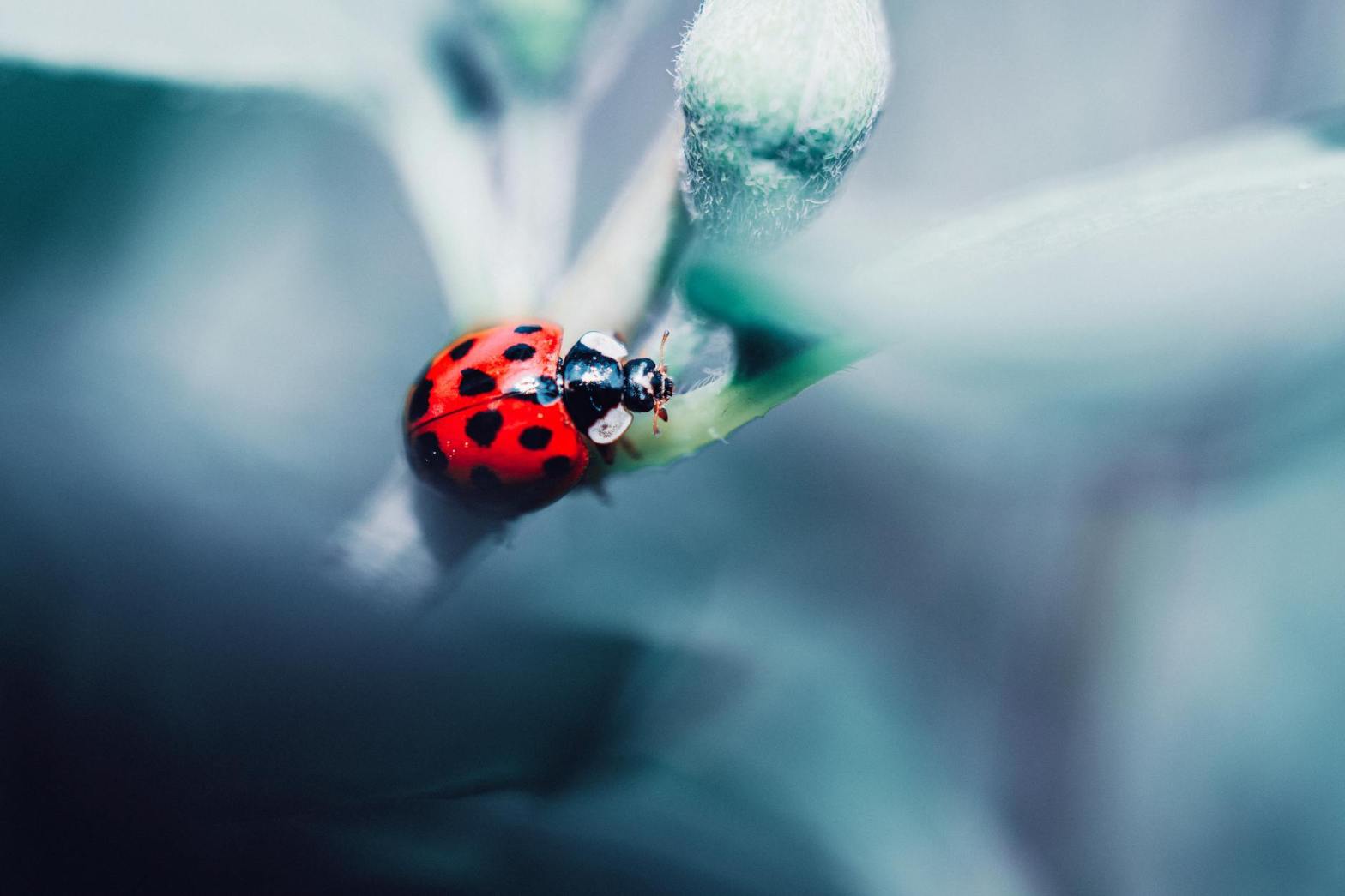
Most mornings she lands on the window, the window along the stairwell. Six sticky legs tapping vertical glass, wings tucked beneath her crimson cape.
It’s a strange place to dance alone. Beyond her: the tree limbs, heads of the cosmos, calendula petals, worlds in their folds, reflecting on this distant landscape, the cold glass
through which I study her underbelly. I tap the window and she stops, the way we all do when something beyond us gives us pause; we wait
with heightened awareness, unable to make sense of the source or meaning, despite something being right there across some transparent plane, possibly
wondering if we can comprehend anything Greater. And if so, would we believe it?
Judy Ray writes poetry and science fiction to help her explore existential wonder, power dynamics, consciousness, and belief systems. She is based in North Carolina.



 Amethyst Review