There’s an Abraham in Me – a poem by Maya Bernstein


There’s an Abraham in Me

after Ross Gay


There’s an Abraham in me
whose split wood
is so flammable
it ignites with a glance,
whose saddled donkey
is so obedient he would sit
without thought of thirst
for days. He wields an ax,
the Abraham in me,
and cuts things apart.
He is famous, this Abraham is,
for his rigorous economy,
for his mellifluous tongue.* *some would stop reading here
Fondly he speaks
of the Isaac in me, the one
he loves enough
to kill to protect
his reputation, the one
always willing
to take a hand, to go
together, wide-eyed
yet unsuspecting
of the cleaver,
the kindling. O inner
Isaac – why don’t you notice
my gleaming butcher knife?
Isaac in me, why are you
willing to make of my body
an apple-dappled tree?
Are you willing to lie
on the altar to better see
the cloud-laced sky?
Or maybe you’re unwilling,
and hoping for word
from the Sarah in me.* *some would stop reading here
Though she’s really not
worth mentioning.
She stays at home
lifting one leg
then another
out of bed
taking one breath
then another
at a time, slicing
into her years
as if into a pie
which she warms
and sets on a hand-painted
pottery plate dotted with sheep
and dew-soaked hills.
She sits, this Sarah
in me, with her steaming
tea, gazing out
the window
at the Hagar in me
(whom I banished
long ago) piercing
the dough with her fork tines.
What is she waiting for? * *some would stop reading here
And the angel?
Is there an angel
in me? And where
would she direct me?
And would I listen?


Maya Bernstein’s writing has appeared or is forthcoming in Adanna Literary Journal, Allium, By the Seawall, the Cider Press Review, the Eunoia ReviewLilith MagazinePoetica MagazineRue Scribe, Tablet Magazine, and elsewhere. She is on faculty at Georgetown University’s Institute for Transformational Leadership and Yeshivat Maharat, and is pursuing an MFA in poetry from Sarah Lawrence College. Her first collection is There Is No Place Without You (Ben Yehuda Press, 2022). She serves on the board of Yetzirah: A Hearth for Jewish Poetry.

Skipping Stones – a poem by Joseph Kleponis

Skipping Stones
 
In my imperfect memory
I recall that perfect summer day,
How the sky was almost cloudless,
How an easterly breeze so slight
Cooled us but did not churn the water,
Where we stopped along the rocky shore
And skipped flat stones across the waves,
Slicing crests before they could break.
The flat dark discs caught sunlight,
Glittering as they leaped higher
To where sea and sky join as one
As if propelled by magic
To leap farther and farther still. 
 
We played until our arms grew tired,
And we laughed as we talked
Of our skill at defying nature
As we watched waves roll in and out
Smoothing rocks for future play.

Joseph Kleponis lives North of Boston, Massachusetts. His poems have appeared in First Literary Review – East, the Rockvale Reviews and other publications. Kelsay Books published his first book Truth’s Truth: Poetic Portraits in 2021.

Night Sky from 912 – a poem by Tyler Rogness

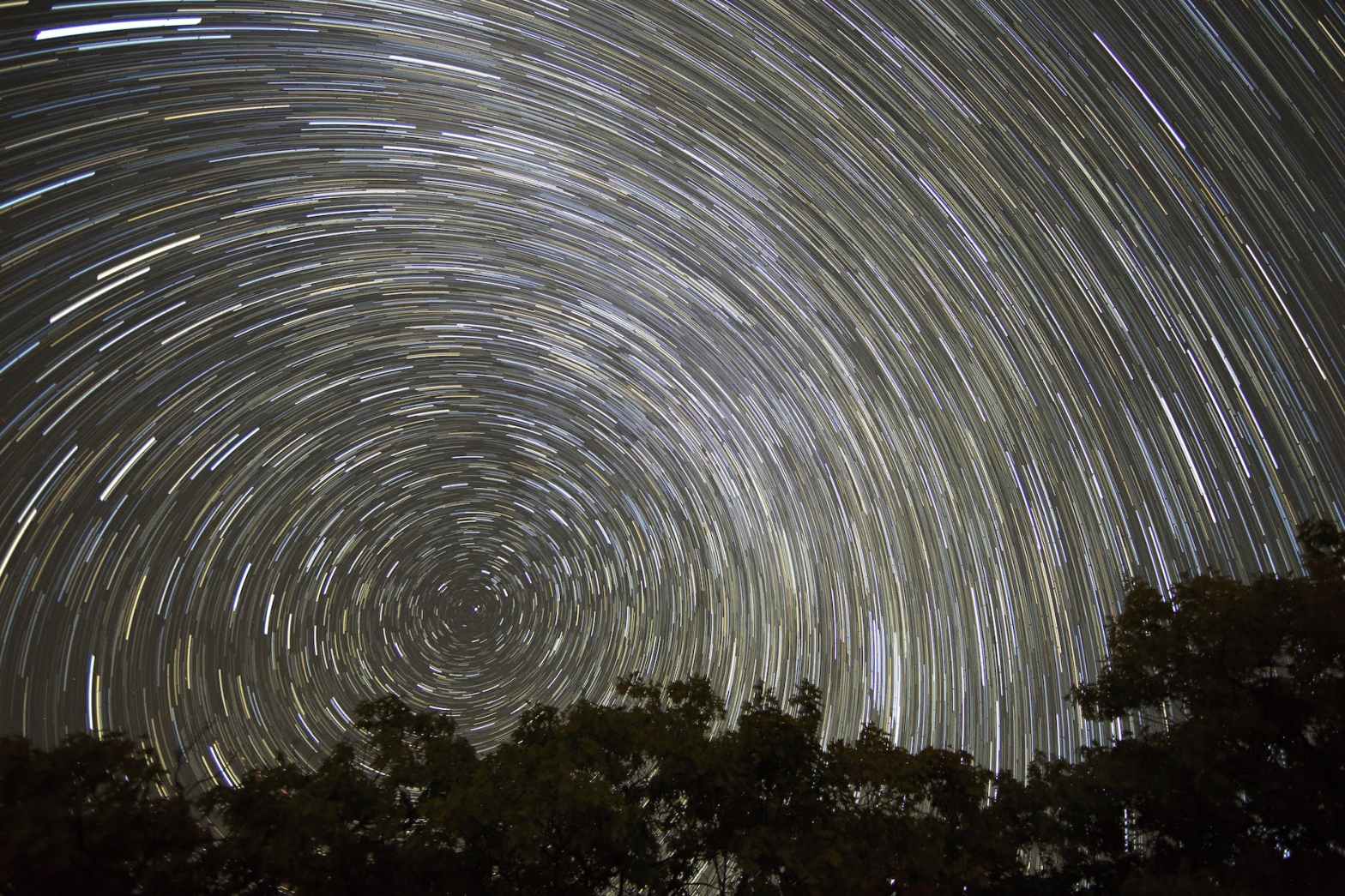
Night Sky from 912

Open like the evening, heart, in wordless wonder:
            mark the whirling earth who bears
                        still waters; how still
            the stars recall their dance — not
                        a misstep, no mistakes —
            but every one in perfect place
                        as painted
            on their velvet bed.

I rest my head below the bear, and hers —
            a stranger here —
and ember down with our chariot star.
Let there be night, my restless soul.
            Break open like the even.


Tyler Rogness is learning to live on purpose, and to sink into the small moments that fill a life. He loves deep words, old books, good stories, and his wonderful family who put up with his nonsense. His poetry has appeared in the Agape ReviewThe Habit Portfolio, and the Amethyst Review. More of his work can be found at awakingdragons.com.  

Mojave Vipassanā – a poem by Michael Dwayne Smith

Mojave Vipassanā


A pair of juvenile ravens swoop
	and fall along the fence.
		One wipes its beak with vigor

against the top rail, the other
	tilts up its head, and gives
gurgling croaks in a rising pitch.

I’m in my front yard and happen to drop
	a rake on the concrete
		driveway. They should startle

but no, they just carry on, as desert
	wind kicks up, shuffles their
		feathers. They glisten in the high

sun, oily purple-black, and wings
	are spread to catch the
		hot breeze. There are shadows

somewhere, but not here. Here
	we are featured in full light,
		going about the minor business

of our lives, not waiting
	for something to happen, not
		locked in drama, natural or

otherwise— just the laze of
	afternoon flowing through, presence,

lone moment, radiant particle suspended in space.

Michael Dwayne Smith haunts many literary houses, including The Cortland Review, Gargoyle, Monkeybicycle, Sheila-Na-Gig, ONE ART, Third Wednesday, Heron Tree, and Heavy Feather Review. Author of three books, and a multiple-time Pushcart Prize/Best of the Net nominee, he lives near a Mojave Desert ghost town with his family and rescued horses. His latest collection goes from apparition to publication early 2024.

58th and Lexington – a poem by Aaron Poochigian

58th and Lexington


Dozens of random ugsome humans under
skyscrapers looming like a mountain range
suddenly each turned whimsical and strange
and gorgeous to me. Why that rush of wonder?

Sunlight erupted from behind a tower. 
A breeze rose holy, and I was aware
of how we all breathed in the grace of air.	
The rapture lasted for about an hour,

and then those radiant beautifuls became
haggard again and pushy: they were others.
Epiphany which Custom always smothers,
I was a good man lighted by your flame.

Come back and fire my unexalted eyes—
I live for your impermanent surprise.

Aaron Poochigian earned a PhD in Classics from the University of Minnesota and an MFA in Poetry from Columbia University. His latest collection of poetry, American Divine, the winner of the Richard Wilbur Award, came out in 2021. He has published numerous books and translations with such presses as Penguin Classics and W.W. Norton. His work has appeared in such publications as Best American PoetryThe Paris Review and POETRY.

The Chamber of Wings – a poem by Rupert M Loydell

The Chamber of Wings

'But is it not the case that when one 
loses one's way one gains a wider view 
of the world?'
   – Anselm Kiefer, Art Will Survive Its Ruins

In the chamber of wings
hang empty white dresses.

Where there should be heads
are only twigs and sticks,

a pile of bricks, nothing
to help with ascension

or escape up Jacob's ladder
to our ideas of elsewhere. 

Those who didn't make it 
were tarred and feathered, 

steamrollered into painted
memories of hurt and love.

Despite the lines and circles
you conjure up and draw 

to map out life and death,
we will always get lost,

distracted by recollections
of ancestors and relatives

who dreamt of the future
but are now only ash.


(from The Frame of Understanding. for Anselm Kiefer)


Rupert M Loydell is a writer, editor and abstract artist. His many books of poetry include Dear Mary (Shearsman, 2017) and The Return of the Man Who Has Everything (Shearsman 2015); and he has edited anthologies such as Yesterday’s Music Today (co-edited with Mike Ferguson, Knives Forks and Spoons Press 2014), and Troubles Swapped for Something Fresh: manifestos and unmanifestos (Salt, 2010)

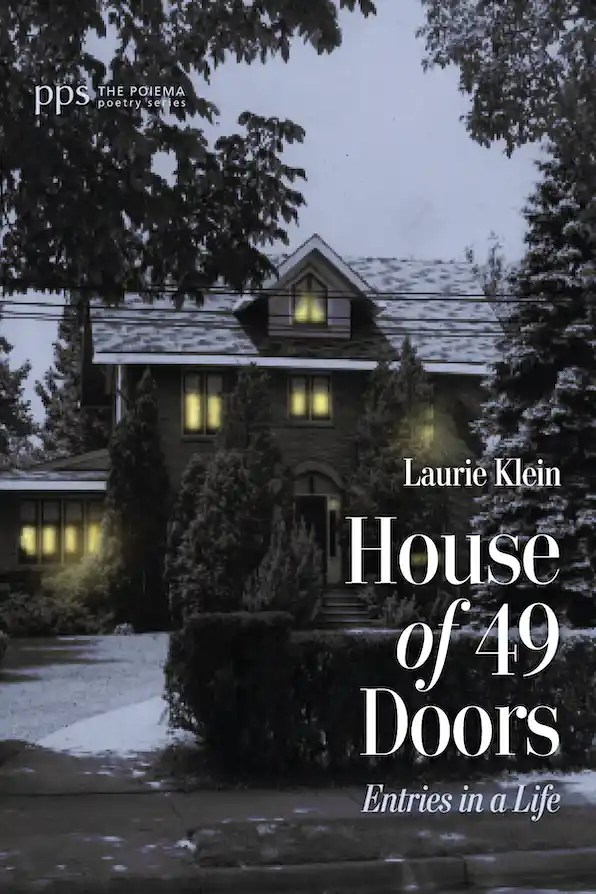
Ember, Nest, Gesture – an essay by Laurie Klein

Ember, Nest, Gesture 

IRELAND, 6TH CENTURY: Come daybreak, the last star winks out. Brother Kevin paces among the abbey kettles. Stirring, then seasoning, back and forth he goes, pacing, then pausing, to re-roll a sleeve. A vein pulses blue at his bony wrist. Throughout the day he’ll scour back-burnered dregs of gruel, and later, leftover lentils. 

It’s a prayer composed of soaking and scraping, burnished to gleam. 

By day’s end, perhaps worry besets him. So many needs to pray for. His narrow cell requires he angle his body until one lanky arm extends through the window: thus, he stands, his body a cross. Wind from the north chafes fingertips already swollen with sores. Reflexively, his other hand hovers, impelled to scratch—Don’t, he thinks, curling a fist, T’will make the chilblains seep

*

NORTH AMERICA, 18TH CENTURY: Beneath starry skies a woman stoops to remove a live coal from the tribal fire. Perhaps she prays as she lays it atop the flat stone anchored inside a buffalo horn. She adds cottonwood sticks for long-burning fuel. Damp moss provides insulation, and a circle of wood seals the horn’s throat, isolating the ember in waiting darkness. Perhaps she sighs. She might yearn to be her people’s front runner, called to carry the fire for their next encampment. The original spark dates back hundreds of years. Rekindled, each blaze sustains a sacred continuity. Miles from where she now kneels, the appointed runner will eventually retrieve the burning heart of the coal, coax fresh tinder into welcoming flames.

*

Heroes, both. I am all admiration. Do my people feel carried, well-fed, warm? What words can I speak today to elicit figurative heat and light for them? Restive thoughts distract me. My hands clench, unable to fully entrust my loved ones to God’s care. 

I forget every tale carries the star as well as the singe, promise alongside pain. 

*

KEVIN, AGAIN: Throughout the night he prays, hands raised, festering skin forgotten. Legend recounts a female blackbird alights on his wrist: stark iridescent sheen. Perhaps she strokes his scabs with her beak, easing the fiery itch. She must have calmed his urge to pace as—so the story goes—she builds a nest in his palm, then lays a clutch of blue-green eggs speckled with russet. 

Freeze-frame that whimsical scene: a living statue cradling marvel. Hatching takes two weeks. Consider standing that still: an itch you can’t reach, those pins-and-needles, then the burden of numbness. Ideally, divine strength shouldsustain the monk. But at what cost? Notice those flagging triceps, that snarl of hair darkened by sweat. As poet Seamus Heany once wrote:

A prayer his body makes entirely/ For he has forgotten self, forgotten bird.

*

Perhaps you’ve seen Tableaux Vivant, or “living pictures.” The 19th-century parlor game eventually went public, moving from homes to the stage. Actors, mimes, or dancers would pose, unspeaking, as if captured in amber. The still life might represent a famous person, event, mood, or era. 

One insomniac night, while worrying about my family, I sensed an invitation. I was to picture each person uniquely posed with Love, then close my eyes and mentally leave them there. In the dark. Like an ember enclosed for safekeeping. 

But how to begin? The memory of a dance I’d once seen inspired me. Imagine a man clothed in white, at sunrise. With Kevin-esque arms, he extends the straight edge of a linen cape behind his body, at shoulder height. Backlit, the fabric ripples below his outstretched hands. When he draws his arms together over his chest, linen sheathes his body. That move approximates a protective presence made visible: a little tent of weightless shimmer. 

On that sleepless night I pictured my fretful self likewise encompassed. Then I positioned my people, one by one, with God: a troubled grandchild, piggyback; an anguished friend facing outward, unaware a scarred hand would soon tap her shoulder. 

I gazed until the peace of each image prayed through me. 

Words a certain rabbi once spoke before healing the blind deepened my resolve: “Do you believe I can do this?” he asked. Oh yes.

I find repeating this question often evokes new tableaux. One day, riled over political venom, I pictured the speakers as kindergarteners, myself included. We curled on mats the color of sherbet, our lips sweetened by cookie crumbs. My anger softened. Praying for enemies felt doable.

Such imaging may sound fanciful, even misguided, but early church leaders used the term perichoresis, “to dance or flow around,” to depict the dynamics ever-pulsing within the Trinity. The root word has evolved to mean “choreography.”  

It’s not, however, foolproof. I usually visualize outdoor settings peopled with those I love (or loathe), each uniquely connecting with the Divine in timeless, static tranquility. Yet when real-life crises erupt in their lives, I resemblethe weary monk plagued by chilblains, tempted to claw what hurts, worry the scab. The wound seeps, and my psyche primes itself to contend for only the best outcome. Let me direct! 

I have to mentally sweep closed a black velvet curtain. Visually disengage. Much as I want to watch heaven at work, faith insists Mercy continues to move behind the curtain. I re-summon an image of Kevin, no longer pacing, almost maternal. I think of the woman who yearns to run with the fire. Inside that buffalo horn the hidden ember conserves its heat—over time and miles—vital, yet stilled, in the waiting darkness. God of stillness and fire, keep me steady. Readied.But oh, this terrible in-between: the freeze and the singe, the hour-as-is and yet-to-be-seen. What if I lose the friend I love before she can sense the hand of God poised near her shoulder? Ah. Picture them both one frame ahead, her name legible on that outstretched palm. No nesting bird there, but a place for her gaze to rest: the promise of life to come. 

Laurie Klein’s prose has appeared in Brevity, Beautiful Things, Tiferet, Cold Mountain Review, The Windhover, and elsewhere. Winner of the Thomas Merton Prize and a Pushcart nominee, she is the author of Where the Sky Opens (Poeima/Cascade). Her second collection for The Poeima Poetry Series, House of 49 Doors: entries in a life, will be published by Cascade in 2024.She lives in the Pacific Northwest.

Bharata & the Deer – a poem by Charlotte Couse

Bharata & the Deer


In my last life I was a politician — a good one —
they named a city after me — its streets swept
& beggarless — even the stray dogs’ fur shone —
but I walked away from everything —
homes hung with Mughal silks
the laugher of children in sunlit courtyards
my wife’s body — warm from dreams at dawn.

I cast off my clothing like old lives
& sat by the river Chakra — its waters
washing over shaligrams — ammonites
sacred to Vishnu, tightly coiled snakes
in centuries-deep sleep — & I meditated
till my mind was a shoreless sea —
thoughts darting away like silver fish.

But prarabdha karma had yet to fruit
& I was wrenched from bliss —
a doe damp from a lion’s breath
lept over the river & died beside me
& out from under her a living fawn —
I’d never seen anything so vulnerable —
wet leaf-mulch eyes looking up at me.

I fed him milk & later grass from my hand
& we walked in the forest & when he tired
I carried his fine bones on my shoulders
& I when I slept, he curled up by my flank —
soothing my sleep with his pulse —
& when I meditated I saw him —
nose black & wet as a shaligram.

When death came, it was a storm
& my last thought was of my deer,
shaking in the rain, so I was born a deer —
but a jatismara remembering past lives —
so I skitter through the mustard field
to the banks of the Gandaki where the rishis are
to drink the water rippling with their wisdom.

Charlotte Couse lives in Wareham, on the south-west coast of the UK. She has an MA in Creative Writing from Southampton University and works as an acupuncturist and practitioner of Chinese herbal medicine. 

Not Afraid of Bees – a poem by Cortney Collins

Not Afraid of Bees

There is enough complexity of life
in this micro-creature
to still the gaze 
and protract the 
ordinary progression
of time.

There is enough simplicity of being
in the observer
to abandon all assumptions
about the observed, 
an open-ended question
about whom is whom.

There is enough nakedness of intention
to challenge the usual
apprehensions
on both sides,
in both dimensions.

There is enough congruence
between the iridescence of 
paper wings and the iris 
of an eye, to birth 
mystics for years to come. 

But who is the mystic?
Is it the bee?

Honey and fear mingle
in one shared aliveness,
one sweetness,
one wariness. 

The bee leaves me alone
without really leaving me alone.

Cortney Collins lives on the Front range of Colorado with her two beloved feline companions, Pablo (after Neruda) and Lida Rose (after a barbershop quartet song from The Music Man.) She is the founder of the pandemic-era virtual poetry open mic and community Zoem, which ran for two years and produced an anthology of its poets’ work, Magpies: A Zoem Anthology, of which she is co-editor. Her poetry has been published by South Broadway Press, Sheila-Na-Gig, 24hour Neon Mag, and other various print and online journals. 

Impatient Spring – a poem by Ken Gierke

Impatient Spring


Warm morning light eases the transition
from melting snow to winter lawn.
Four robins skip across the turf,
pausing to peck at both soil and snow,
ignoring juncos and wrens
that forage for dropped seeds
below a feeder monopolized
by cardinal, titmouse, and chickadee.

I step outside for the morning paper,
greeted by the call of another robin
high in the white oak that towers
over the yard.  Snow is still banked
beside the driveway, witness to shoveling
during last week’s introduction to February.
Beside it and below the oak lies bare lawn.
The robin calls to me, as if to say
snow may fall again, but we are here,
and there is no stopping spring.

Ken Gierke writes primarily in free verse and haiku. His poetry has been published or is forthcoming both in print and online in such places as Amethyst Review, As It Ought to Be Magazine, Ekphrastic Review, Poetry Breakfast, and Silver Birch Press. Glass Awash, his first collection of poetry, was published by Spartan Press in 2022. His website: https://rivrvlogr.com/