Descent into Orta San Giulio from the Sacro Monte di Orta – a poem by Alan Bern

Descent into Orta San Giulio 
from the Sacro Monte di Orta

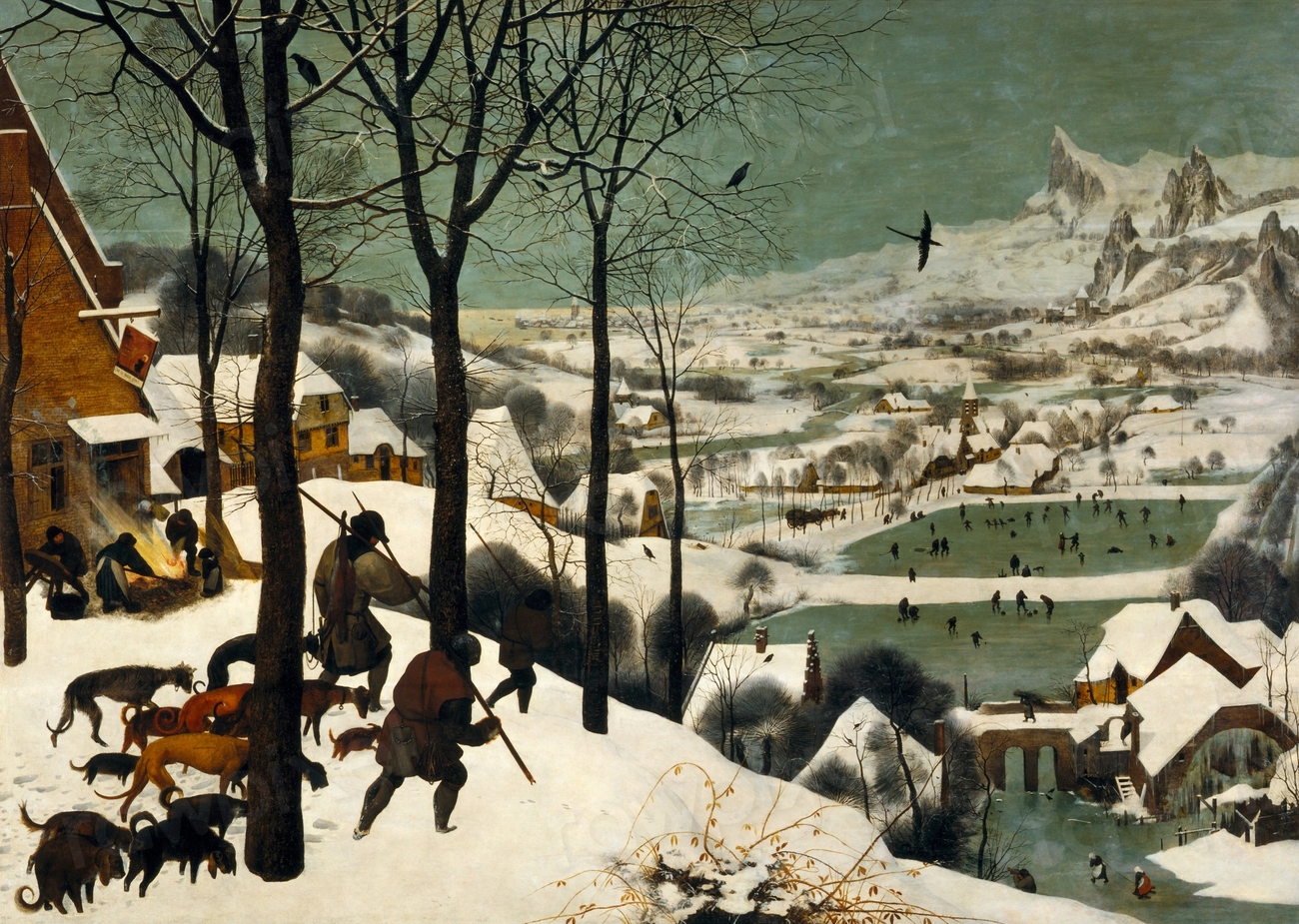
Winter trees bide
they gate
Orta’s Sacro Monte pathway,

branches, bared to pale bark,
lift death’s face.

Lean Francesco, in stone, overlooks.

His stick-crucifix 
held in cold air.

A first step it takes many
to sound out Francesco’s words 
chiseled at Chapel VI,

“go dear ones…announce peace and penance…
be patient…bless and thank everyone,”	 

just up Viale Frate Vento, 			 
the Avenue of Brother Wind.

Though I falter in penance,
peace mumbled beyond me,  	
  
I walk back down a stony path  
with loosened heart humming 
every
one.

Retired librarian Alan Bern is an award-winning author with three books of poetry and has a hybrid memoir forthcoming from UNCOLLECTED PRESS. He is an exhibited/published photographer and performs with dancer/choreograhper Lucinda Weaver and with musicians from Composing TogetherLines & Faces, his press with artist/printer Robert Woods, linesandfaces.com.

after Isabel Archer – a poem by Annie Diamond

Annie Diamond is an Ashkenazi Jewish poet living and working in Chicago. She has been awarded fellowships by MacDowell, Luminarts Cultural Foundation, The Lighthouse Works, and Boston University, where she earned her MFA in 2017. Her poems appear and are forthcoming in No Tokens, Yemassee, Modern Language Studies, Western Humanities Review, and elsewhere.

Address to Humility – a poem by Jean Biegun

Address to Humility


Humility, you bobble-head doll
you laughingstock of Wall Street
grit in the slick gears of progress

Here you pop up on this quiet rise above the hyper city 
like a bowing monk 
passing out lifesaver donuts

Humility, I just climbed a very steep hill for you
I am breathless 
sitting on a crumbling stump

the clover all green in happy heart shapes
at my feet
and a tree I don’t know the genus of is beside me

vertical strips of bark peeling down
in tendrils
accepting the order of its kind

Humility, you appear as confounding as this rusty can
decaying on the trail
All forms and falls apart it says

Please help me reach your proffered hand
while I feel some degree of thirst
a slight peekaboo of readiness

Jean Biegun’s poetry has appeared in numerous journals, anthologies, and art exhibits. In 2022, her chapbook Hitchhikers to Eden was published, she received a Pushcart Prize nomination and the Christine Award for Best Prose Poem of 2021 (Easter Iowa Review). Work has been in Amethyst Review, Soul-Lit, As Above So Below, Time of Singing and other spiritual poetry journals.

Devotional Grove – poetry by Mia Schilling Grogan

Devotional Grove


I. Antiqua 

 
Old Pin Oak, 
rucked in grey, 
your youth bleeds through you: 
covered in spring’s velvet leaflets 
and cloaked in their mist of pale-pink silver. 
Promise, Old Tree, keeper of years, 
to prove our belief; 
stand there for the new life to come.

Attend.


II. Cogitare

Consider, Tree of Holly, antique symbol,
that in fact, you do yield:

to robins who flock to your foliage, 
evade your spikes, 
and gorge on ripened berries till they’re sated.

Impressed by this apologue
I google your types:
the holly as shelter, breath-giver.

Putting down my phone, 
towards you I walk,
stripped and storiless.  

O Bearer of the analogic,
consider my neediness,
and through your bounty heal and challenge me.

Assent.


III. Custodes

Cedars so tall,
your watchfulness here
beside our door
subdues all fear.
Over this roof
grow side by side
to shade and guard, 
to brace and bide.

Praise them.


IV. Alta

Lofty White Pine
you pierce the tree line. 
Tallest your crown’s claim.  
Your needles strive, to touch the sky --
to thread, so it seems, the welkin.
Cast down your cones, our cheerful boon,
And express for us steadfastness --
so we also may be steadfast for others.
And teach us to value altitude
that is pruned of all arrogance:

Content. 

V. Domini
The holders of the house labored in the garden
-- and trees rooted in their verdant terrace. 
How the Black Cherry seeds itself:
-- May we bloom where we are planted, come the Spring. 
And the Beech spread its crown – 
-- and overshadowed them.  
Leaf for them, you scattered seedlings of change
-- that they may be blown away by the plenitude of chance.

Flourish, we exhort our sweet Earth (though her bounty unsettles us); that we, to whom the diversity of Life, her gift, is revealed through its decline, will by our delight and shame, be fired with an ardor for this undertaking – to serve her wild caprice.   

Consent.

Mia Schilling Grogan is an Associate Professor of English at Chestnut Hill College in Philadelphia.  She is a medievalist, who publishes in the areas of hagiography and women’s spiritual writing. Her poems have appeared in America, Presence, First Things, The Windhover, and Ekstasis among other journals.  

My African Father – a poem by Daniel Kemper

My African Father
 
I sleep and wake and still he does not rise,
my African Father, with those uncanny eyes
not brown, not silver, but like a storm at dawn,
forever changing hue -and moving on.
Three days have toiled with rain and fog and wind
and have not torn them off— and even now
the fitful storm unfolds, a little thinned
and gray and twisted up like sheets right now,
but still, it won't quite let me wake from this,
the loss of him. I sleep and know that dreams
will be the only place where I can speak
to him: In every drop of rain, a kiss;
in every broken shaft of light, the gleams
that came from loving eyes; in the physique
of leather coats that gusts of time can press
and mold around my chest, his strongest love,
embrace, and faith. But still each moment grows
inexorably farther from the next,
and spring, it must arrive, but nonetheless
these gusts of rain contrive to make that love
a tragic grasp. My fingers try to close
around the grief, and bodily perplexed
as time slides through my hands, I can't let go.
But ever-gentle time extends my fist,
my fingers, thumb, and grasp, and waking once
again, you're gone. You're gone. We cannot trade
our tears for life- the sacrifice is not
accepted here. Though wakefullnesses grow
between the fitful dreams that they untwist
we weep the more for love, but more than once
we've had the thought: By grief is love betrayed?
Shall tears condemn our joy? Why should we not
rejoice? He's passed into a world improved
infinitely on our own. I know, I know
and now that time has stroked my hand some more,
I wonder is this selfishness alone?
No! Unjustly that depraves the name
of love. And Jesus wept. It's not a sin.
and now the further time's caress has moved
my hand and brushed my bangs, the more the glow
within his smile flashes out, the more
the deep inside his swollen heart is shown,
and yet the more it's somehow not the same.
How soft his eyes once stirred and how his chin,
his humble half-tucked chin and smile, approved
of me, how stress would vanish in his shrug
and spreading arms that greet me with a hug.
 
But waking startled- sleep had come again-
his face departs again, and now his hand,
that he can only take into the dream again.
It starts again! –Despite the spring's demand.
Abba, my African father, abba-bee!
You really were a part of me and now
that you have been cut off— because that part
of me's been amputated— I can see
simple things that none can disavow.
The amputation hurts! It's not for art,
philosophy, or selfish things we cry:
the amputation hurts! The only piece
remaining lives in memory and prayer,
and what the mortal amputation brings
are aches and burns and phantom pain. We cry,
surprised, when some familiar times release
these hollow chills again, when maybe they're
set off at night by wind in leaves that sings
as he once did, or by a bible verse,
like Jesus wept. The amputation hurts!
But faithful time still stretches on and three
more days have passed. I wake and rise and still
he does not come. He won't return from there,
my African Father— Quite the reverse,
one day I'll go to him. For now, the shirts
and ties must still be ironed, guests must be
attended to, and Martha might just still
need help; and anyway, where is Mary, where?
The funeral's not until tomorrow. Wait.
The clock extends the space between our tears
and so our mortal contemplations spin
unchanged, unchecked until at last, it’s time:
the funeral’s here and we’re all standing by
the empty- Look, his son! I recognize
my brother-in-law with ease. But grief can’t wait.
The women rush the pit and it appears,
as moments teeter past, that they might go
down too. He weeps and holds them back, and time,
it too, holds back. The rain. Just now. Goodbye.
And so my father passes on, his eyes
in every thunderstorm that fades at dawn
forever changing you -and moving on.
 

Daniel Kemper is an unaccomplished man. He has walked The Bridge of No Return across the Sachong, and returned. He’s carried an acolyte’s cross at dawn and heard poetry at The Gates of Hell at midnight (Rodin Gardens). He’s touched the bones of Dinkenesh (“Lucy”) and climbed Masada at Dawn. He’s been How Berkeley Can You Be and walked the Pamlico Sound barefoot. He’s brought two children into the world and taken his father out of it. He’s written when there was no one he could tell and he writes now to bring out things of value and to engage and embrace all those who are doing the same.

Review at the Gate – a story by Chris Klassen

Review at the Gate

I was looking at an angel.  A live white-winged, white-robed angel, standing in front of me, a closed golden gate behind, a few white cotton-ball clouds above with bright rays of sun shining through.

Yesterday I experienced a massive stroke in my apartment.  I didn’t die immediately.  It took a while, actually, but since I lived alone and it was impossible for me to move or speak, I had remained sprawled out on my floor until I died.  Now I was standing in front of an angel.

“Do you want to say anything before we begin?” the angel asked.

I swallowed and looked down.  I was still wearing the same clothes from my last day.  That struck me as odd, although really, how was I supposed to know what was odd and what wasn’t?

I looked at the angel and my new surroundings.  “This all seems a bit, um, corny, no?”

“What did you expect?” the angel replied.  “You’ve read the Bible.  Doesn’t the Bible describe it just like this?”

“I guess so.”

“Well don’t blame me if you didn’t take the Bible at face value.  You should have.  It’s all literal.  You know the story of Noah and the flood?  It really happened just like that.  And the burning bush?  And the loaves and fishes?  And Lazarus coming back from the dead?  All literal.  You and your liberal society, so supposedly enlightened.  You like to say that the Bible is just a collection of myths, no different than the stories from ancient Greece or Rome.  Well, it’s not.”

I looked back down, not sure what to say.  If I really was where it seemed I was, I certainly was not going to start a theological argument with an angel.

The angel asked again, “Do you want to say anything before we begin?”  I shook my head.  “I bet you’re feeling a bit stupid now after scoffing at right-wing fundamentalists all your life.  Never expected that they’d be right, did you?”  I shook my head again.  It was becoming clear that, whatever this was, it probably was not going to go well for me.

“Ok, well this shouldn’t take too long,” the angel began.  “We don’t have to review your whole life, just a few select incidents will suffice.  Based on what I know about you, I think the end result is a given anyway.  But you know, protocol…”

I smiled.  It was an instinctive response.  “Why am I still in these clothes?” I blurted out suddenly.

“What should you be wearing?” the angel asked.

“I don’t know, it just seems strange to still be in these clothes.”

“I just review you.  I don’t dress you.  Any more questions?”  I shook my head.  “Ok then.  First incident.  January 1973.   You were seven years old, grocery shopping with your mom.  You used to go with her every Saturday.  Sometimes you would stop for French fries and gravy first, remember?  On the day we’re talking about, at the check-out, as she was taking everything out of the buggy, you stole a chocolate bar.  Put it in your pocket without anyone seeing.  When you got home, you went to your room and ate it and loved it.  Intellectually, even at seven years old, you knew it was wrong, and you never stole anything again.  But, at that moment in time, you were completely guilt free.  What are your thoughts?”

“I don’t know, it was just a chocolate bar.  Sure, I stole it and I knew it was wrong, but I was seven!  It was a whim, a stupid impulse.  All kids steal something at some point in their lives.”

“You broke a Commandment.  Thou shall not steal.”

I shrugged.  “I was seven,” I said again softly.

“You never felt guilt.”

“No.”

“Next incident.  March 1979.  You and a friend were walking to school.  It was your first year in high school and you were feeling somewhat arrogant.  You heard a voice from behind you.  It was another friend, not a close one, more of an acquaintance really, but still someone you had known for a while.  He yelled your name, said “Hey, wait for me”.  But instead of waiting, you and your other friend started to run away.  He obviously saw you but you didn’t care.  You felt cool.  When you finally saw him at school, you could see that he was upset.  But no one ever said a word about it.”

The angel stopped speaking, looking at me emotionlessly.  I stood in silence, uncomfortable.

“Any thoughts on this?

I hesitated.  “It was a mean thing to do.  For whatever it’s worth, I did feel bad about it later.  I’ve thought about it often, to be honest.  I actually think it may have affected how much I trusted people when I got older.  But still, we were teenagers.  Teenagers do stupid things.  Seems a bit of an over-reaction if the decision on my Eternity is based on how I ran away from someone when I was a teenager.”

“We’re not talking about any ultimate decisions on your Afterlife yet.  Don’t be so dramatic.  But do you know what happened to your friend because of that incident?” the angel asked.

“No.  I never saw him again after graduation.”

“Nothing happened.  It was totally irrelevant.  He’s living a happy and completely average middle-class life with a wife and kids, much more content than you ever were.”

“So that’s good, no?  It didn’t matter then.”

“You’re right.  For him, it didn’t matter.  But it could have mattered and that’s the point.  It could have traumatized him.  You were just lucky that your friend was mentally and emotionally mature and healthy.”

I shrugged again.  I was doing a lot of shrugging.

The angel’s wings fluttered slightly.   For whatever reason, I got the feeling that it was an involuntary reaction to being frustrated with me and our conversation.  “Your wings moved,” I said.

“April 1980.  You were working at your first job as a bus-boy at a restaurant.  Your supervisor didn’t like you at all and he made you miserable.  He made fun of you, spread rumours about you, even knocked you over once or twice while you were carrying trays of dishes.  You know who I’m talking about, right?”

“Yes, I remember.”

“Do you want to tell me what you did to him?  Or would you like me to continue the story?”

I didn’t say anything.  I felt the warm flush of shame on my face.

“I’ll continue then,” the angel said.  “One night, late in the shift, he was being particularly mean to you.  He had already tried to trip you once.  He had yelled at you in front of the other staff, called you an incompetent jerk.  He said he was going to get you fired.  And as he walked by after his tirade, he slapped you on the side of the head.  It didn’t hurt you but it was embarrassing and some of your co-workers laughed.  By the time you got home after work, you were furious.  Do you remember?”

I nodded.

“You didn’t sleep the entire night.  Thoughts were racing through your mind.  You had never been a vengeful person but you really wanted to get back at him somehow, right?  I’m being accurate with my description?”

“Yes, it’s accurate.”

“So you came up with a plan to shame him.  For the next three weeks, you went to work as if nothing had ever happened.  He still harassed you but you said nothing, you never complained and you didn’t react.  Since he saw that he wasn’t getting under your skin anymore, he actually calmed down and didn’t bother you as much.  He wasn’t getting any thrill because you weren’t reacting.  Still sounds right?”

I nodded and took a deep breath and exhaled.

“Once you felt that enough time had passed, you approached him.  It was at the end of a Friday night shift and you said you needed to tell him something.  He scoffed but you said it was serious so he humoured you and listened.  You told him that, a day or two after he had slapped you, you got a headache.  At first, it was mild, but it didn’t go away.  It just slowly kept getting worse, until finally you went to the doctor who did a quick examination and took a couple x-rays.  You told him that, the next day, the doctor had called you back and said you had to go to emergency immediately for more in-depth tests.  The x-rays had shown something odd.  Do you remember how he reacted to this?”

“He didn’t say anything.  But I knew he was getting nervous.  He was starting to look scared.”

“Exactly.  And you knew it and you could have stopped there.  But you kept going with your story.  You told him that you had just received the test results and they were as bad as they could be.  You said that, when he slapped you, it damaged some blood vessels in the side of your head.  A total fluke thing, the doctors said.  But it was irreparable.  The headaches would continue to get worse but the really bad news was that eventually the blood vessels would rupture.  You told him that the doctors gave you three more years to live, at the most, but that there was no way to know for sure.  Do you remember what happened next?”

“I made myself cry.”

“So clever.  It was a devious conclusion and a brilliant performance.  The perfect way to sell your lie.  He believed every word you said, the whole entire story.  The next day, you quit your job and he never saw you again.  It was quite the diabolical plan.  Ultimately ironic, too, when you think of it, since you actually did end up dying of a stroke which is caused by a burst blood vessel.  Funny how that worked out.”

The angel stopped speaking and looked at me.  I wasn’t sure if I should say anything.  There was a long gap of very uncomfortable silence.  Finally, the angel spoke again.

“Do you want to know the end result of your performance?  How it affected the rest of your co-worker’s life?”

“I guess so,” I replied.

“It was pivotal.  He never hit anyone again and the direction of his whole life changed.  He became a model citizen and a Christian minister.  The guilt and shame he felt because of what he thought he did to you changed everything.  He started searching for ways to make himself feel better and religion turned out to be the answer.  So he decided to make that his calling.  He works every day now trying to make other people feel better.  And it was all because of you.”

I didn’t know what to say.  It seemed that any response would be the wrong response.  The angel said nothing either.  Then I had a question.

“You know everything about me, right?”

“Of course.”

“So are we going to talk about anything else?  I mean, you know that I did worse things.”

“I know you did worse things, yes.  Do you want to talk about them?  Do you think there is a reason to talk about them?  You know what they are and I know what they are.  We can verbalize them if you want but, really, I don’t see the point.  As far as I’m concerned, my work with you is done.”  The angel started to turn away, wings fluttering softly.  The golden gate opened slightly.

“What do I do now?”  I asked.  “What happens now?”

The angel turned back and faced me and pointed a long delicate finger.  “Walk that way.”

“Where am I going?”

The angel showed no expression.  “You’ll know when you get there.”

Chris Klassen lives and writes in Toronto, Canada. After graduating from the University of Toronto and living for a year in France and England, he returned home and worked the majority of his career in print media. He is now living a semi-retired life. His stories have been published in Short Circuit, Unlikely Stories, Across the Margin, Fleas on the Dog, Vagabond City, Dark Winter, Literally Stories, Ghost City Review, The Raven Review and Close to the Bone.

Holy Lore – a poem by J.S. Absher

Holy Lore


In the lore of the nightcrawler and red wriggler, 
it’s said that, when Jesus knelt and wrote in the dust, 
their progenitors saw it from below
      (saw it, though they had no eyes!)—
two vertical lines for the tree of life, and two 
along the bottom for the river of life.`

As He wrote, they saw those lines, engraved now
on the wide palm of His hand, framing the names 
He’d made and blessed, billions of us, written
      in vanishingly small 
nanoscale, miraculously legible 
letters. And some say, on a golden wall

of the Holy of Holies in heaven are two 
upright lines, the trees of wisdom and life; 
two horizontal, for the waters we drink 
      from once and never again thirst; 
and squiggly lines for the Annelida 
underfoot: these least that shall be first.

And they say Jesus saw the little worms
and promised: You will enrich the soil of Zion
and restore the loam of Eden. When My hands
      that rolled you from clay and mud
are pierced, you will see the fount of red
composting death with vivifying blood. 

J.S. Absher’s second full-length book of poetry, Skating Rough Ground, was published in 2022 by Kelsay Press. His first full-length book, Mouth Work (St. Andrews University Press) won the 2015 Lena Shull Book Contest from the NC Poetry Society. His poems have recently been published or accepted by the NC Literary Review, Triggerfish Review, and Tar River Review. His poems have been nominated four times for the Pushcart Prize. He lives in Raleigh, North Carolina, with his wife Patti. His webpage is js-absher-poetry.com

Origami – a poem by John Claiborne Isbell

Origami


As the day trembles between afternoon and evening,
	a salmon jumps in the river.
	An old woman reads verses from Dante

in Guadalajara.
	A heart-red cardinal decorates a tree line.
	In Reno, a couple argue

over something they will not forget.
	A woman stops working in a field.
	A spider spins its web.

A man in a suit
	closes up his papers
	and locks his office door.

A girl solves a mathematical equation.
	An Audi crosses a residential neighborhood.
	Henry lights a cigarette.

The ghost of the Moon
	hangs in the vast proscenium
	like a stranger at a feast.

A butterfly dreams of pollen.
	On a rocky beach, a dog runs in the shallows.
	A lion eats a gazelle.

These events
	fold up like paper
	in the unknowable mind of God.

John Claiborne Isbell taught French and German for many years in Indiana and Texas after his Ph.D. at Cambridge University. In 1996, he appeared in Who’s Who in the World. He has a new monograph, An Outline of Romanticism in the West, with Open Book Publishers, where it is available to download for free online. His first book of poetry, Allegro, came out in 2018. 

Bellini’s Saint – a poem by Royal Rhodes

Bellini's Saint
   ~ restored at the Frick Museum

The artist's brush left
only light here,
as if removing paint
coating the lanky saint
from the creator's mind
within a rocky landscape,
like Jesus off in the desert,
alone looking to God
gently heavenward,
with open palms raised.
Behind is a fortified town,
a donkey idly grazing,
and perhaps tended orchards.
But what is here -- placed
by the painter to tell something?
A red bird, particular
plants, an elegant heron,
and a rabbit he had ransomed,
bribing the meat vendor
to carry here to release.
We catch a glimpse of specks
of red dotting the hands
and a spot on the saint's foot.
But there is nothing that others
depicted of Christ's wounds
and the terrifying angel
disturbing turbulent air.
Perhaps that is unseen:
blood on a pierced side,
thorns hid in the mouth,
the struggle with God's pain.
But here for us is only
light.

Royal Rhodes taught the history of Christianity for almost forty years. His poems have appeared in a number of literary journals, including: Ekstasis Poetry, Amethyst Magazine, Foreshadow Magazine, The Cafe Review, New Verse News, and  STAR 82 Review, among others. Art and poetry collaborations have been published by The Catbird [on the Yadkin] Press in North Carolina.

Quiet Psalm of a Ditched Snail – a poem by Helen Freeman

Quiet Psalm of a Ditched Snail

Coiled and confined,
she retracts her mole-like jelly eyes
on the end of her tentacles and topples off 

into a ditch. 
She looks stunned, top-heavy.  
Do you think she knows her shell is a masterpiece? 

A powerhouse whorl 
to uphold her? A lime-crystal mantle 
to cloak her? A conch horn of song to deliver her?

She rights herself 
and struggles out, then sets off 
with a whistle, painting the moist earth silver.

Helen Freeman started writing poetry whilst recovering from an accident in Oman and got hooked.  She now lives in Durham, England and has poems published on sites like Visual Verse, Ink, Sweat & Tears, Clear Poetry, Ground Poetry, Open Mouse, Algebra of Owls, Red River Review, Barren Magazine, The Drabble, Sukoon, Poems for Ephesians and Ekphrastic Review.  Instagram @chemchemi.hf