
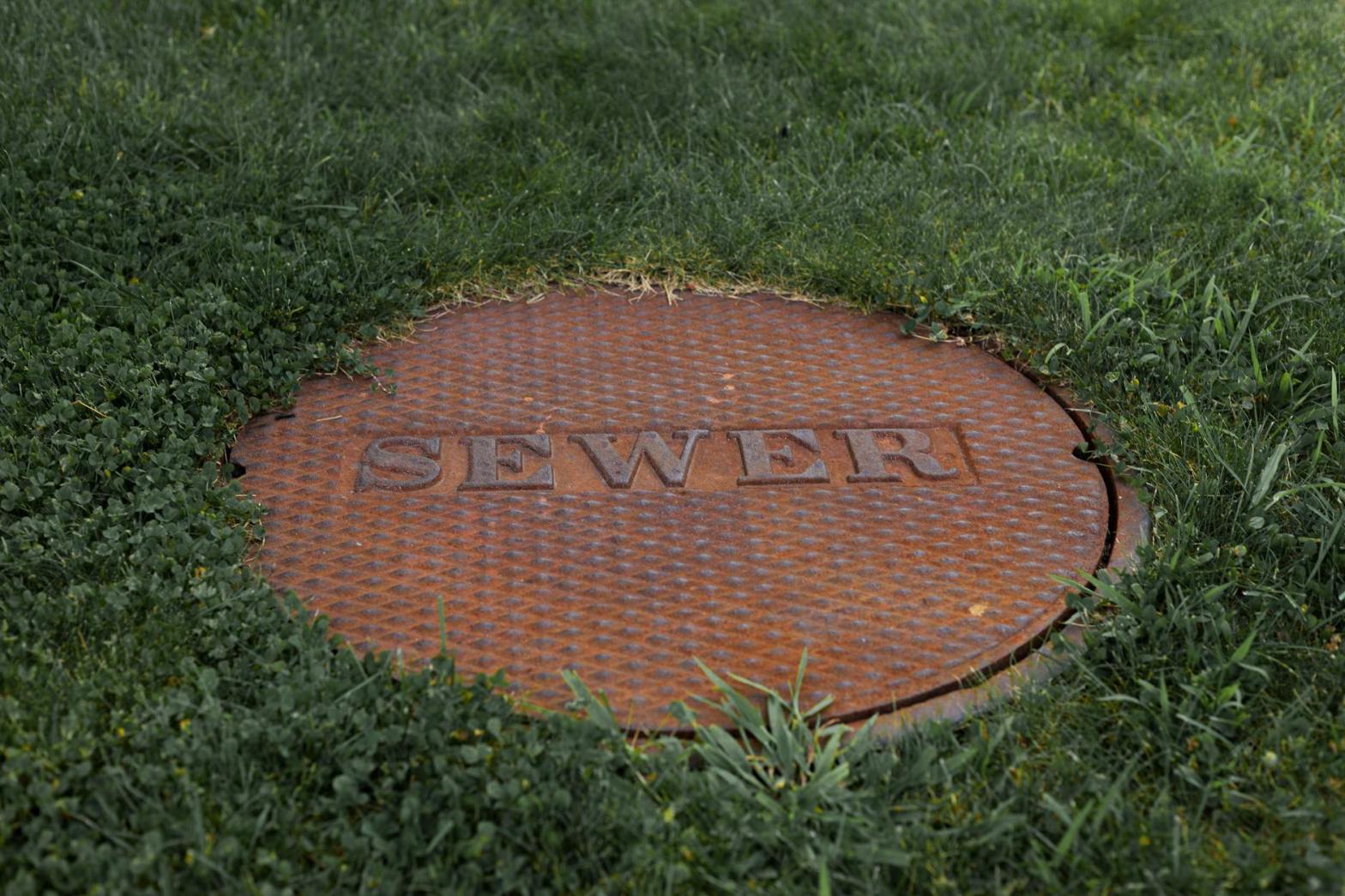
Cloacina – a poem by J.C. Scharl

Cloacina

Roman goddess of the sewers; considered a cult of Venus.

Toilet goddess,
gentle guardian of filth,
how long you’ve kept your shy chthonic cult
intact, stewarding your wealth
of swill and piss.

The ancients knew
no man can rule the sewer.
That is a woman’s place. That waste land
needs a careful hand to stir
the lonesome goo

and smooth the way
down gently sloping tunnels
through the dark, that dark through which we all
must come. You love the runnels
and all the clay-

brick oozing walls.
You love chunky dishwater
and laundry scum; you love the bloody
drainage after a slaughter;
shit, spoor, and all

belong to you,
Purifier, forgotten realm’s
prudent queen. O lady of the mire,
how you have loved your squalid
children! You, who

see the wreck of
living things, know that nothing
can be made clean from afar. It takes
hands deep in the muck, scrubbing.
You know that love

must go down, in-
to the stinking guts of earth,
and make even them holy. Midwife
to the endless afterbirth
of life, come in

with your strange toil.
Teach us not to turn away.
Teach us to gaze at every cast-off
thing, sit down by it, and stay,
and not recoil.


J.C. Scharl is a poet and critic from Royal Oak, MI. Her poetry has been featured in some of America’s top poetry journals, including The New Ohio Review and The Hudson Review, as well as internationally on the BBC and in several UK journals. Her criticism has appeared in many magazines and journals. She holds a BA in politics, philosophy, and economics from The King’s College in New York, and an MFA in poetry from Seattle Pacific University. She is the author of the poetry collection Ponds and two verse plays.

Oh Lydia, Oh Lydia – a poem by Cynthia Gallaher

Oh Lydia, Oh Lydia

Acts 16: 14-15
14 One of those listening was a woman from the city of Thyatira named Lydia, a dealer in purple cloth. She was a worshiper of God. The Lord opened her heart to respond to Paul’s message. 15 When she and the members of her household were baptized, she invited us to her home. “If you consider me a believer in the Lord,” she said, “come and stay at my house.” And she persuaded us.”


Oh Lydia, oh, Lydia, say have you met Lydia
Oh, Lydia, the tattooed lady
~ tune sung by Groucho Marx


Maybe she wasn’t tattooed
but her fingers and palms
stained permanently
from Tyrian purple dye,
royal color of the garments
she dealt.

Perhaps her feet and legs
embellished as well,
from crushing mollusks in a vat
like grapes for wine,
ten thousand murex snails
to render a gram of dye,

More valuable than gold,
a tint so purple to seem red,
so dark and brilliant
as if sanguine,
each mollusk’s spiny shell,
a crown of thorns.

Lydia, pagan of many idols,
went on to accept
the one supreme god,
then stained and marked
by the blood of Christ
in that river near Philippi,

Baptized, she and her household
by Paul and his friends,
branded with an invisible ink
that won’t wash away,
loomed with an internal weaving
of heavenly embroidery
no needle can render.

Oh Lydia, oh, Lydia, say have you met Lydia
Oh, Lydia, the tattooed lady

Cynthia Gallaher, a Chicago-based poet, is author of four poetry collections, including Epicurean Ecstasy: More Poems About Food, Drink, Herbs and Spices, and three chapbooks, including Drenched. Her award-winning nonfiction/memoir/creativity guide is Frugal Poets’ Guide to Life: How to Live a Poetic Life, Even If You Aren’t a Poet. One of her poems will be sent on NASA’s flight to the south pole of the moon later this decade.