
Aama’s Healing Room
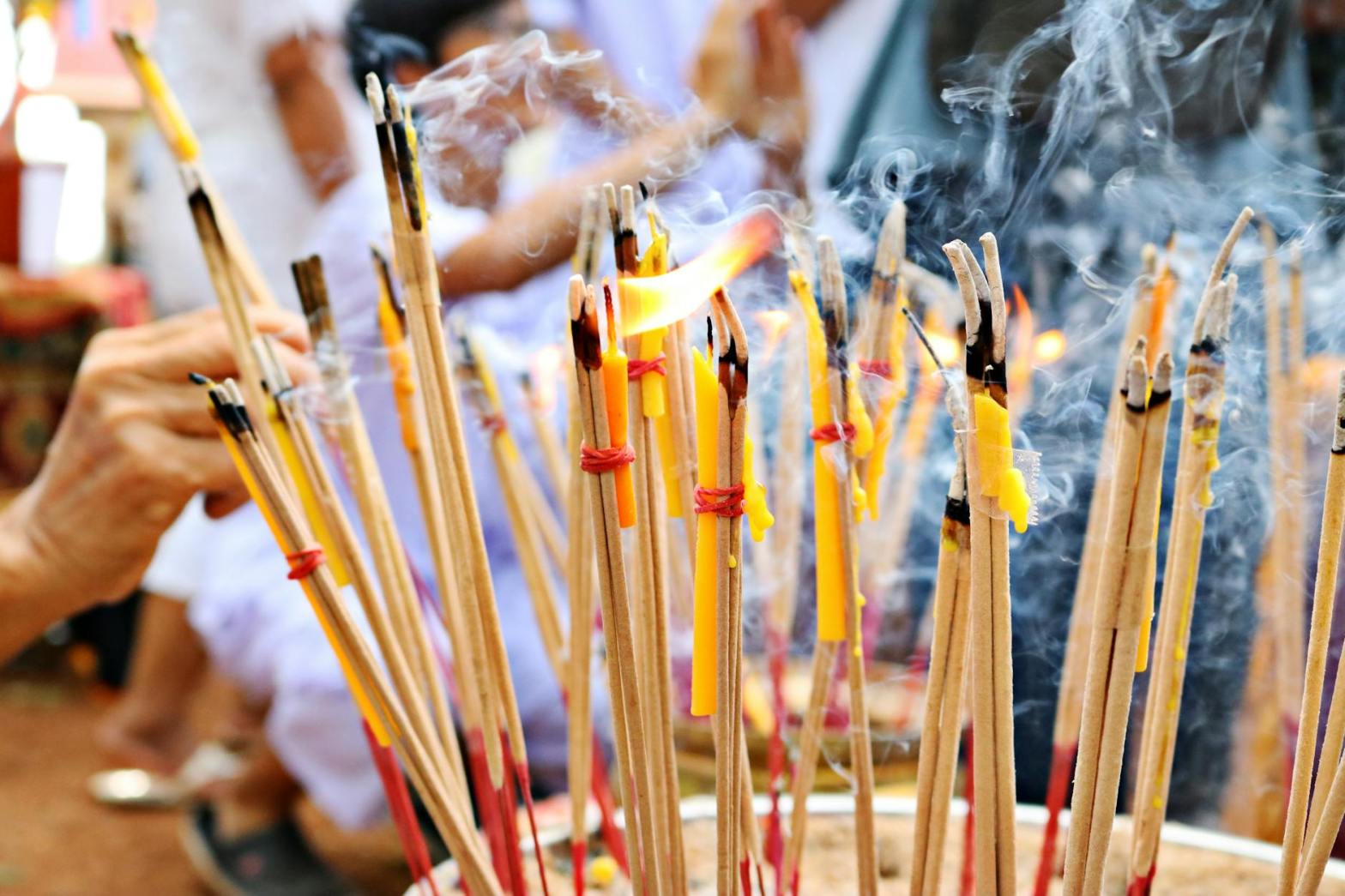
I arrive early in the morning, the mist still hovering like a ghost on the gritty street. The metal grate that protects the house is already raised, and the pungent scent of incense wafts from the open doorway. The short walkway is swept clear of debris, an odd juxtaposition given the litter strewn around the city of Kathmandu.
Sliding my shoes off, I give a low bow at the altar with a brass statue of Shiva surrounded by white carnations and smeared with red tika. I enter the room where Amma is sitting on a cushioned chair, already doing a healing with a young man. He glances up when I slip in, his dark hair flopping to his forehead as he gives me a nod.
I sit on a pillow and scan the small room. Paintings of Hindu and Buddhist saints line the barely pink walls and a large cabinet with a glass front holds her spiritual tools: offering bowls filled with water, mustard oil and rice, incense, peacock feathers, a conch shell. A young mom sits in the corner with two children under the age of three. One of them fusses and she bounces him on her lap, singing softly, to keep him occupied. But this is not like church where quiet is equated with reverence and obedience with devotion. The small crowd of fifteen laughs when he sticks his fingers in her mouth and giggles. Another woman leans against the wall and shakes, mumbling something unintelligible as her eyes roll back in her head. Others look at her with sympathy and I learn later that her behavior is the culturally accepted symptom of possession.
Aama watches it all but stays focused on the young man seated in front of her, his head bowed as she sprinkles a few grains of rice as an offering to the Spirits called to heal him. Her sing-song prayer reverberates through space, pulls our heads closer to the floor by an invisible thread of reverence and devotion. She dips her forged iron knife into a tin of sacred ash made by a sadhu and stirs it into a small tumbler of water. Aama chuckles at something only she can hear before pouring some of the water into his mouth and the rest over his head. “La,” she says, indicating the healing is complete. “La.” He leaves for work.
Aama is my teacher and I’ve come to Nepal to be in her company, to learn and absorb her wisdom and knowledge of spiritual healing. I observe with rapt attention and listen carefully as the translator explains the maladies described by her patients: a failing business, a cheating husband, a lost pregnancy, a sadness that shreds the heart. Aama invokes the Spirits for assistance, sometimes embodying the Goddess for a direct and divine intervention, and sometimes urging her patient to see a physician because the problem is not of a spiritual nature. But always they leave with a blessing and the understanding that they are seen by the Deities, that they are not alone in their suffering. They are uplifted and held.
I’ve come to immerse myself in all of it: Aama and her healing room, the closeness of life and death, just a breath apart, this place where Spirit meets grime. But these filthy streets are not what they seem. They are avenues gilded with daily devotion, carved from the million steps that lead from temple to temple, and adorned with marigolds mixed with bits of prayer and hope. I listen to the murmur of mantras on a bus, the clicking of mala beads louder than summer cicadas, and the spin of a prayer wheel wiping away eons of karma. I push beyond the grit and poverty, beyond the stink of diesel fumes and the endless wall of need. Peer behind the veil to find the Divine Mother, limitless, vast and patient, waiting to whisper in my ear exactly what my heart needs to hear. “La,” She breathes. “La.” I board the plane for home.
Sixteen years later I can still smell the sweet incense and feel the heat from the fires at the burning ghats, where families bring their deceased loved ones wrapped in saffron shrouds to be cremated on the banks of the river. Shiva welcomes all, comforts their hearts and bears the sorrows of their souls.
I still long for the places where my forehead bent to touch the ground of holy sites and temples, where my heart filled with love and expanded into the cosmos, merging with a million other hearts on pilgrimage to themselves, which is to say, the Divine. Cradled in my hands, my lapis mala holds the energy of mantra, the intention of union with what is seen and unseen by these human eyes, and reverberates with the touch of Aama’s fingers as she raps me on the head, transmitting more than power and knowledge, transmitting responsibility, love and connection to all.
What began in Aama’s healing room spilled into the streets and corner shrines and followed me home to Minnesota, a mind as far from Kathmandu as the moon. I thought it was place that mattered but I’ve learned that devotion is devotion, and my heart became the temple housing more than these ephemeral memories, creating a home for the Deities themselves to reside. This is the unexpected gift that unfolded after my return, the visceral, embodied experience that is beyond words and can only, inadequately, be described as Love.
The water in the pond behind my house sparkles with the sun, breathing it’s rays, creating ripples of light that sound like laughter. “La,” it whispers. “La.” I smile in gratitude.
Susan Langston is a writer, performance artist, playwright, and traditional healer. Her mini-musical, I Am Cate Blanchett, was produced three times to sold out audiences in the Twin Cities. She is a member of the Loft Literary Center and AWP, and was selected for AWP’s Writer to Agent Program in Summer, 2025. Susan lives with her wife and three deranged cats in Minneapolis, America’s peaceful superpower for protecting community and saving democracy.


“Minneapolis, America’s peaceful superpower for protecting community and saving democracy” indeed… In these days where there’s not much to be proud of in this country, I am so very proud of my fellow citizens in Minneapolis. Thank you, Susan, “La”.
LikeLike