
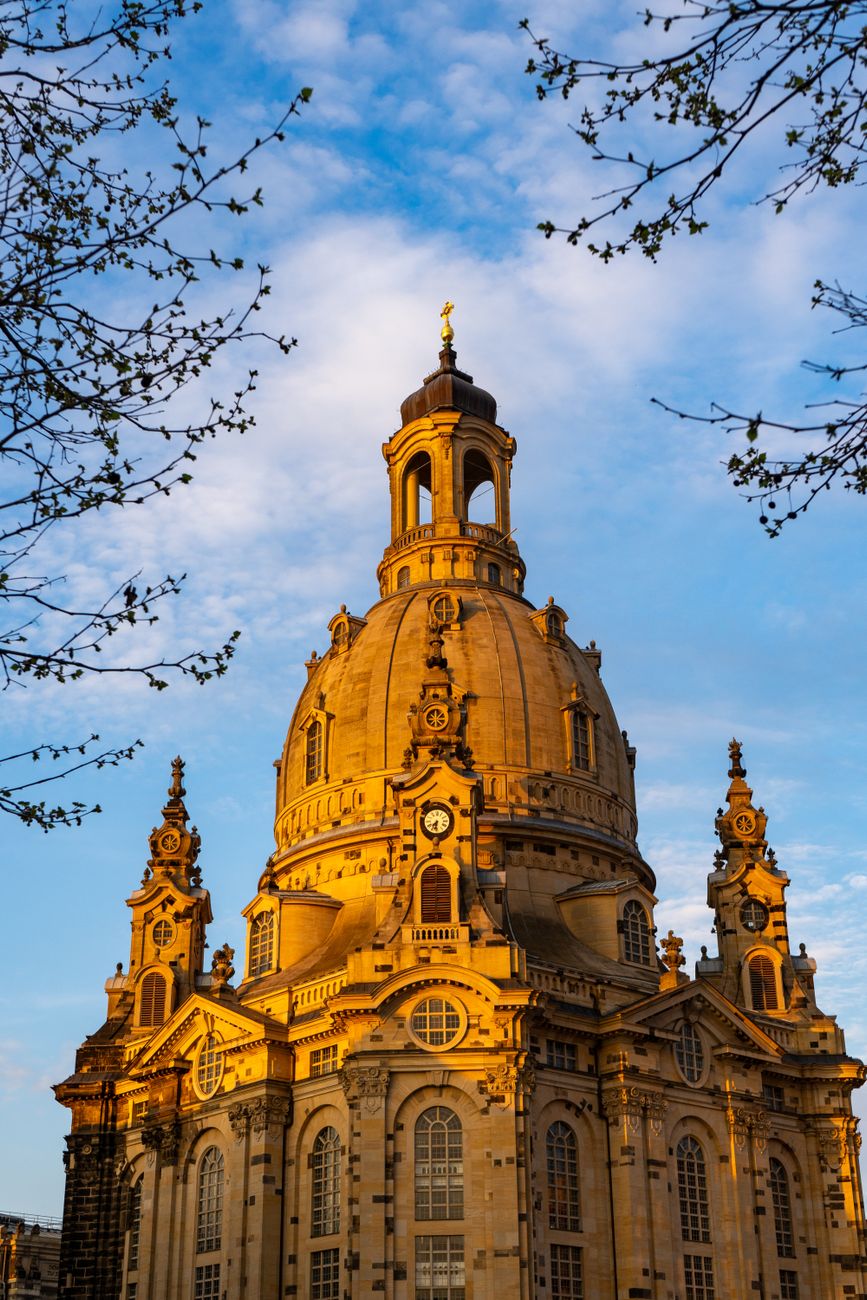
Tour Guide at the Frauenkirche

The Frauenkirche (Church of Our Lady) in Dresden, Germany, built in 1726-43, was destroyed during World War II.

	for Sabine


She’d lived here since this church was rubble, burned
in Dresden’s firestorm. When the bombs had turned
her city into ashes and debris,
the ruins of the church, essentially
untouched, remained for decades: monument
to those who’d died and somber testament
to pain that spanned the country. But the scar
that split the nation, and extended far
beyond its borders, finally began
to heal—and Dresden had its own bold plan:
the Frauenkirche would stand here again,
to grace this square just as it had back when
no bombs had fallen. Thousands of the stones
from the demolished church would be the bones
that shaped a replica. Inside, a charred
and twisted cross, too precious to discard,
would flank the rebuilt altar. Our guide beamed,
still moved by how her city had redeemed
its past and honored it. They’d resurrected
its beauty brick by brick, and so rejected
the war’s brutality. The massive dome
again had risen, emblem of her home.

I stood before the church alone, hours past
the ending of a tour that had recast
the history I’d vaguely known. Our guide
had added detail, passion, joy, and pride.
I watched as late sun kissed the sandstone walls,
and thought about what rises and what falls,
what finally endures. This light would fade,
but not our guide’s tale of a church remade.
Her Frauenkirche stands with dignity
to honor peace and its fragility.
Jean L. Kreiling lives on the coast of Massachusetts. She is the author of four collections of poetry; her fifth is due out later this year from Able Muse Press. Her work has been awarded the Frost Farm Prize, the Rhina Espaillat Poetry Prize, the Kim Bridgford Memorial Sonnet Prize, and three New England Poetry Club prizes, among other honors.

