Matthew Tallied Who’d Eaten the Most – a poem by Margaret T Rochford

Matthew Tallied Who’d Eaten the Most

Jesus called forth his friends
to star in their own work of art,
gently washed their feet.

Thirteen companions reclined
on carpets and floor cushions
in the dimly lit upper room.

Pure stone jars of olives, dates,
pistachios — supper laid out
on low tables by Peter and Simon.

Judas dipped bread into Jesus’s fish sauce.
Thaddeus stroked the air with prayers between bites.
Bartholomew passed the lamb.

John leaned close, listening.
James refilled the wine.
Thomas bit his bottom lip,
doubted their truth.

Andrew and the other James
argued over leavened bread recipes.
Matthew tallied who’d eaten the most.
Philip questioned how bread became body.

In the centre,
Jesus broke bread and drank wine,
asked his friends to do this
in memory of him—
body in bread,
divinity in wine.

Amen.

Margaret T Rochford is a poet and playwright originally from Ireland living in London. She regularly performs her poetry at open mike sessions. Her poetry has been published in magazines and on line, she is working on her first pamphlet. Two of her short plays have been performed at the Irish Cultural Centre in London and she is currently working on a play about Irish dancing.

The Fish in the Deep Lake – a poem by Ahrend Torrey

The Fish in the Deep Lake

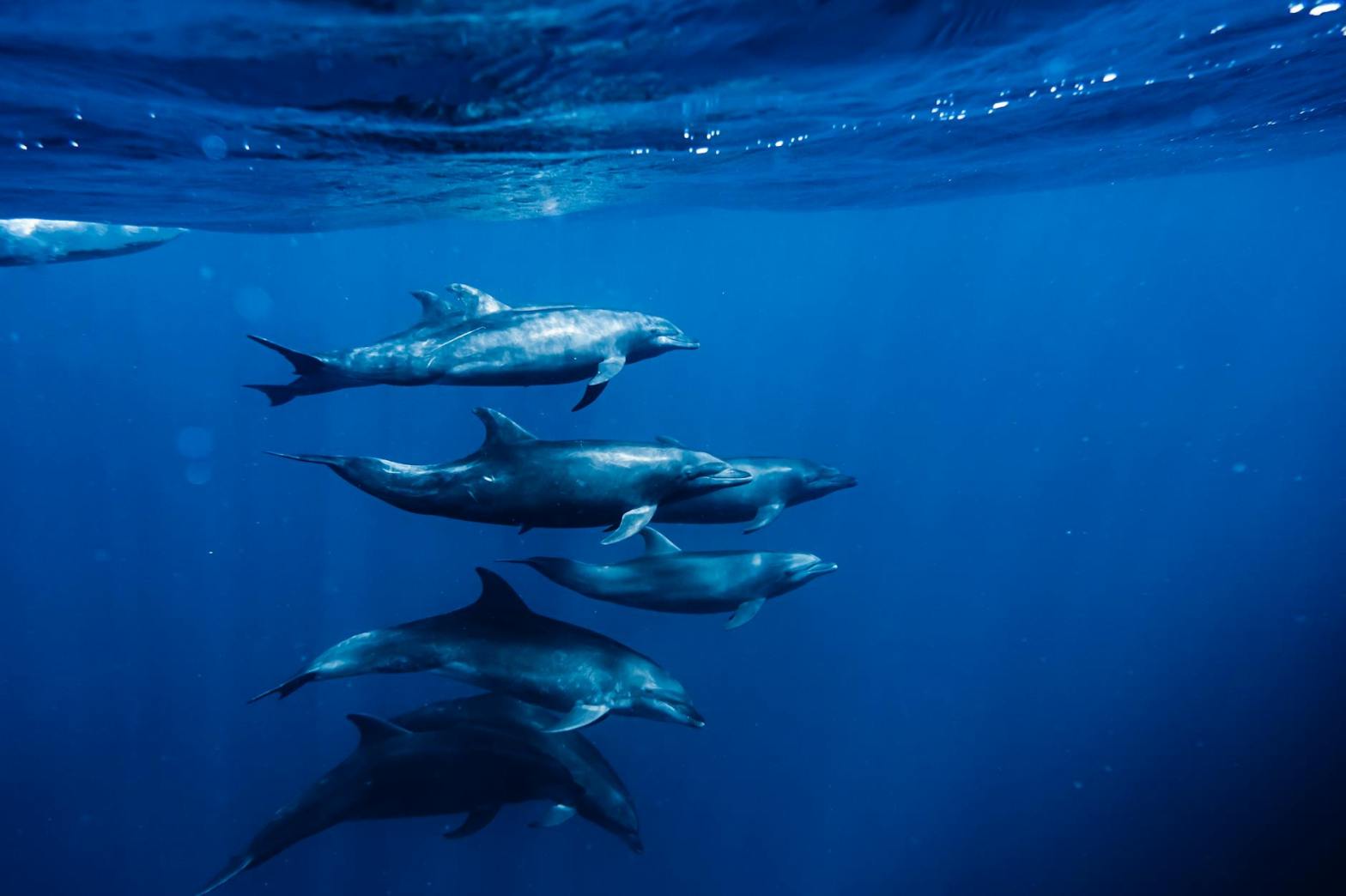
run their mouths
over rocks again,

take many forms
of flesh,

dart among
the wild celery
and driftwood—

And we the people
do not see them;

we do not acknowledge
they’re alive.

As we turn
from this side of the lake

toward the other,

they’re all the same
making a difference
in their own world.

Though we can’t see them
in their camouflage,


a life-filled world

exists beyond ours—

Ahrend Torrey is the author of This Moment (Pinyon Publishing, 2024). His work has appeared in Denver Quarterly; Panorama: The Journal of Travel, Place, and Nature; storySouth; The Greensboro Review; The Westchester Review; Welter; and West Trade Review, among others. He’s currently working on a new collection of poems titled Running Among the Trees—New & Selected Poems. He lives in Chicago with his husband, Jonathan, and enjoys exploring the nearby forests and dunes. Read more of his poetry at https://ahrendtorreypoetry.wixsite.com/website

The Path for Me? – a poem by Terry Sherwood

The Path for Me?

In the hall are twenty devotees, a terrier
and a mongrel.

A smile greets when I hand in a quiche lorraine
for the potluck meal; blank faces disappoint

when I tell them I've been exploring Theravada.
A volunteer lights incense and candle then invites the bell.

We recite ‘The Community’’s version
of the five precepts. I’m too shy and dodge

my turn; say I’ve forgotten my glasses.
Walking meditation makes me self conscious

and feels strange. After a blessing,
we savour lunch in silence.

Some of us take a walk through the village,
over a bridge, down a lane and back.

As we do so, we talk and talk;
released from silence.

One serene follower sits cross legged
on a mat, peels and eats a banana

before the dharma talk on mindfulness.
After which, I still don't know what it is.

Terry Sherwood lives in Northamptonshire, England. A former painter, his creative outlet is now poetry. His poems have been published in Allegro, Acumen, Orbis, Pennine Platform, The Cannon’s Mouth, The Ekphrastic Review and The Seventh Quarry amongst others.

Stone – a poem by Silas Foxton

Stone

I am soaring miles above the earth.
Below me,
the smooth surface of the precambrian shield
is flowing like a river.

Water snakes and winds around bedrock.
Vast swathes of forest and wetland
are changing shape,
dancing with the living granite.

The stone tells me:
“Everything good lives on forever in spirit
and returns to the Earth when it is ready.”

I wake and remember Kateri,
their hand on a boulder,
saying, "This is the speed
at which Spirit moves."

Silas Foxton is a tattoo artist and community worker meandering around the great lakes basin. Their work picks at a simultaneously strained and reverent relationship to land, ancestry, and identity which draws on experiences of dream life and things only seen out of the corner of one’s eye.

Dominion – a poem by Duncan Smith

Dominion

is not exploitation’s synonym,
reason’s rationale for ruined resources,
permission to pursue people as assets,
a commandment to act as God.

it calls us to be
secure in our skin
so others can be in theirs,
acknowledge that abundance means
enough for all not more for me,
understand equality and equity
are not the same,
see the forest and the trees,
know the village it takes is lifeless
until we dwell in it.

Duncan Smith grew up on a farm in southeastern North Carolina in the 1960s in one of the nation’s historically poorest counties. He attended the University of North Carolina at Chapel Hill. A public librarian who started a database company, he published his first poem at the age of twenty. Decades later he published his second poem, reclaiming writing and poetry as a long-lost and recovered passion. Duncan’s work has appeared in or is forthcoming in BRILLIG, Broad River Review, The Crucible, Kakalak and online in North Carolina Literary Review, Red Eft Review, Table Rock Journal.

Waiting Hours – a poem by Elle Rosamilia

Waiting Hours

This month, there has been no revelation,
no miraculous sign, no sudden turn.
The earth spins slowly and my poems end
without the Spirit stealing my pen.
He does not work the same way twice, I know,
and still, the ache for Him to work at all:
I know You could heal me if You gave me the words.
I know what it feels like to be surprised.

I read once of a type of bamboo that, once planted,
didn’t show a sprout for three years. In a day,
it grew straight into the sky.

Elle Rosamilia grew up in upstate New York, moved to Mississippi for college, and spent the next three years teaching English in North Africa and studying theology in the UK. She currently lives in Pennsylvania, where she can be found reading poetry on her lunch breaks and writing in the pockets of free time she has amidst her retail job. Her latest poetry collection, The Mourner’s Almanac, explores seasons of grief and hope, and she has poems published in Prosetrics and Vessels of Light.

Nam Myoho Renge Kyo – a poem by Thomas R. Smith

Nam Myoho Renge Kyo

I chant it, breathe it, or just think it
sometimes when I’m feeling anxious,
that little Japanese mantra I was given
by a friendly young woman
on the subway the spring I hitched to New York
on my way to Europe. I was fresh off
the road, heavy backpack, new hiking boots,
I’m sure had out-of-towner written
all over me. This woman — I remember
she was short with wavy sandy-colored
hair — brought her face close to mine and said,
“This will help you to center,” and
wrote it so I wouldn’t forget. I was
lonesome but hopeful that year in the last
days of my twenties, discovering
I could open the door of Nam myoho
renge kyo
and find reservoirs of calm.
Nichiren Buddhist, translates variously
as Glory to the Dharma of the Lotus
Sutra
and I take refuge in the Lotus
of the Wonderful Law
. I relied on it
camping in bushes beside the autobahn
or trying to sleep in a seedy
hotel room in Milan. Even now when
troubles worry me awake, I breathe in
Nam myoho and breathe out renge kyo
thinking of that time when I was lost
and trying to find the way back to my life,
and I thank that woman who pegged me for
the worried pilgrim I was on the New
York subway and gave me the sublime gift
of the Lotus of the Wonderful Law.


Thomas R. Smith is a poet, essayist, editor, and teaching living in western Wisconsin. His most recent book of poems is Medicine Year (Paris Morning Publications). He is the editor of a forthcoming collection of Robert Bly’s essays on poetry and the writing life, The Garden Entrusted to Me (White Pine Press)

Museum of Trees – a poem by Frank Desiderio

Museum of Trees

Finish every day and be done with it - Ralph Waldo Emerson

Let yesterday, all yesterdays
go into your museum of trees
some verdant, some burnt.

Sure, you may smell the smoke
of tamped down desires,
and, yes, the leaves constantly
mutter nonsense as if they had regrets.

The broken branch
crashed to the ground
but it missed you, move on.
The autumn fall of forgiveness
softens the forest floor.

The constant burble of the stream
wants to hold you
ease you with cool touching.
Slights and insults roll over the rockslide,
slick from years in the stream,
swallowed in the white water roil.

Leave the snapped twigs behind
under a loamy mound.
Yes, there are also the mounds
marked with stones
some heart-shaped, some a cross,
some an X.
Pray your prayer and make progress.

Rain rinses everything clean.
Rise and begin serenely again
lift your mug heavy with coffee
give thanks
all you need for happiness is here
in the clearing of your morning vision.

Frank Desiderio is a priest and poet who served as a campus minister (UCLA), retreat leader and film producer. Now, he produces two video poems each week on his Substack, Holy Poetry, https://holipoetry.substack.com. His poems have appeared in the Spring Hill Review, Amethyst Review, America, Windhover and Presence among other journals. Currently he lives in Manhattan and finds joy in helping to raise his nieces, writing poetry and doing Tai Chi.

The Monks of Skellig Michael – a poem by Greg McClelland

 The Monks of Skellig Michael
(Ireland, 6th Century)

I'm with you always, till the end, You said.
I look for You in desolation, high
between the sea and sky and, living dead
to world and self, transmogrify
to something less or more than merely human.
My minutes, hours, days are tolled by breathed
novenas, heaven's furious sun and rain,
sweeping waves of screaming sea-terns weaved
through cloud-thrown tapestries of light and shade,
and constant sea-borne bass of boom and rush.
I feel You in the rote of night and day,
and hear You in the deepest evening hush.

The last west rock before the endless sea,
from Skellig's crags they glimpsed eternity.

Greg McClelland is a retired federal government attorney. He has written poetry throughout the years but has only made a concerted effort to publish it since retiring in 2013. He has published poetry in Ancient Paths, The Road Not Taken, and New Verse News. He has one Pushcart Prize nomination.

Revelation 2:17 – a poem by Dean Abbott

Revelation 2:17

What if an incantation of animal names
was the only necessary magic?

What if freedom fell from hearing

Dove
Vole
Horse
Tortoise
Grouse
and
Heron?

What if midway through
our recitation we
discovered ourselves
outside
the locked gates:

Mortgage
Degree
Buy
Entertain
and
Hurry

What if through the deer’s leaping white like a
flame, the fox’s laugh in autumn,
the call of the barred owl reminding
us of death’s slow approach we
knew ourselves again?

What if we plunged our dusty hands into the
river of what is given and pulled
from her a stone, white, which
when turned revealed our own
forgotten name?

Dean Abbott is a writer, poet and pastoral counselor living in Kentucky. He can be contacted through http://www.deanabbott.com or on X @deanabbott.