Weather Forecasting – a poem by Maryanne Hannan

Weather Forecasting

I loved her…
Wisdom 8:2


If Unknowing is a cloud, could Love be
A tornado, rope-wedging its way,
A stratosphere of search,
Seeding atmospheric
Draft, filaments of
Tang-ly breath
From every
Single
Cell?

Maryanne Hannan has published poetry in both All Shall Be Well: A poetry anthology for Julian of Norwich and Thin Places & Sacred Spaces. A resident of upstate New York, USA, she is the author of Rocking Like it’s all Intermezzo: 21st Century Responsorials.

Life-size St. Francis in Bronze – a poem by John Davis Jr.

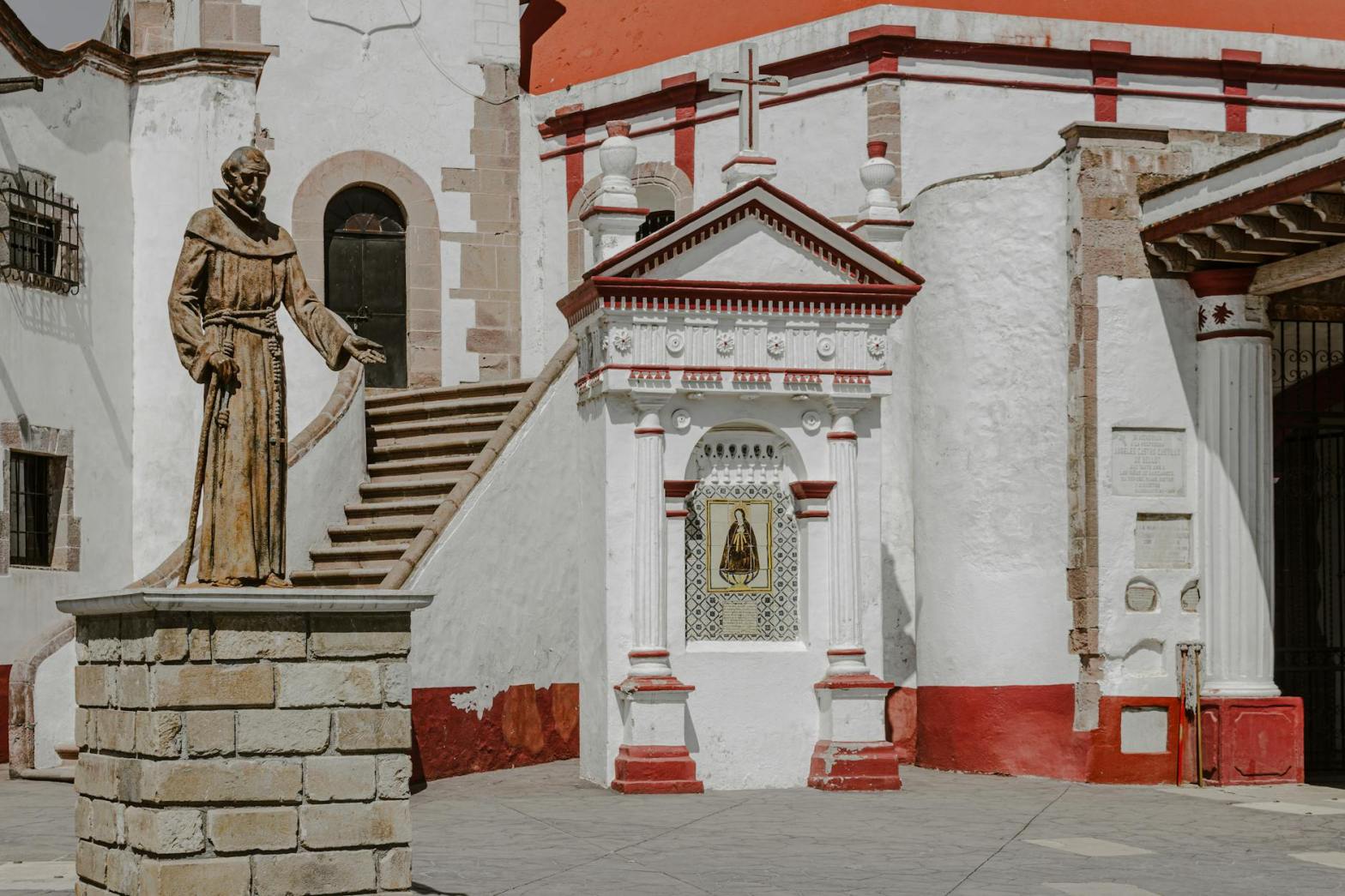
Life-size St. Francis in Bronze 
Santa Fe, New Mexico, 2013


I have reckoned with wolves.
Snarling killers need admonition
and an unclenched hand to grasp coarse fur
before the calm walk into town
for raw meat and understanding.

I have felt songbirds’ tiny talons
grasp my war-wearied knuckles.
Quick, clear eyes gleam divinity
as white-throated notes proclaim
Gloria Gloria Gloria

I have been cast by a maker
who forged peace upon my countenance,
who sandaled my feet in a forward step:
permanent happy progress
alongside His animal pilgrims.

John Davis Jr. is the author of The Places That Hold (Eastover Press, 2021), Middle Class American Proverb (Negative Capability Press, 2014), and three other poetry collections. His poems have appeared in The Common, Nashville Review, The American Journal of Poetry, and elsewhere over the last 25 years. He holds an MFA and teaches English and Creative Writing in the Tampa Bay Area of Florida, his native state.

The Afterlife of Riley – a poem by Gregory Lobas

The Afterlife of Riley

Sleet slashes my window with
the undersound of faraway voices.
I watch the twisting
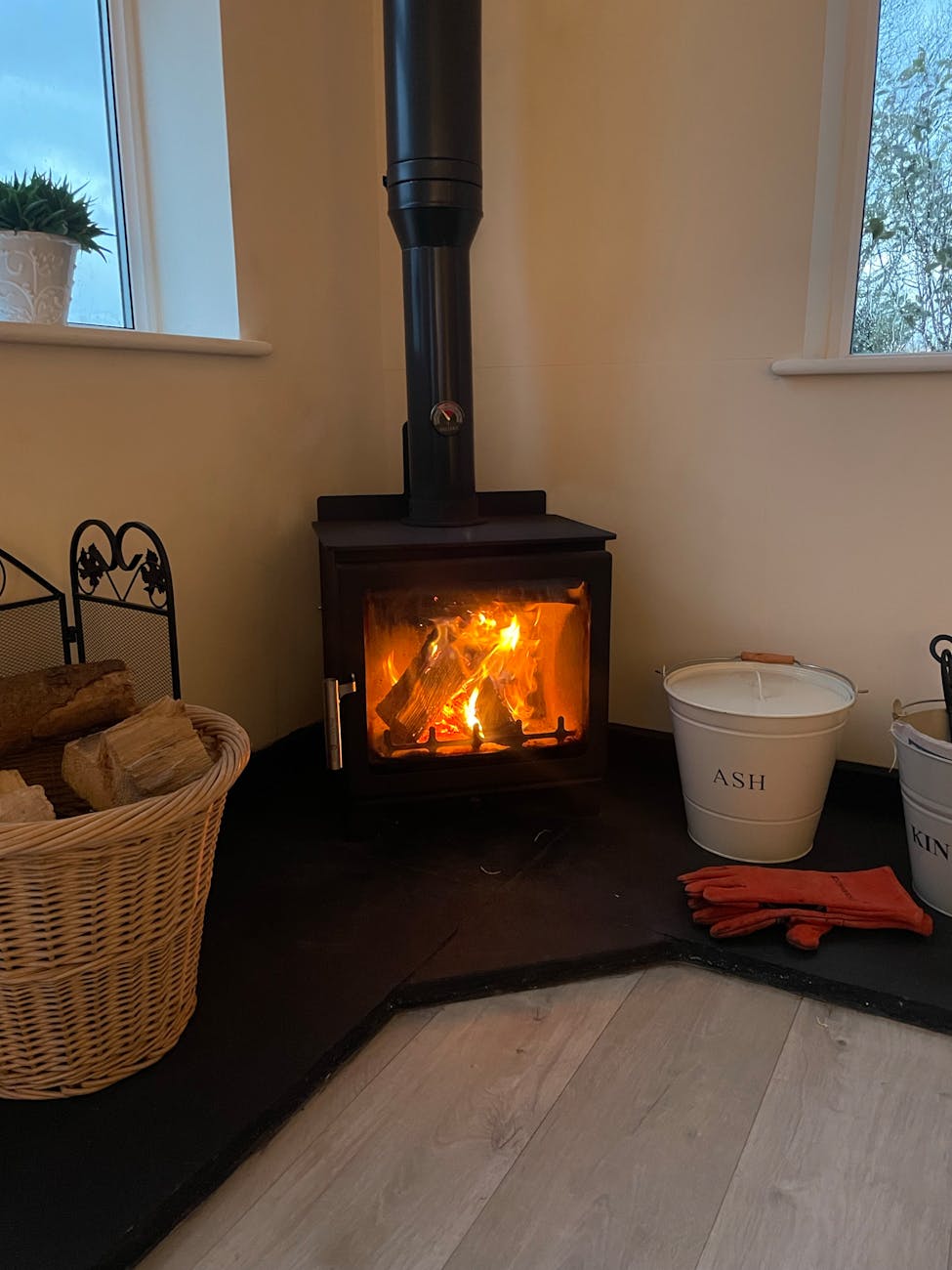
flames in my woodstove,
hypnotic, like dancers
telling ancient stories
in the season of longnights.
It’s a good woodstove.
It keeps me warm even when
the cold emanates from within.
Soot forms on the glass of the window in the door
if a log is set too close, releasing shapes
hidden in the sap, remnants of forest and earth and high breezes.
What appears to me now is the shape
of my old dog Riley, buried just a season past.
Not some vague suggestion.
Not a toasted-cheese-Jesus Riley.
But Riley, snoozing in the soot-stained glass
of the woodstove as he had at my feet
on so many murky nights.
It’s him, alright.
I know it in the egg-shaped hump
of his body low in the front, high in the rump,
smoky haunches pulled up,
the protective curl of his tail,
even the furrowed brow
that worried his face so in life,
now resin stained into the glass.
Behind his half-opened eyes,
at rest but still watching, as he often did,
carnelian embers glow in his pupils.
He has become knowing, like the eyes
I’ve seen in photographs of the saints –
Thérèse of Lisieux, she of the Little Way,
José Sánchez del Río, boy rebel and martyr,
Gemma of Galgani, Hollywood beautiful
pained by the stigmata.
And my Riley who was just a good boy.
Eyes, all of them, that saw beyond the veil
and burned with a holy fire
they, in their young lives,
and Riley after death, in this winter gloom
when the veil is thin and spirits dance in the fire.
A long while I ponder his image,
Riley peering back at me from the fire, gaze for gaze.
Clearly, he is not going back tonight
to his dark bed beneath the pines,
so I leave him three potato chips
where his dish had been.
And no, I’m not surprised to find them when I wake.
Dogs who run with the Saints have no more need of chips.
The spirit of offering has left them.
They are only potato chips now.
I eat them myself, trusting he received
their salty, crunchy welcome.

Gregory Lobas is the author of Left of Center (Broadkill River Press, 2022) which won the Dogfish Head Poetry Prize. His work has appeared in numerous journals and anthologies, such as Thin Places & Sacred Spaces, Tar River Poetry, Cimarron Review, Vox Populi, Susurrus, and many others. He is a retired firefighter/paramedic living with his wife Meg and dog Sophie in the Hurricane Helene-ravaged area of western North Carolina

The Ark and its Keeper – a poem by Jimmy O’Hara

The Ark and its Keeper

It started with stuffed animals,
shifting toys upright on shelves.
I picked lone plushies off the floor
at stores—wishing each one had
somewhere warm and safe to go,
a home to animate with joy.

It began with unbearable terror,
the visceral fear I felt seeing worms
tossed against brick walls at recess—
caterpillars torn apart, cicada broods
smashed alive; precious beings
in pain, helpless and writhing.

What seeded as care for creatures
turned to grave concern for climate.
I grieved kingdoms wiped from earth.
Still I drowned out a mass extinction
of souls unseen and prayers unheard,
built borders on the basis of species.

All my youth I dug tombs. I buried
the struggle of farmed animals deep
in the backrooms of my forming mind.
I silenced what felt strange and wrong
as I breastfed from countless mothers,
cooked their kin’s flesh medium rare.

I spent twenty years loving a cat.
Near the end of her days I asked
what she hoped I would remember.
She said, I’m interested in my life.
I saw that animals are here With us,
fellow travelers through holy floods.

Some watch how I move and make sense
of what matters. Some lean in, see a light
worth reaching toward. Others consider me
with a kind of pity, incredulous and stunned.
I am their cracked mirror, a crypt for questions
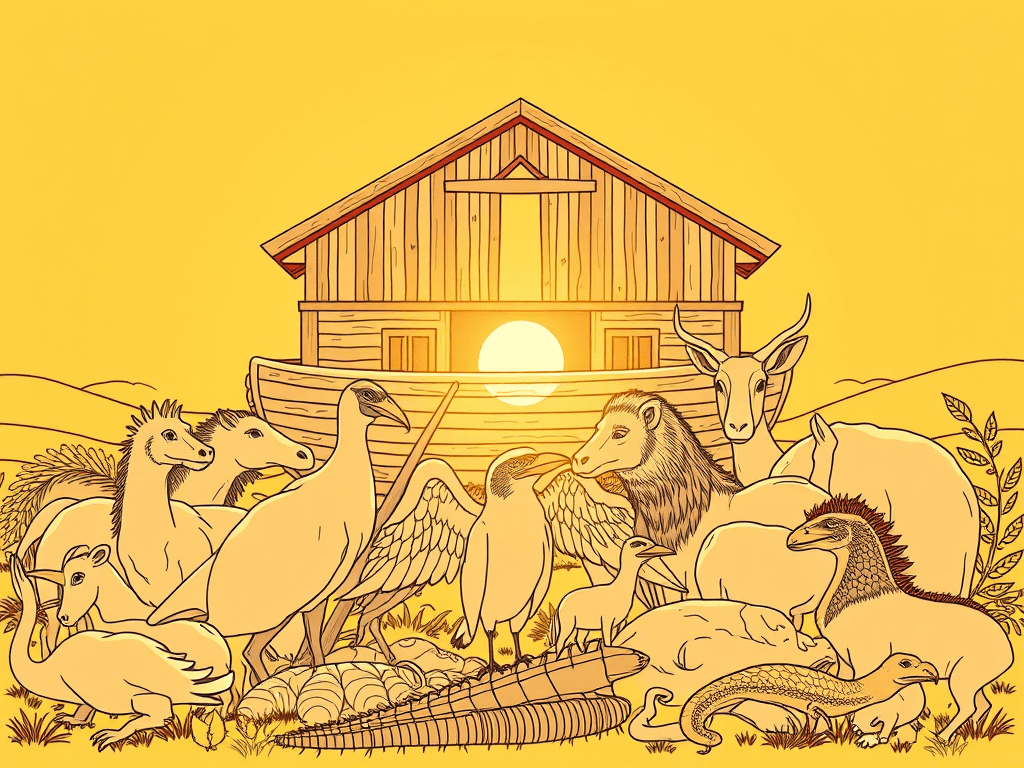
they don’t want answered; the ark and its keeper.

Creatures of God set sail where I go, staring you down.
I unleash pigs and cows upon the vile factory tycoons
and they storm forth, gladly. Paired reptiles and insects,
bonded amphibians, rare and mated birds all aboard—
entire histories, sacred and in danger. I make sure
you hear the chicken pray: My life is worth living.

By the time you bring the elephant into the room
I have already found a hundred ways to set her free.

Jimmy O’Hara is a gay writer and editor who crafts science news for a non-profit medical organization. Based on the U.S. east coast, he often focuses his poetry on memory, spirituality, animal rights, social conscience, and a sense of belonging. His work has appeared or is forthcoming in Eunoia Review, Pictura Journal, and Literary Veganism. You can reach him at jpohara4@gmail.com.

Rapture – a poem by Connor Patrick Wood

Rapture

In feather and in fury | fly the vicious
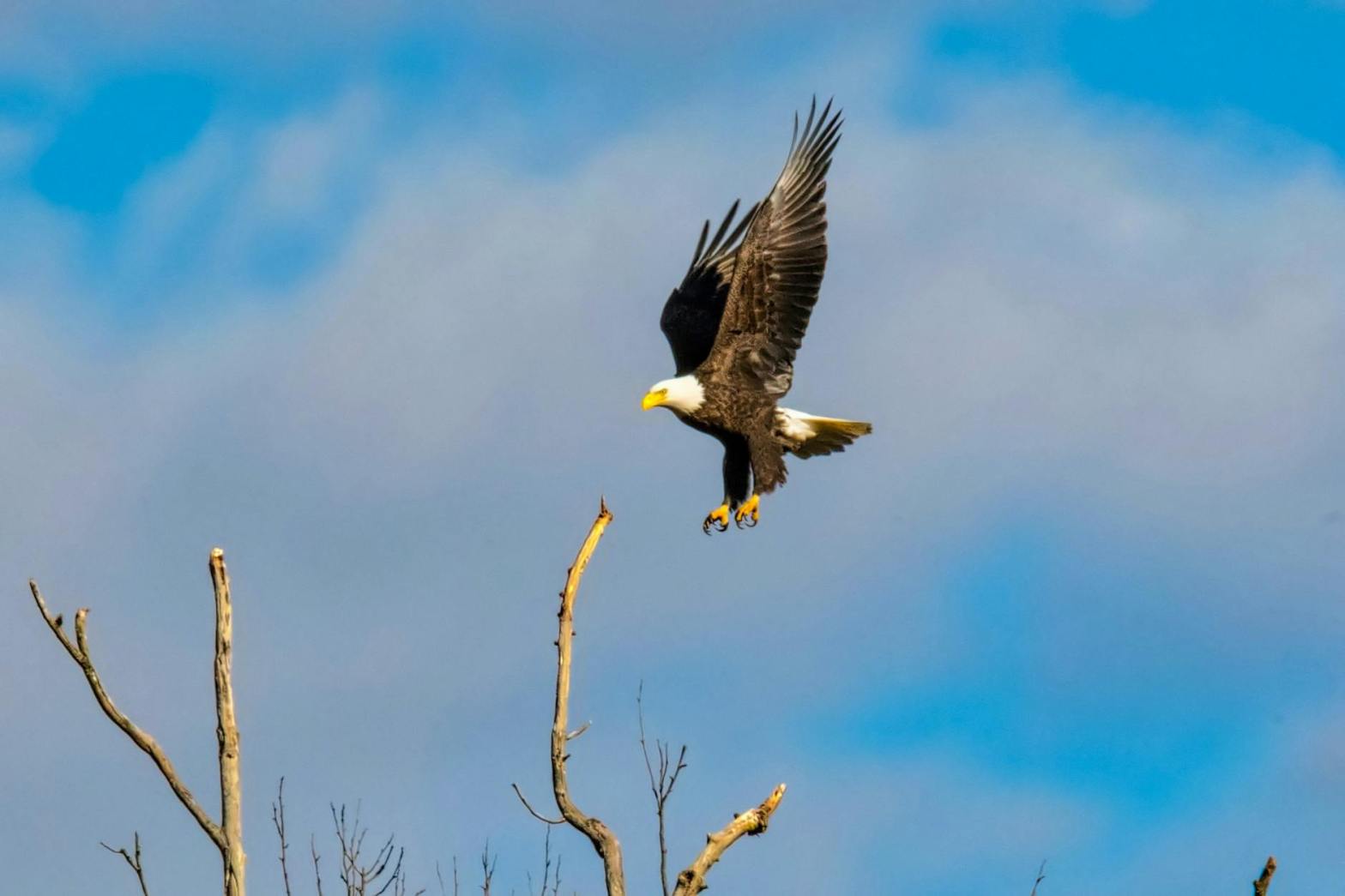
Eagle, entrance | end the warp,
Forth sunder | in small sun
Like beaded beauty | better than grasp
Talon-tightly | torque and tear;
Ah, small thing | thence you blossom
Stark and crimson | creature like a bloom.
Greatly grasses | gripe them short,
Flurry sudden | such small
Violence, not vengeance. | Vitality in burn,
No time, no time at all | terribly you learn
What learnéd lesson | leases not escape
But dances, dances | down so dim
Ages, and accounts | awfully seeded
Thy ledger lieth not, | look: empty
Stand its lines. | Lack my beastie
Nothing now, | never treasure
Green grass | that groweth more.
Aloft ascend, | alight in transform —
Now sightless citizen | of stranger shore.

Connor Patrick Wood is a poet and Substacker (https://cultureuncurled.substack.com) in Arlington, Massachusetts. He holds a BA in creative writing from the University of Wisconsin-Madison and a PhD in religion and science from Boston University. Before he left academia, Connor’s research on the cognitive science of ritual was funded by the John Templeton Foundation. He has published poetry at the Rabbit Room Substack, Ekstasis, and elsewhere.

celebrate – a poem by Amrita Skye Blaine

celebrate

this cloud billows
once, in all of time
the corkscrew willow
bending—the curve
a grace, a prayer

how the leopard
bears whisker spots
these rosettes
their fingerprint
and the baby’s
cowlick at his nape

all of us, called—
how precise we are
each one unique
every one required

Amrita Skye Blaine develops themes of aging, disability, and spiritual awakening. She received an MFA in Creative Writing from Antioch University in 2003. She has published a memoir and a three-novel trilogy. Blaine has been writing poetry steadily since she turned seventy. Her poems have been accepted by Braided Way Magazine, The Penwood Review, Delta Poetry Review, the New English Review, Soul Forte, and Chiron Review. Her first book of poetry, every riven thing, has been accepted for publication by Finishing Line Press and will come out mid-2025.

lessons from a peach – a poem by Shelina Gorain

lessons from a peach

let the woody kernel bleed its pigment
into your flesh

ripening can be savoured
but not rushed

when it’s time, let your body fall away
with an ease that calls forth
celestial juice

delight in this fleeting season
then crawl into dark grooves
like an ant searching sweetness

hold the seed
in the palm of your soil
nourish it

Shelina Gorain is a former software professional, a balcony gardener and a knitter. She writes from Toronto.

Come Sit with Me – a poem by Michael J. LaFrancis

Come Sit with Me

When my small blue flame
was barely flickering,
still in the wind of adversity,
you came to visit me.
Without any words of advice,
you kept vigil, still believing
as doubt and fear were busy
building their nest, chirping away.
There is something to be said
for just sitting quietly, our hearts
breathing to the same rhythm,
it can be the best prayer offering
You may be wondering how
something that seems so small
can mean the world to me.


Michael J. LaFrancis is a trusted advisor, advocate, author and connector supporting individuals, groups and organizations aligning purpose and capabilities in service of their highest ideals. Writing poetry is a contemplative practice providing him with insight and inspiration for living a creative life. His poems are also appearing in Amethyst Review, Avalon Review, City Key, Mocking Owl, One Art and Last Leaves, Seraphic Review now or in the coming months.


By Our Hands And Days – a poem by Fred Briggs

By Our Hands And Days

There is so much to do
in a garden -
unlike back when
it was done for us. Pruning, clearing
all the thorns
and thistles - getting it ready for
this year’s new plants. And the birds complain
when I
work near the feeder. I give them
names - Daniel, Judith, Ruth.
Pausing - I need
to straighten my back - I look to
the other
side of the yard - three more chores pop out.
Work to be done - for another day.
Back to planting.
The sun shines where it wants -
the best spots
must be
divined.
Plant one here one here
one there otherwise we won’t
be able to
see them. Dig a hole -
painful toil - amend the soil,
put
in a plant, backfill. Not enough
dirt - need some more from somewhere else.
I swear the Earth will slowly
disappear from gardening. A
butterfly - small angelic - appreciates
the
newly planted
flower
in front of me.
Working the way back.
It’s bad for my spine but the sweat of
my brow is good for my soul.

Fred Briggs is a graduate of Stony Brook University where he majored in English Literature with an emphasis on 17th Century poetry. An award-winning poet, his work has been published in several journals and online.

See more of his poetry on Facebook: The Poet’s Cloak – The Poetry of Fred Briggs

In Her Sunroom – a poem by Ralph F. Matthews

In Her Sunroom

The recliner all but swallows her up now.
Approaching from behind, I must
look from a certain angle to see if she is there.

Her lap cradles no Sunday paper,
no junk mail. Even her decrepit Bible
sojourns on a nearby chair. She must be asleep.

Then I see her blue eyes
gazing blankly ahead of her
through the window to the woods.

She sits as still as a column of cumulus clouds
in late summer. Her face has been practicing
its look for the grave all day long.

I imagine the den has a whiff
of ether about it. I don’t dare breathe
it in or light a candle against the coming dark.

I can almost hear the scratch
of match against box, and then
an explosion of light

that might take me, too.
But now all I see are the pilot lights
of her eyes as they burn

through the woods behind the house,
across the black water beyond the woods,
to a place I cannot see from where I stand.


Ralph F. Matthews is a high school English teacher and poet living in Columbia, South Carolina, with his wife and three children. He has published poems in Visual Verse and Time of Singing.